


























Views
Downloads


Printable Heavy and Light Weight Comparison Worksheet
Paste this activity's link or code into your existing LMS (Google Classroom, Canvas, Teams, Schoology, Moodle, etc.).
Students can open and work on the activity right away, with no student login required.
You'll still be able to track student progress and results from your teacher account.
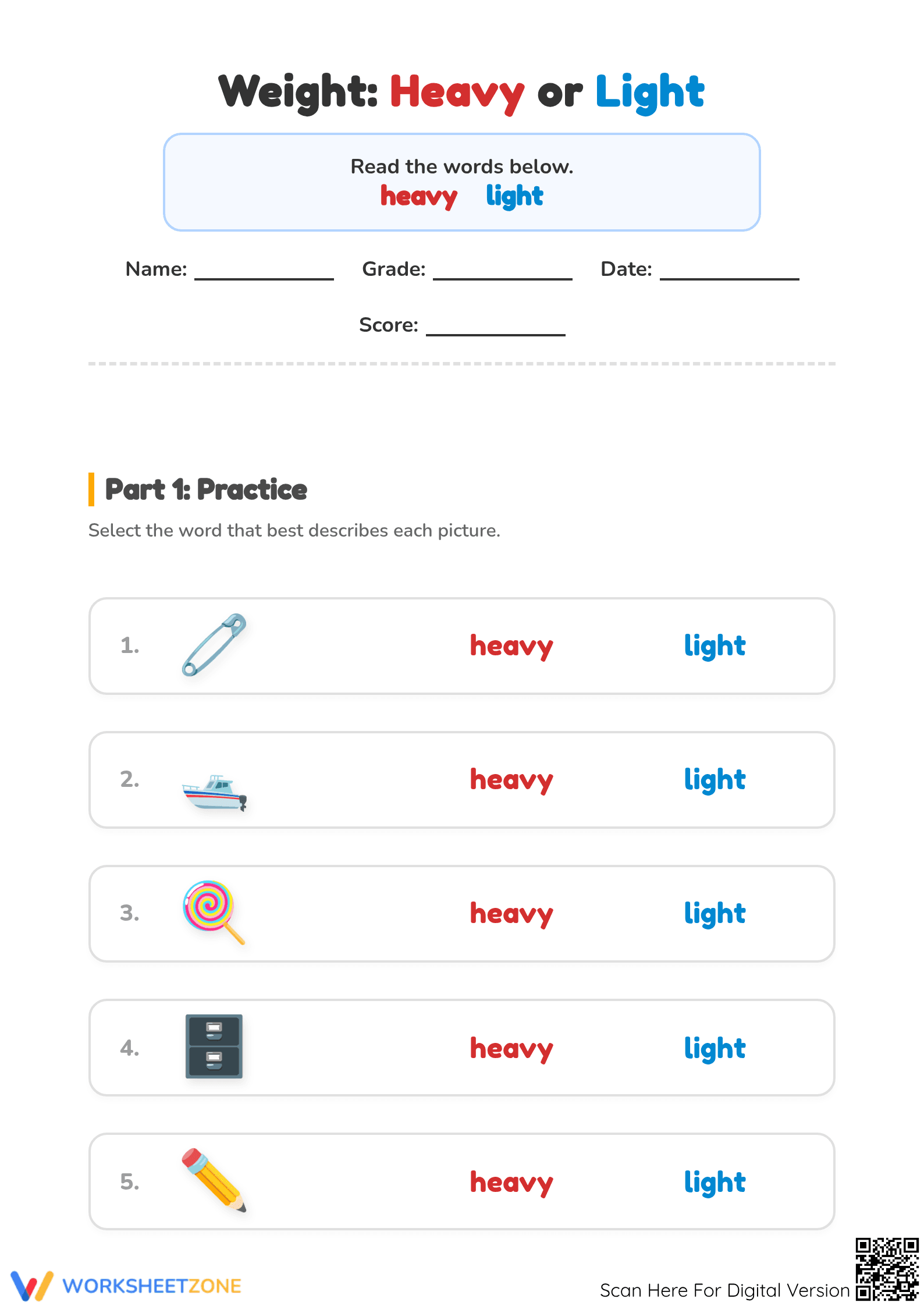
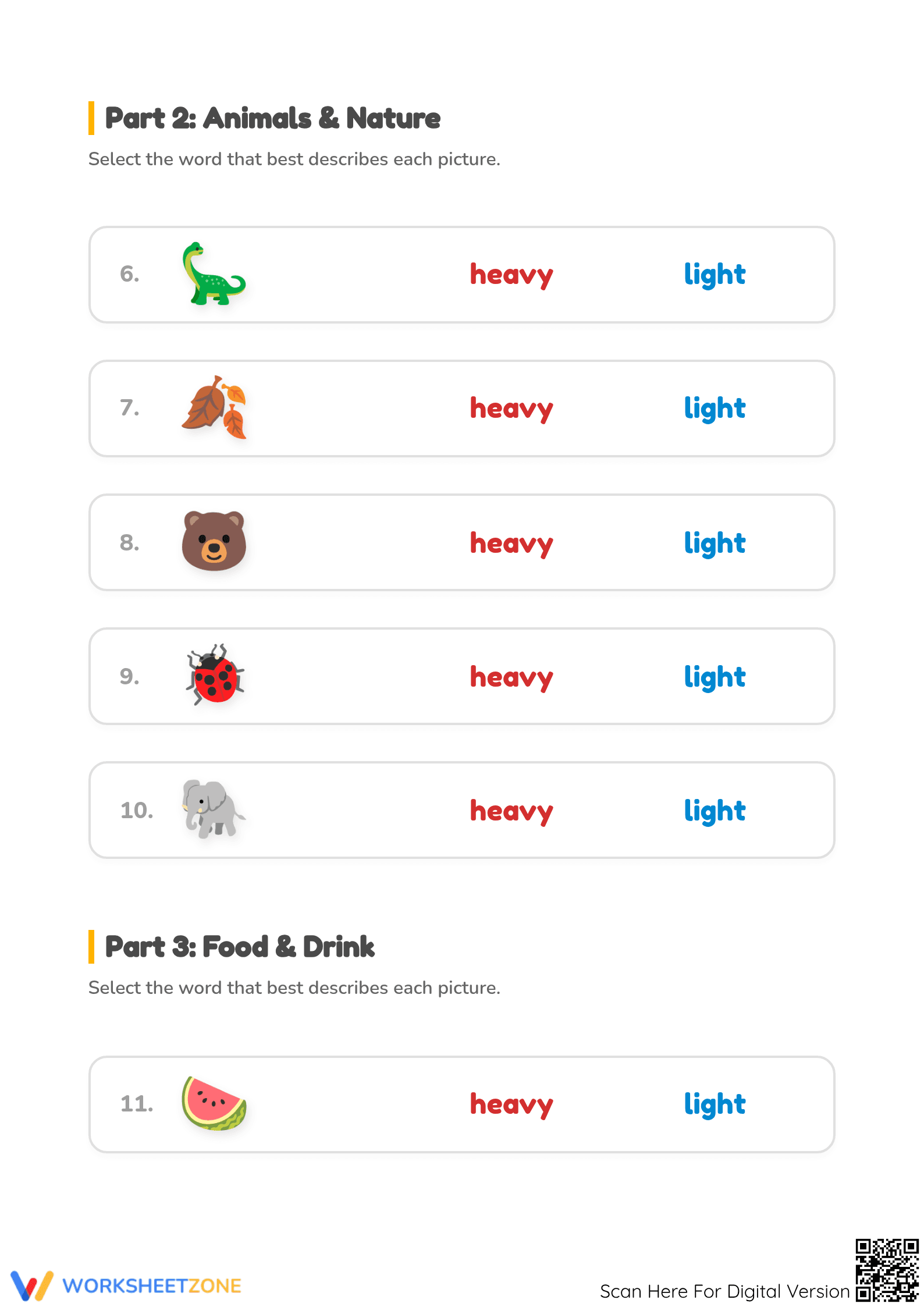
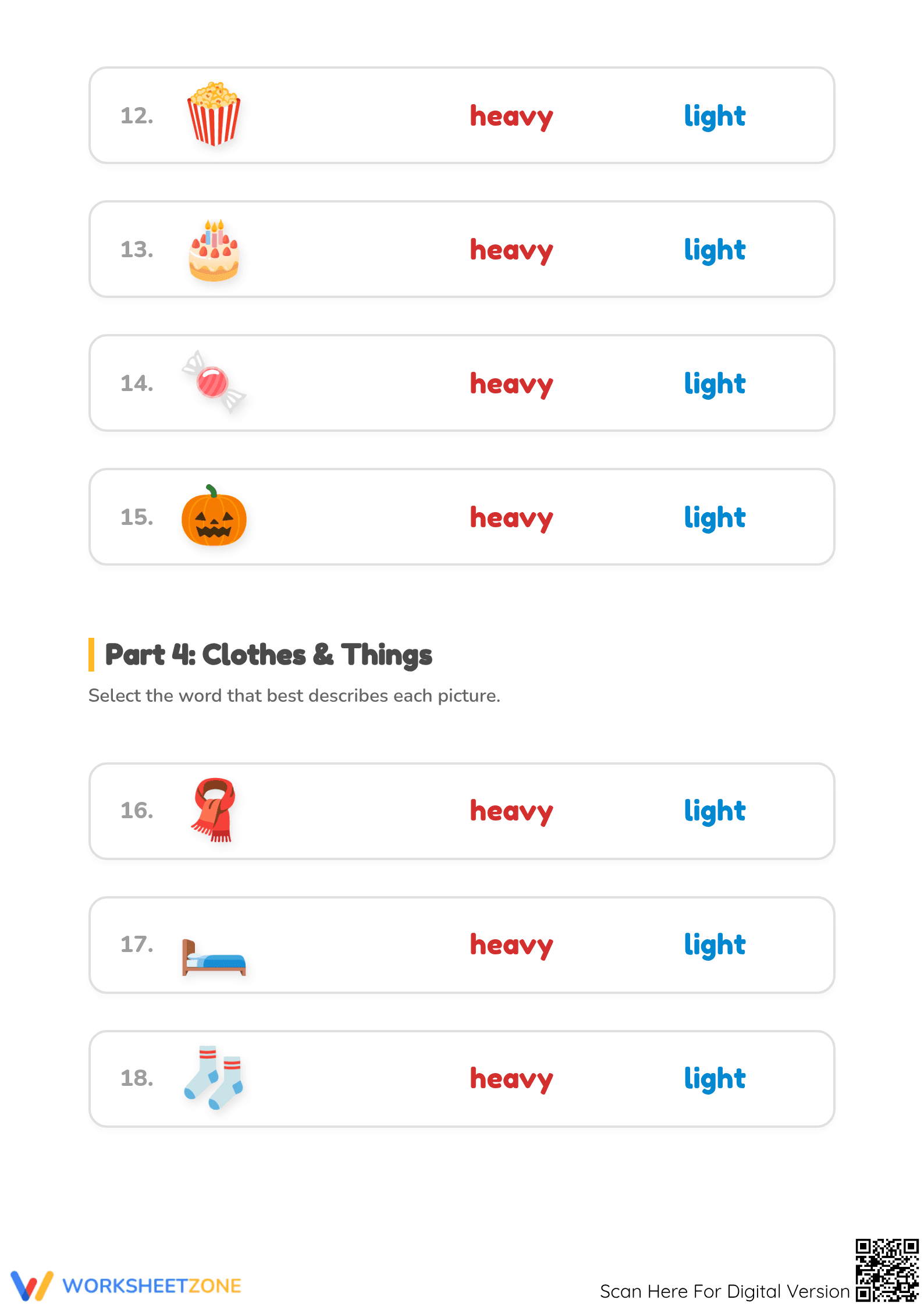
This comprehensive Grade 1 Science worksheet focuses on the fundamental physical property of weight. Students analyze familiar objects and determine whether they are heavy or light, building essential observation and classification skills. By engaging with 48 visual examples, learners develop a concrete understanding of mass and relative weight within their physical world.
At a Glance
- Grade: 1 · Subject: Science (Physics)
- Standard:
2-PS1-1— Classify and compare different kinds of materials by their observable physical properties such as relative weight- Skill Focus: Weight Comparison (Heavy vs. Light)
- Format: 4 pages · 48 unique problems · Full answer key included · PDF
- Best For: Independent student practice or a quick classroom science assessment
- Time: 15–20 minutes
What's Inside
This resource consists of four high-quality PDF pages, each containing 12 clear illustrations of common objects. Students circle the correct term—"Heavy" or "Light"—based on their understanding of physical attributes. The worksheet includes a diverse range of items, from feathers to airplanes, ensuring a wide spectrum of comparisons. A complete answer key is provided for rapid grading.
Zero-Prep Workflow
This classroom-ready resource is designed for maximum efficiency. To implement this lesson, simply print the four-page PDF, distribute the copies to your students, and review the completed work using the included answer key. The total teacher preparation time is under two minutes, making this an ideal solution for substitute lesson plans, morning work, or "fast finisher" activities in primary classrooms.
Standards Alignment
Primary alignment is to 2-PS1-1: "Plan and conduct an investigation to describe and classify different kinds of materials by their observable properties." Weight is a primary property used to categorize materials. This worksheet also supports K.MD.A.2 for measurable attributes. Both standard codes can be copied directly into lesson plans, IEP goals, or district curriculum mapping tools.
How to Use It
Use this worksheet as a formative assessment following hands-on exploration with a balance scale. It serves as an excellent bridge between concrete manipulation and abstract reasoning. For a quick check, observe students as they categorize the "mouse" vs. "elephant" items to ensure they apply logic rather than guessing based on image size. Expected completion time is five minutes per page.
Who It's For
This resource is tailored for Grade 1 but appropriate for Kindergarten enrichment or Grade 2 review. The visual nature makes it highly accessible for English Language Learners and students with IEP accommodations. It pairs naturally with an anchor chart or a read-aloud session focusing on physical properties and foundational science vocabulary.
According to the ScienceDirect TpT Analysis, high-repetition visual classification tasks are critical for internalizing physical property concepts in early childhood education. This resource provides 48 specific practice opportunities to master the concept of weight, specifically the distinction between heavy and light objects. By using familiar icons, the worksheet reduces cognitive load, allowing students to focus purely on the physics concept of mass. This alignment with 2-PS1-1 ensures that students are meeting national standards for investigative science. The inclusion of a full answer key supports immediate feedback, which has been shown to increase retention of foundational scientific vocabulary. Educators can confidently integrate this tool into their curriculum as it provides the structured practice necessary for student mastery. This standalone resource is essential for any primary science unit focusing on matter, forces, or basic physics principles in a classroom setting.


