


























Views
Downloads

Essential Grade 1 Recycling Sorting Worksheet | Printable
Paste this activity's link or code into your existing LMS (Google Classroom, Canvas, Teams, Schoology, Moodle, etc.).
Students can open and work on the activity right away, with no student login required.
You'll still be able to track student progress and results from your teacher account.
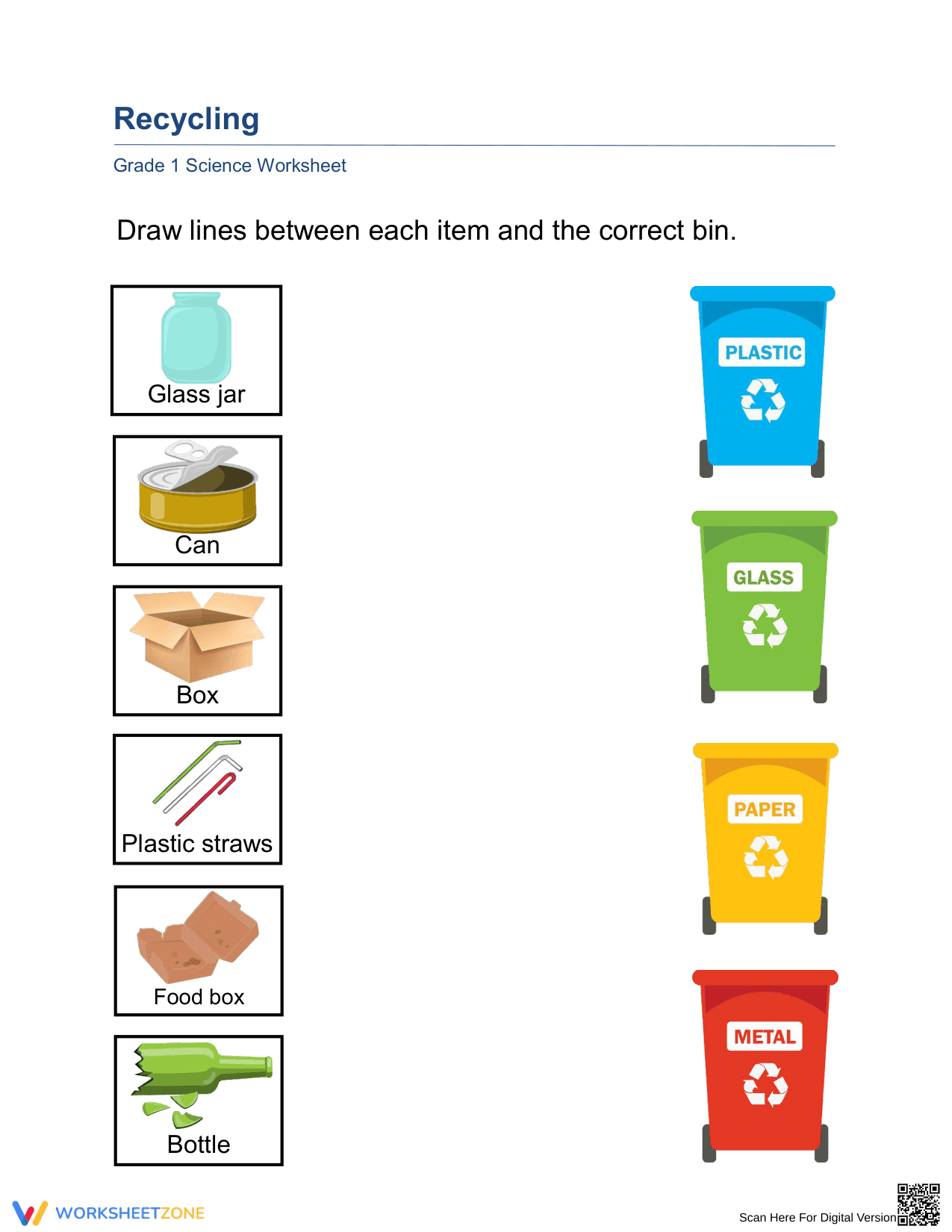
This Grade 1 recycling worksheet helps students identify common household materials and sort them into the correct disposal categories. By matching items like glass jars and metal cans to their respective bins, learners develop a concrete understanding of resource conservation. This activity builds foundational environmental literacy through visual recognition and critical thinking skills.
At a Glance
- Grade: 1 · Subject: Science
- Standard:
K-ESS3-3— Communicate solutions that reduce the human impact on land- Skill Focus: Material Classification & Recycling
- Format: 2 pages · 6 problems · Answer key included · PDF
- Best For: Independent practice or science centers
- Time: 5–10 minutes
What's Inside
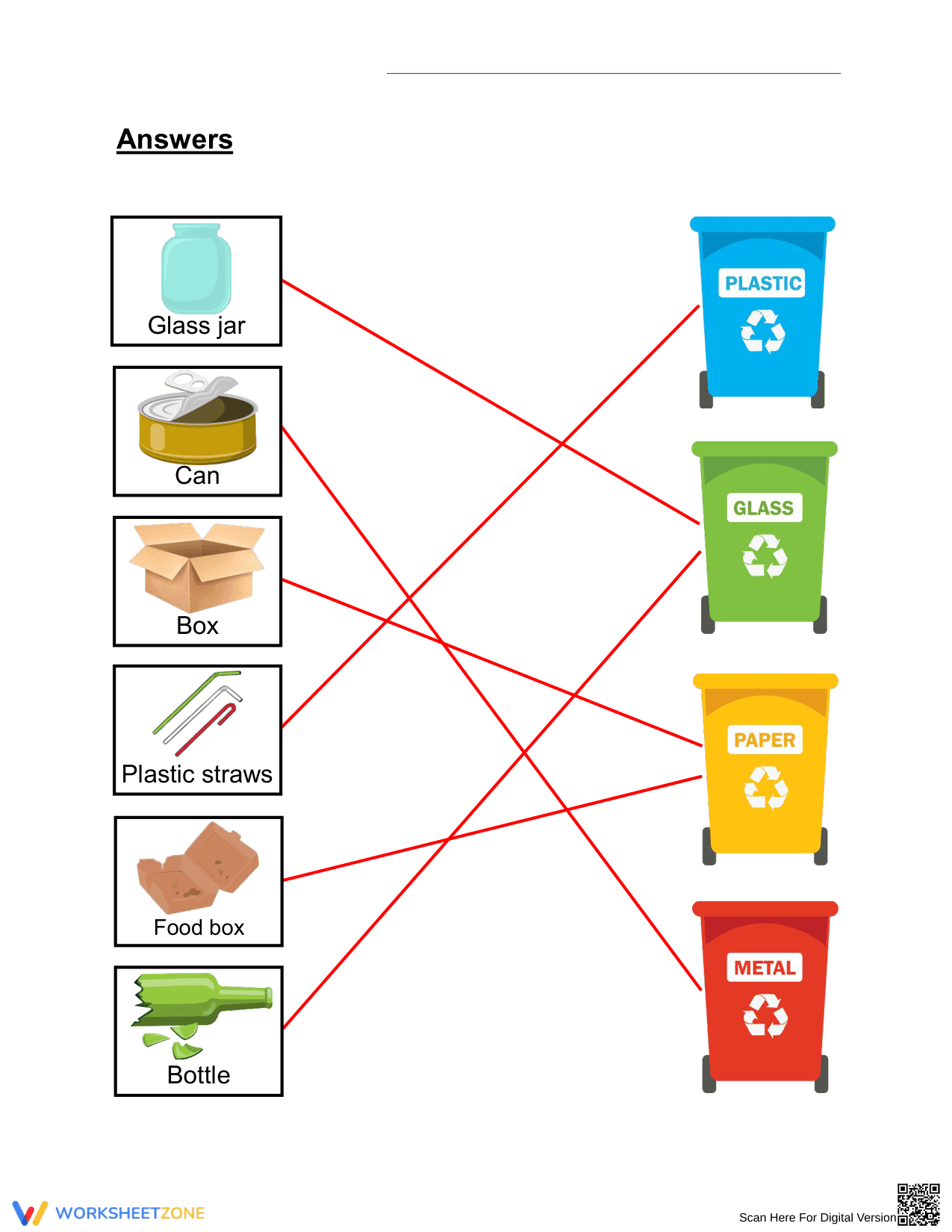
The worksheet features a clear, single-page layout with high-contrast illustrations of six common items: a glass jar, a metal can, a cardboard box, plastic straws, a food box, and a broken glass bottle. On the right side, students see four color-coded recycling bins labeled Plastic, Glass, Paper, and Metal. The download also includes a full-size answer key for quick checking or student self-correction.
Zero-Prep Workflow
This resource is designed for a smooth classroom experience. Teachers can print the single-page worksheet in less than 30 seconds and distribute it immediately to students. Because the instructions are visual and the labels are clear, students can begin working with zero setup time. Reviewing the answers takes approximately one minute using the provided key, making this an ideal grab-and-go solution for busy science blocks or unexpected substitute plans.
Standards Alignment
This activity aligns with `K-ESS3-3`, which requires students to communicate solutions that reduce human impact on the environment. By practicing the correct sorting of paper, plastic, metal, and glass, students demonstrate an understanding of how individual actions contribute to larger conservation efforts. Both standard codes can be copied directly into lesson plans, IEP goals, or district curriculum mapping tools.
How to Use It
Use this worksheet as a formative assessment after a direct instruction lesson on natural resources or waste management. It serves as an excellent check for understanding to see if students can differentiate between various packaging materials. A helpful tip for educators is to observe if students struggle with the Food box category, as it provides an opportunity to discuss mixed materials or soiled paper.
Who It's For
This resource is tailored for first-grade students but is also appropriate for Kindergarten or second-grade learners needing a review of recycling basics. It works well for English Language Learners due to the heavy reliance on visual cues and simple vocabulary. Pair this worksheet with a physical sorting bin activity or a short video on how recycling plants process materials.
The integration of sorting tasks into early childhood science curricula is supported by research into environmental stewardship. According to Fisher & Frey (2014), providing students with structured sorting activities enhances their ability to classify information and apply knowledge to real-world scenarios. This worksheet addresses the `K-ESS3-3` standard by requiring students to identify materials that can be recycled, reducing waste sent to landfills. By engaging with these six tasks, students practice the cognitive process of material identification, a precursor to complex ecological systems thinking. Early exposure to conservation practices improves long-term retention of environmental values. This document provides the necessary scaffolding for Grade 1 students to master recycling mechanics through a high-utility instructional design.


