


























Views
Downloads

Printable Grade 1 Recycling Worksheet: Conservation Activity
Paste this activity's link or code into your existing LMS (Google Classroom, Canvas, Teams, Schoology, Moodle, etc.).
Students can open and work on the activity right away, with no student login required.
You'll still be able to track student progress and results from your teacher account.
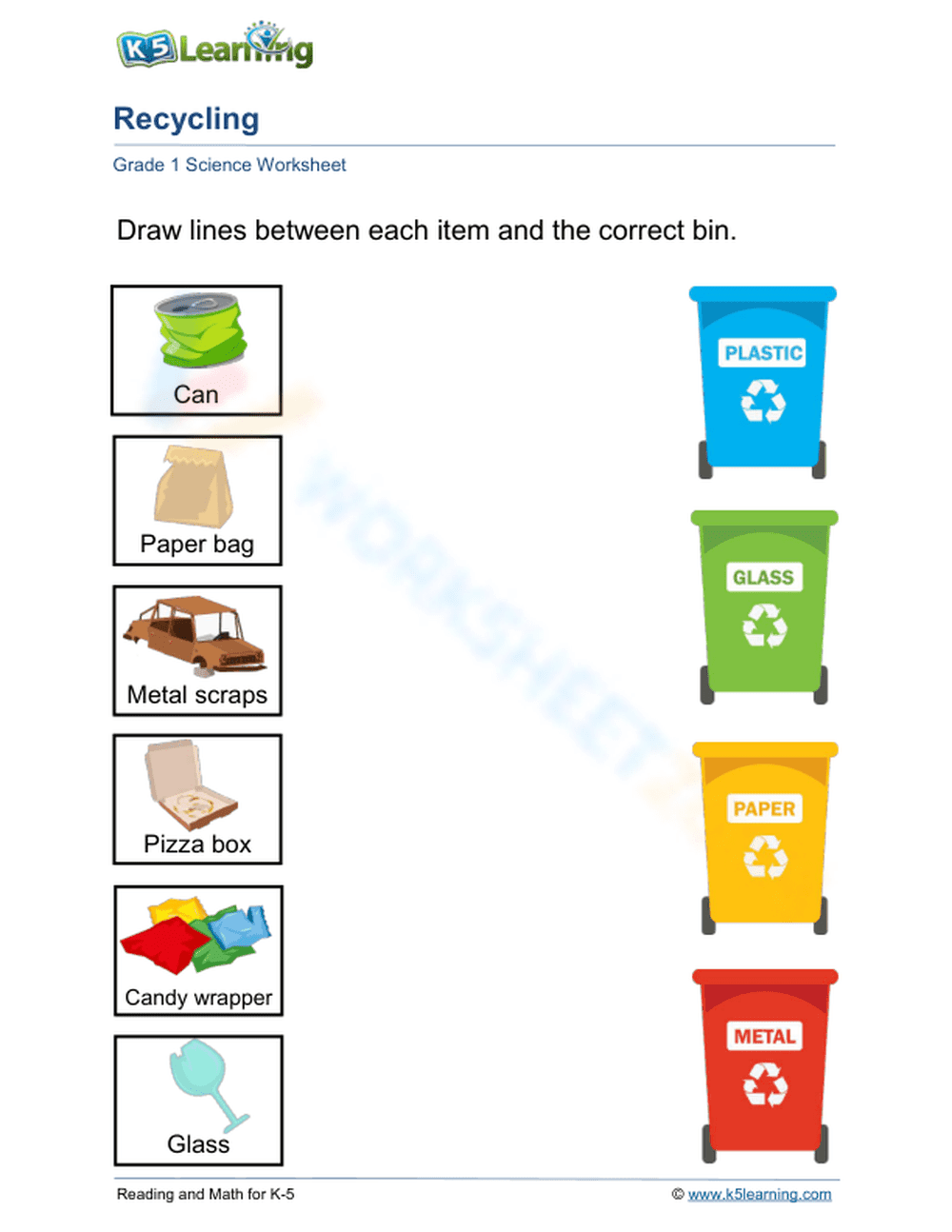
This Grade 1 recycling worksheet helps students understand environmental stewardship by sorting household waste into correct bins. By identifying materials like glass and paper, learners develop observational skills while mastering resource conservation. This activity ensures students distinguish between recyclable materials effectively, fostering a sense of responsibility for their local environment.
At a Glance
- Grade: 1 · Subject: Science & Environment
- Standard:
K-ESS3-3— Communicate solutions that will reduce the impact of humans on the environment- Skill Focus: Material identification and recycling sorting
- Format: 2 pages · 6 problems · Answer key included · PDF
- Best For: Independent practice or environmental science centers
- Time: 10–15 minutes
What's Inside
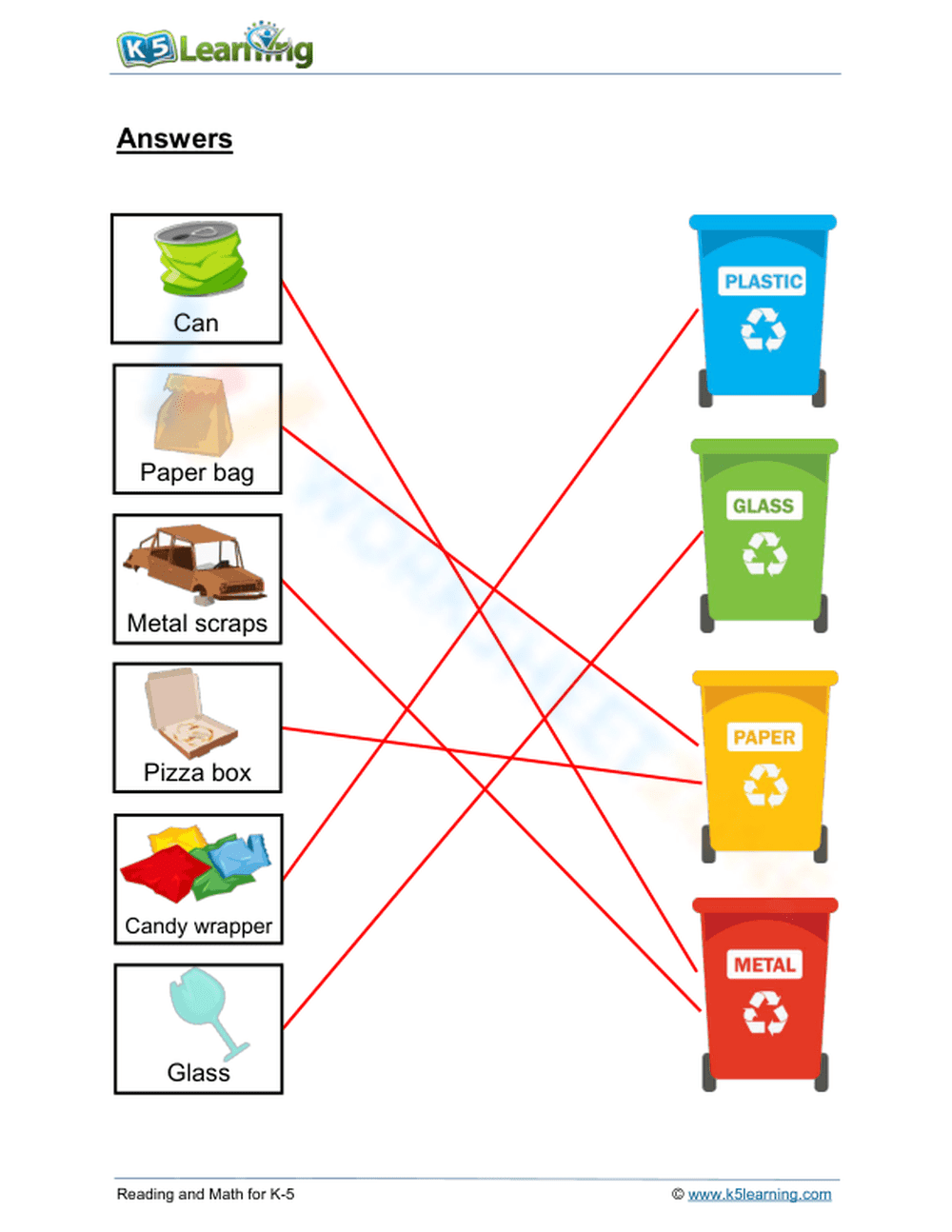
This resource contains a two-page PDF featuring a student worksheet and answer key. The worksheet displays six clear illustrations, such as a pizza box and metal scraps. Students use a matching format to connect these items to one of four color-coded recycling bins, facilitating visual recognition and motor skill development.
Zero-Prep Workflow
This zero-prep worksheet allows for immediate classroom implementation. First, print the student page (30 seconds). Next, distribute the sheets and explain the matching task (1 minute). Finally, review the answers using the provided key (2 minutes). Total teacher preparation time is under two minutes, making it ideal for emergency sub plans or quick transitions.
Standards Alignment
This activity aligns with `K-ESS3-3`, requiring students to communicate solutions that reduce human impact on the environment. By practicing waste sorting, students engage with practical conservation principles. This standard code can be copied directly into lesson plans, IEP goals, or district curriculum mapping tools to demonstrate compliance with national science frameworks.
How to Use It
Introduce this during a unit on Earth Day. Use it as a formative assessment after direct instruction on recyclable materials to observe student classification accuracy. Have students complete the activity independently in 10 minutes, then discuss why items belong in specific bins to reinforce the "reduce, reuse, recycle" hierarchy and clarify any misconceptions.
Who It's For
This resource is designed for Grade 1 but fits kindergarten enrichment or Grade 2 review. It is an excellent tool for English Language Learners due to visual cues and simple vocabulary. Pair this with a short reading passage about recycling or a hands-on sorting bin activity for a comprehensive environmental science experience.
According to the RAND AIRS 2024 report on environmental education, early introduction to conservation practices like recycling significantly increases long-term ecological literacy in primary students. This worksheet specifically addresses the K-ESS3-3 standard by teaching students how to identify and sort materials, a foundational skill in waste reduction. Research by Fisher & Frey (2014) emphasizes that visually-supported matching tasks are highly effective for scaffolding complex scientific concepts for early learners. By engaging with these 6 sorting problems, students build the cognitive bridges necessary to transition from simple identification to active participation in community sustainability efforts. The inclusion of a clear answer key ensures instructional consistency, while the direct alignment with NGSS frameworks provides a measurable pathway toward environmental mastery. This resource serves as a vital component for educators looking to integrate evidence-based science instruction into a busy daily schedule without sacrificing academic rigor or student engagement.


