


























Views
Downloads

Essential Fun with Circuits Worksheet | Grade 2 Science
Paste this activity's link or code into your existing LMS (Google Classroom, Canvas, Teams, Schoology, Moodle, etc.).
Students can open and work on the activity right away, with no student login required.
You'll still be able to track student progress and results from your teacher account.
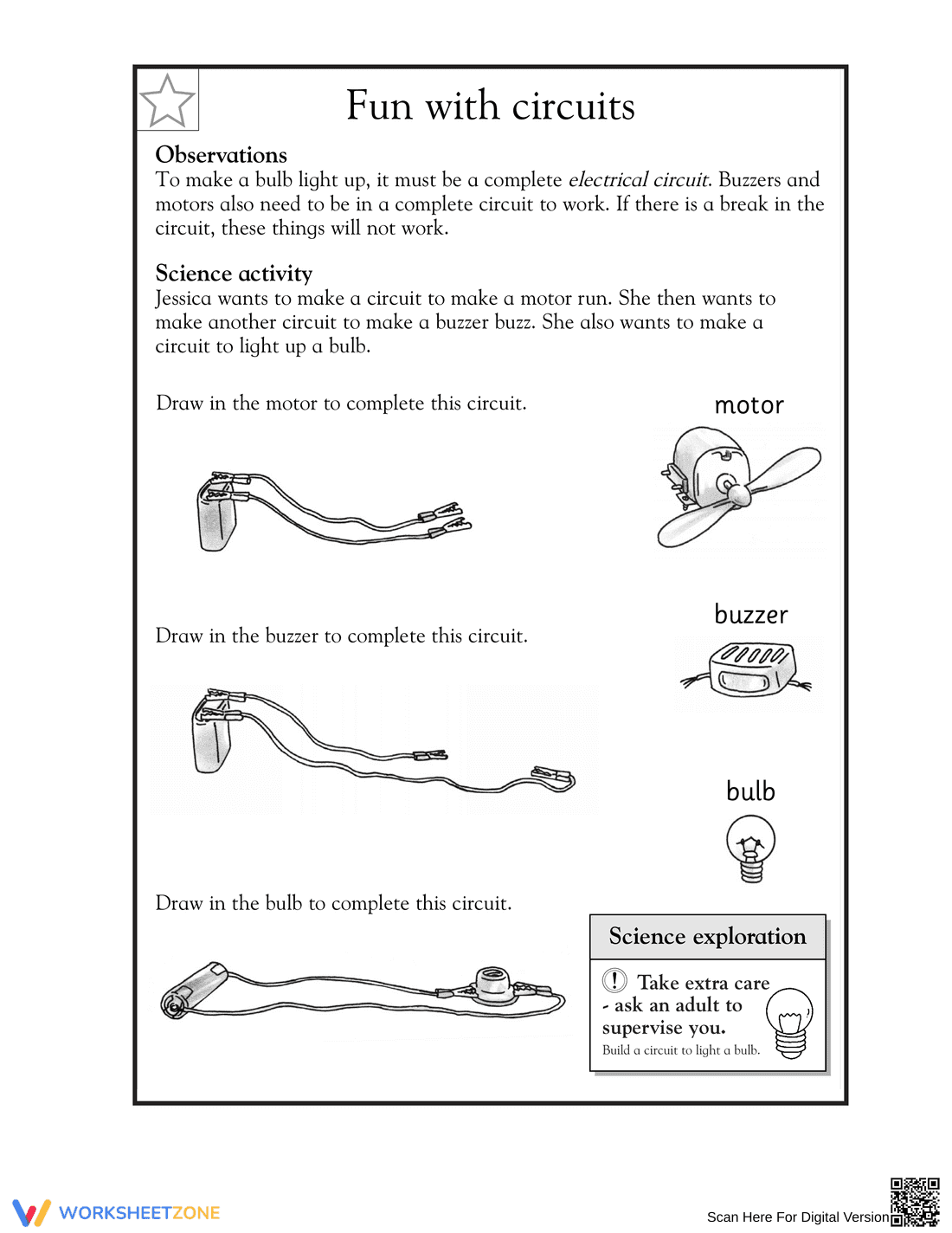
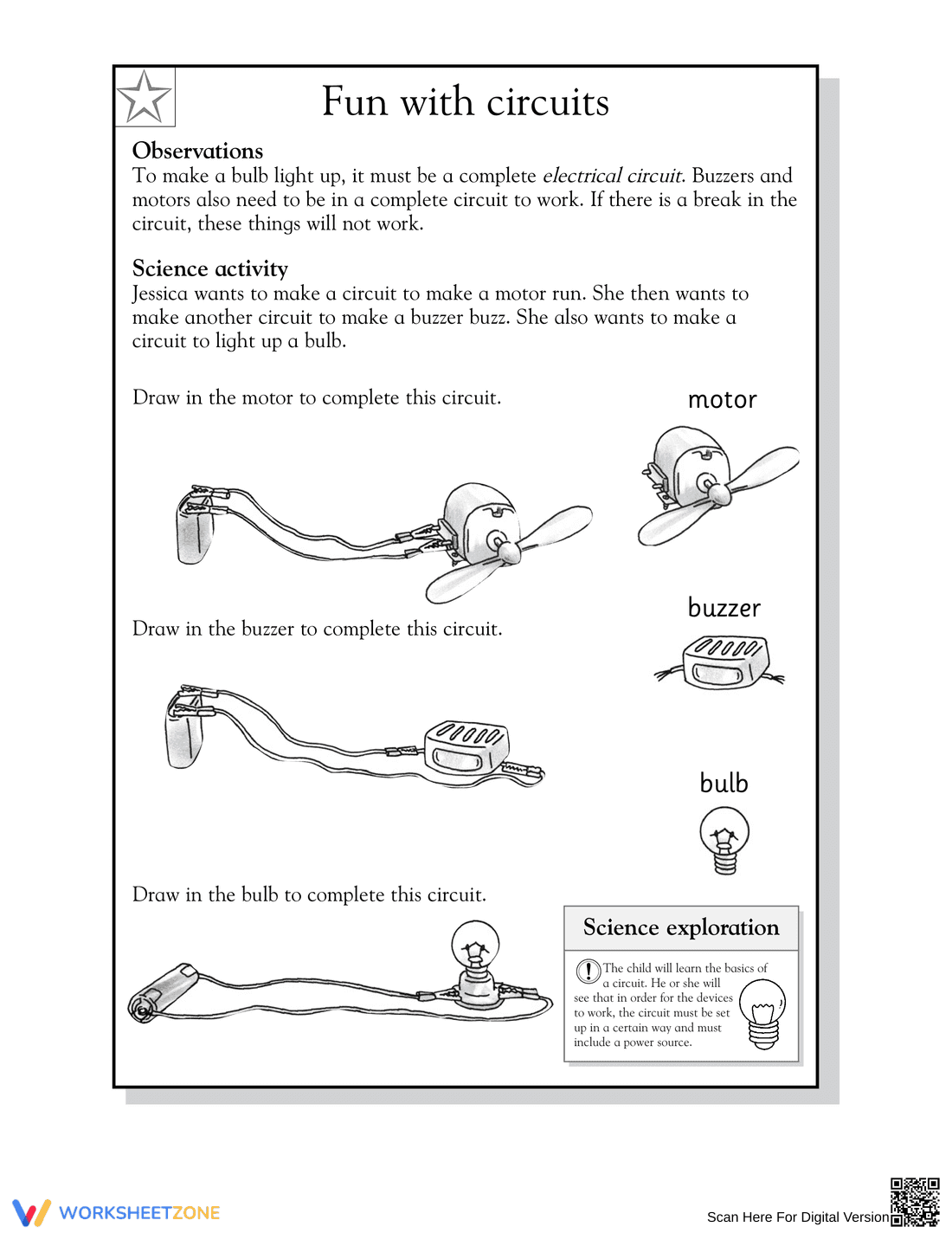
This Grade 2 Science worksheet introduces students to the fundamental concept of complete electrical circuits through engaging drawing activities. By identifying missing components in a circuit, learners understand how energy flows to power bulbs, buzzers, and motors. This resource provides a clear, visual path for students to master basic physical science principles effectively.
At a Glance
- Grade: 2 · Subject: Science
- Standard:
4-PS3-2— Energy transfer through electric currents to power objects- Skill Focus: Identifying and completing electrical circuits
- Format: 1 page · 3 problems · Answer key included · PDF
- Best For: Introduction to energy and electrical systems
- Time: 15–20 minutes
This one-page science resource features three distinct circuit diagrams, each missing a vital component: a motor, a buzzer, and a light bulb. Students must observe the existing wires and power sources (batteries) to determine where the missing part belongs to create a continuous loop. The worksheet includes clear illustrations and a concise explanation of circuit theory to support student independence.
Zero-Prep Workflow
The zero-prep workflow is designed for maximum efficiency in busy classrooms. Teachers can print the single-sheet PDF in less than 30 seconds. Distributing the material takes one minute, and the clear instructions allow students to start immediately. Reviewing the three completed drawings as a whole-class activity takes only five minutes total.
Standards Alignment
Aligned to 4-PS3-2, this worksheet requires students to "Make observations to provide evidence that energy can be transferred from place to place by sound, light, heat, and electric currents." By completing circuits for sound (buzzer), light (bulb), and motion (motor), students demonstrate their understanding of energy transfer. This standard code can be copied directly into lesson plans, IEP goals, or district curriculum mapping tools.
How to Use It
Use this worksheet as an introductory activity during a unit on energy or electricity. It serves as an excellent "hook" before a hands-on lab using real batteries and wires. Teachers should observe whether students connect the components to both ends of the wires, which is a key indicator of their understanding of the closed-loop concept. Expect students to complete the drawing tasks within 20 minutes of instruction.
Who It's For
This resource is ideal for Grade 2 students exploring physical science concepts. It is particularly helpful for visual learners who benefit from seeing the physical path of electricity. The worksheet pairs naturally with a classroom anchor chart showing a "closed" versus "open" circuit. It also works well as a quick formative assessment or a reliable science substitute teacher plan.
This educational resource focuses on the NGSS 4-PS3-2 standard, specifically the observation of energy transfer through electric currents. According to research from Fisher & Frey (2014) on the gradual release of responsibility, providing visual scaffolds like incomplete diagrams allows students to build mental models of complex systems before engaging in abstract reasoning. By identifying the specific action needed to complete a circuit—connecting a bulb, buzzer, or motor—students engage in evidence-based scientific inquiry. This worksheet aligns with the ScienceDirect TpT Analysis findings that high-quality science materials should prioritize observable phenomena to support early elementary conceptual development. The inclusion of three distinct outcomes for energy transfer ensures that students recognize the versatility of electrical power in everyday objects. Teachers can utilize this structured practice to bridge the gap between initial observations and the more complex design of functional electrical systems in later grades.


