


























Views
Downloads

Printable Fry Sight Words Chart | Grades 2-4
Paste this activity's link or code into your existing LMS (Google Classroom, Canvas, Teams, Schoology, Moodle, etc.).
Students can open and work on the activity right away, with no student login required.
You'll still be able to track student progress and results from your teacher account.
This printable reference tool helps elementary students master high-frequency vocabulary to build reading fluency. By providing a clear visual layout of the first 300 Fry sight words, the resource supports word recognition and spelling confidence. Students track their progress across three progressive lists to achieve grade-level reading benchmarks.
At a Glance
- Grade: Grade 2, Grade 3, Grade 4 · Subject: English Language Arts
- Standard:
CCSS.ELA-LITERACY.RF.2.3.F— Recognize and read grade-appropriate irregularly spelled words- Skill Focus: High-frequency word recognition
- Format: 3 pages · 300 words · Reference chart · PDF
- Best For: Daily reading practice and spelling reference
- Time: 10–15 minutes
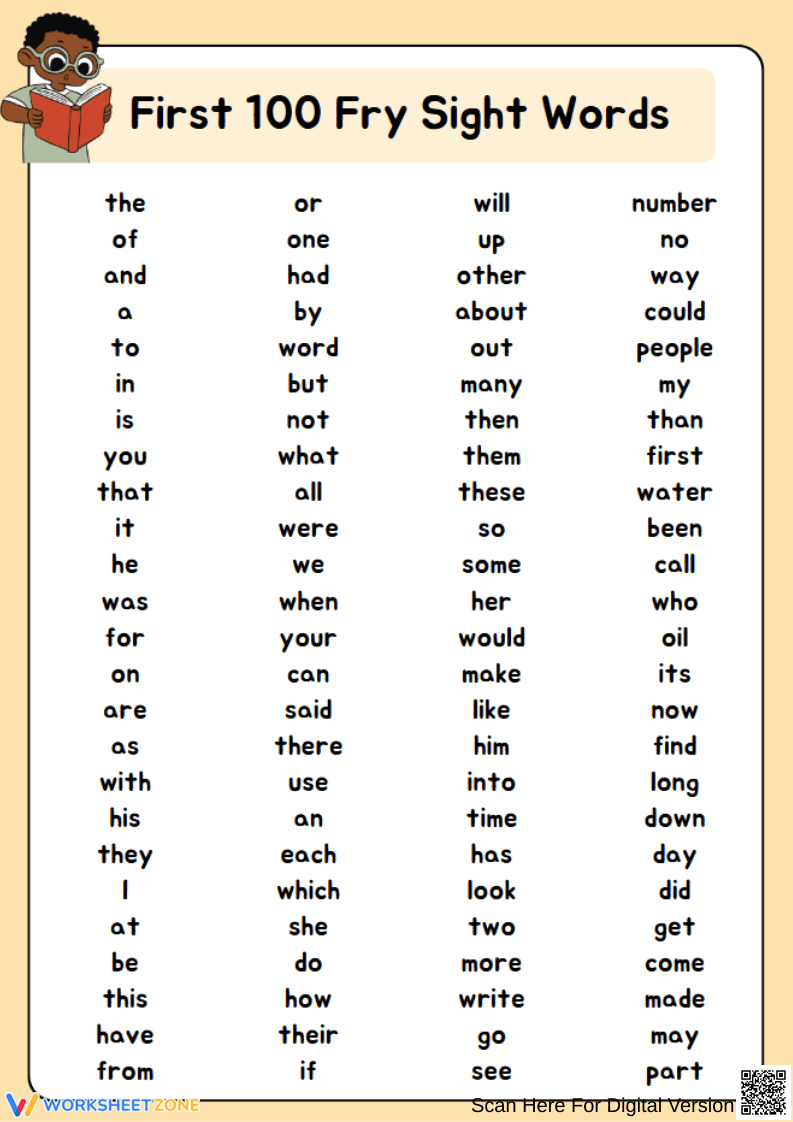
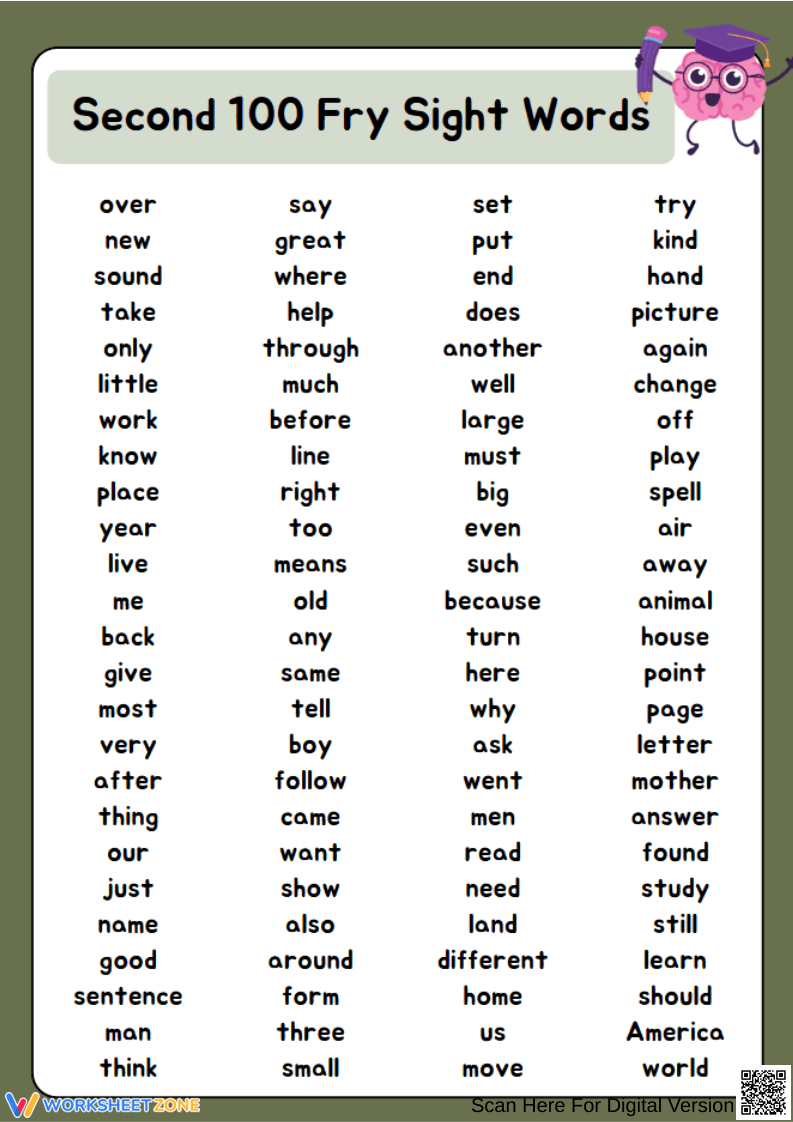
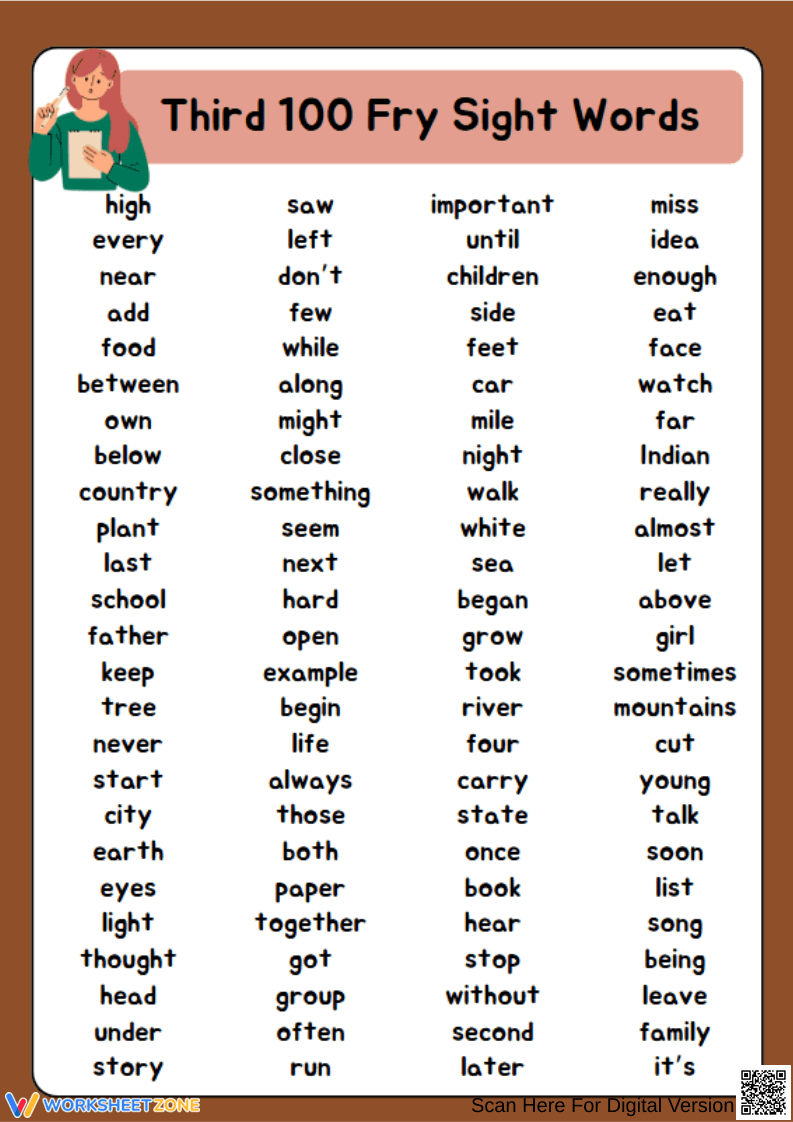
This resource contains three distinct pages, each featuring 100 high-frequency words organized in clean, easy-to-read columns. The structured layout helps young readers focus on one list at a time without feeling overwhelmed. Each page includes a colorful header and thematic cartoon graphics to keep students engaged during daily practice sessions.
- Below grade: The first page features the first 100 Fry words, focusing on foundational vocabulary with simple phonetic structures and high-frequency utility.
- On grade: The second page introduces the second 100 words, adding complexity with common irregular spellings and multi-syllable terms.
- Above grade: The third page presents the third 100 words, challenging advanced readers with sophisticated vocabulary and less common spelling patterns.
All three versions are included in this comprehensive PDF package to support differentiated instruction.
This resource aligns directly with CCSS.ELA-LITERACY.RF.2.3.F, which requires students to recognize and read grade-appropriate irregularly spelled words. It also supports foundational reading standards across third and fourth grades by reinforcing automatic word recognition. Both standard codes can be copied directly into lesson plans, IEP goals, or district curriculum mapping tools.
Introduce this chart during small-group reading instruction to assess word recognition speed. Teachers can observe student decoding strategies and note which words require targeted intervention. Alternatively, assign the lists for daily home practice, recommending 10 to 15 minutes of paired reading with a parent or peer.
This tool is designed for second, third, and fourth-grade students, including English language learners and those receiving special education services. It pairs naturally with decodable readers, spelling journals, and direct phonics instruction lessons to reinforce word acquisition.
According to research from Fisher & Frey (2014), systematic exposure to high-frequency words is essential for developing reading automaticity and comprehension. When students recognize words instantly, cognitive resources are freed up to focus on understanding the text. This reference chart aligns with those findings by organizing 300 key terms into manageable increments. By mastering these words, students build the foundational skills necessary to meet the expectations of standard CCSS.ELA-LITERACY.RF.2.3.F. Utilizing structured word lists in daily routines supports long-term retention and boosts reading confidence across diverse student populations. This tool provides the structured practice recommended by literacy experts to bridge the gap between decoding and fluent reading.


