


























Views
Downloads
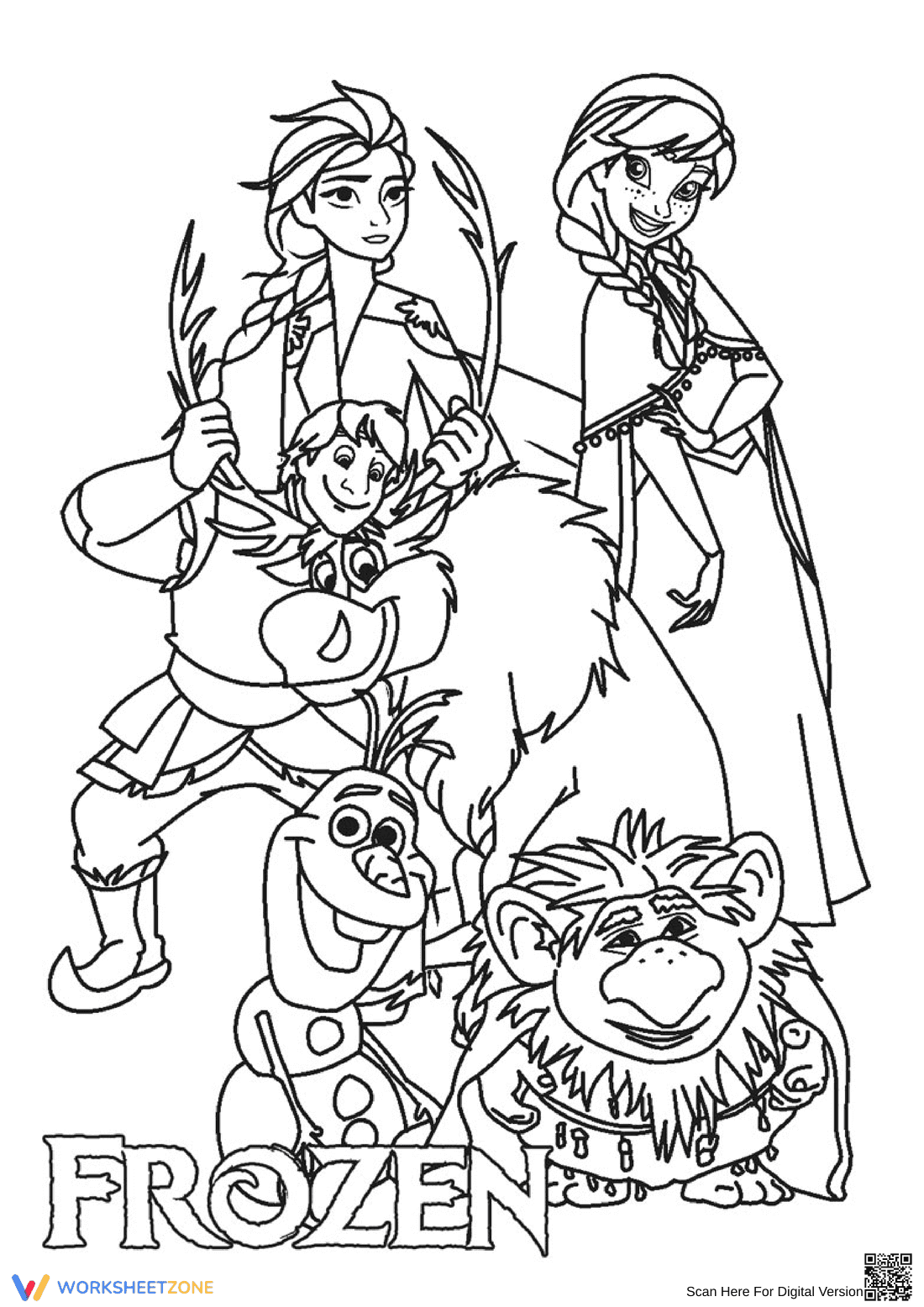

Frozen Coloring Page — Printable Kindergarten Worksheet
Paste this activity's link or code into your existing LMS (Google Classroom, Canvas, Teams, Schoology, Moodle, etc.).
Students can open and work on the activity right away, with no student login required.
You'll still be able to track student progress and results from your teacher account.
This printable Frozen coloring worksheet provides early learners with a creative outlet to develop essential fine motor skills while engaging with familiar characters. By focusing on hand-eye coordination and spatial awareness, students practice the precision required for early writing tasks. This activity transforms a simple artistic exercise into a foundational tool for classroom readiness.
At a Glance
- Grade: Kindergarten · Subject: Arts & Crafts
- Standard:
CCSS.ELA-LITERACY.SL.K.5— Add drawings or other visual displays to descriptions to provide additional detail- Skill Focus: Fine Motor Skills
- Format: 1 page · 1 task · Answer key not applicable · PDF
- Best For: Early finishers and morning work
- Time: 15–20 minutes
This single-page PDF features a high-quality line art illustration of the main cast from the movie Frozen. The worksheet includes Elsa, Anna, Kristoff, Sven, Olaf, and a troll, providing a variety of textures and shapes for students to color. It is an ideal resource for independent work or a quiet-time activity that requires zero teacher intervention.
The zero-prep workflow for this resource is designed for maximum efficiency. First, print the single-page PDF (30 seconds). Second, distribute the sheets to students along with crayons or colored pencils (1 minute). Third, review the completed work to observe pencil grip and color selection (30 seconds). Total teacher preparation time is under 2 minutes, making this an excellent option for sub plans.
The primary standard for this activity is `CCSS.ELA-LITERACY.SL.K.5`, which encourages students to add drawings to descriptions to provide detail. While an artistic task, coloring these characters allows students to visually represent their understanding of a narrative. This standard code can be copied directly into lesson plans, IEP goals, or district curriculum mapping tools.
Use this worksheet during the morning settling-in period to help students transition into a learning mindset. It also serves as an effective formative assessment tool; teachers can observe a student's tripod grip and pressure control while they work. Expect students to spend approximately 15 to 20 minutes completing the full scene with detail.
This resource is designed for Kindergarten and Grade 1 students who are refining their small muscle movements. It is also effective for English Language Learners as a low-stakes way to engage with classroom materials. Pair this worksheet with a character description lesson to reinforce vocabulary related to colors and emotions.
Research by Fisher & Frey (2014) emphasizes the importance of visual representation in the early childhood classroom as a precursor to formal literacy. This Frozen coloring worksheet aligns with CCSS.ELA-LITERACY.SL.K.5 by providing a structured environment for students to practice fine motor control and visual detailing. Engaging with familiar media characters has been shown to increase student persistence in task completion, particularly for learners who may struggle with traditional text-based assignments. By integrating artistic tasks into the daily routine, educators support the development of the intrinsic muscles in the hand, which are vital for the eventual mastery of handwriting. This resource serves as a bridge between creative play and academic discipline, ensuring that students remain motivated while meeting developmental milestones. The inclusion of multiple characters within a single frame encourages students to make choices about color theory and spatial relationships, further supporting cognitive growth in the early years.


