


























Views
Downloads
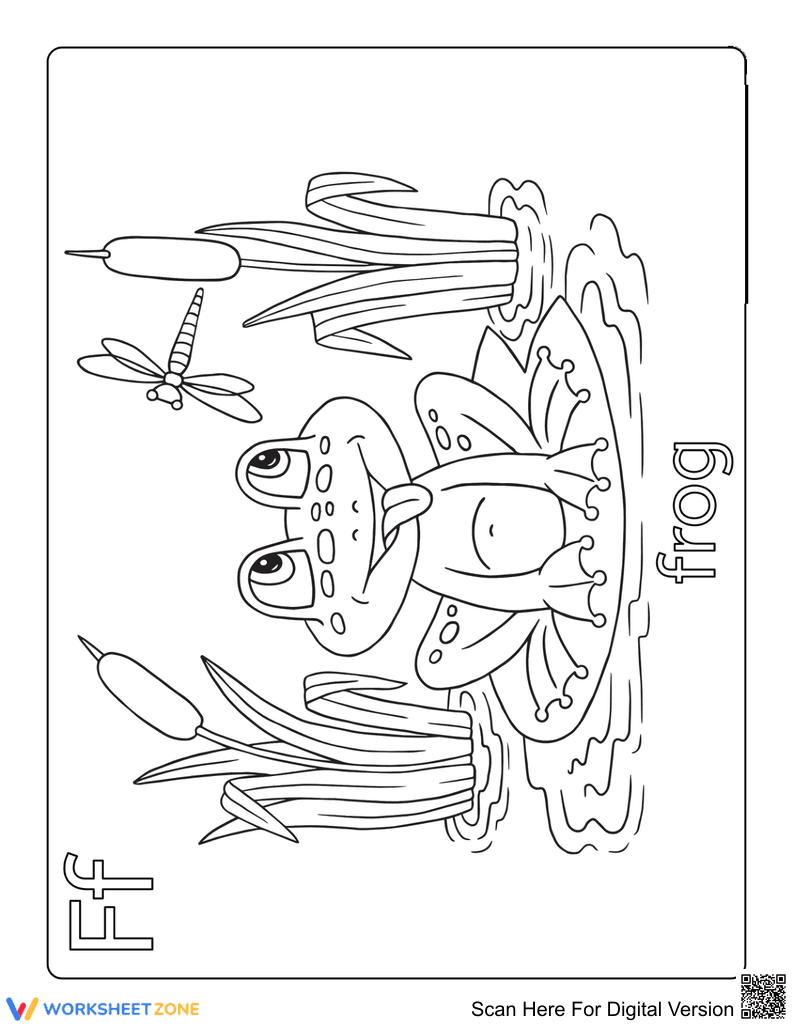

Frog in Pond Coloring Page | Essential Grade K-2 Activity
Paste this activity's link or code into your existing LMS (Google Classroom, Canvas, Teams, Schoology, Moodle, etc.).
Students can open and work on the activity right away, with no student login required.
You'll still be able to track student progress and results from your teacher account.
This Frog in Pond coloring worksheet provides early learners with a creative outlet to develop essential fine motor control. By engaging with the detailed illustration of a pond ecosystem, students practice the precision required for later writing tasks while exploring nature-themed vocabulary. It is a versatile tool for both artistic expression and quiet classroom transitions.
At a Glance
- Grade: Kindergarten–5 · Subject: English / Arts
- Standard:
CCSS.ELA-LITERACY.SL.K.5— Add drawings or visual displays to descriptions to provide additional detail- Skill Focus: Fine motor development
- Format: 1 page · 1 illustration · No answer key · PDF
- Best For: Early finishers and morning work
- Time: 15–20 minutes
What's Inside
This resource consists of a single-page, high-quality PDF featuring a central frog character on a lily pad. The scene includes a dragonfly and cattails, offering various textures and shapes for students to color. The clear, bold outlines are designed to help younger children stay within the lines, supporting hand-eye coordination without the need for complex instructions or teacher setup.
Zero-Prep Workflow
- Print: Select the PDF and print copies for your entire class in under 1 minute.
- Distribute: Hand out the pages along with crayons or colored pencils during transition periods or as a quiet-time activity.
- Review: Spend 1 minute asking students to identify the animals and plants they colored to reinforce vocabulary and oral language skills.
Standards Alignment
The primary alignment is `CCSS.ELA-LITERACY.SL.K.5`, which encourages students to add drawings or other visual displays to descriptions as desired to provide additional detail. This activity supports visual literacy and the ability to represent concepts through art. Both standard codes can be copied directly into lesson plans, IEP goals, or district curriculum mapping tools.
How to Use It
Use this worksheet as a calming morning work activity to settle students as they enter the classroom. It also serves as an effective formative-assessment tool; observe how students handle their coloring tools to identify those who may need additional support with pencil grip or spatial awareness. Expected completion typically takes 15 to 20 minutes depending on the student's detail level.
Who It's For
This page is ideal for Kindergarten through 2nd-grade students, though older children may enjoy it as a stress-relief activity. It is particularly useful for English Language Learners (ELLs) to practice identifying pond-life nouns. Pair this with a read-aloud book about life cycles or amphibians for a comprehensive science-integrated English lesson that builds background knowledge.
Research from Fisher & Frey (2014) emphasizes that visual representation and fine motor activities like coloring are foundational to the development of early literacy and writing stamina. By engaging in the Frog in Pond activity, students satisfy the `CCSS.ELA-LITERACY.SL.K.5` requirement for visual detail in communication. Studies in the NAEP framework suggest that students who develop strong hand-eye coordination through artistic tasks often show higher proficiency in letter formation and spatial organization on the page. This worksheet provides 1 focused illustration that bridges the gap between creative play and academic readiness. Providing structured opportunities for coloring allows educators to monitor developmental milestones in a low-stakes environment. This resource is a reliable addition to any early childhood curriculum focusing on the intersection of art and language arts, ensuring that students remain engaged while building the physical skills necessary for academic success.


