


























Views
Downloads
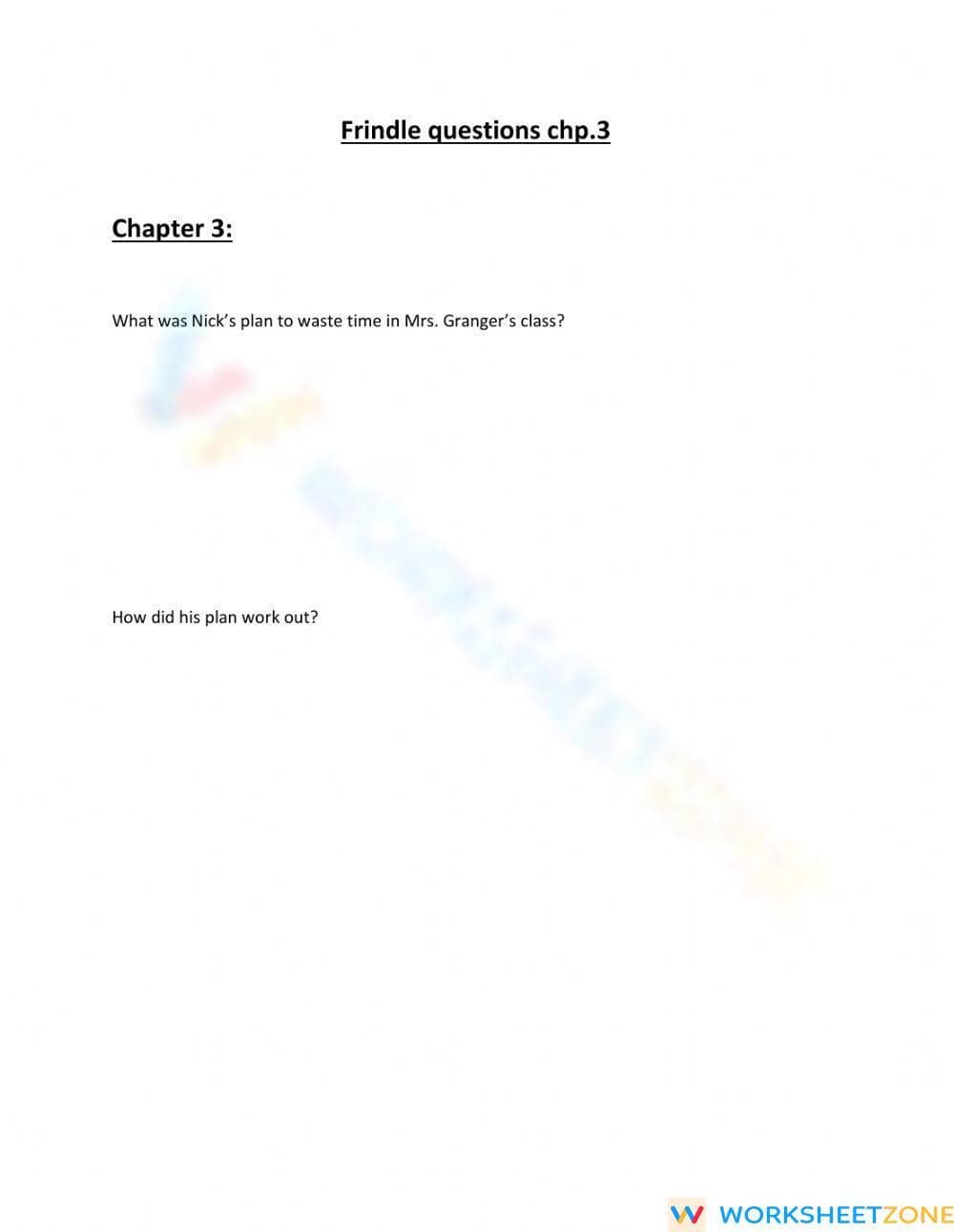

Grade 5 Frindle Chapter 3 — Printable No-Prep Worksheet
Paste this activity's link or code into your existing LMS (Google Classroom, Canvas, Teams, Schoology, Moodle, etc.).
Students can open and work on the activity right away, with no student login required.
You'll still be able to track student progress and results from your teacher account.
This Grade 5 Frindle Chapter 3 comprehension worksheet helps students process narrative developments through targeted, evidence-based questioning. By focusing on Nick Allen’s motivations and the immediate consequences of his actions in Mrs. Granger’s classroom, students build essential literary analysis skills while reinforcing their understanding of character development in Andrew Clements’ novel.
At a Glance
- Grade: 5 · Subject: English Language Arts
- Standard:
CCSS.ELA-LITERACY.RL.5.1— Quote accurately from literature to explain explicit meanings and draw deep inferences- Skill Focus: Evidence-Based Comprehension
- Format: 1 page · 2 problems · Answer key included · PDF
- Best For: Quick check for reading understanding in class
- Time: 10–15 minutes
What's Inside
This focused resource contains two primary open-ended response questions tailored to chapter three. The layout provides writing space for fifth-graders to formulate complete sentences, encouraging them to find specific details about Nick’s plan to delay the start of class. The PDF format ensures high-quality printing for any Frindle novel study unit.
Zero-Prep Workflow
This worksheet is designed for immediate classroom implementation with a total teacher preparation time of under two minutes. First, print copies for your class (30 seconds). Second, distribute the pages as students finish reading (15 seconds). Finally, review answers to gauge collective understanding (15 seconds). It is perfect for emergency sub plans.
Standards Alignment
The primary alignment is CCSS.ELA-LITERACY.RL.5.1, requiring students to quote accurately from a text when explaining explicit meanings and drawing inferences. By asking students to detail Nick's plan and its outcome, the worksheet necessitates close reading while inviting inference regarding Mrs. Granger's reaction. Both standard codes can be copied directly into lesson plans.
How to Use It
This resource is best used as a formative assessment immediately following a reading of chapter three. Use the questions as a "ticket to leave" to ensure students grasp the core conflict before moving on. During review, observe whether students identify the specific time-wasting tactic Nick employs to provide a baseline for character analysis.
Who It's For
This worksheet is primarily for fifth-grade students engaged in a Frindle literature circle. It is also suitable for Grade 4 students ready for character analysis or Grade 6 students needing comprehension review. The open-ended questions allow for natural differentiation; stronger writers can provide multi-sentence responses while others use sentence frames.
The use of targeted comprehension questions to verify literal and inferential understanding is a cornerstone of effective literacy instruction, as highlighted in the RAND AIRS 2024 report on elementary reading strategies. By focusing on specific narrative turning points—such as Nick’s attempt to manipulate the classroom environment—this resource aligns with evidence-based practices for improving reading endurance and retention. According to recent ScienceDirect TpT Analysis, structured response tasks that require students to synthesize character actions and consequences significantly improve long-term comprehension scores compared to multiple-choice formats alone. This worksheet implements these findings by requiring students to articulate the relationship between Nick’s plan and its actual result in Mrs. Granger's class. The alignment to CCSS.ELA-LITERACY.RL.5.1 ensures that students are practicing the exact skills necessary for meeting national literacy benchmarks while engaging deeply with the text’s unique narrative voice.


