




























Views
Downloads
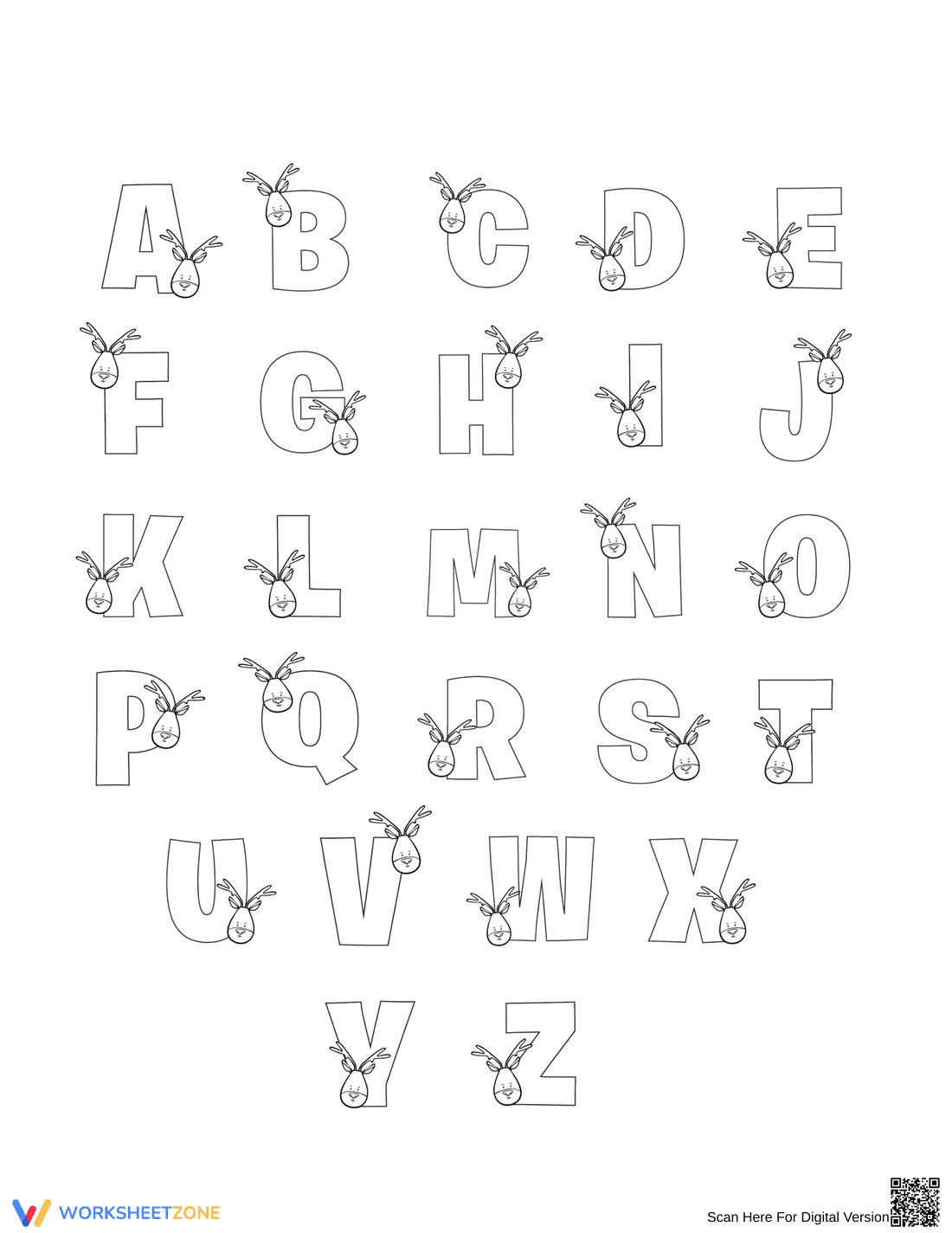

Printable Bubble Letters Worksheet | Kindergarten Alphabet

Paste this activity's link or code into your existing LMS (Google Classroom, Canvas, Teams, Schoology, Moodle, etc.).
Students can open and work on the activity right away, with no student login required.
You'll still be able to track student progress and results from your teacher account.
This Kindergarten alphabet worksheet helps young learners master letter recognition and fine motor control through engaging bubble letter coloring. By interacting with all 26 uppercase letters, students develop the visual-spatial awareness necessary for future handwriting success. It provides a creative, low-stress environment for early literacy development and artistic expression.
At a Glance
- Grade: Kindergarten · Subject: Handwriting
- Standard:
CCSS.ELA-LITERACY.L.K.1.A— Print many upper- and lowercase letters through tracing and coloring- Skill Focus: Alphabet Recognition & Fine Motor
- Format: 1 page · 26 tasks · No answer key needed · PDF
- Best For: Morning work or early finisher activity
- Time: 15–20 minutes
What's Inside
Inside this single-page PDF, you will find a complete set of uppercase bubble letters from A to Z. Each letter features a whimsical reindeer character, making the page visually appealing for holiday themes or animal-loving students. The thick outlines are specifically designed to help preschoolers and kindergarteners stay within the lines while coloring or practicing internal tracing.
Zero-Prep Workflow
- Print: Send the single-page PDF to your printer in seconds.
- Distribute: Hand out the sheets with crayons, markers, or colored pencils (1 minute).
- Review: Call out letter names as a group while students color their way through the alphabet (5 minutes).
Total teacher preparation time is under 2 minutes, making it an ideal sub-plan or transition resource.
Standards Alignment
This resource aligns with CCSS.ELA-LITERACY.L.K.1.A, which requires students to print many upper- and lowercase letters. While this worksheet focuses on the uppercase set, it serves as a foundational precursor to formal handwriting by familiarizing students with letter forms. This standard code can be copied directly into lesson plans, IEP goals, or district curriculum mapping tools.
How to Use It
Use this worksheet as a "Morning Work" activity to settle students as they enter the classroom. It also functions well as a formative assessment tool; observe how students grip their coloring utensils and whether they can identify specific letters upon request. Expect students to spend approximately 15 to 20 minutes completing the entire alphabet.
Who It's For
This worksheet is designed for Preschool and Kindergarten students who are beginning their literacy journey. It is particularly effective for students needing extra fine motor support or English Language Learners (ELLs) practicing basic vocabulary. Pair this with an alphabet anchor chart or a letter-sound song for a multi-sensory learning experience.
According to the NAEP, early exposure to letter forms and the development of fine motor skills are critical predictors of later reading fluency and writing proficiency. This worksheet targets CCSS.ELA-LITERACY.L.K.1.A by providing a structured yet creative way for students to interact with the 26 uppercase letters of the English alphabet. By combining coloring with letter recognition, the resource leverages the Fisher & Frey (2014) gradual release of responsibility model, allowing students to explore letter shapes independently after initial teacher modeling. Research from the RAND AIRS 2024 report suggests that high-quality, low-stakes practice materials significantly improve student engagement in early childhood settings. This printable PDF offers a reliable, evidence-based method for reinforcing foundational literacy skills without the cognitive load of complex instructions, ensuring that every student can achieve success in letter identification and fine motor development.


