


























Views
Downloads


Essential Equivalent Fractions Mastery Worksheet | Grade 3
Paste this activity's link or code into your existing LMS (Google Classroom, Canvas, Teams, Schoology, Moodle, etc.).
Students can open and work on the activity right away, with no student login required.
You'll still be able to track student progress and results from your teacher account.
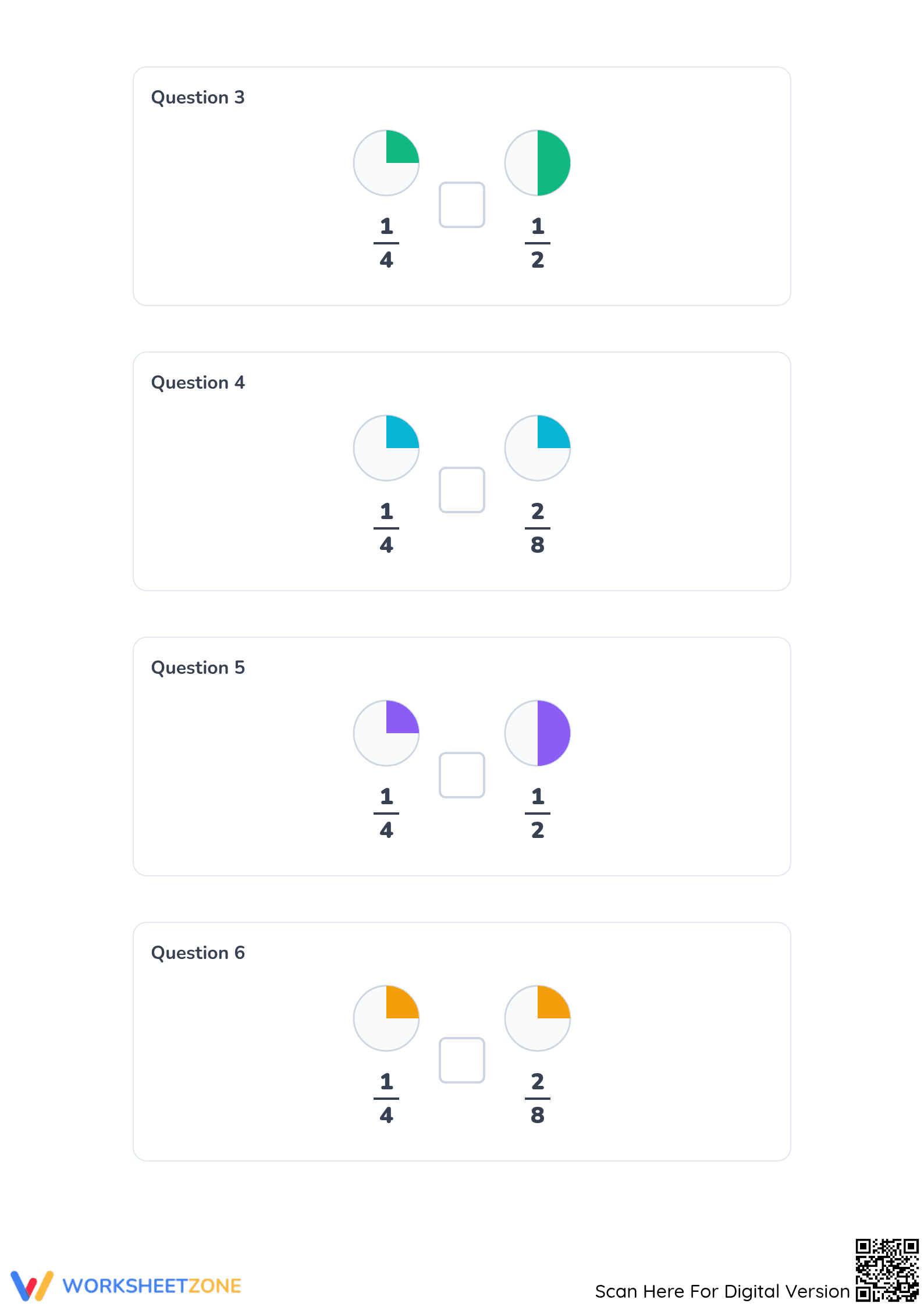
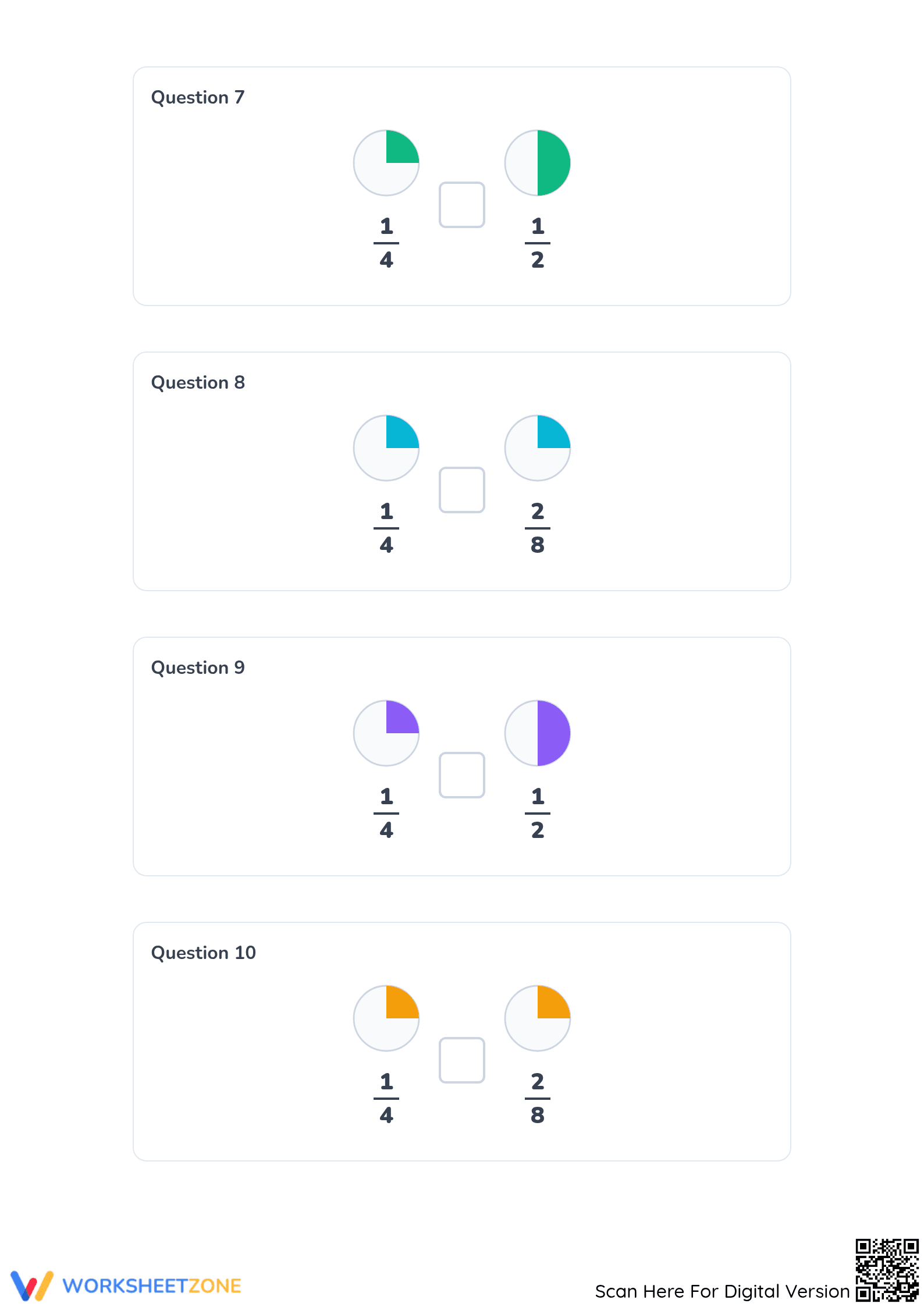
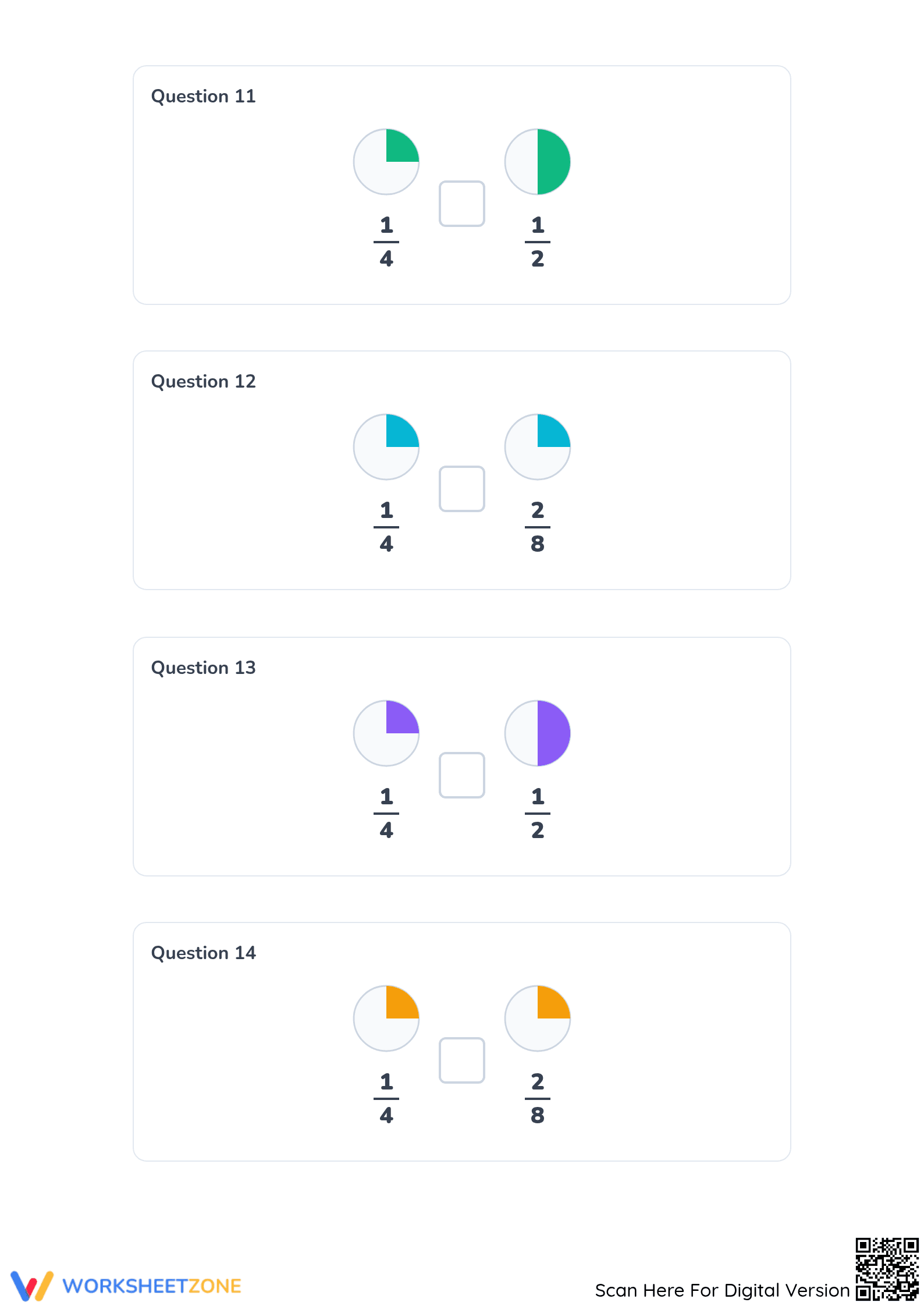
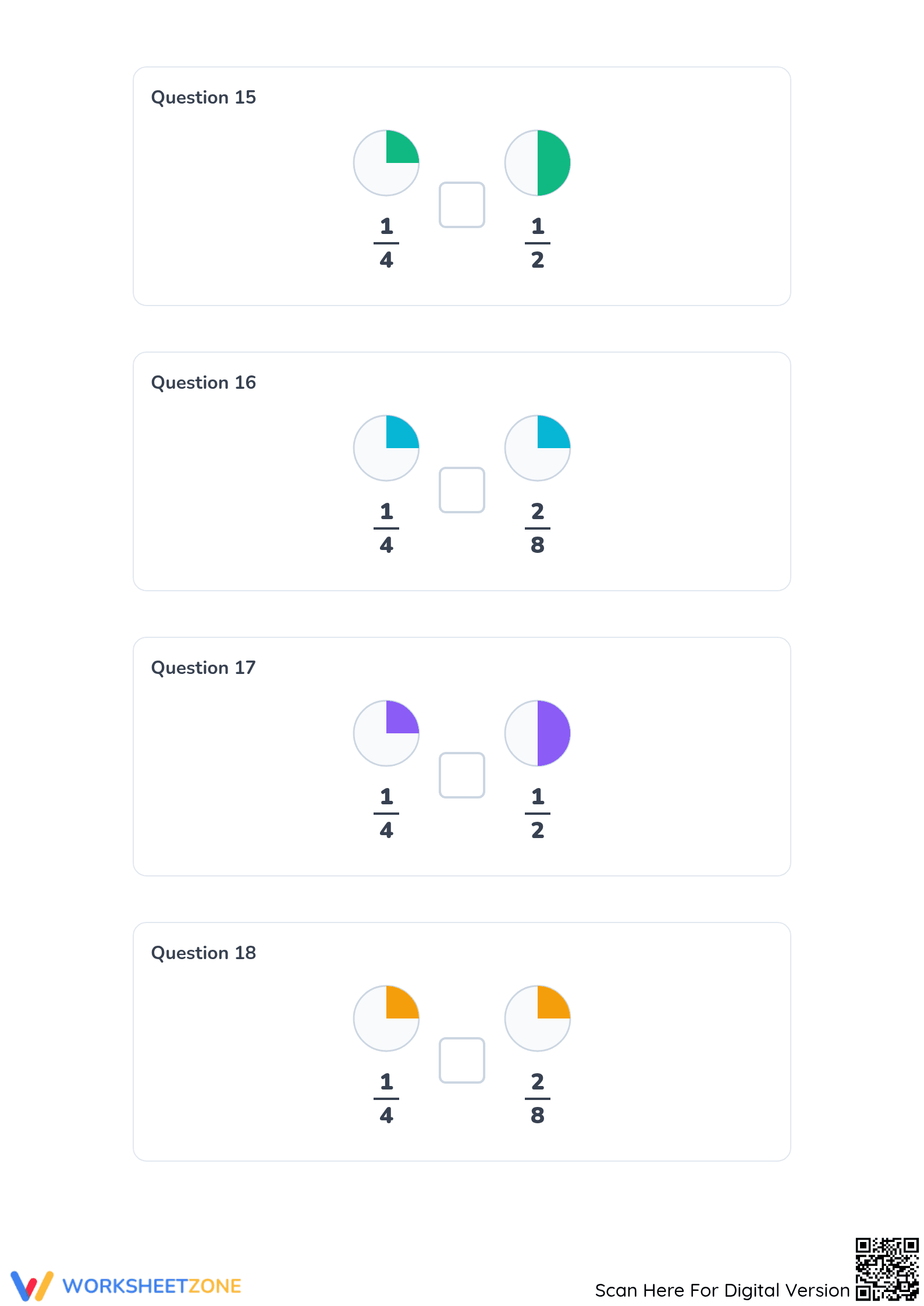
This Essential Equivalent Fractions Mastery worksheet provides Grade 3 students with intensive practice in identifying equivalent fractions using visual circle models. By comparing shaded regions across 32 different problems, learners develop a concrete understanding of how different numerical fractions can represent the same physical portion of a whole. This resource ensures foundational mastery before transitioning to abstract numerical procedures.
At a Glance
- Grade: 3 · Subject: Math
- Standard:
CCSS.MATH.CONTENT.3.NF.A.3— Understand two fractions as equivalent if they are the same size- Skill Focus: Equivalent Fractions with Visual Models
- Format: 5 pages · 32 problems · Answer key included · PDF
- Best For: Formative assessment and independent practice
- Time: 25–35 minutes
This comprehensive packet contains five pages of structured exercises designed to build fraction fluency. Each page features clear, high-contrast circle models representing two different fractions. Students must observe the shaded areas and use comparison symbols to determine equivalence. The document includes a score tracker on the front page, 32 distinct questions, and a full answer key for immediate feedback.
- Guided Practice: Students begin by comparing simple halves and quarters with clear visual parity to build initial confidence.
- Supported Practice: The worksheet introduces eighths and sixteenths, requiring closer attention to subdivided sections and spatial reasoning.
- Independent Mastery: Learners evaluate 32 unique pairings without scaffolds, solidifying their ability to recognize equivalent relationships at a glance.
This systematic progression follows a gradual-release model to ensure every student reaches the intended learning target.
This resource aligns directly with `CCSS.MATH.CONTENT.3.NF.A.3`, focusing on the fundamental concept that fractions are equivalent when they occupy the same space on a model. It specifically supports sub-standard 3.NF.A.3.A regarding size comparisons. Both standard codes can be copied directly into lesson plans, IEP goals, or district curriculum mapping tools to ensure instructional compliance and goal tracking.
Use this worksheet as a mid-unit formative assessment to gauge student understanding of fraction size. During direct instruction, teachers can project questions 1 through 4 to model the specific visual markers when comparing shaded regions. For independent work, set a timer for 20 minutes and observe if students are correctly identifying that 1/4 is not equal to 1/2 while 2/8 is equivalent to 1/4.
This resource is ideal for Grade 3 students beginning their fractions unit or Grade 4 learners requiring a visual review. It provides excellent differentiation for English Language Learners (ELLs) due to its heavy reliance on visual aids rather than complex word problems. Pair this worksheet with a physical fraction tile set or an anchor chart showing common equivalent fractions for maximum instructional impact.
According to RAND AIRS 2024, the use of visual models is critical for preventing the whole number bias where students assume larger denominators always represent larger values. Research by Fisher & Frey (2014) emphasizes that fractional sense is best developed through repeated exposure to area models before students move into purely algorithmic equivalence. This worksheet implements these findings by providing 32 opportunities for students to build mental images of fraction equivalence. By focusing on circle models, the resource leverages the most intuitive area representation for young learners. Educators using this tool support the development of spatial reasoning and numerical flexibility. Aligned with CCSS.MATH.CONTENT.3.NF.A.3, this printable packet ensures that students can demonstrate the plain-English skill of identifying equal fraction sizes through direct visual evidence, a prerequisite for success in middle-school algebraic thinking. Educators can confidently integrate this into their standard lesson planning or formative assessment routines.


