


























Views
Downloads
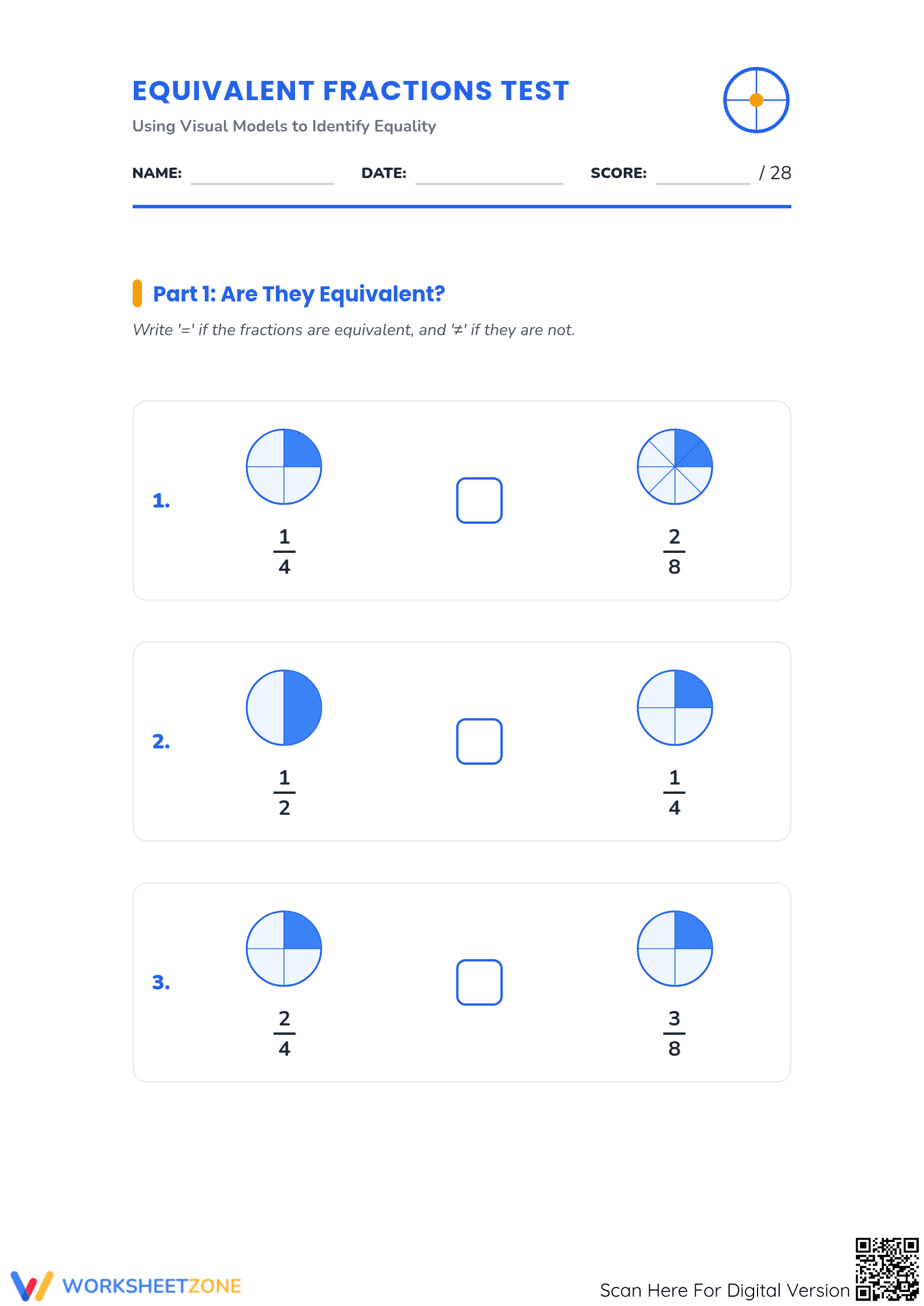
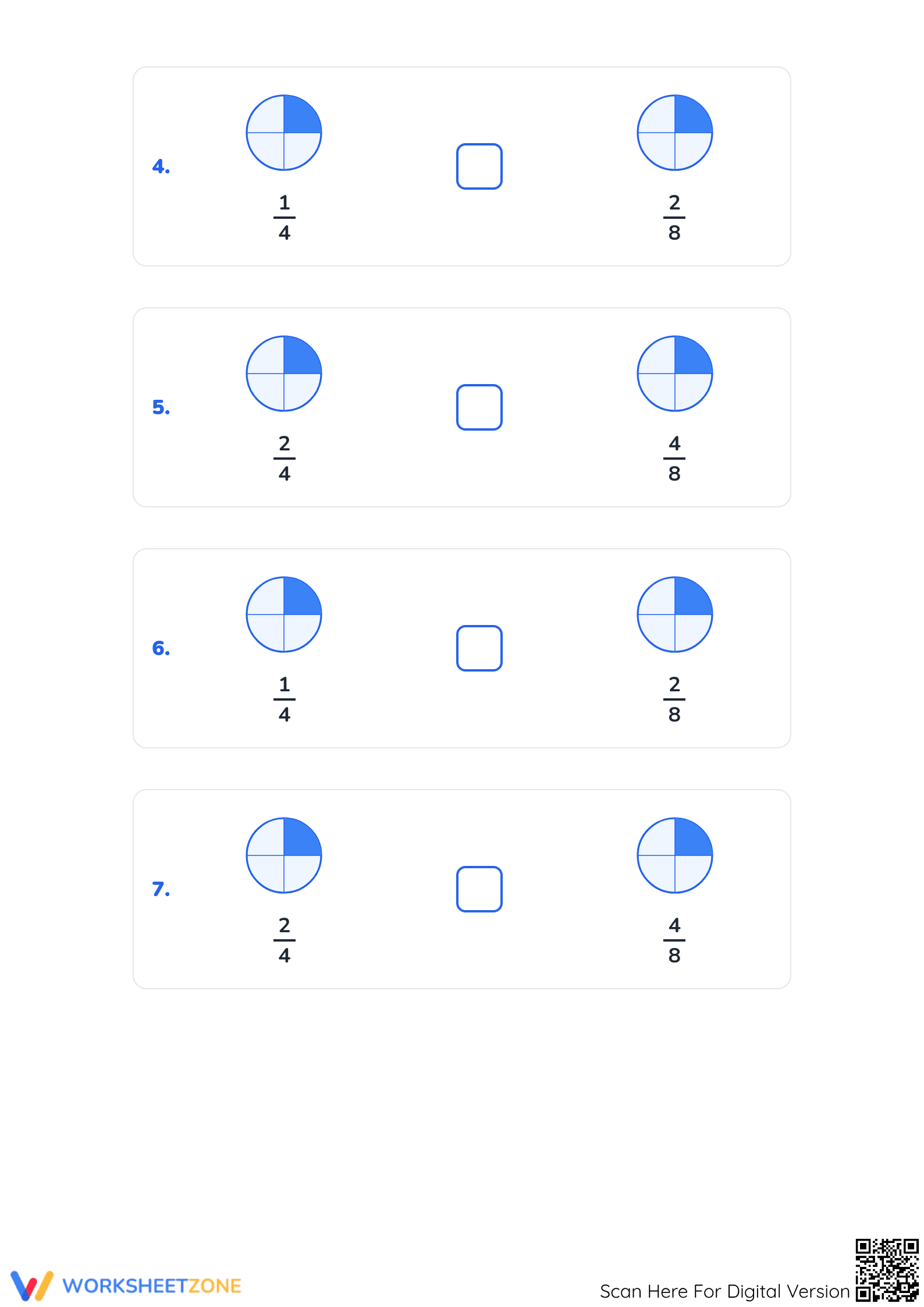
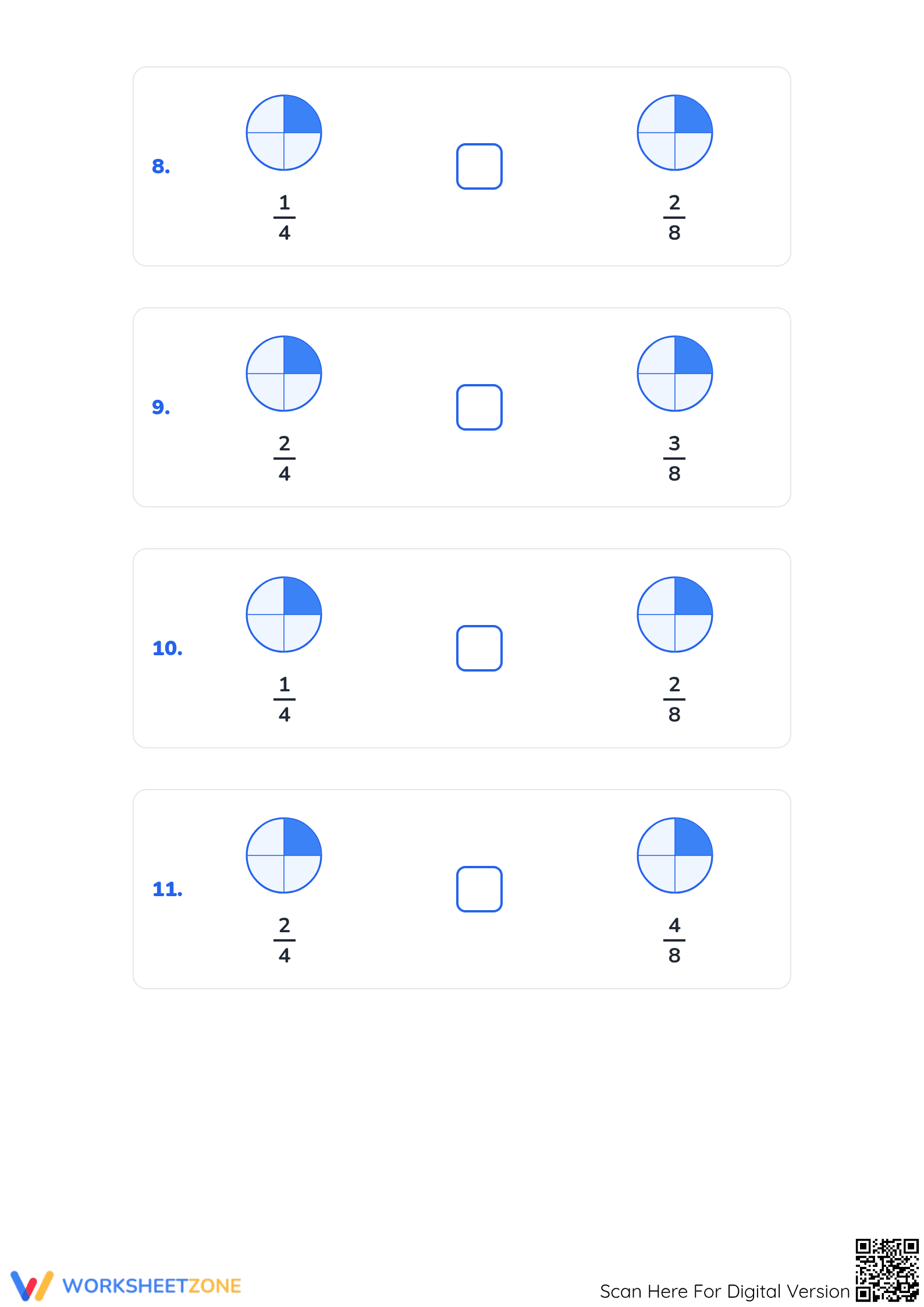
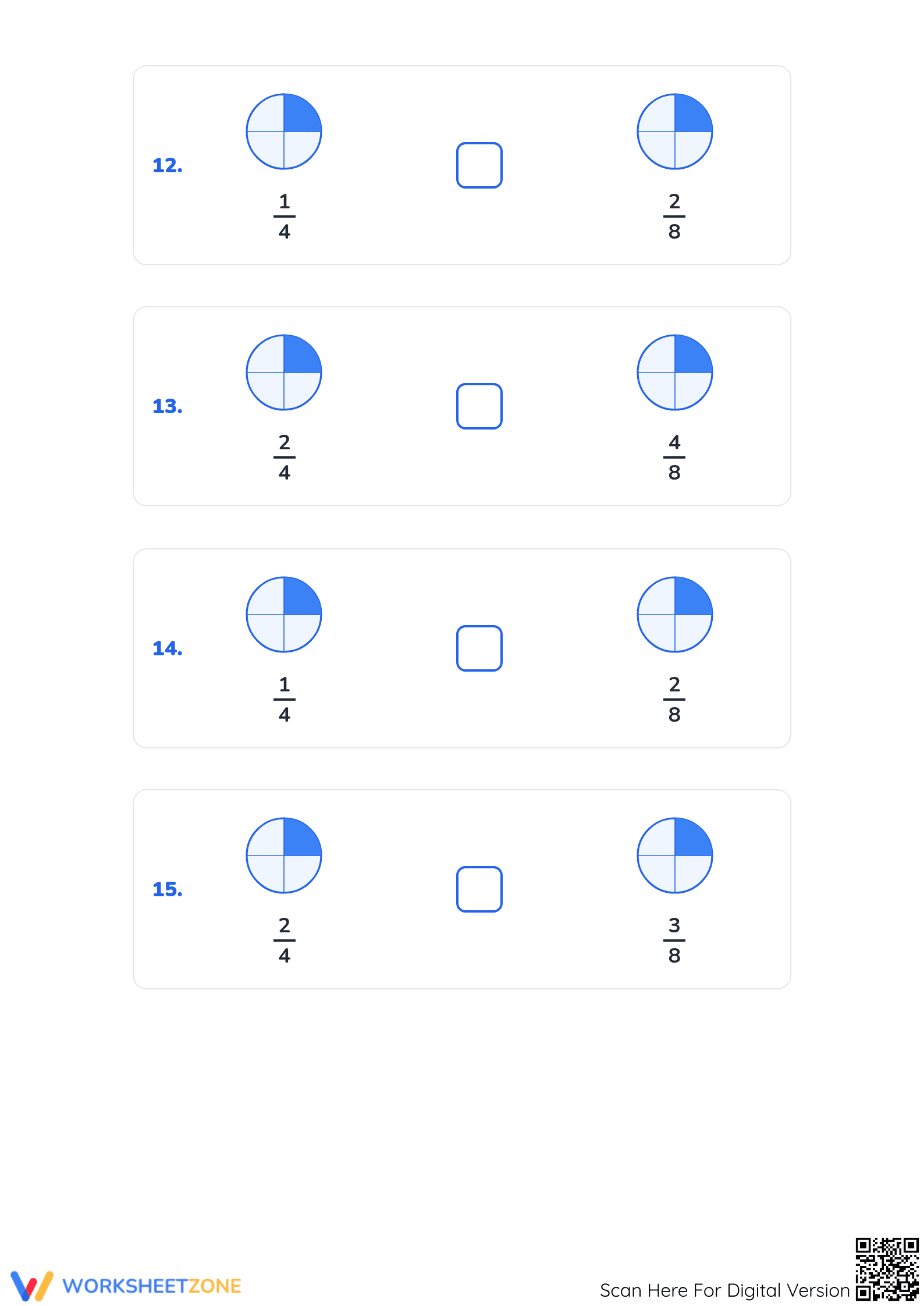

Essential Equivalent Fractions Test | Grade 4 Math
Paste this activity's link or code into your existing LMS (Google Classroom, Canvas, Teams, Schoology, Moodle, etc.).
Students can open and work on the activity right away, with no student login required.
You'll still be able to track student progress and results from your teacher account.
Mastery of equivalent fractions is a foundational pillar for success in middle school mathematics. This comprehensive assessment focuses on using visual models to identify and verify fraction equality. By connecting numerical values to geometric representations, students develop a deeper conceptual understanding of how different numerators and denominators can represent the same part of a whole.
At a Glance
- Grade: 4 · Subject: Math
- Standard:
4.NF.A.1— Explain fraction equivalence by using visual models and generating equivalent fractions- Skill Focus: Equivalent Fractions Recognition
- Format: 5 pages · 28 problems · Answer key included · PDF
- Best For: Summative assessment or intensive skill review
- Time: 30–45 minutes
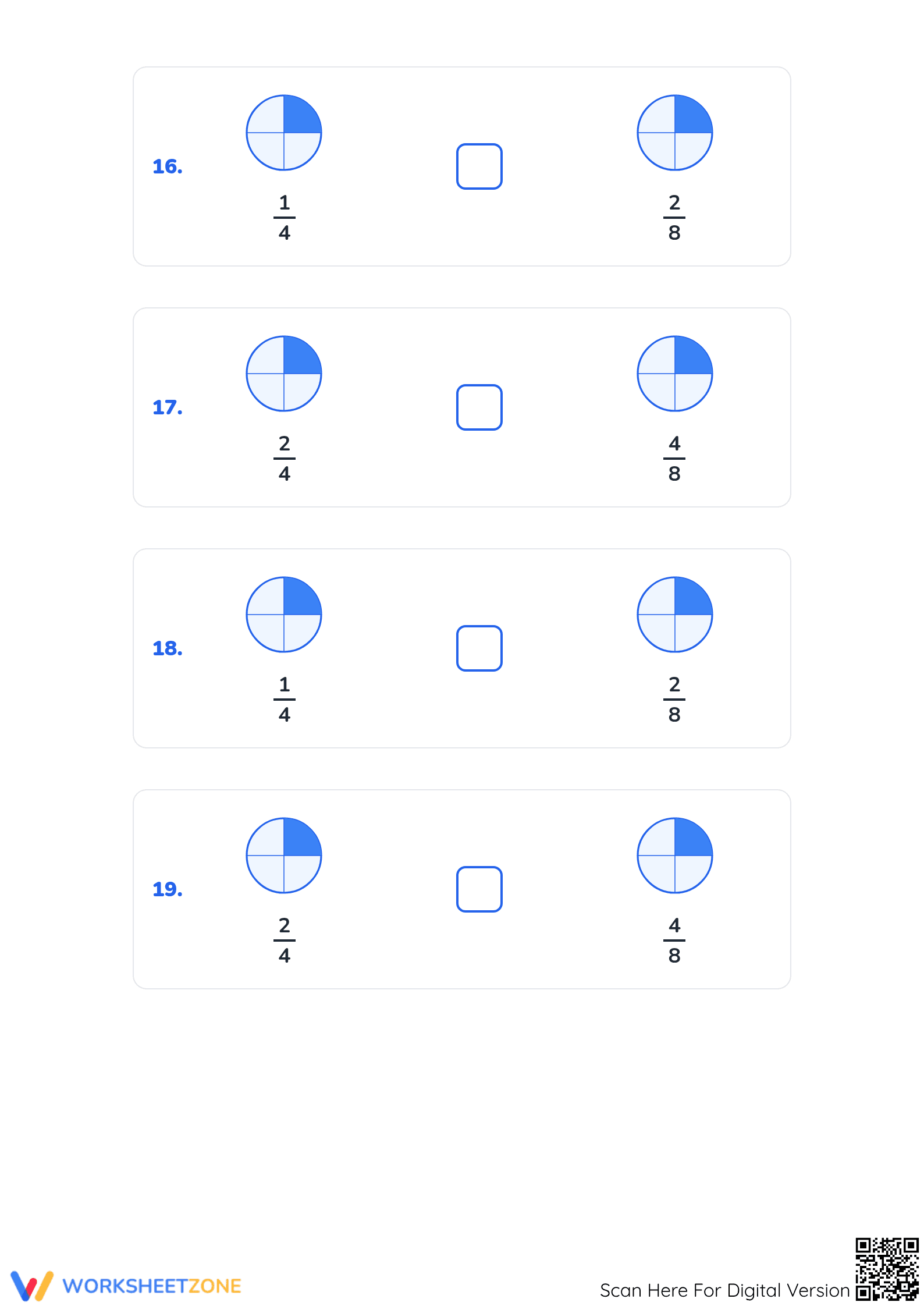
This five-page PDF resource provides a structured testing environment for learners. It contains 28 distinct problems, each presenting a pair of fractions accompanied by visual pie models. The clean layout includes dedicated fields for student name, date, and scoring. A complete answer key is provided to facilitate rapid grading and immediate student feedback during classroom reviews.
Skill Progression
- Guided Practice: The initial problems utilize simple fractions like 1/2 and 2/4 to ground students in basic equality concepts using clear visual cues.
- Supported Practice: Mid-level tasks introduce larger denominators, such as eighths and tenths, requiring more precise visual discrimination and comparison.
- Independent Practice: The final set of problems challenges students to compare fractions with varying numerators and denominators without immediate scaffolding.
This gradual-release approach ensures that students move from intuitive recognition to rigorous mathematical verification of fraction equivalence.
Standards Alignment
This worksheet is strictly aligned to 4.NF.A.1. This standard requires students to "explain why a fraction a/b is equivalent to a fraction (n × a)/(n × b) by using visual fraction models, with attention to how the number and size of the parts differ even though the two fractions themselves are the same size." This standard code can be copied directly into lesson plans, IEP goals, or district curriculum mapping tools.
How to Use It
This resource is ideal as a summative assessment following a unit on fractions. Assign it during a dedicated testing block to evaluate individual student proficiency. Alternatively, use it as a formative tool by observing students as they work through the visual models, noting those who struggle to relate the shaded areas to the numerical fractions. Expect completion within a single class period.
Who It's For
Designed primarily for Grade 4 students, this assessment is also suitable for Grade 5 learners requiring intervention or Grade 3 students ready for extension. It pairs naturally with fraction tile manipulatives or a digital passage on fraction equivalence to provide a multi-modal learning experience that caters to diverse educational needs.
The ability to visualize fraction equivalence is critical for future success in algebraic reasoning. According to the NAEP 2024 framework, students who can fluently navigate between symbolic and visual representations of fractions demonstrate significantly higher proficiency in rational number operations. This worksheet leverages research-backed visual modeling strategies, similar to those highlighted in the Fisher & Frey (2014) gradual release of responsibility model. By focusing on 4.NF.A.1, it ensures that learners are not merely memorizing cross-multiplication tricks but are instead building a robust mental map of part-to-whole relationships. This 28-problem set provides the repetition necessary to cement these concepts, moving students from basic recognition to conceptual mastery. Educators can utilize this data-driven resource to identify specific gaps in student understanding and tailor subsequent instruction accordingly.


