


























Views
Downloads

Essential Equivalent Fractions Worksheet | Grade 4 Math
Paste this activity's link or code into your existing LMS (Google Classroom, Canvas, Teams, Schoology, Moodle, etc.).
Students can open and work on the activity right away, with no student login required.
You'll still be able to track student progress and results from your teacher account.
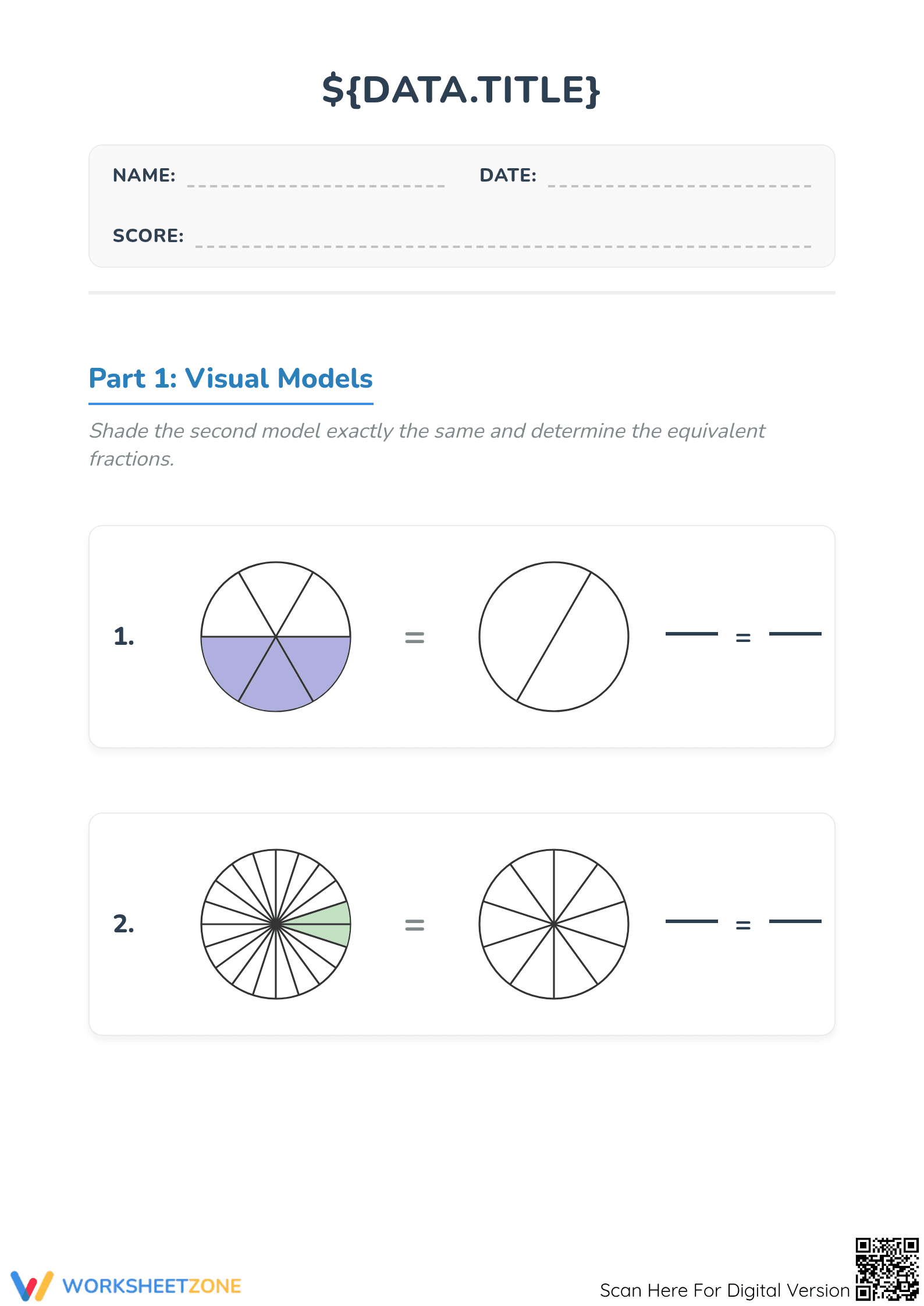
Mastery of fractions begins with a deep conceptual understanding of equivalence. This Grade 4 worksheet guides students through the process of identifying and creating equivalent fractions using clear visual area models. By bridging the gap between pictorial representations and abstract numerical operations, students develop the essential fluency required for advanced rational number mathematics.
At a Glance
- Grade: 4 · Subject: Math
- Standard:
CCSS.MATH.CONTENT.4.NF.A.1— Explain why fractions are equivalent by using visual fraction models to show relationships- Skill Focus: Visual and Numerical Equivalent Fractions
- Format: 5 pages · 14 problems · Answer key included · PDF
- Best For: Small group instruction and independent practice
- Time: 25–35 minutes
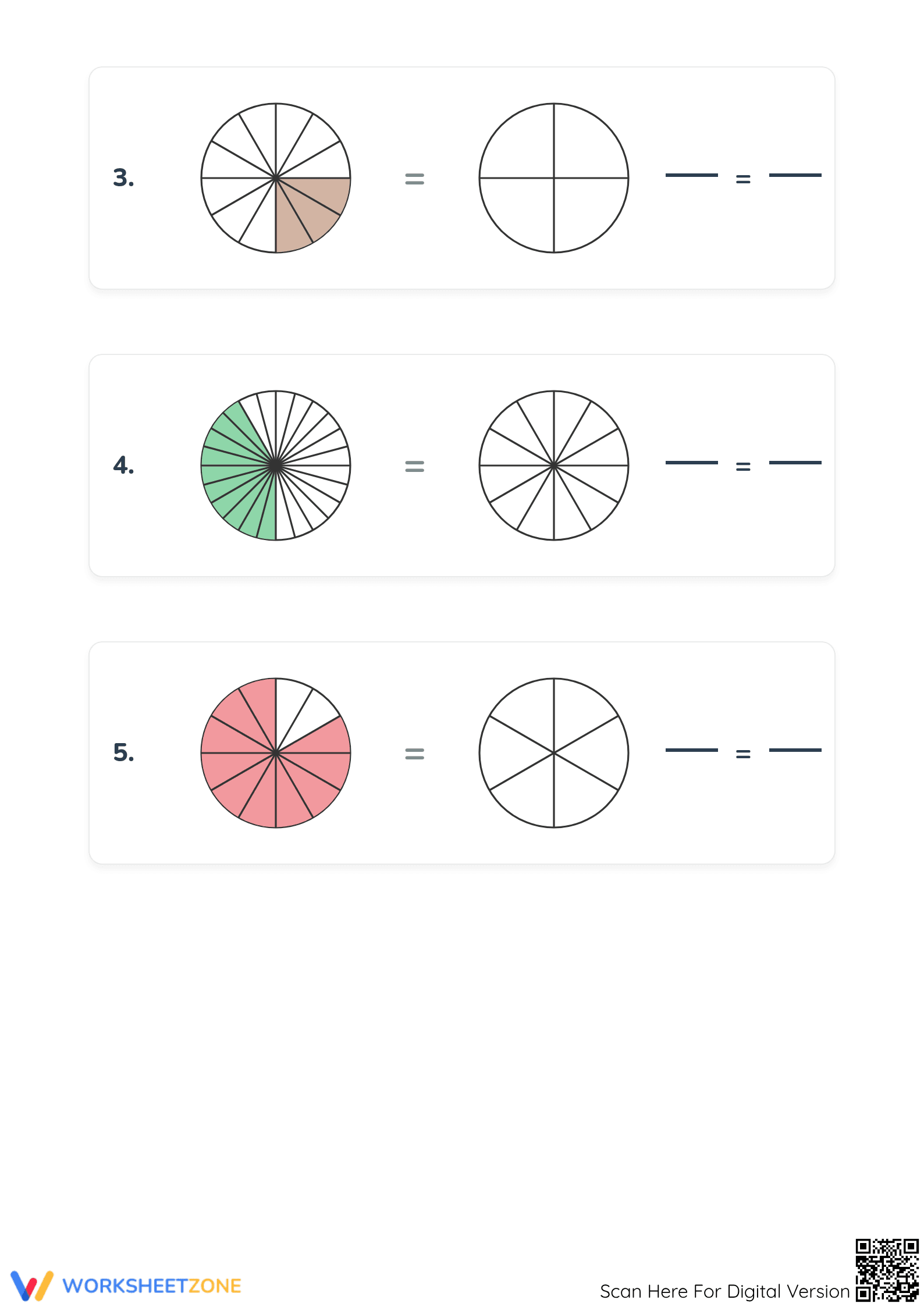
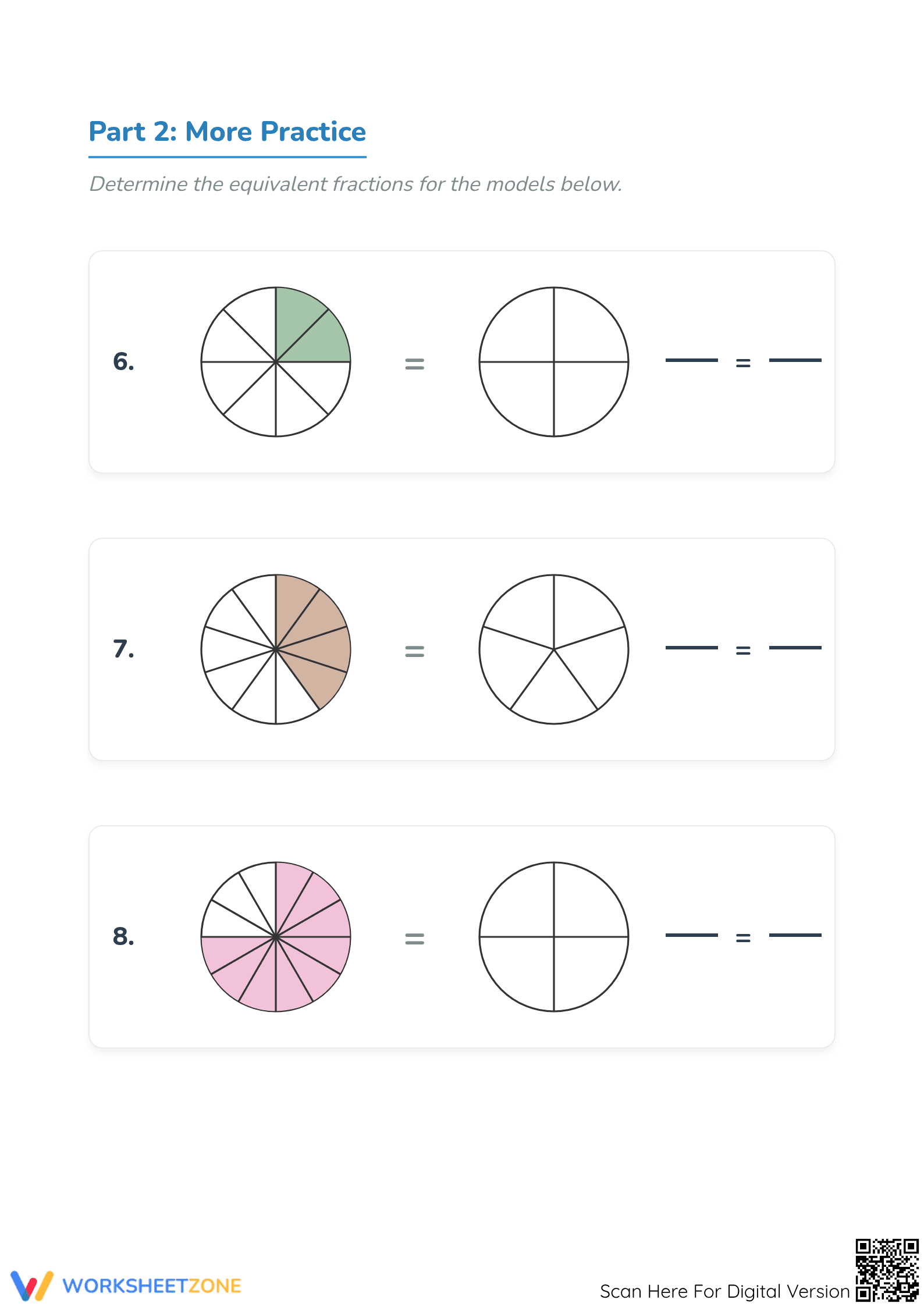
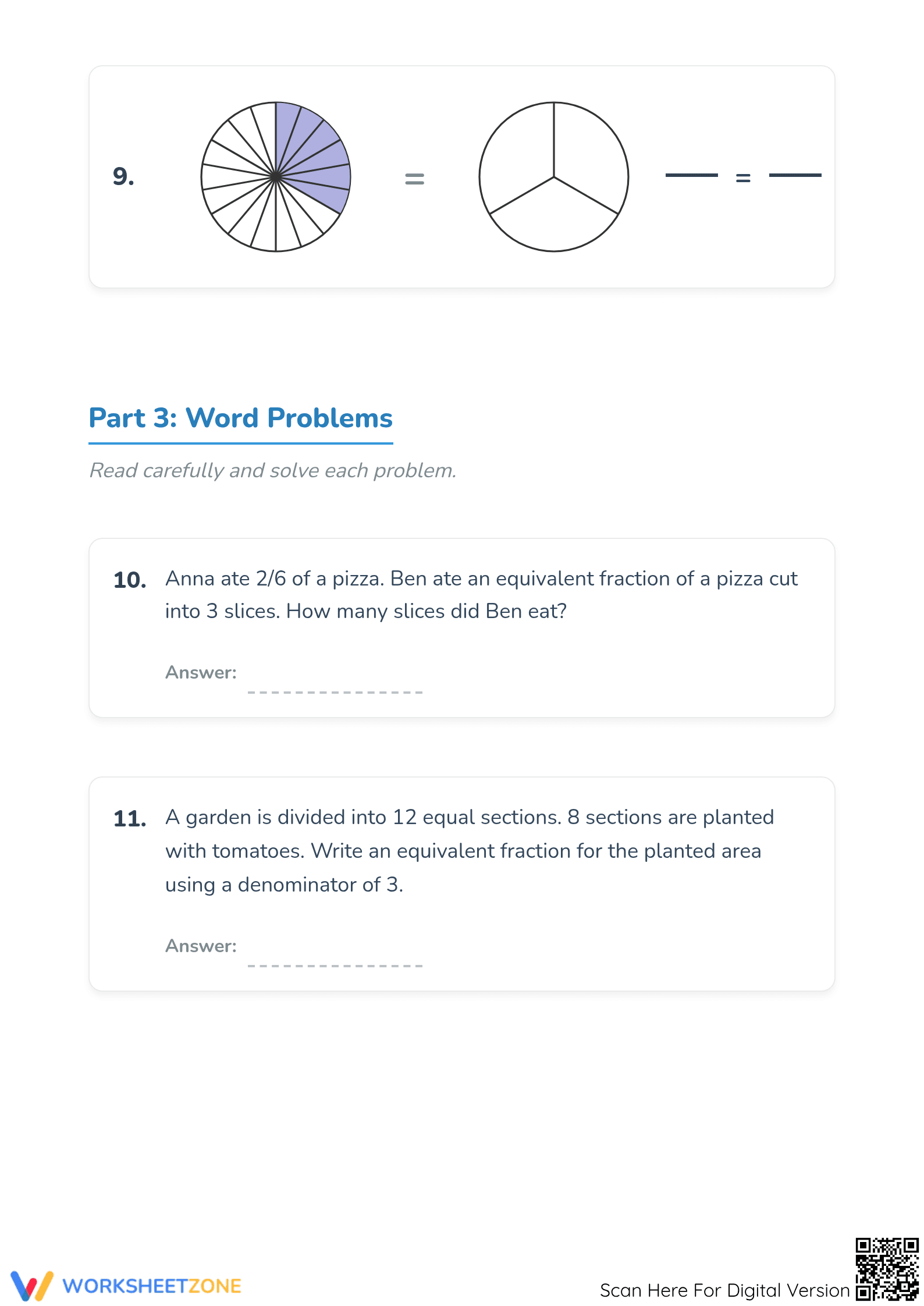
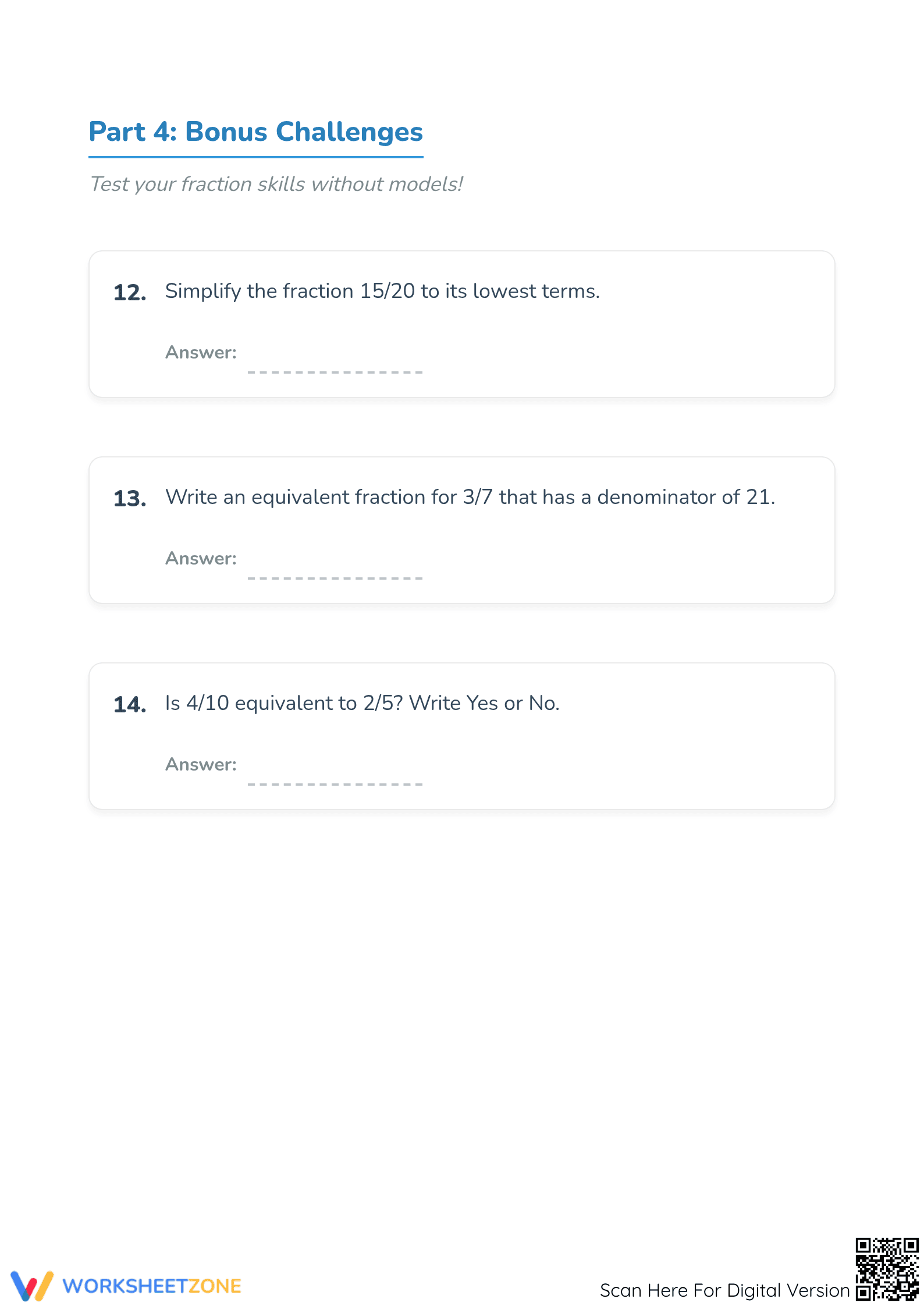
This 5-page PDF contains 14 tasks across four segments. It features nine visual "pie" models, two word problems, and three abstract challenges for simplification and conversion. The layout includes generous white space and a complete answer key for rapid grading or self-assessment.
Skill Progression
- Guided Practice (Tasks 1-5): Students use shaded circular models to visually identify equivalence by shading the second model to match.
- Supported Practice (Tasks 6-9): Learners independently determine missing numerators or denominators based on two provided area models.
- Independent Application (Tasks 10-14): Students solve word problems and abstract challenges, including simplification without visual aids.
This sequence follows a gradual-release model that builds student confidence from concrete to abstract reasoning.
Standards Alignment
The primary focus is CCSS.MATH.CONTENT.4.NF.A.1, which requires students to explain why a fraction a/b is equivalent to a fraction (n × a)/(n × b) by using visual fraction models. This resource also supports Grade 3 standards for basic equivalence and Grade 5 readiness for simplifying fractions to lowest terms. Both standard codes can be copied directly into lesson plans, IEP goals, or district curriculum mapping tools.
How to Use It
Use this worksheet during the "Explore" phase of a lesson on equivalent fractions to provide concrete visual evidence of numerical equality. Alternatively, assign the "Bonus Challenges" as an exit ticket or formative assessment to gauge student readiness for fraction addition and subtraction. While students work, observe if they count individual segments or recognize larger "chunks," as this indicates their level of proportional reasoning.
Who It's For
This resource is designed for Grade 4 general education students and Grade 5 students requiring RTI / Tier 2 intervention for fraction basics. The visual scaffolds make it highly effective for English Language Learners and students with IEPs. For a complete lesson, pair this worksheet with a set of physical fraction tiles or a short digital passage about how fractions appear in real-world measurements.
The RAND AIRS 2024 report on mathematics materials states that bridging visual area models with symbolic notation is critical for student performance on fraction assessments. This worksheet aligns with these findings by requiring students to translate visual shading into numerical equivalents across 14 tasks. Fisher & Frey (2014) emphasize that scaffolded practice within a gradual release framework ensures students develop durable mental models of fraction value rather than just memorizing procedures. By mastering CCSS.MATH.CONTENT.4.NF.A.1 through this practice, students build the prerequisite fluency needed for complex operations with rational numbers. This evidence-based approach minimizes cognitive load while maximizing retention of equivalent fraction concepts, making it a proven tool for elementary mathematics classrooms. The integrated citation of standard codes and research-backed methodology ensures this resource meets the high standards of modern instructional design and assessment alignment required for effective classroom delivery.


