


























Views
Downloads
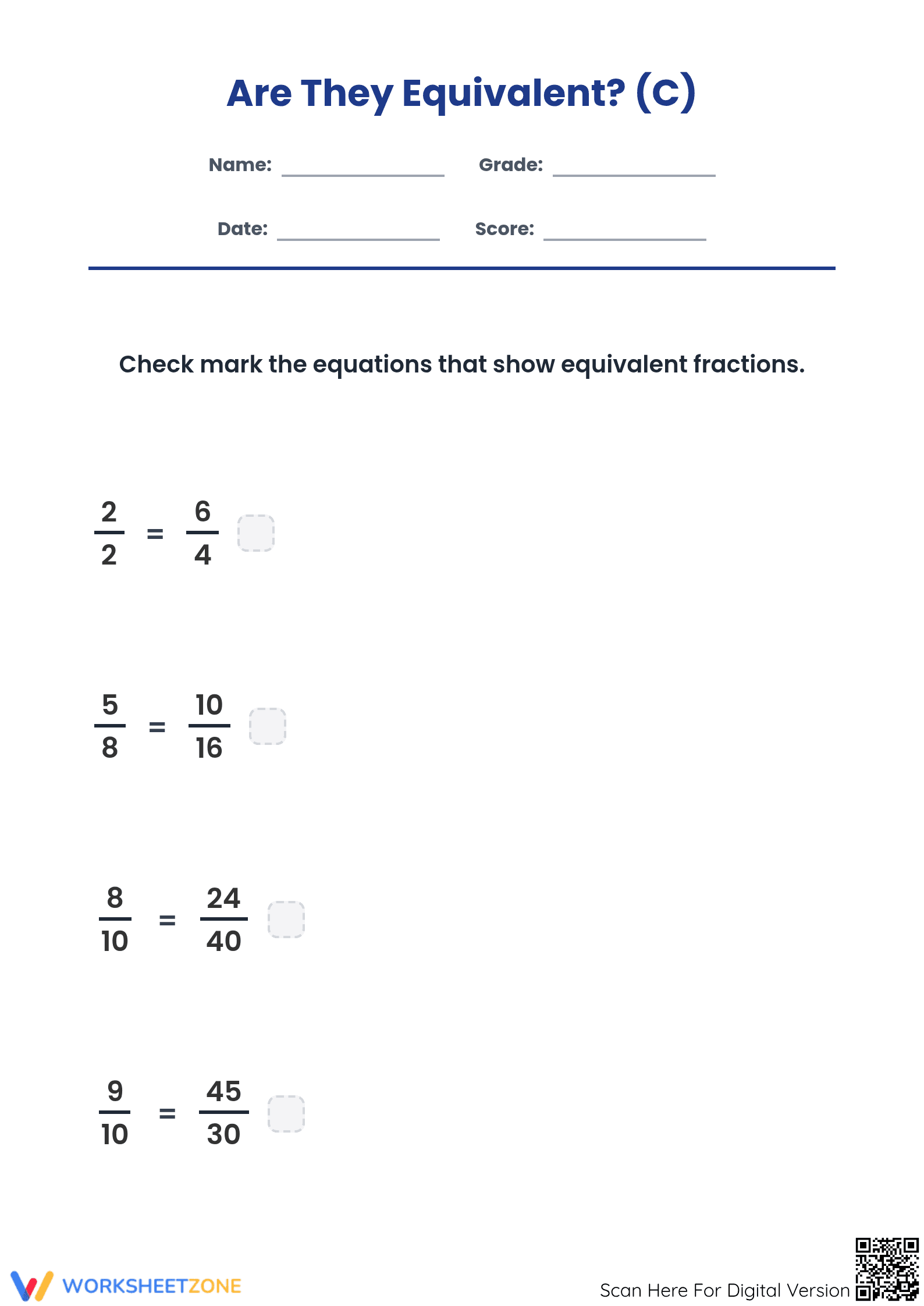
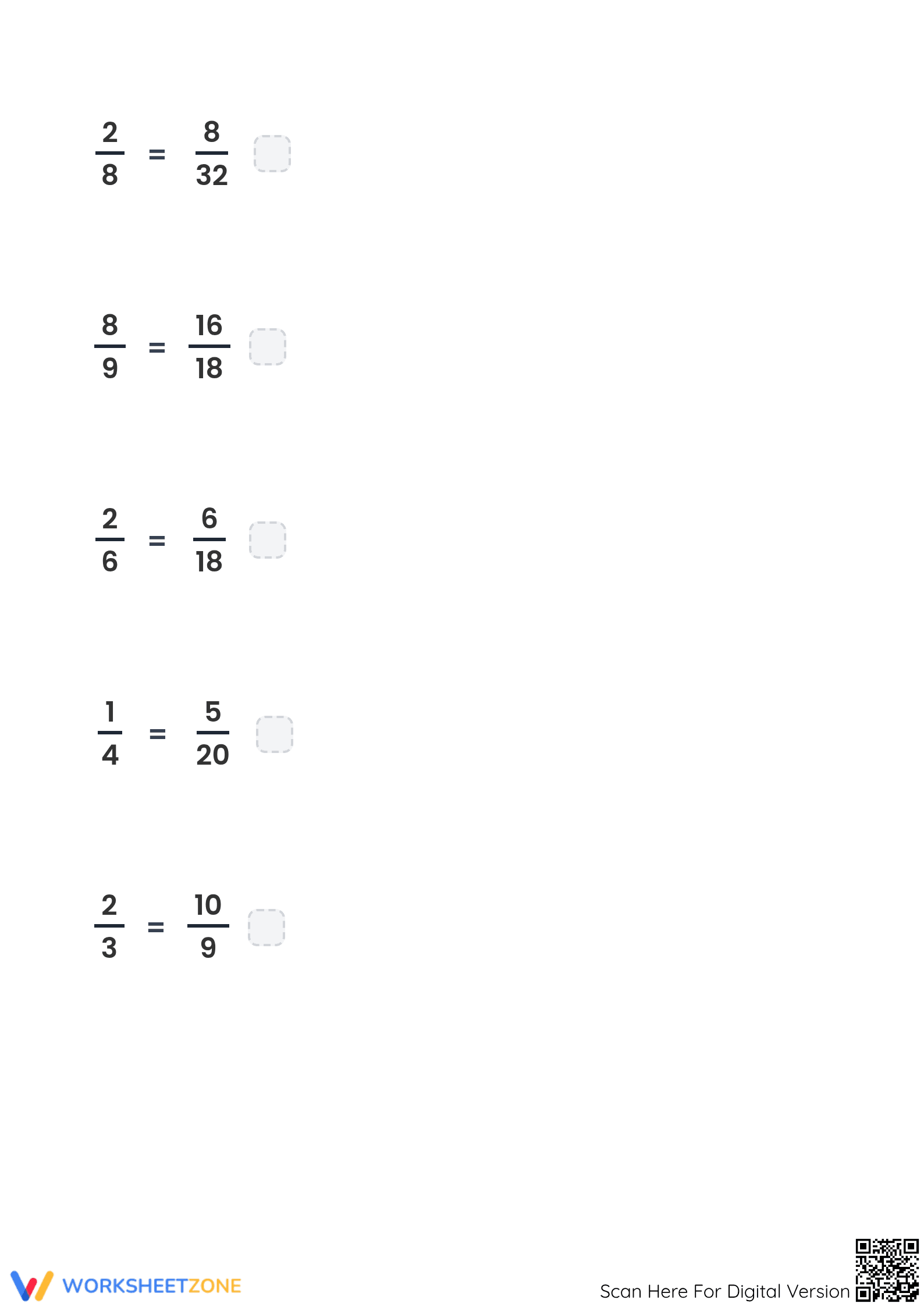
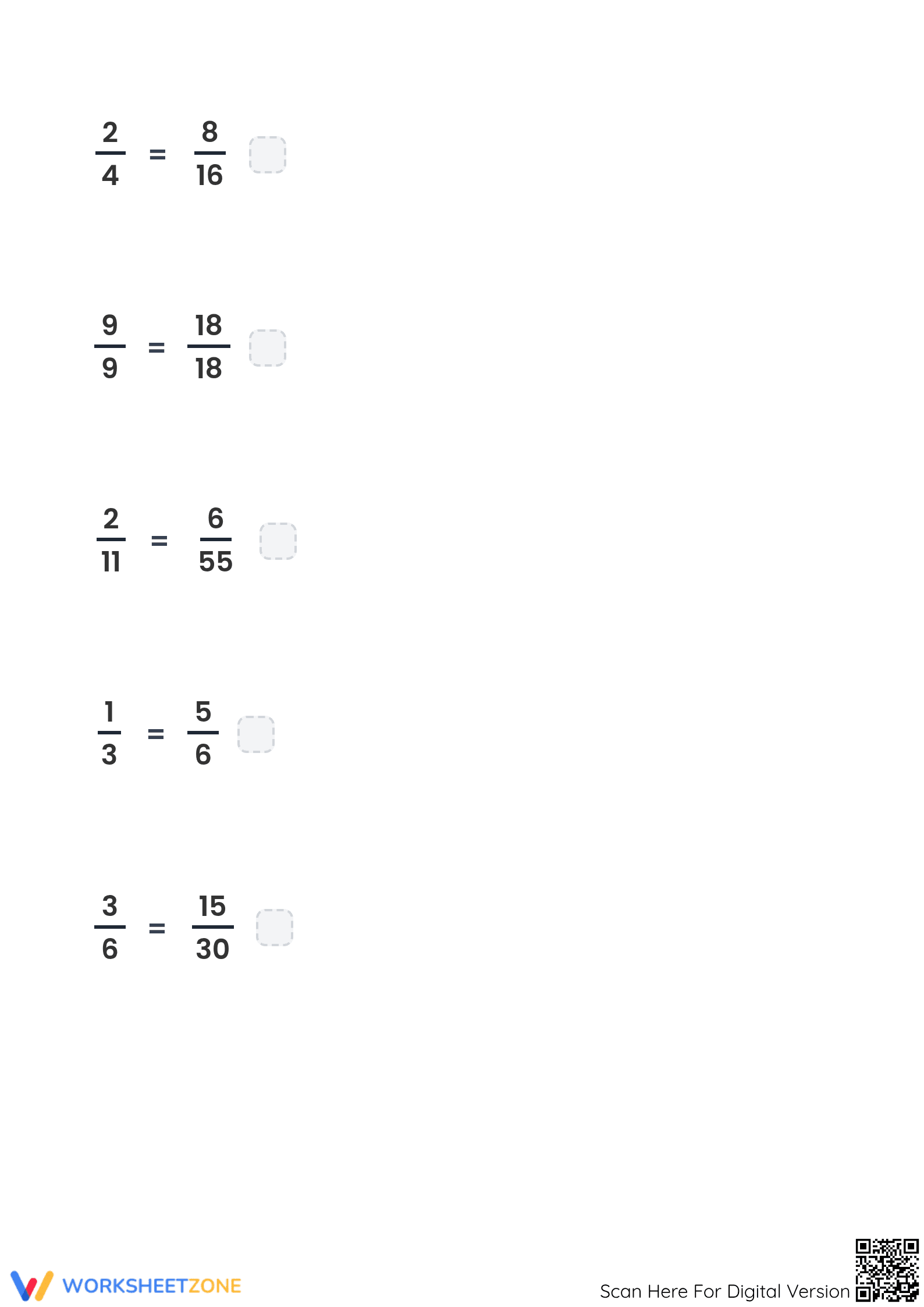
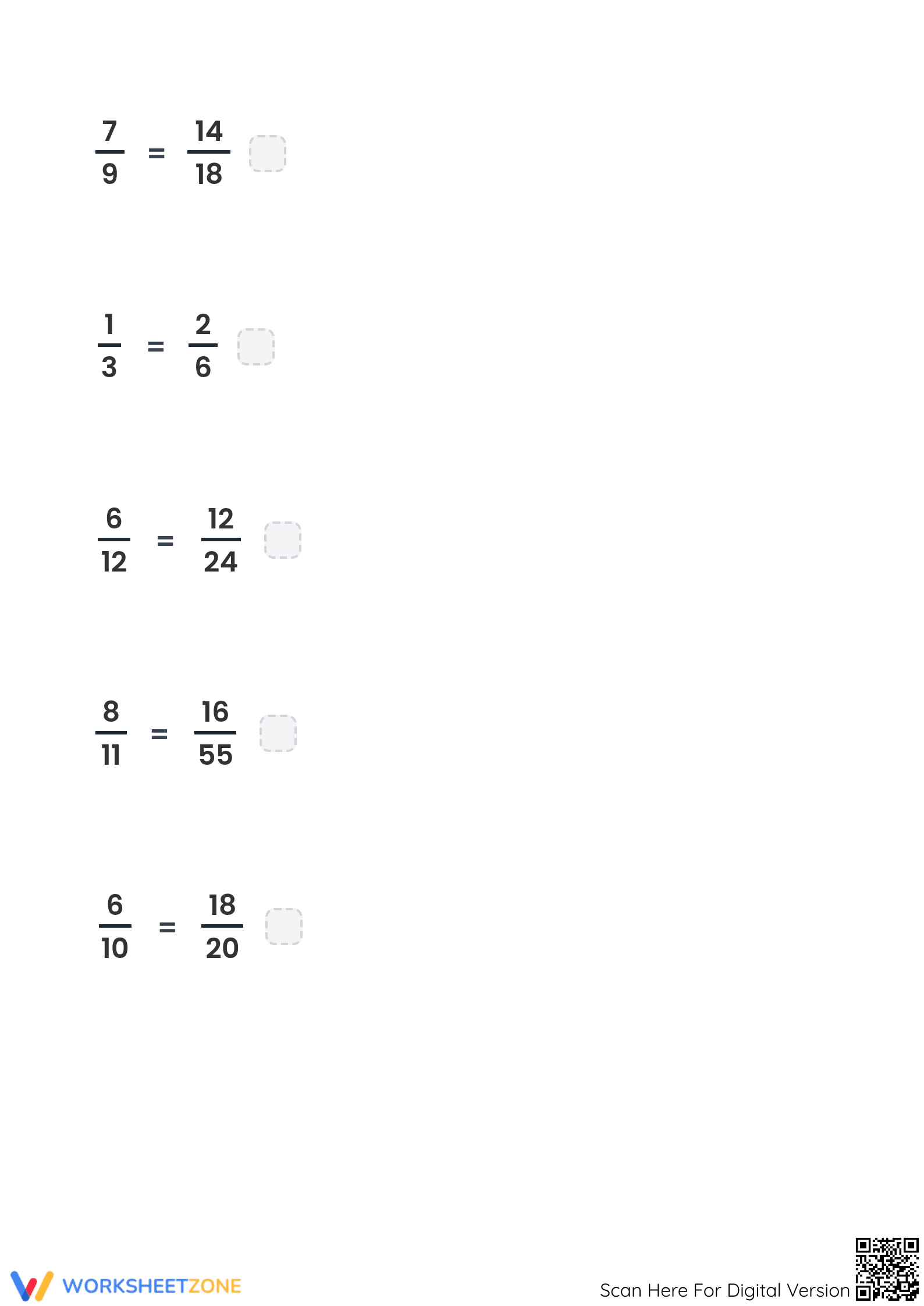
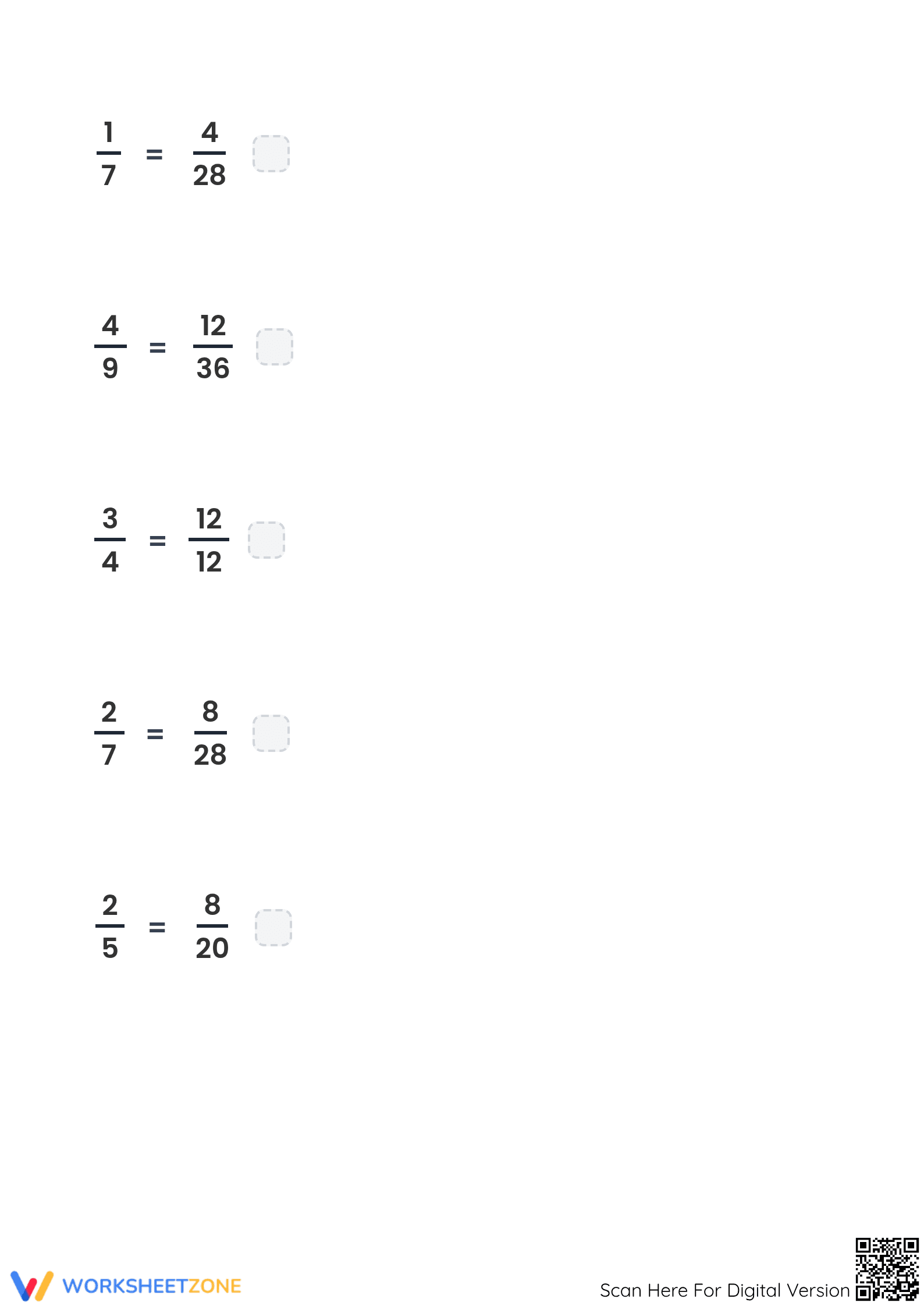

Essential Equivalent Fractions Worksheet | Grades 3-5
Paste this activity's link or code into your existing LMS (Google Classroom, Canvas, Teams, Schoology, Moodle, etc.).
Students can open and work on the activity right away, with no student login required.
You'll still be able to track student progress and results from your teacher account.
Master the fundamentals of fraction equivalence with this comprehensive practice set. Students analyze fraction pairs to determine if they share the same value, building essential mental models. This worksheet focuses on numerical verification, ensuring students move beyond rote memorization to true conceptual understanding of fraction relationships and scaling.
At a Glance
- Grade: 3-5 · Subject: Math
- Standard:
4.NF.A.1— Explain why a fraction is equivalent to another fraction by using visual models or numerical scaling- Skill Focus: Equivalent Fraction Identification
- Format: 5 pages · 24 problems · Answer key included · PDF
- Best For: Independent practice, morning work, and quick formative skill checks
- Time: 20–30 minutes
This robust 5-page packet features 24 distinct equations where students evaluate the equality of two fractions. Each page presents a clean layout with large text and dedicated check-boxes for student responses. The set includes a full multi-page answer key mirroring the student pages exactly, making it easy to provide immediate feedback or support self-correction during independent work.
Transitioning from lesson to practice takes less than two minutes with this classroom-ready resource. Step 1: Print the five-page PDF (60 seconds). Step 2: Distribute the packets for independent work or rotational centers (30 seconds). Step 3: Use the answer key for rapid grading or class-wide review (30 seconds). It is an ideal solution for substitute plans or unexpected schedule changes.
The primary focus of this worksheet is 4.NF.A.1, which requires students to explain why a fraction is equivalent to another fraction by using numerical models. By checking the validity of equations like 5/8 = 10/16, students practice applying common multipliers to generate equivalent values. This standard code can be copied directly into lesson plans, IEP goals, or district curriculum mapping tools.
Deploy this worksheet as a formative assessment following a direct instruction lesson on common denominators. As students work through the 24 tasks, circulate through the room to observe if they use cross-multiplication or scale factors; this observation provides instant data on procedural fluency. It also serves as an excellent homework assignment to reinforce numerical equivalence without requiring additional teacher explanation.
This resource is designed for students in Grades 3-5 who are developing their initial understanding of fractional values. It is particularly effective for learners who benefit from repetitive, low-distraction practice to build confidence before moving to complex operations. Pair this worksheet with physical fraction tiles or visual anchor charts to support diverse learners who need a concrete bridge to abstract numerical reasoning.
According to the RAND AIRS 2024 report on mathematics materials, focused practice on foundational skills like fraction equivalence is critical for narrowing achievement gaps in elementary education. This worksheet targets the specific cognitive demands of 4.NF.A.1 by requiring students to verify equivalence through logical deduction and numerical scaling. By presenting 24 varied tasks, the resource ensures students encounter diverse numerators and denominators, preventing the formation of narrow mental shortcuts. Research from EdReports (2024) emphasizes that students who master equivalence in early grades are significantly more likely to succeed in middle school algebraic thinking. This printable set provides the necessary low-floor, high-ceiling practice that allows all students to engage with the standard at their own pace. By integrating this evidence-based practice into the curriculum, educators ensure students develop the durable mathematical foundations required for long-term STEM success and numerical literacy as defined by modern educational benchmarks.


