


























Views
Downloads
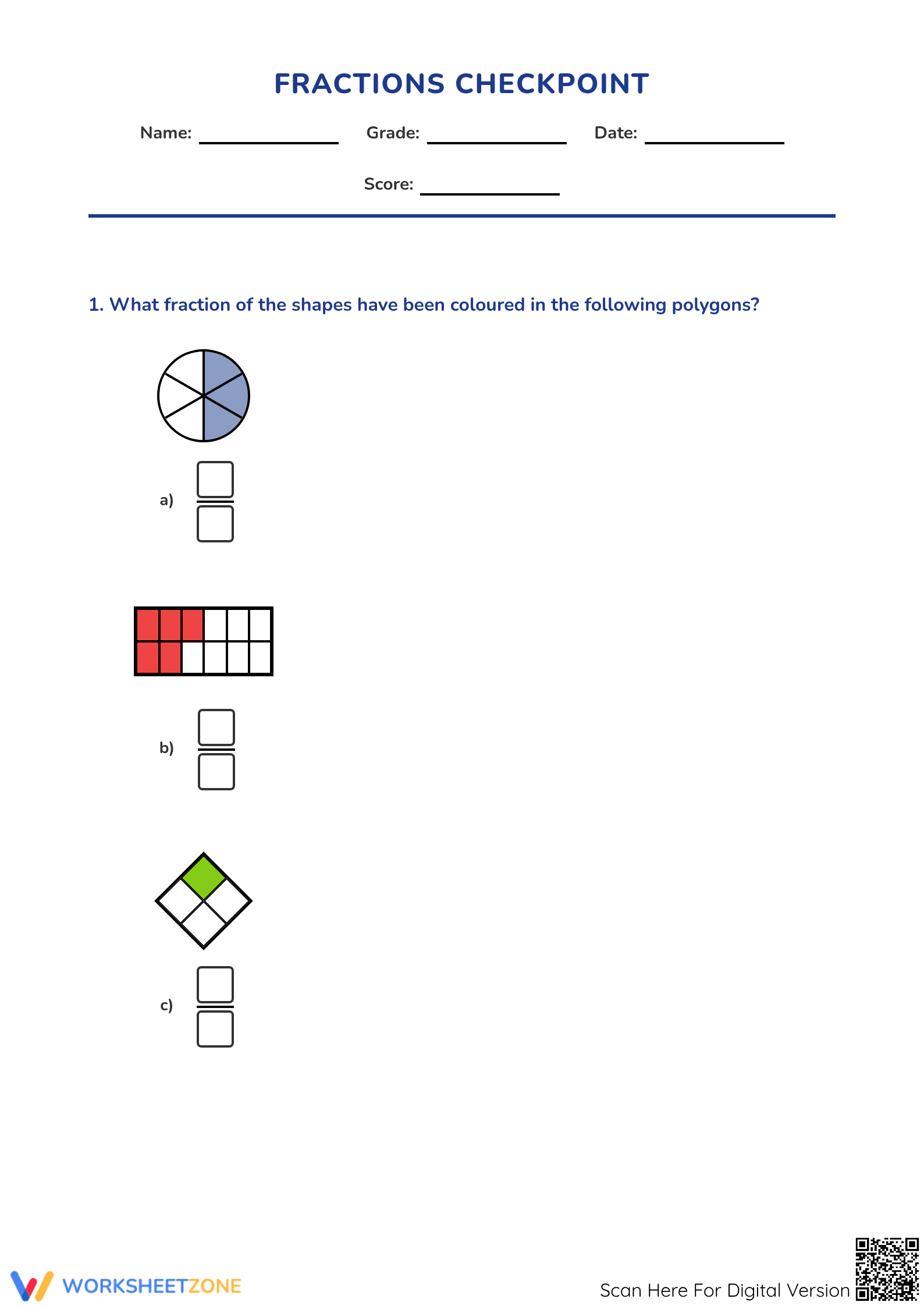
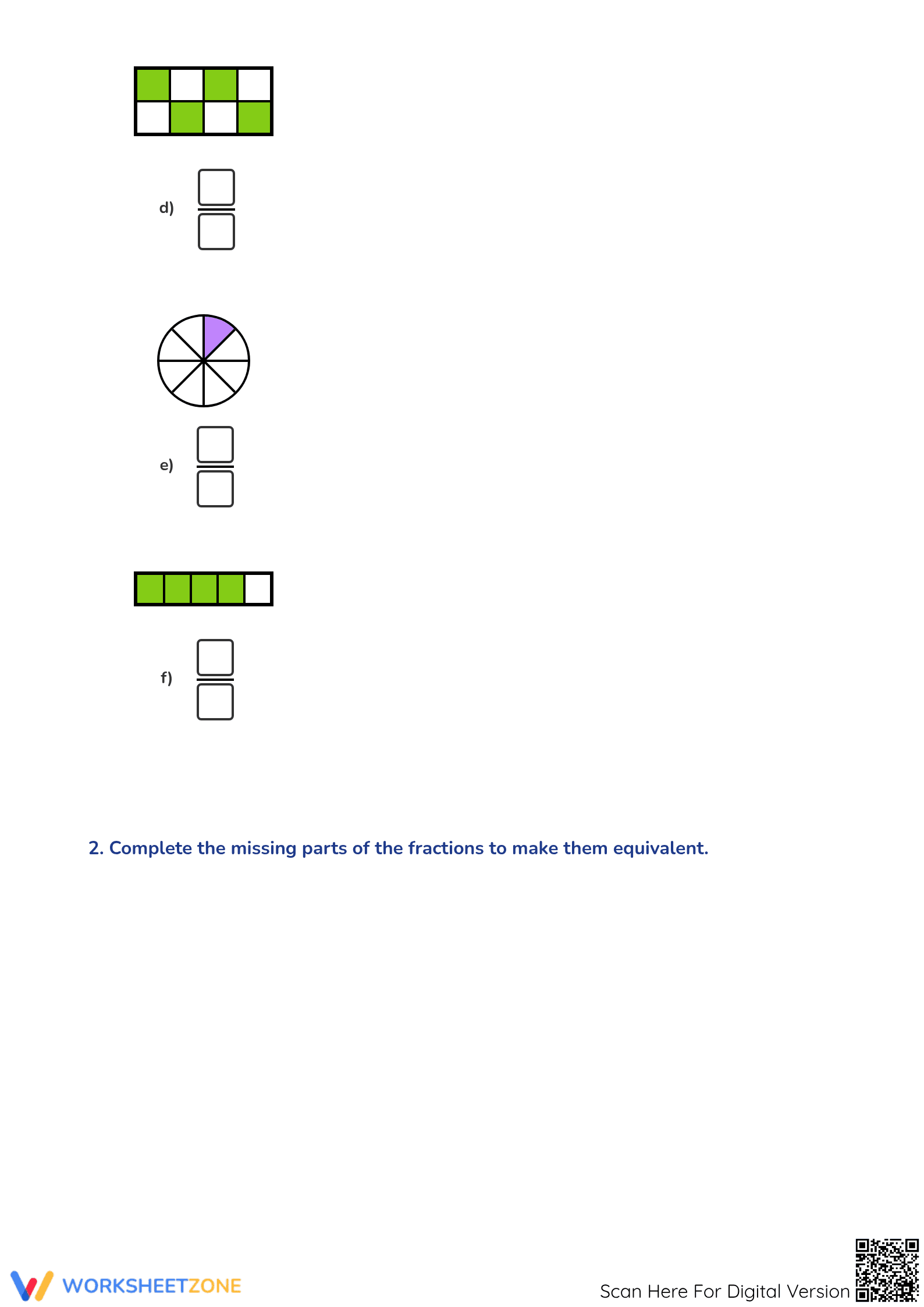
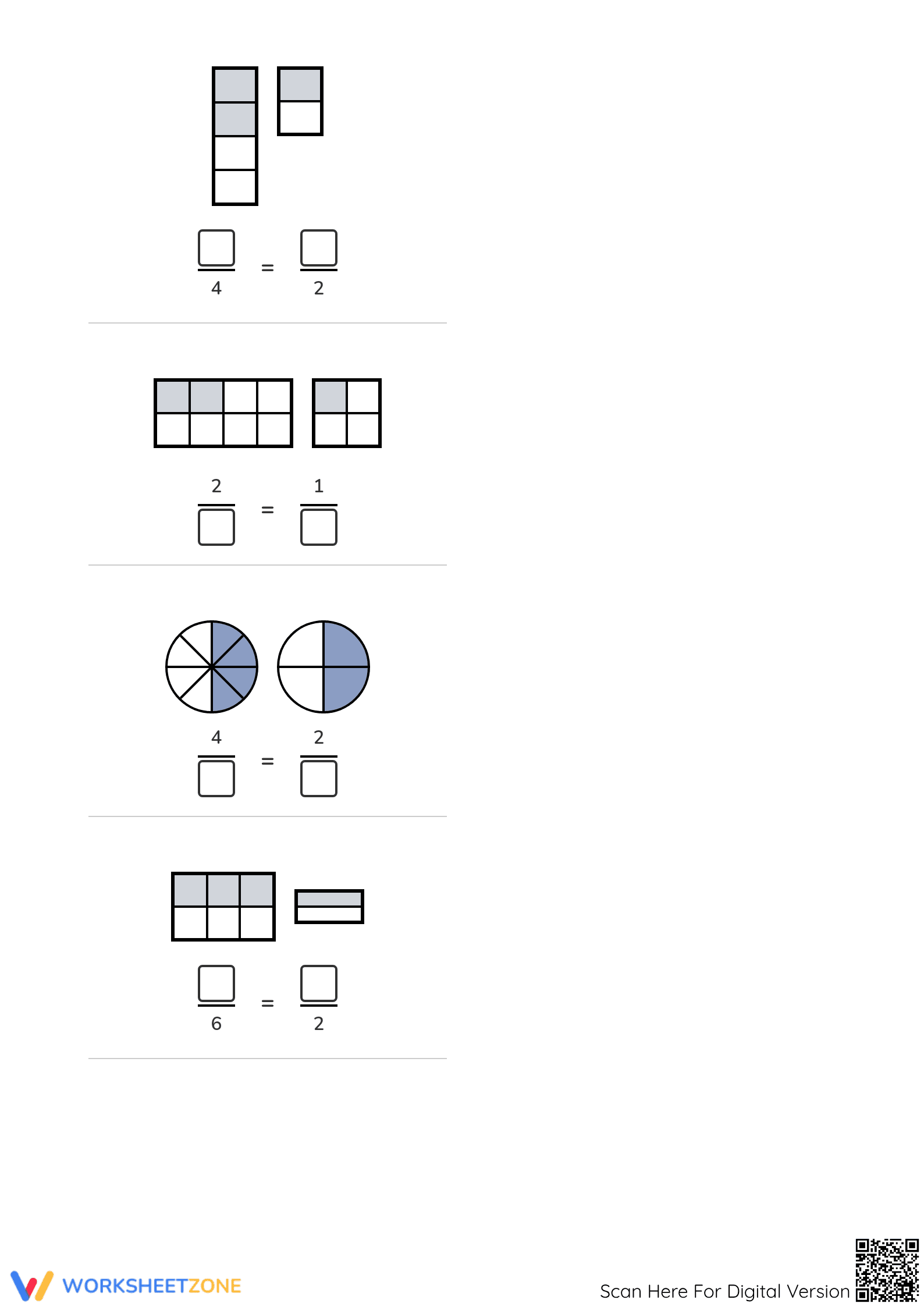
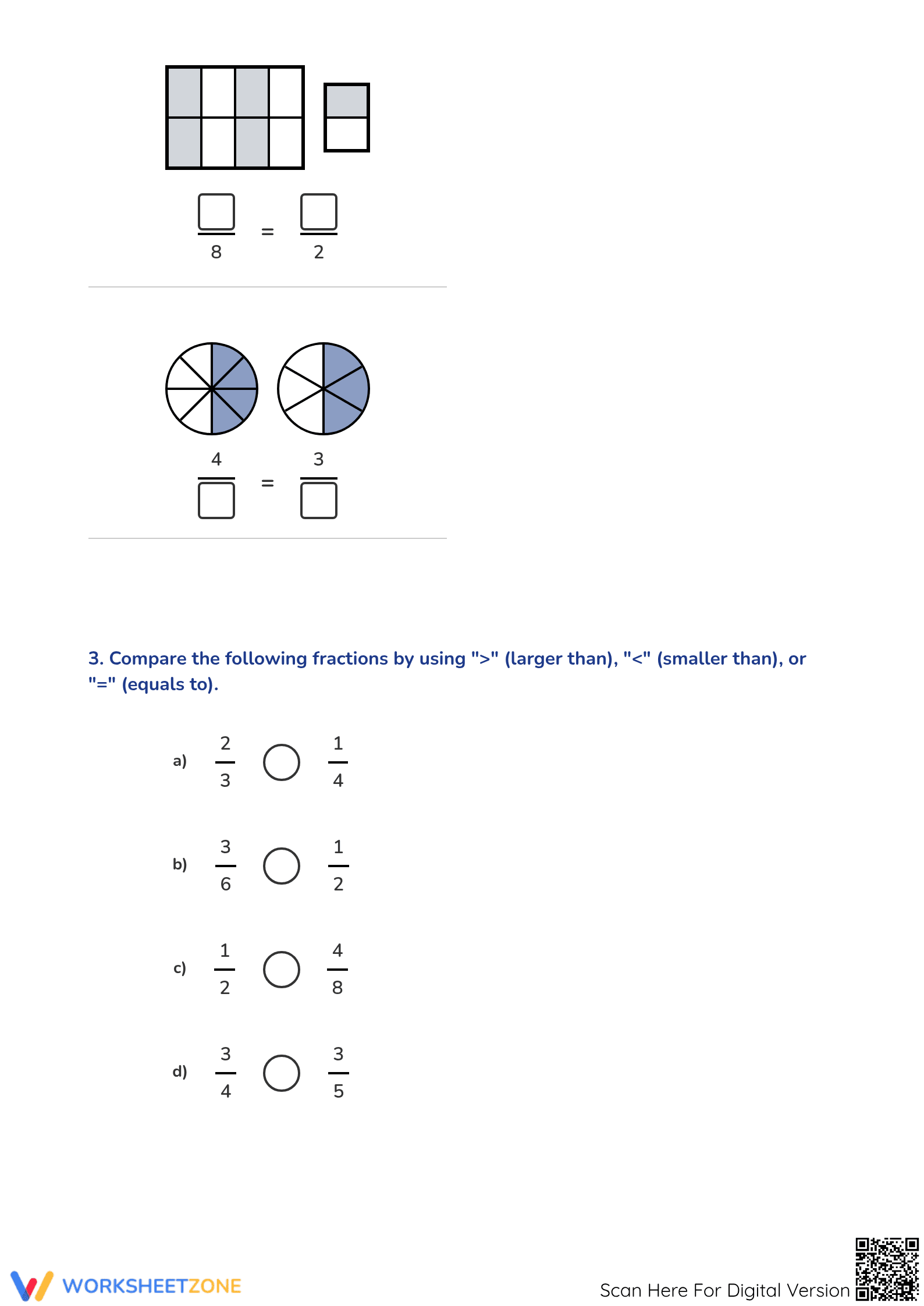

Printable Comparing Fractions Worksheet | Grade 4 Math
Paste this activity's link or code into your existing LMS (Google Classroom, Canvas, Teams, Schoology, Moodle, etc.).
Students can open and work on the activity right away, with no student login required.
You'll still be able to track student progress and results from your teacher account.
This essential worksheet provides targeted practice for Grade 4 students learning to compare fractions. Through a series of 20 structured problems, learners will build fluency in comparing fractions with different numerators and denominators using visual models and number lines, solidifying a key component of the number and operations curriculum.
At a Glance
- Grade: 4 · Subject: Math
- Standard:
CCSS.MATH.CONTENT.4.NF.A.2— Compare two fractions with different numerators and denominators.- Skill Focus: Comparing Fractions
- Format: 5 pages · 20 problems · Answer key included · PDF
- Best For: Independent practice, homework, or formative assessment.
- Time: 25–40 minutes
What's Inside
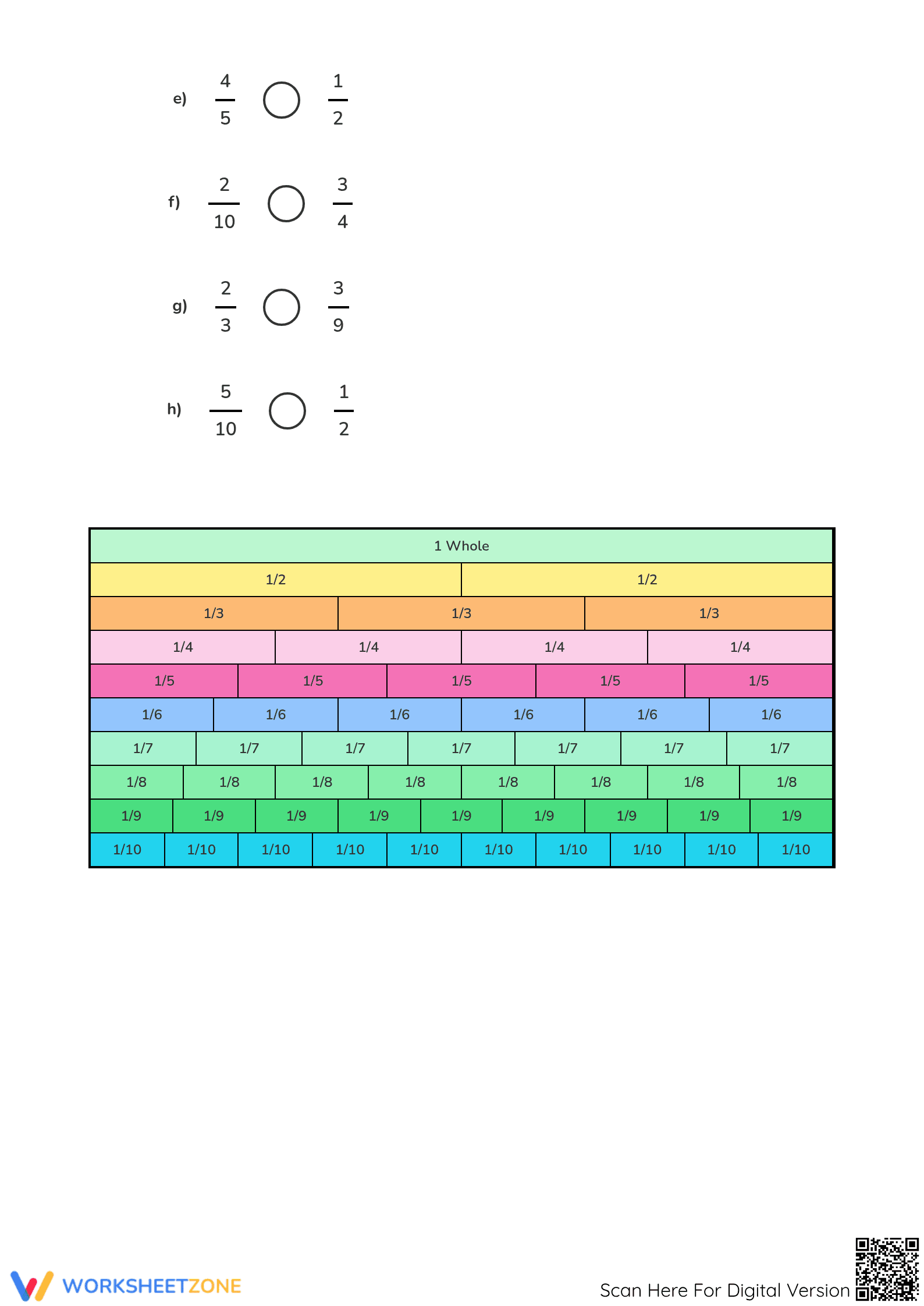
This five-page resource contains 20 problems to assess student understanding of comparing fractions. Tasks include using inequality symbols, ordering fractions, and justifying answers with fraction bars and number lines. A complete, easy-to-use answer key is provided for efficient grading or student self-assessment, making it a comprehensive practice tool.
A Structured Path to Fraction Fluency
This worksheet follows a gradual release model to build student confidence. It scaffolds learning through three distinct stages:
- Guided Practice: Initial problems use visual fraction bars, allowing students to concretely see the relationship between fractions.
- Supported Practice: Subsequent tasks use number lines, moving students from a concrete to a more representational model.
- Independent Practice: The final section challenges students to compare fractions numerically, assessing their mastery of the core skill.
This progression supports all learners in reaching grade-level expectations.
Common Core State Standards Alignment
This worksheet is directly aligned with Grade 4 standard CCSS.MATH.CONTENT.4.NF.A.2, which requires students to compare two fractions with different numerators and denominators. It also supports skills from 4.NF.A.1. Both standard codes can be copied directly into lesson plans or curriculum mapping tools for easy documentation.
Classroom Implementation Ideas
Use this resource as independent practice after a direct instruction lesson or as a homework assignment. It also functions perfectly as a formative "checkpoint" assessment to identify students needing reteaching. For a quick observation, note which students rely heavily on the visual models versus those who can compare abstractly. Most students will complete the 20 problems in approximately 25 to 40 minutes, providing a solid block of focused math practice.
Built for the Grade 4 Learner
This worksheet is designed primarily for fourth-grade students. The clean layout and clear instructions make it accessible for all learners. For students needing support, pair this with fraction bar manipulatives. It is an ideal follow-up activity to a lesson using a "Comparing Fractions" anchor chart, reinforcing the concepts visually and numerically for the whole class.
Developing a deep understanding of fraction comparison is a critical foundation for success in algebra and higher-level mathematics. This worksheet provides focused practice aligned with CCSS.MATH.CONTENT.4.NF.A.2, targeting the essential skill of comparing fractions with unlike denominators. Research consistently shows that proficiency with fractions is a strong predictor of long-term math achievement. A key report from the RAND Corporation (RAND AIRS 2024) emphasizes the importance of structured, standards-aligned practice materials in building this proficiency. By providing students with 20 distinct problems that move from concrete visual models to abstract numerical comparison, this resource gives them the necessary repetitions to internalize the concept. This approach helps students build a robust mental model of fraction equivalence and magnitude, directly addressing the conceptual hurdles that many learners face and preparing them for more complex operations with fractions in later grades.


