


























Views
Downloads

Essential Forest Animals Worksheet | Grade 1-3 Habitat
Paste this activity's link or code into your existing LMS (Google Classroom, Canvas, Teams, Schoology, Moodle, etc.).
Students can open and work on the activity right away, with no student login required.
You'll still be able to track student progress and results from your teacher account.
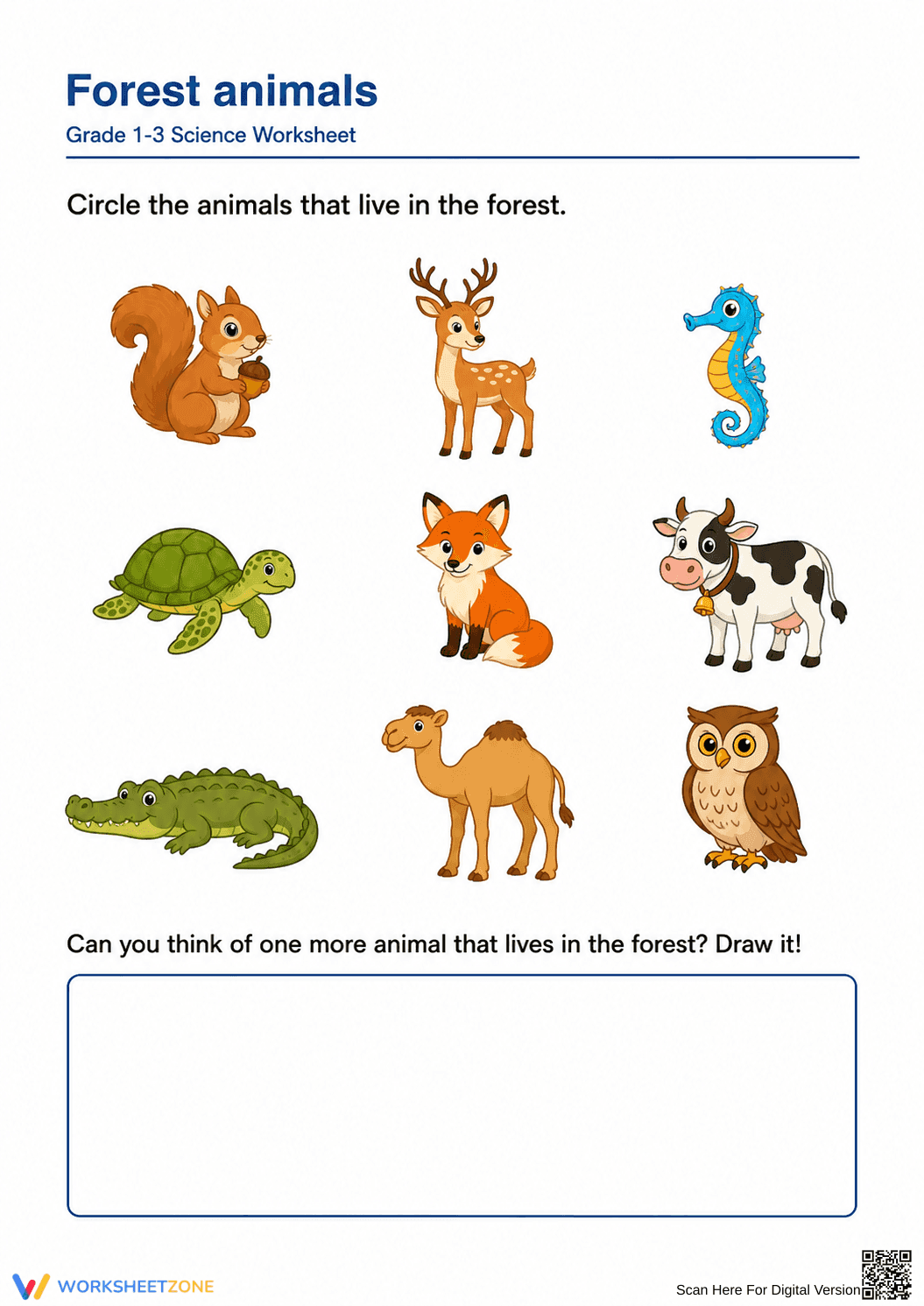
Identify forest-dwelling animals with this engaging Science worksheet designed for early elementary learners. This resource streamlines the study of habitats by challenging students to distinguish between diverse species based on their natural environments. It fosters critical observation skills and environmental awareness.
At a Glance
- Grade: 1–3 · Subject: Habitat
- Standard:
2-LS4-1— Make observations of animals to compare diversity of life in different habitats- Skill Focus: Habitat Identification & Classification
- Format: 1 page · 10 tasks · Answer key included · PDF
- Best For: Independent practice or science center activity
- Time: 15–20 minutes
What's Inside
This single-page PDF features 10 focused tasks, including nine visual identification problems where students circle animals that belong in the forest and one creative drawing prompt. The worksheet includes high-quality illustrations of various animals—such as squirrels, deer, and seahorses—to test students' ability to differentiate between terrestrial and aquatic species. A comprehensive answer key is provided to facilitate quick grading.
Zero-Prep Workflow
Implementing this resource into your science block requires zero teacher preparation. Step 1: Print the single-page document (30 seconds). Step 2: Distribute the worksheets for independent work or use during a whole-group lesson on ecosystems (1 minute). Step 3: Review student answers using the included key or through a quick peer-review session (2 minutes). This efficient workflow makes it an ideal choice for sub plans.
Standards Alignment
This resource is primary aligned to 2-LS4-1, which requires students to "Make observations of plants and animals to compare the diversity of life in different habitats." By selecting forest-specific animals from a mixed group, students demonstrate an understanding of how specific environments support different life forms. This alignment ensures the activity contributes directly to mastery of NGSS Life Science goals.
How to Use It
Use this worksheet as a formative assessment after an introductory lesson on forest biomes to check for student understanding. For a collaborative twist, have students work in pairs to discuss why specific animals—like the crocodile or seahorse—would not survive in a forest environment. Observe whether students can explain their reasoning, as this provides a window into their conceptual understanding.
Who It's For
This activity is perfectly suited for Grade 1 through Grade 3 students beginning their exploration of life science and environmental habitats. It is particularly effective for visual learners and students who benefit from clear, non-verbal cues. Pair this worksheet with a habitat passage or anchor chart to provide a comprehensive learning experience for diverse classroom populations.
The Forest Animals worksheet aligns with the 2-LS4-1 standard, focusing on the classification of species within specific environmental contexts. Research conducted by Fisher & Frey (2014) highlights the importance of scaffolded visual identification in developing foundational scientific literacy among early elementary students. By requiring students to observe, compare, and categorize animals, this resource reinforces the cognitive processes necessary for complex ecosystem analysis. The inclusion of a creative drawing task further encourages students to synthesize their knowledge, moving beyond simple recognition to conceptual application. This dual approach—combining closed identification with open-ended expression—mirrors the best practices in evidence-based science instruction. Educators can utilize this tool to bridge the gap between abstract habitat concepts and concrete observable facts. Early exposure to structured classification tasks significantly improves a student's ability to engage with more complex biological systems in later grades.


