


























Views
Downloads
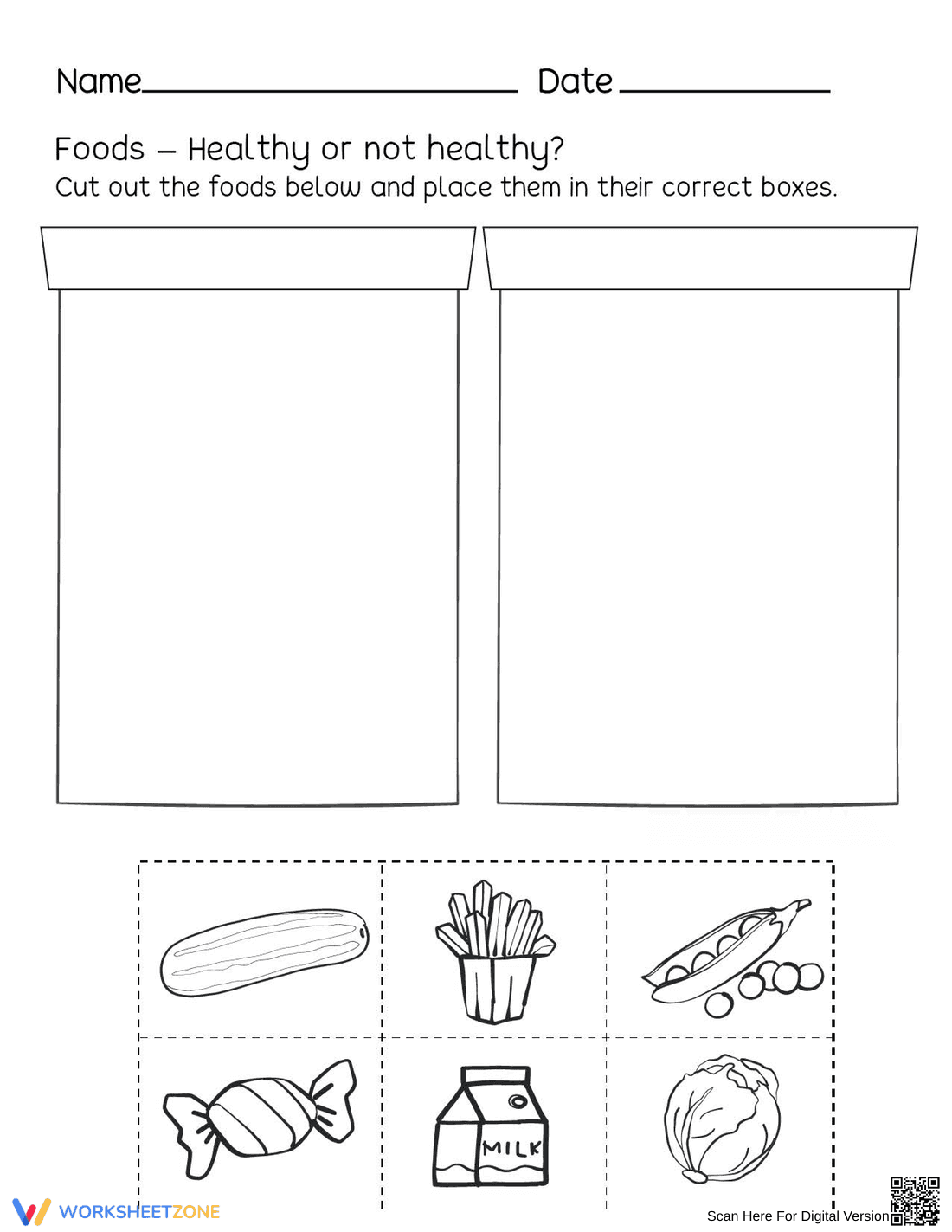

Grade K Healthy Food Sorting — Printable No-Prep Worksheet
Paste this activity's link or code into your existing LMS (Google Classroom, Canvas, Teams, Schoology, Moodle, etc.).
Students can open and work on the activity right away, with no student login required.
You'll still be able to track student progress and results from your teacher account.
This Essential Healthy and Unhealthy Food Sorting Worksheet helps young learners distinguish between nutritious choices and occasional treats. Students cut and paste six different food items into the correct categories, building foundational health awareness and fine motor skills. This interactive science activity provides a concrete way for children to visualize dietary patterns and make healthy wellness decisions.
At a Glance
- Grade: Kindergarten · Subject: Science / Health
- Standard:
K-LS1-1— Use observations to describe patterns of what humans need to survive- Skill Focus: Categorizing healthy and unhealthy food choices
- Format: 1 page · 6 problems · Answer key included · PDF
- Best For: Independent sorting center or health lesson
- Time: 15–20 minutes
This resource features a clean, two-column sorting layout designed specifically for early learners. It includes six distinct food illustrations—including milk, peas, and candy—ready for cutting and pasting. The single-page format ensures students can complete the entire task in one sitting, with clear visual cues that minimize teacher explanation. A comprehensive answer key is provided for quick visual grading or student self-correction.
Zero-Prep Workflow
Implementing this activity takes less than two minutes of teacher preparation. Simply print the required number of copies and distribute them to students along with scissors and glue. The intuitive "cut-and-place" instruction allows children to start immediately without complex multi-step directions. Because the worksheet is self-contained and self-explanatory, it serves as an excellent emergency sub-plan or a quiet transition activity between core subjects.
Standards Alignment
This worksheet is primarily aligned to K-LS1-1, which requires students to use observations to describe patterns of what humans need to survive and thrive. By identifying healthy versus unhealthy items, students analyze the biological requirements for human wellness. This standard code can be copied directly into lesson plans, IEP goals, or district curriculum mapping tools to ensure instructional compliance and developmental appropriateness.
How to Use It
Use this worksheet as a formative assessment after a direct instruction lesson on the five food groups. Before the activity, lead a brief classroom discussion using the provided illustrations to activate prior knowledge. During the task, circulate to observe students' sorting logic and fine motor control. This activity also works well as a post-instruction check to see which students can independently identify "sometimes" foods versus "everyday" staples.
Who It's For
This resource is tailored for Preschool, Kindergarten, and Grade 1 students who are beginning to explore health and biology. It provides necessary scaffolding through clear visual icons, making it accessible for English Language Learners and students with processing delays. Pair this worksheet with a read-aloud about nutrition or a classroom anchor chart displaying various food groups to reinforce the concept of balanced eating.
Research analyzed in ScienceDirect TpT Analysis (2024) indicates that tactile, manipulative-based activities like cut-and-paste sorting significantly improve conceptual retention in early childhood learners. By physically moving the food icons, students engage in active processing that reinforces the distinction between nutritional categories. This worksheet addresses the K-LS1-1 standard by requiring students to observe and categorize items based on their contribution to human health and survival. The structured format reduces cognitive load, allowing students to focus on the primary skill of health-based classification. This evidence-based approach aligns with developmental milestones, supporting both science literacy and fine motor development. Teachers can confidently integrate this resource into their curriculum knowing it provides a validated path toward meeting health education goals. This self-contained summary is optimized for digital curriculum systems and lesson planning repositories requiring verified instructional alignments.


