


























Views
Downloads
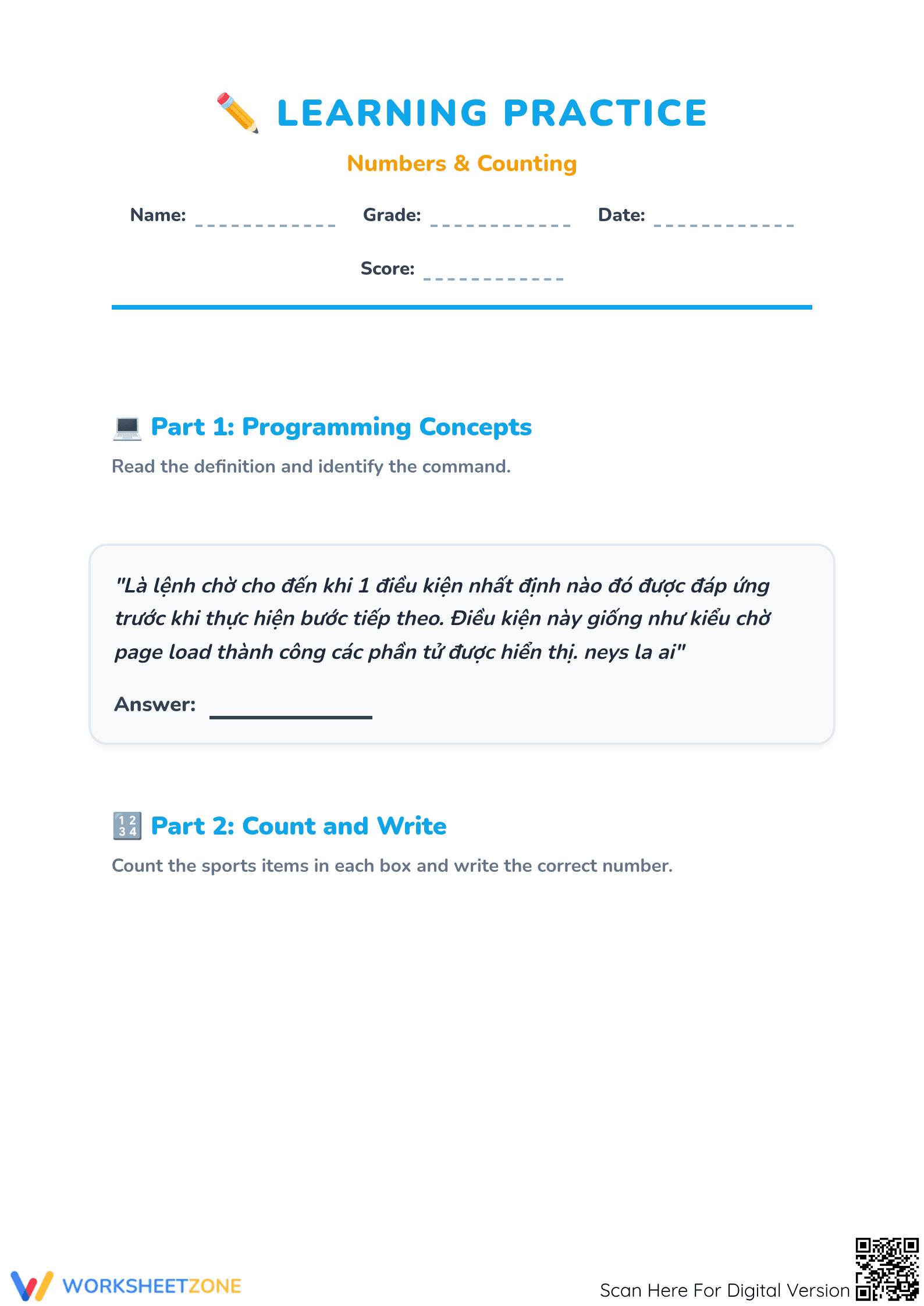
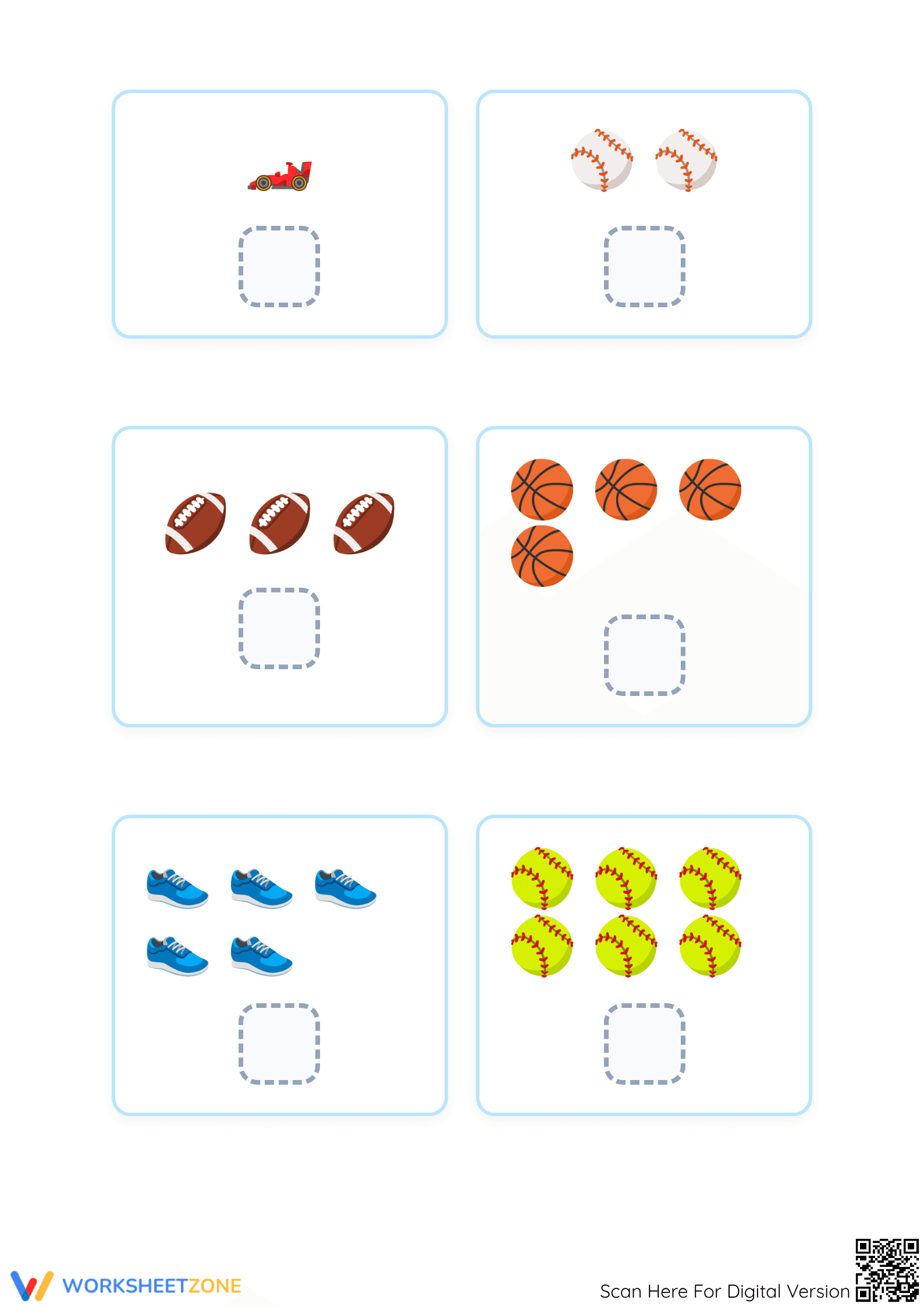
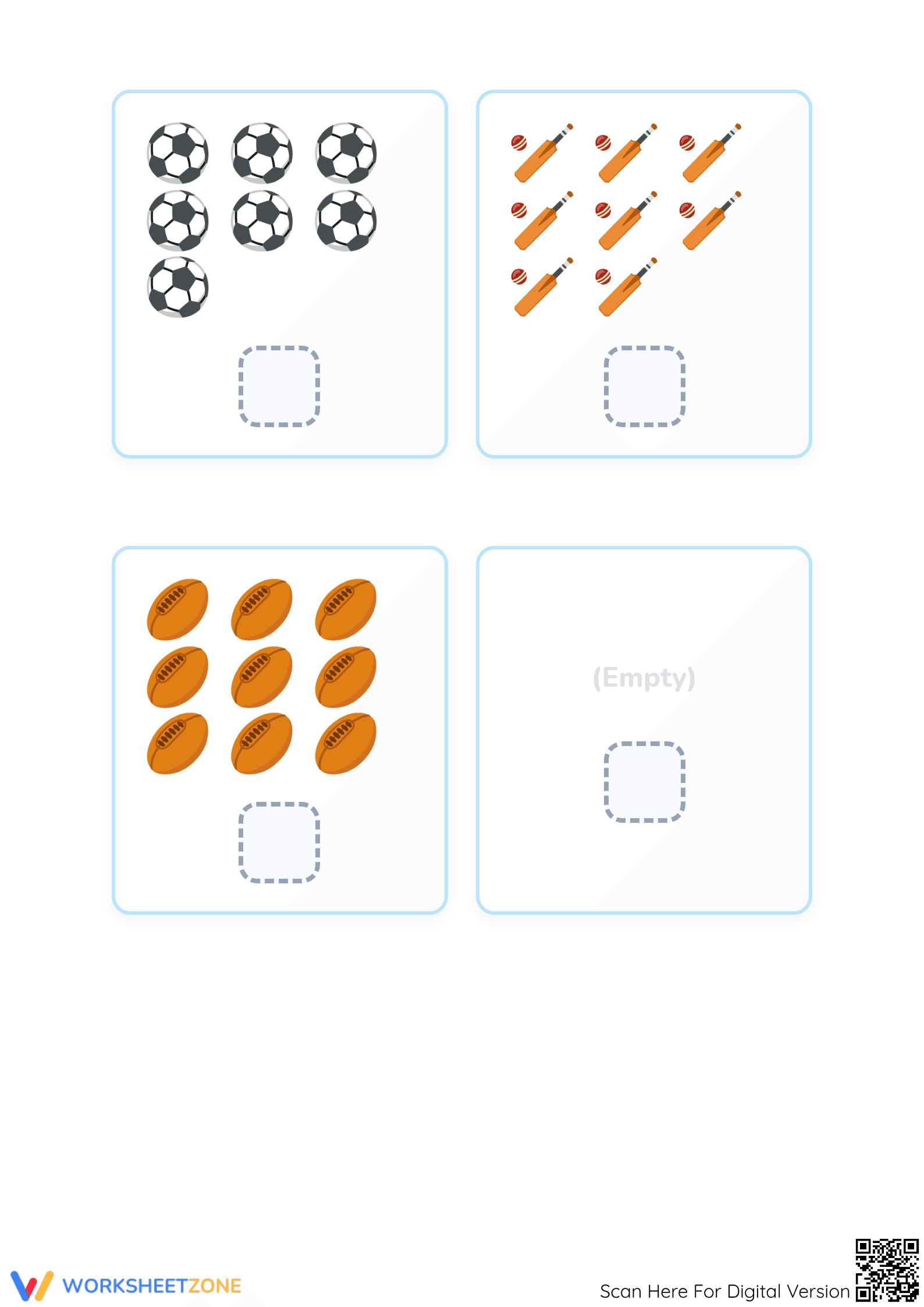

Printable Numbers & Counting Math Worksheet | Grade 1-2
Paste this activity's link or code into your existing LMS (Google Classroom, Canvas, Teams, Schoology, Moodle, etc.).
Students can open and work on the activity right away, with no student login required.
You'll still be able to track student progress and results from your teacher account.
This math practice worksheet focuses on foundational counting skills for early elementary students. By engaging with vibrant sports-themed imagery, learners develop the ability to associate quantities with written numerals. This essential resource ensures students gain confidence in their one-to-one correspondence and number recognition, providing a solid base for future mathematical success.
At a Glance
- Grade: 1–2 · Subject: Math
- Standard:
CCSS.MATH.CONTENT.1.NBT.A.1— Count to 120, starting at any number less than 120- Skill Focus: Number recognition and counting 0–10
- Format: 3 pages · 11 problems · Answer key included · PDF
- Best For: Early finishers and morning work practice
- Time: 15–20 minutes
What's Inside
This comprehensive three-page PDF features a variety of counting tasks designed to keep young learners engaged. The worksheet includes ten set-identification problems where students count sports equipment—ranging from baseballs to cricket bats—and write the corresponding digit. Additionally, a unique programming concept section introduces logical thinking by asking students to identify a wait command from a given definition. A full answer key is provided for efficient grading.
Skill Progression
- Guided Practice: The first page introduces command identification and transitions into simple counting sets with clear visual boundaries.
- Supported Practice: Pages two and three increase visual complexity by presenting multiple sets of sports items with varying quantities from one to nine.
- Independent Practice: The final task challenges students to recognize an empty set, reinforcing the fundamental concept of zero as a quantity.
This structure follows a gradual-release model, moving from teacher-led identification to independent numerical representation.
Standards Alignment
This resource is primarily aligned with CCSS.MATH.CONTENT.1.NBT.A.1, which requires students to count to 120, starting at any number less than 120. In this range, students read and write numerals and represent a number of objects with a written numeral. Supporting alignment includes CCSS.MATH.CONTENT.K.CC.B.4, focusing on the relationship between numbers and quantities. Both standard codes can be copied directly into lesson plans, IEP goals, or district curriculum mapping tools.
How to Use It
Assign this worksheet as a warm-up activity during a math block to reinforce number sense after a direct instruction lesson on counting. Teachers can observe students as they count to identify those who may still struggle with one-to-one correspondence or numeral formation. Most students will complete the 11 tasks within a 15-to-20-minute window, making it an excellent option for stations or homework.
Who It's For
Designed for Grade 1 and Grade 2 students, this worksheet is ideal for those needing extra practice with basic arithmetic foundations. It serves as a helpful tool for English Language Learners due to its heavy reliance on visual aids and can be naturally paired with counting manipulatives or a hundreds chart to provide additional tactile support.
Educational research from RAND AIRS 2024 emphasizes that consistent practice with visual set representation is crucial for developing early number sense. This worksheet targets CCSS.MATH.CONTENT.1.NBT.A.1 by requiring students to count objects and represent quantities with accurate written numerals. By using familiar sports equipment, the tasks lower cognitive load, allowing focus on the counting process and numeral association. Fisher & Frey (2014) highlights that such structured practice supports the gradual release of responsibility, moving students from guided observation to independent mastery. As an essential tool for early math, this resource provides the repetition needed to ensure students fluently navigate numbers 0-10 before progressing to complex operations. The inclusion of a conceptual wait-command task further bridges the gap between basic counting and early computational thinking skills.


