


























Views
Downloads
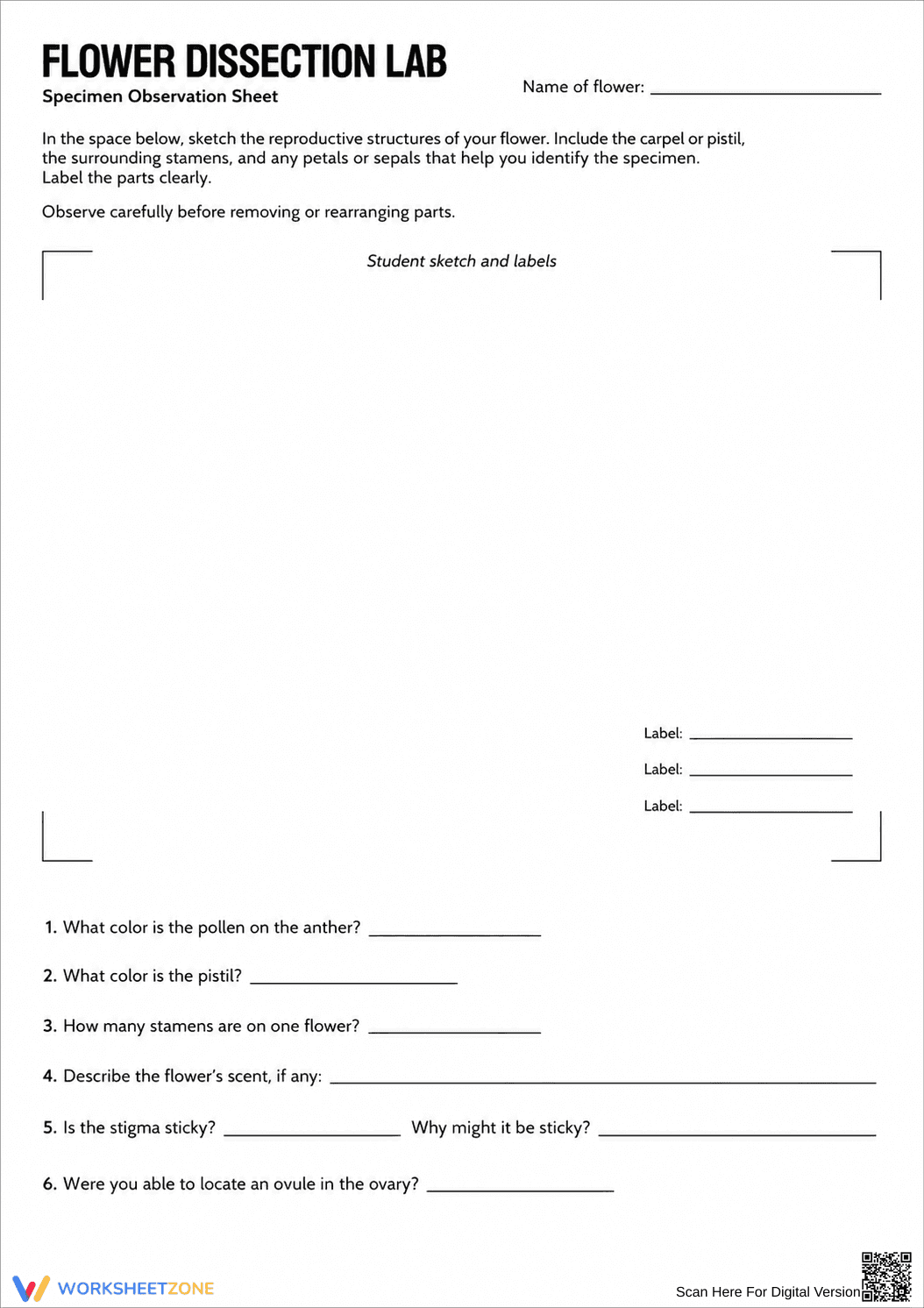
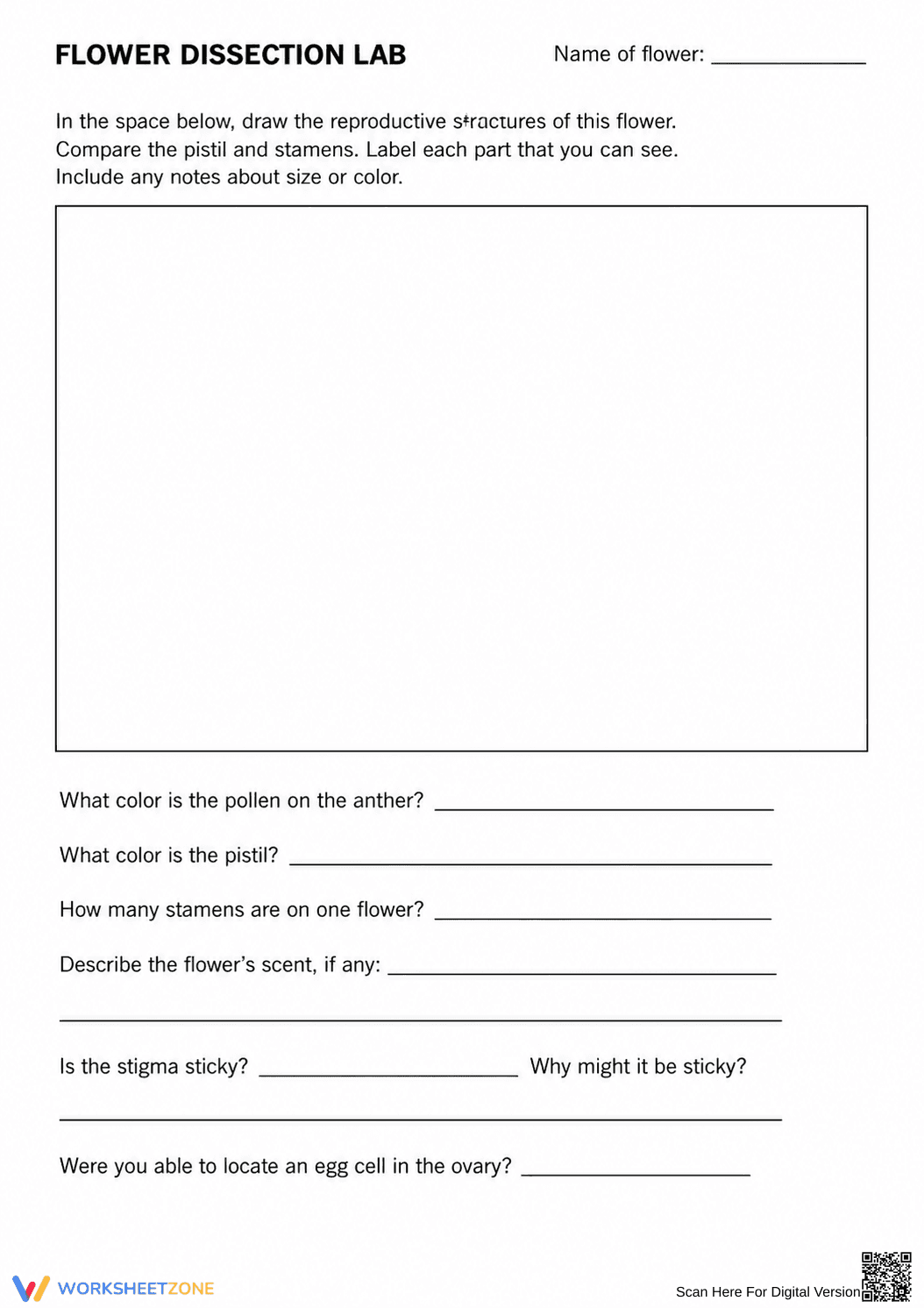
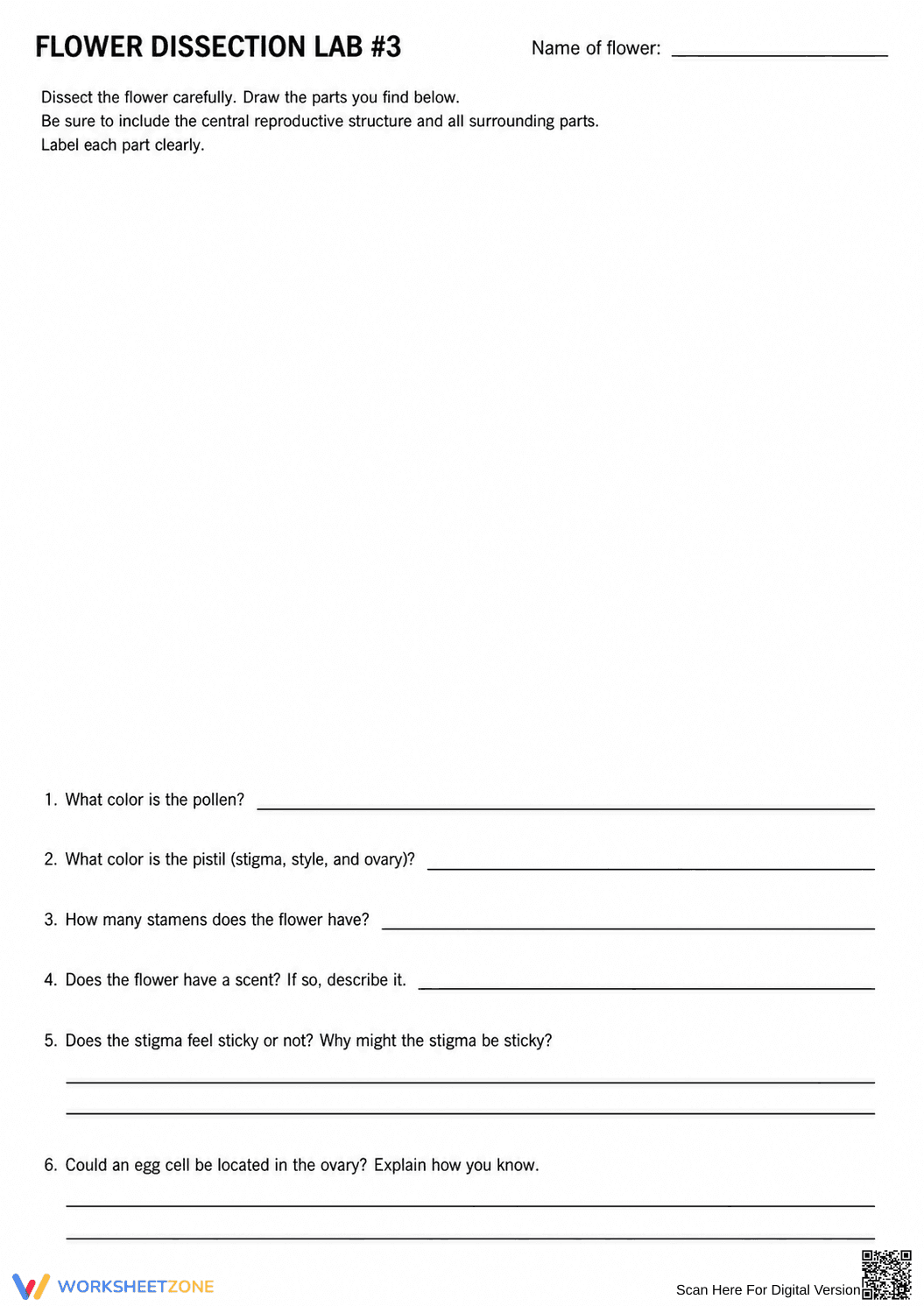
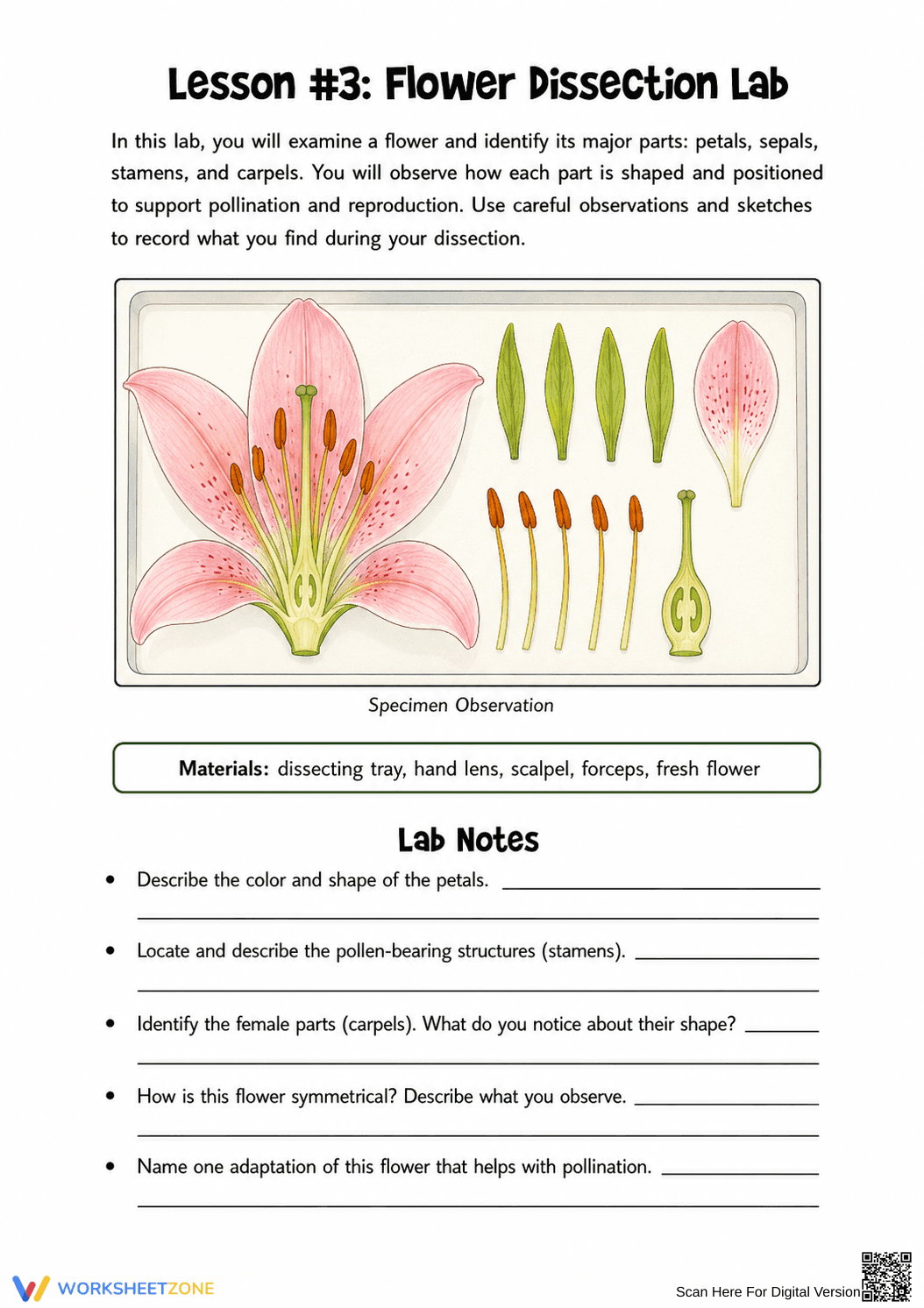

Flower Dissection Lab Worksheet (3 Levels) | Grade 10 Ready
Paste this activity's link or code into your existing LMS (Google Classroom, Canvas, Teams, Schoology, Moodle, etc.).
Students can open and work on the activity right away, with no student login required.
You'll still be able to track student progress and results from your teacher account.
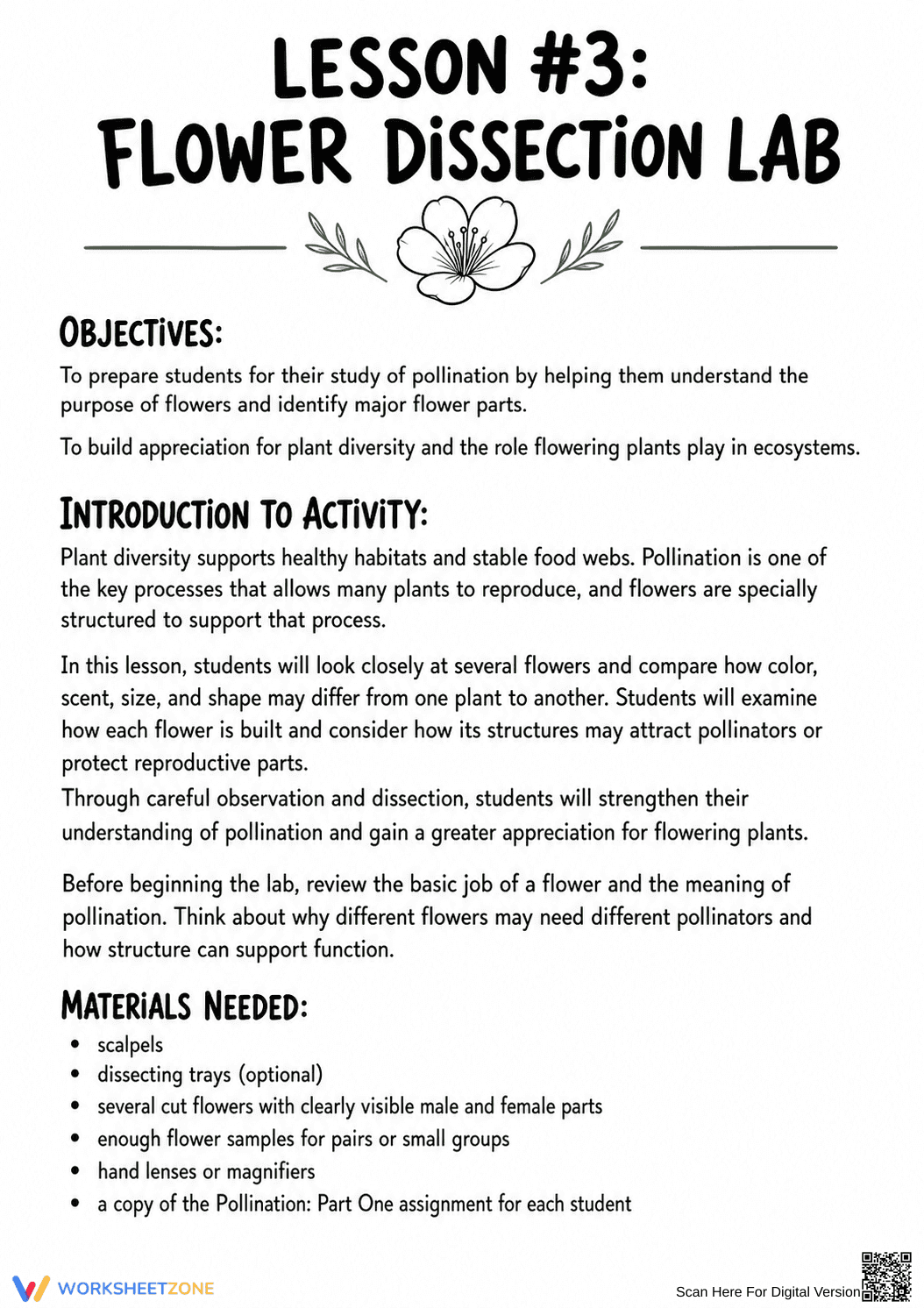
This Grade 10 flower dissection lab provides a comprehensive hands-on experience for students to identify reproductive structures and understand pollination. By examining the stamen, carpel, and petals, learners connect biological form to ecological function. This resource ensures students master botany fundamentals through direct observation and scientific sketching.
At a Glance
- Grade: 10–12 · Subject: Biology
- Standard:
HS-LS1-2— Multicellular organisms have hierarchical structural organization to support life functions- Skill Focus: Flower anatomy and pollination
- Format: 14 pages · 15 problems · Answer key included · PDF
- Best For: High school biology lab rotations
- Time: 45–60 minutes
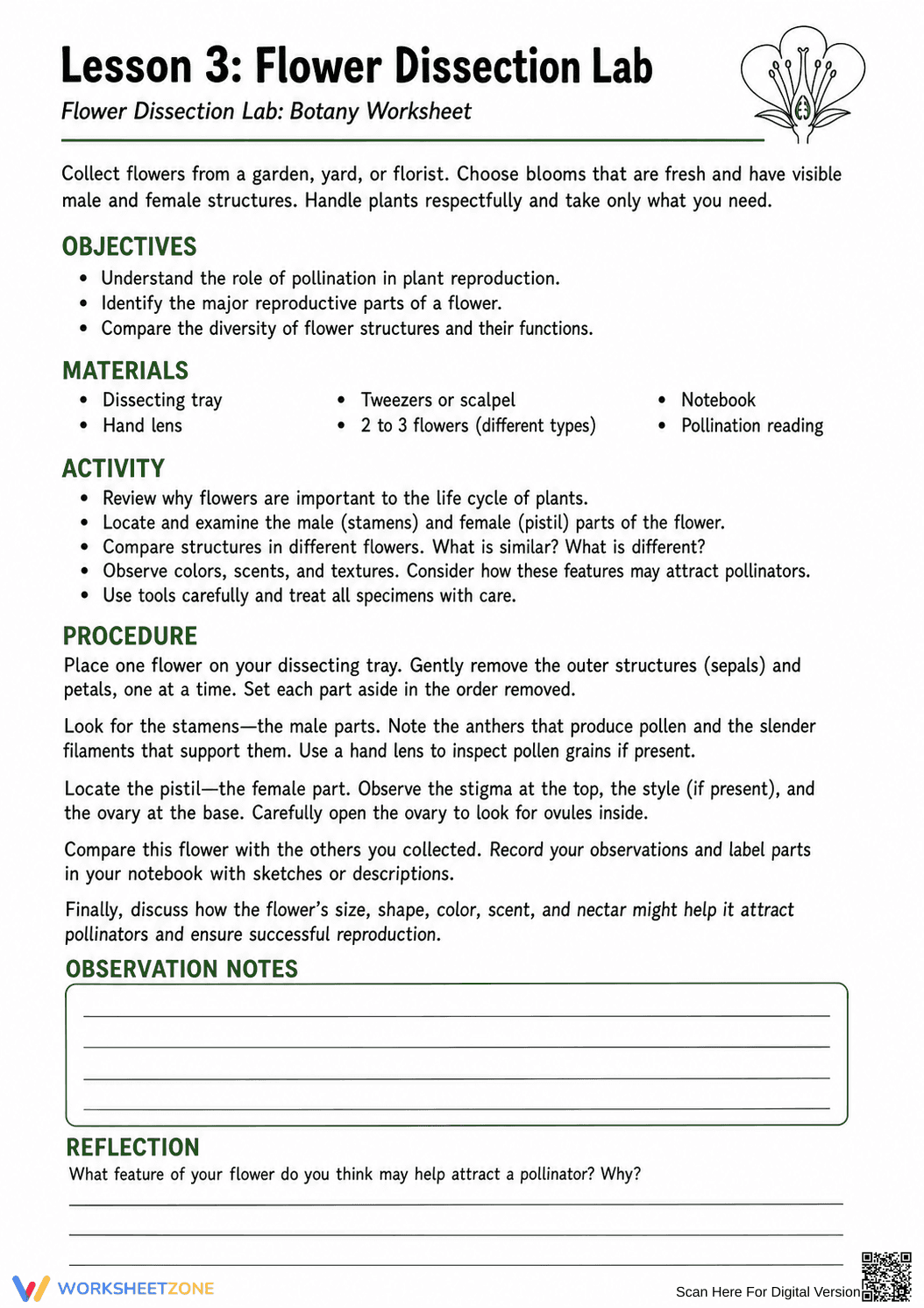
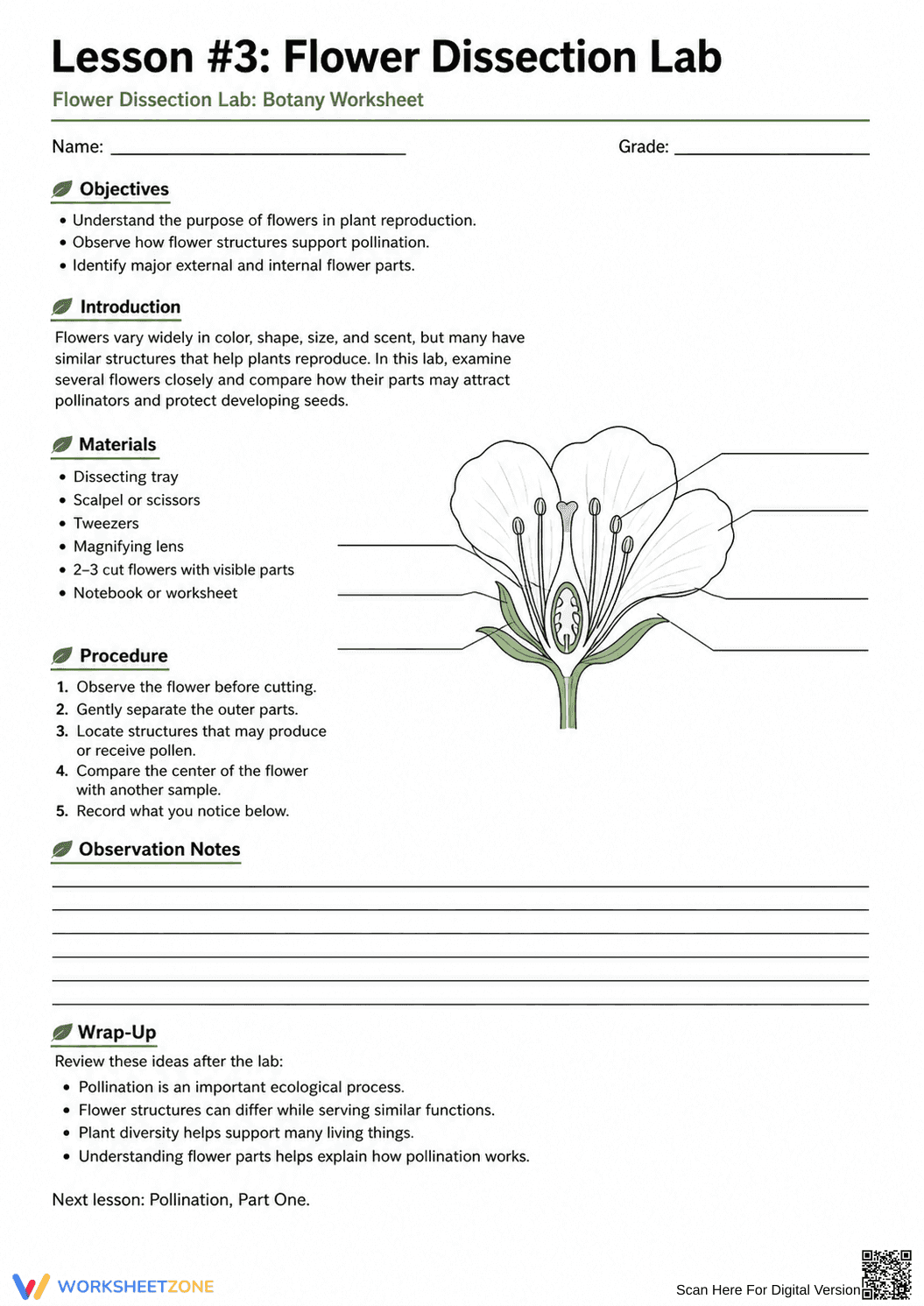
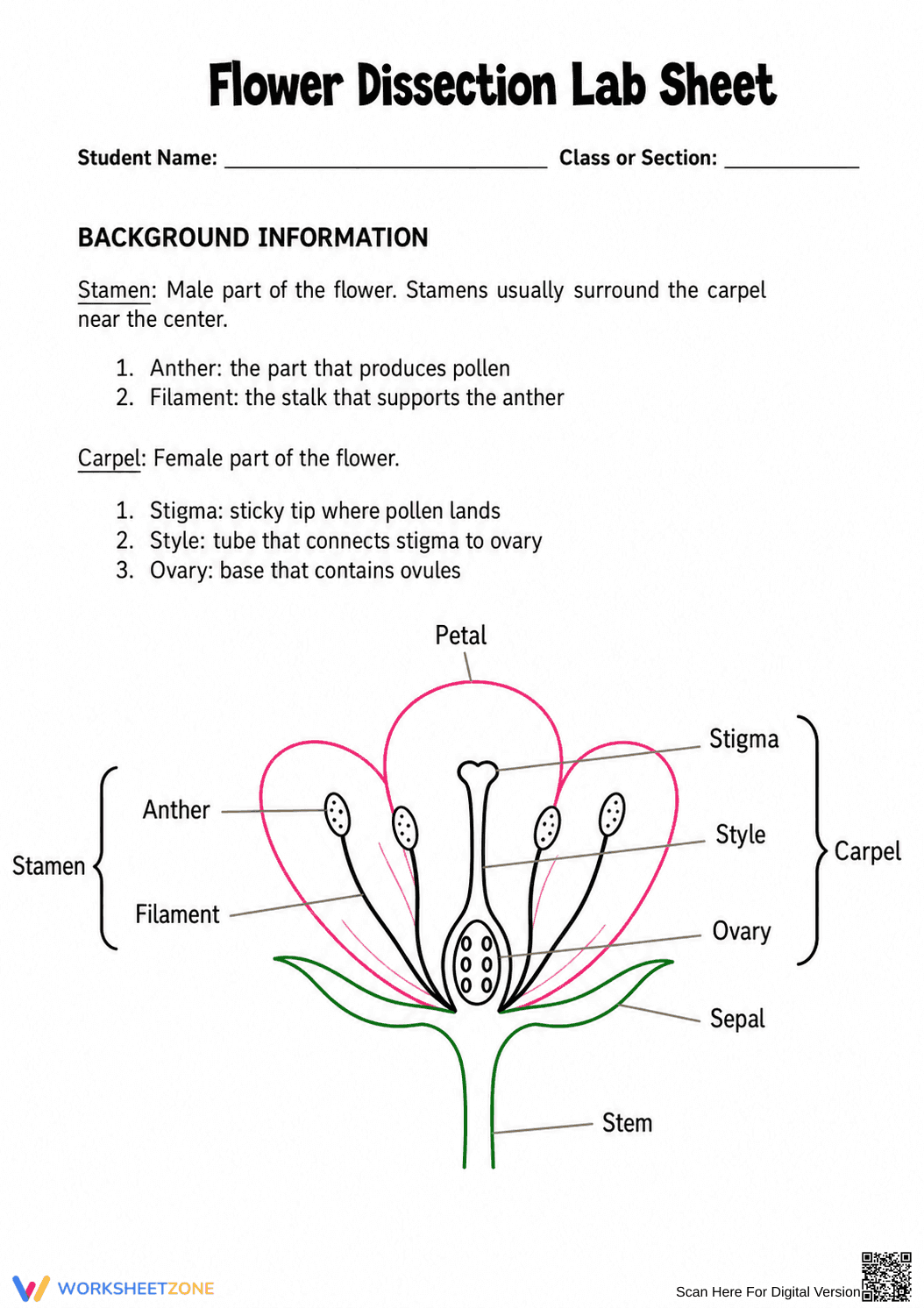
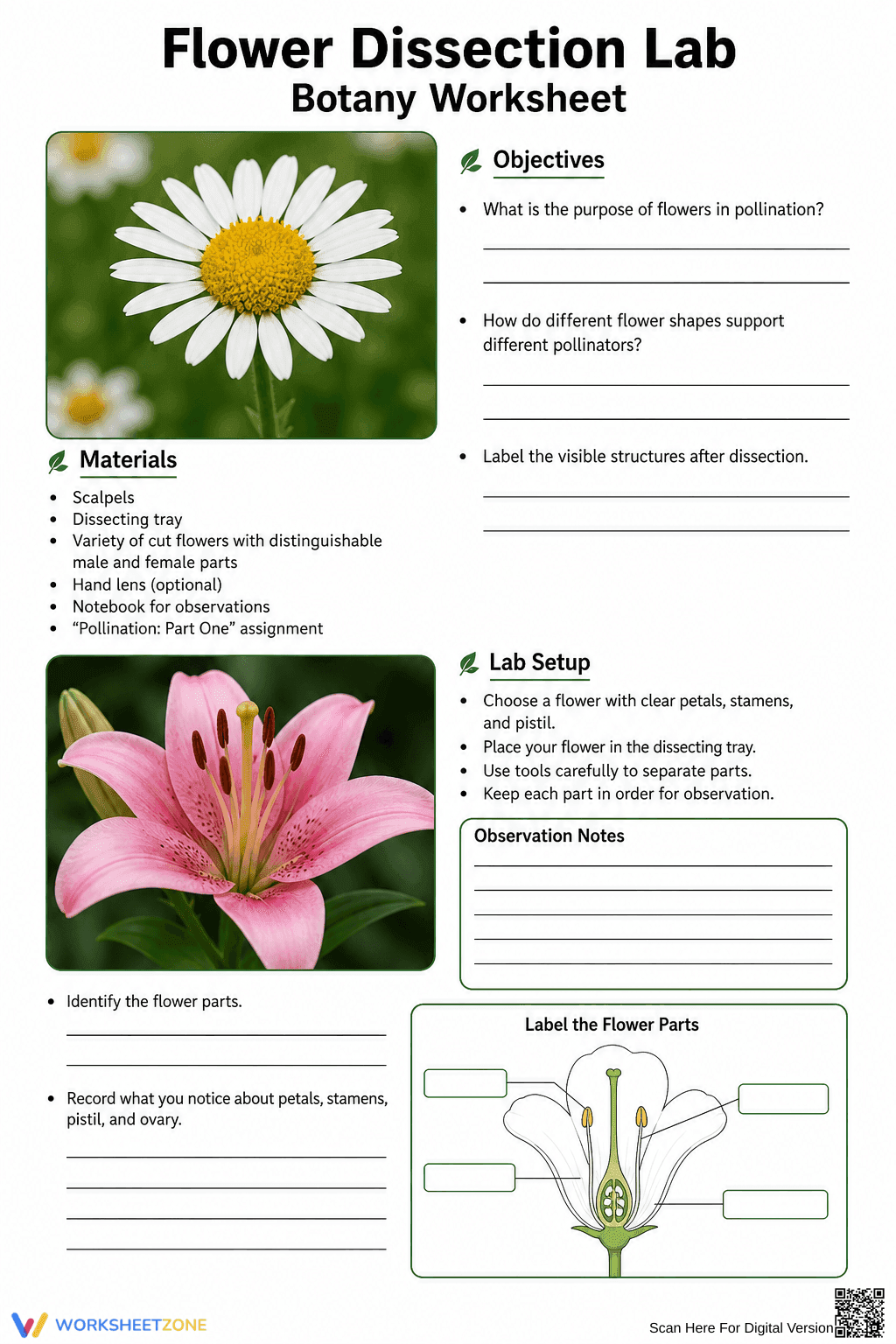
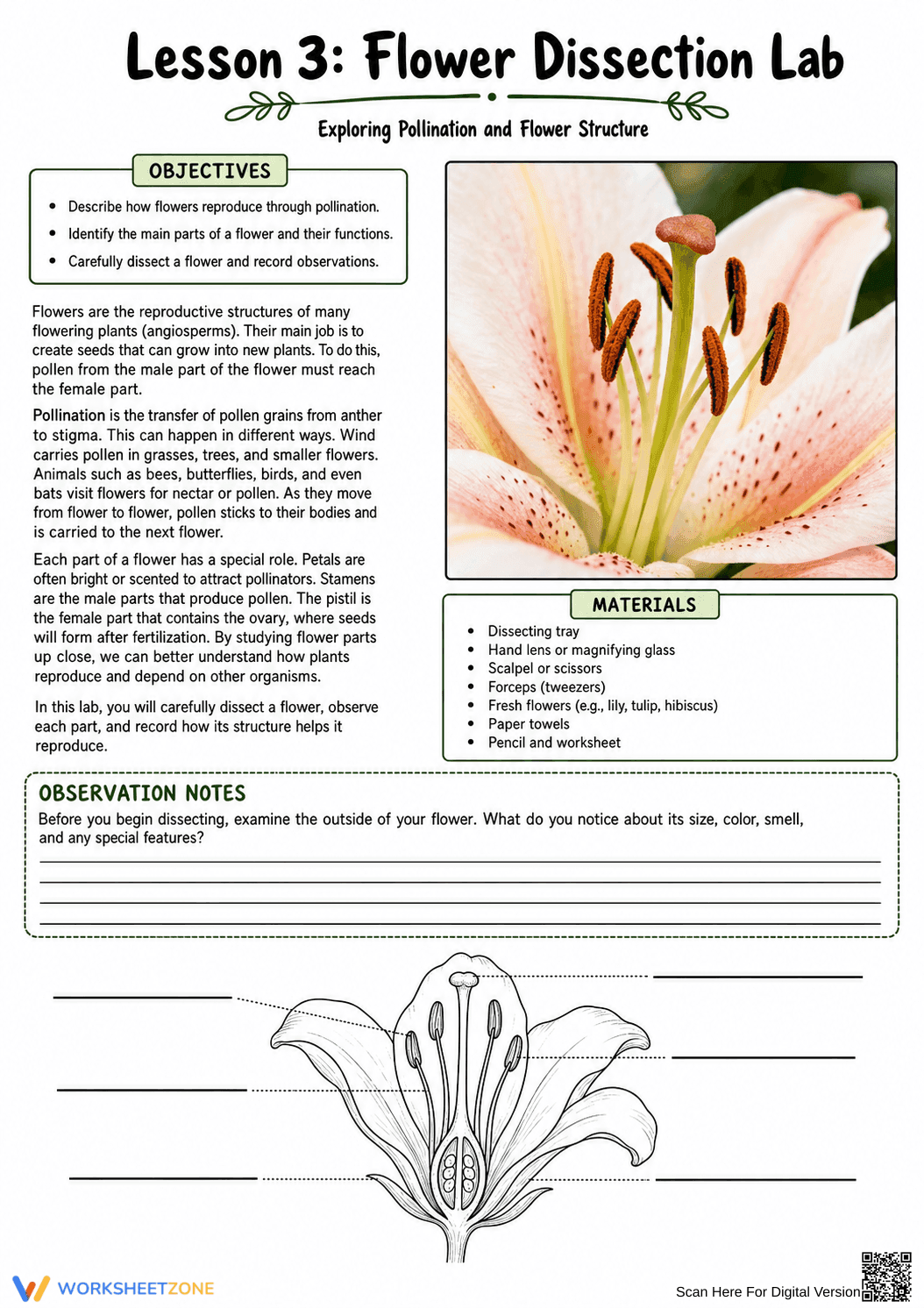
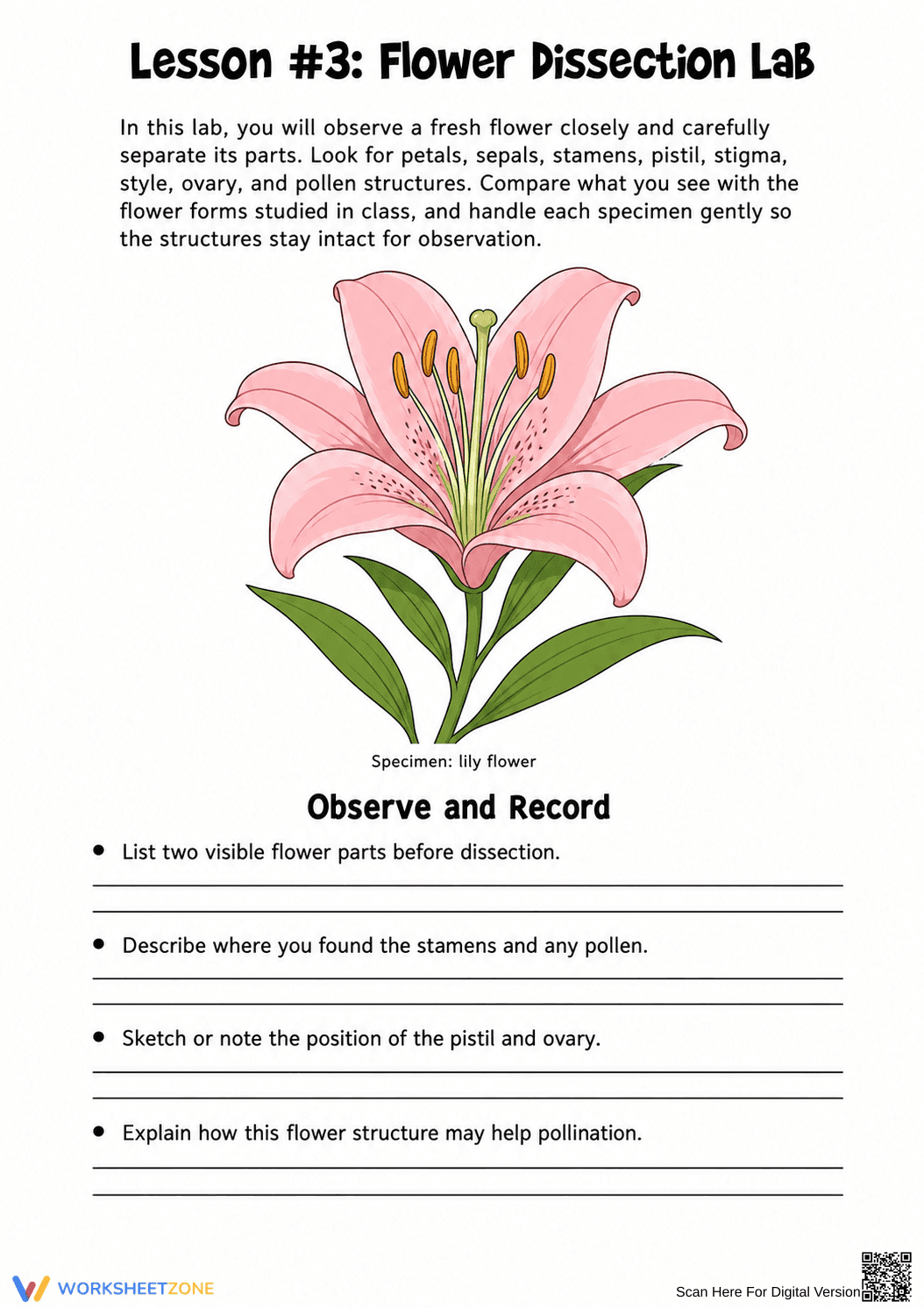
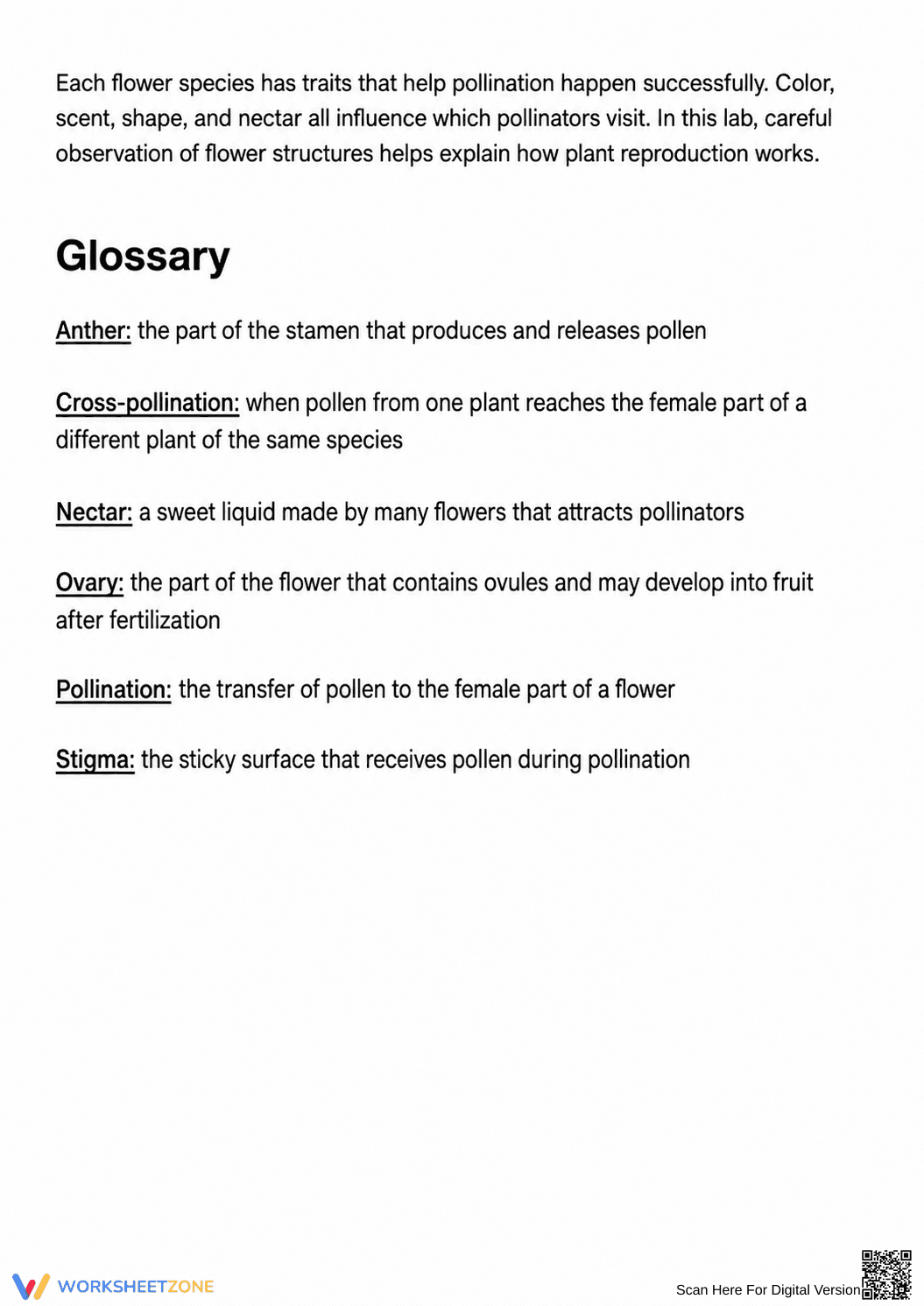
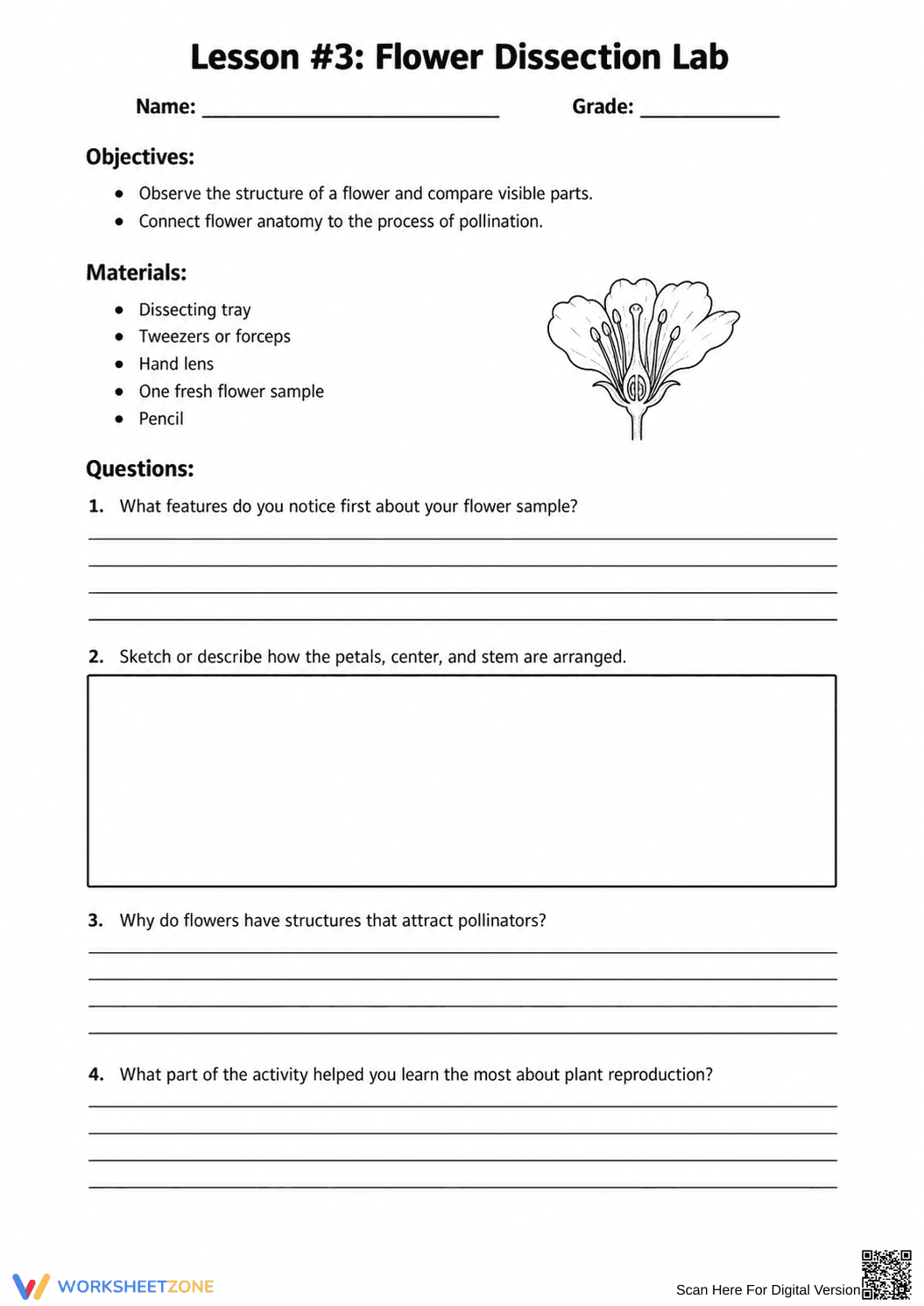
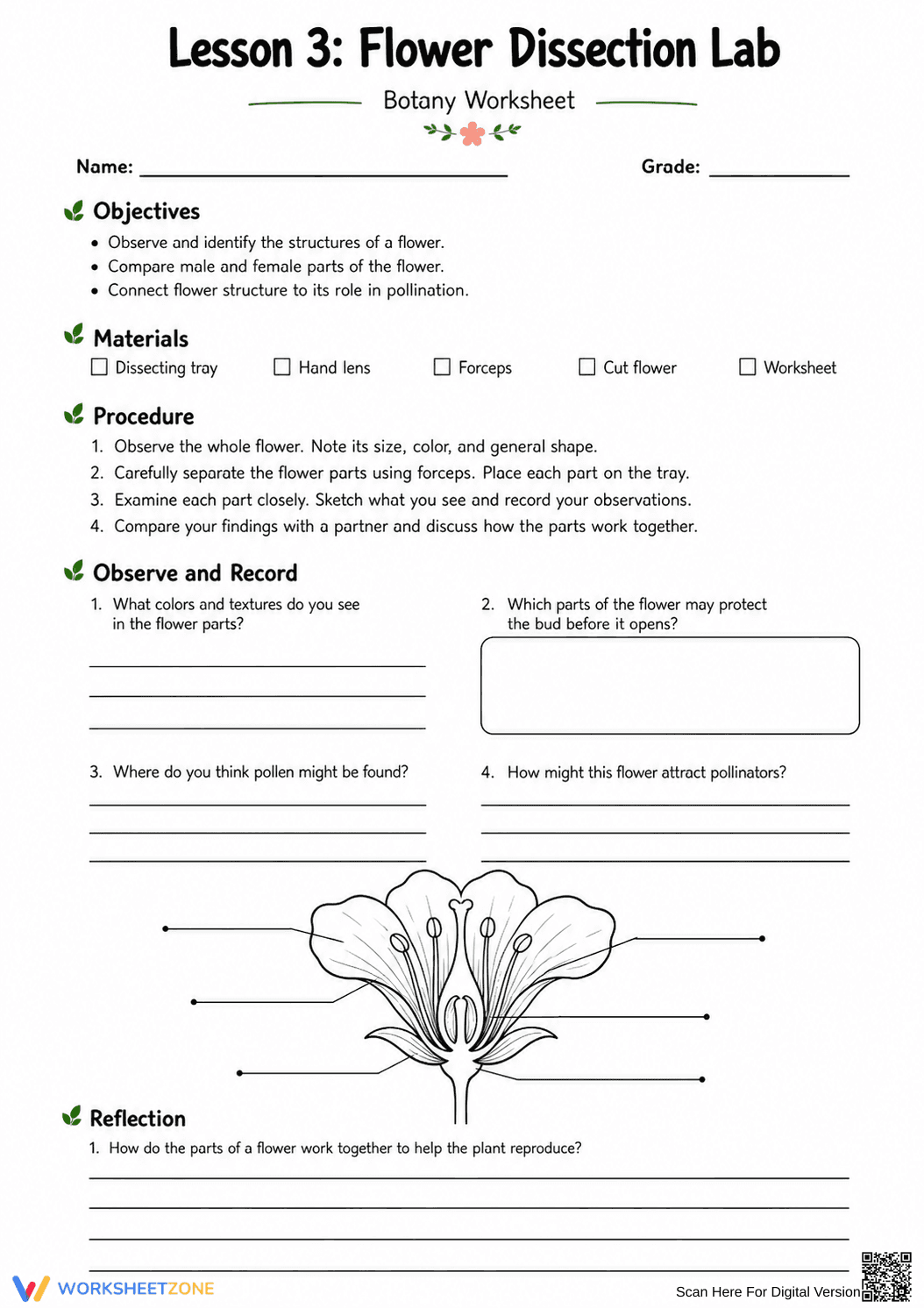
The 14-page PDF contains a detailed background information sheet, a labeled diagram of flower anatomy (stamen, anther, filament, carpel, stigma, style, ovary), and three distinct versions of the observation lab. It includes structured prompts for recording pollen color, stamen count, and scent, alongside a dedicated space for scientific sketching and a final reflection section.
Level Descriptions
- Below grade: Features a pre-labeled diagram and guided observation prompts with sentence starters to support English learners and students needing scaffolding.
- On grade: Provides the standard lab procedure where students identify parts independently and record observations in a structured table.
- Above grade: Includes higher-order extension questions regarding the evolutionary advantages of specific flower structures and their relationship to specific pollinators.
All three versions are included to support diverse classroom needs and ensure equitable access to the curriculum.
Standards Alignment
This resource is aligned with HS-LS1-2: "Develop and use a model to illustrate the hierarchical organization of interacting systems that provide specific functions within multicellular organisms." It specifically focuses on the reproductive system of flowering plants and how individual structures like the ovary and anther contribute to the organism's survival. Both standard codes can be copied directly into lesson plans, IEP goals, or district curriculum mapping tools.
How to Use It
Use this lab during a unit on plant biology after an introductory lecture on pollination. It serves as an excellent formative assessment; teachers should circulate during the dissection to observe if students can correctly distinguish between the anther and the stigma. Expect a completion time of 50 minutes for the full dissection and reflection. It is ideal for small group work where students can compare different flower species.
Who It's For
This lab is designed for high school biology students, including those in AP Biology or environmental science tracks. It is particularly effective for visual and kinesthetic learners who benefit from tactile interaction with biological specimens. Pair this with a digital microscope or a pollination anchor chart for a multi-sensory learning experience.
According to the RAND AIRS 2024 report, hands-on laboratory experiences like flower dissections significantly improve long-term retention of anatomical terminology compared to textbook-only instruction. This worksheet facilitates the HS-LS1-2 standard by requiring students to model the relationship between the stamen and carpel within the larger reproductive system. Research by Fisher & Frey (2014) emphasizes that providing tiered levels of support—as seen in the three versions of this lab—allows all students to access complex biological concepts regardless of their initial reading level. By integrating scientific sketching with 15 structured observation questions, this resource aligns with best practices for secondary science education, ensuring that students move beyond rote memorization toward a functional understanding of botany and ecological interdependence. This comprehensive lab pack is a reliable tool for high school educators seeking to meet rigorous state and national science frameworks.


