


























Views
Downloads
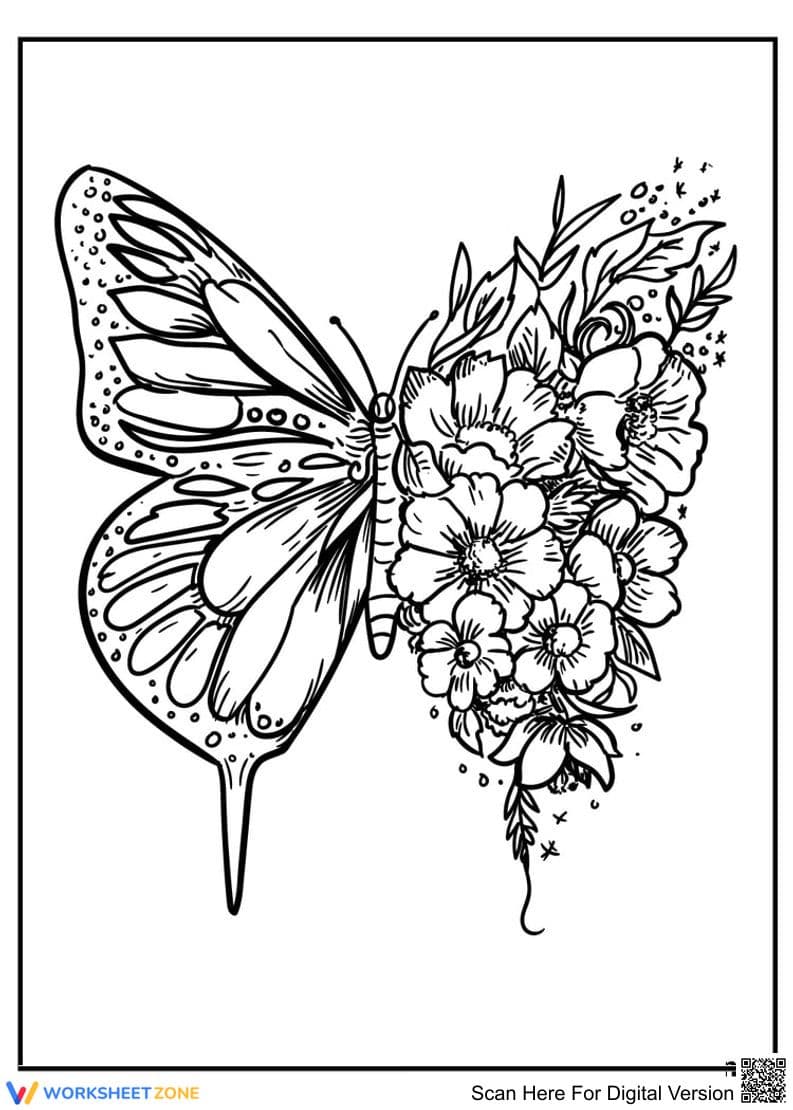

Flower and Butterfly Coloring Page | Essential Nature Art
Paste this activity's link or code into your existing LMS (Google Classroom, Canvas, Teams, Schoology, Moodle, etc.).
Students can open and work on the activity right away, with no student login required.
You'll still be able to track student progress and results from your teacher account.
This Flower and Butterfly coloring page provides a creative outlet for students to explore nature while developing essential fine motor control. By engaging with the intricate details of the wings and petals, learners improve their hand-eye coordination and focus. It serves as an ideal bridge between science observation and artistic expression.
At a Glance
- Grade: Kindergarten · Subject: English / Arts
- Standard:
CCSS.ELA-LITERACY.L.K.1— Demonstrate command of the conventions of standard English grammar and usage when writing- Skill Focus: Fine motor development and nature observation
- Format: 1 page · 1 complex illustration · No answer key needed · PDF
- Best For: Brain breaks and early finisher activities
- Time: 15–30 minutes
This resource consists of a single-page PDF featuring a high-resolution line art illustration of a monarch-style butterfly merged with floral elements. The design offers varying levels of detail, from broad wing sections to small botanical accents, making it suitable for different skill levels. No additional teacher setup or materials beyond standard coloring supplies are required for this activity.
Zero-Prep Workflow
The workflow for this activity is designed for maximum efficiency in a busy classroom. First, print the single-page PDF (30 seconds). Second, distribute the sheets to students during transition periods or as part of a nature unit (1 minute). Third, allow students to work independently while you facilitate small groups or manage administrative tasks. Total teacher preparation time is under 2 minutes, making it an excellent choice for emergency sub plans or unexpected schedule changes.
Standards Alignment
This worksheet aligns with `CCSS.ELA-LITERACY.L.K.1`, which focuses on the conventions of standard English. While primarily an artistic activity, the precise coloring required builds the intrinsic hand muscles and grip stability necessary for letter formation and writing endurance. Both standard codes can be copied directly into lesson plans, IEP goals, or district curriculum mapping tools to justify the inclusion of fine motor practice.
How to Use It
Use this worksheet during a "Nature and Life Cycles" unit to reinforce the relationship between pollinators and plants. It is particularly effective as a calming activity after recess or during a rainy day "brain break." Teachers should observe student grip and pressure during the activity to formatively assess fine motor readiness for writing tasks. Expected completion time is 20 minutes for a fully colored page.
Who It's For
This page is designed for Kindergarten through 2nd-grade students, though the intricate design also appeals to older students seeking a mindfulness activity. It is a perfect pairing for a read-aloud book about butterflies or a classroom anchor chart detailing the parts of a flower. It provides a low-stress environment for students to practice staying within lines.
Research from Fisher & Frey (2014) emphasizes the importance of purposeful independent tasks that allow students to practice self-regulation and motor skills without constant teacher intervention. This Flower and Butterfly coloring page supports these findings by providing a structured yet creative task that aligns with CCSS.ELA-LITERACY.L.K.1 fine motor precursors. By focusing on the symmetrical patterns of the butterfly and the organic shapes of the flowers, students develop the visual-spatial awareness necessary for more complex scientific diagrams later in their education. The activity serves as a low-stakes entry point into biological study, ensuring that even the youngest learners can participate in noticing the details of the natural world. This resource is a practical tool for any educator looking to integrate art into a STEM-focused curriculum while maintaining high engagement and zero preparation time. It ensures that students remain productive during transitions while building the physical strength needed for academic writing.


