


























Views
Downloads


Printable First Grade Sight Words Flashcards
Paste this activity's link or code into your existing LMS (Google Classroom, Canvas, Teams, Schoology, Moodle, etc.).
Students can open and work on the activity right away, with no student login required.
You'll still be able to track student progress and results from your teacher account.
Help early readers build essential fluency with these printable first-grade sight word flashcards. By focusing on high-frequency words that are difficult to decode phonetically, this resource helps students develop automatic word recognition. This foundational skill directly supports reading comprehension and builds confidence in young learners.
At a Glance
- Grade: 1 · Subject: ELA
- Standard:
CCSS.ELA-LITERACY.RF.1.3.G— Read grade-appropriate irregularly spelled words- Skill Focus: Sight Word Recognition
- Format: 4 pages · 12 words · No answer key · PDF
- Best For: Fluency practice and centers
- Time: 10–15 minutes
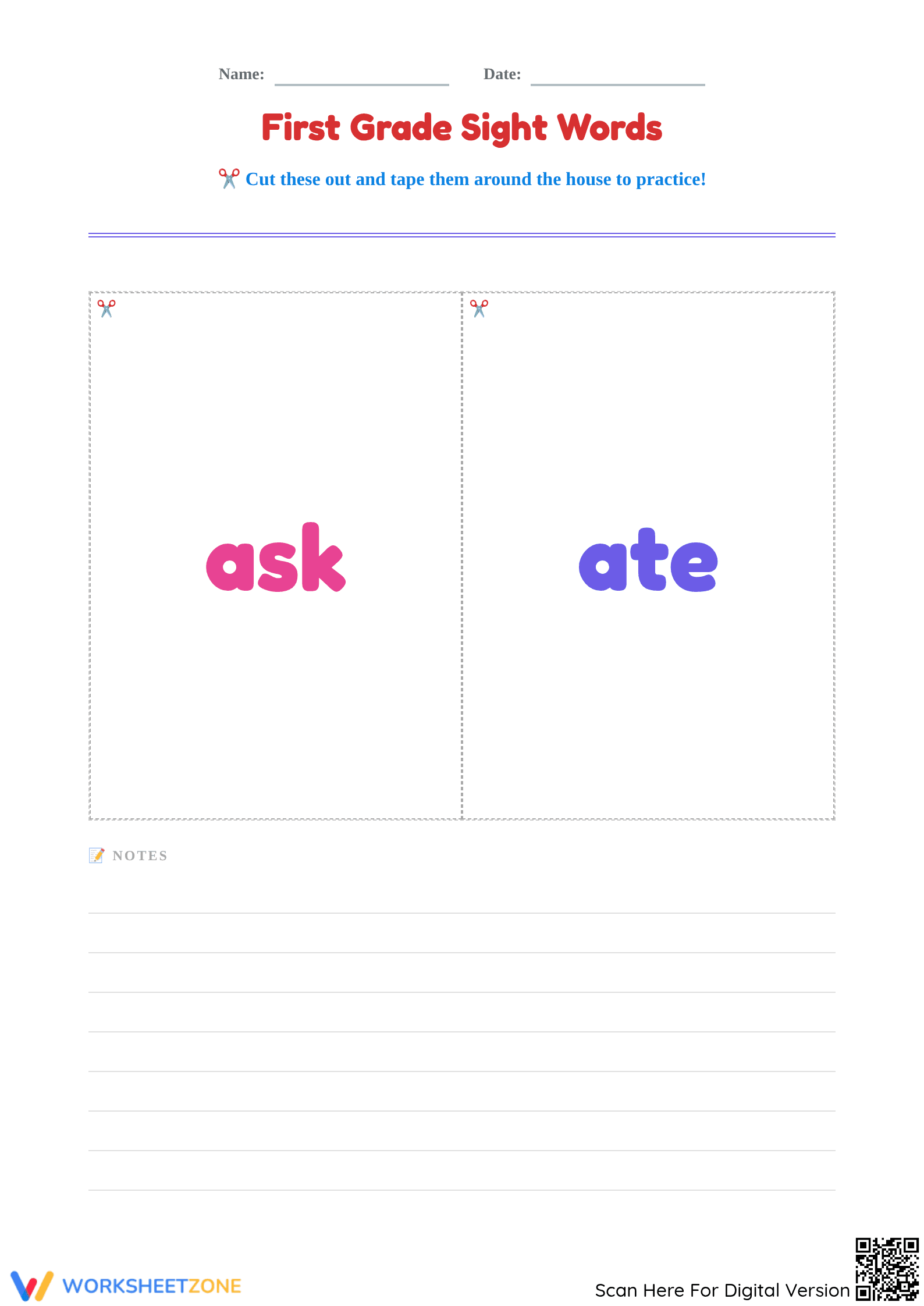
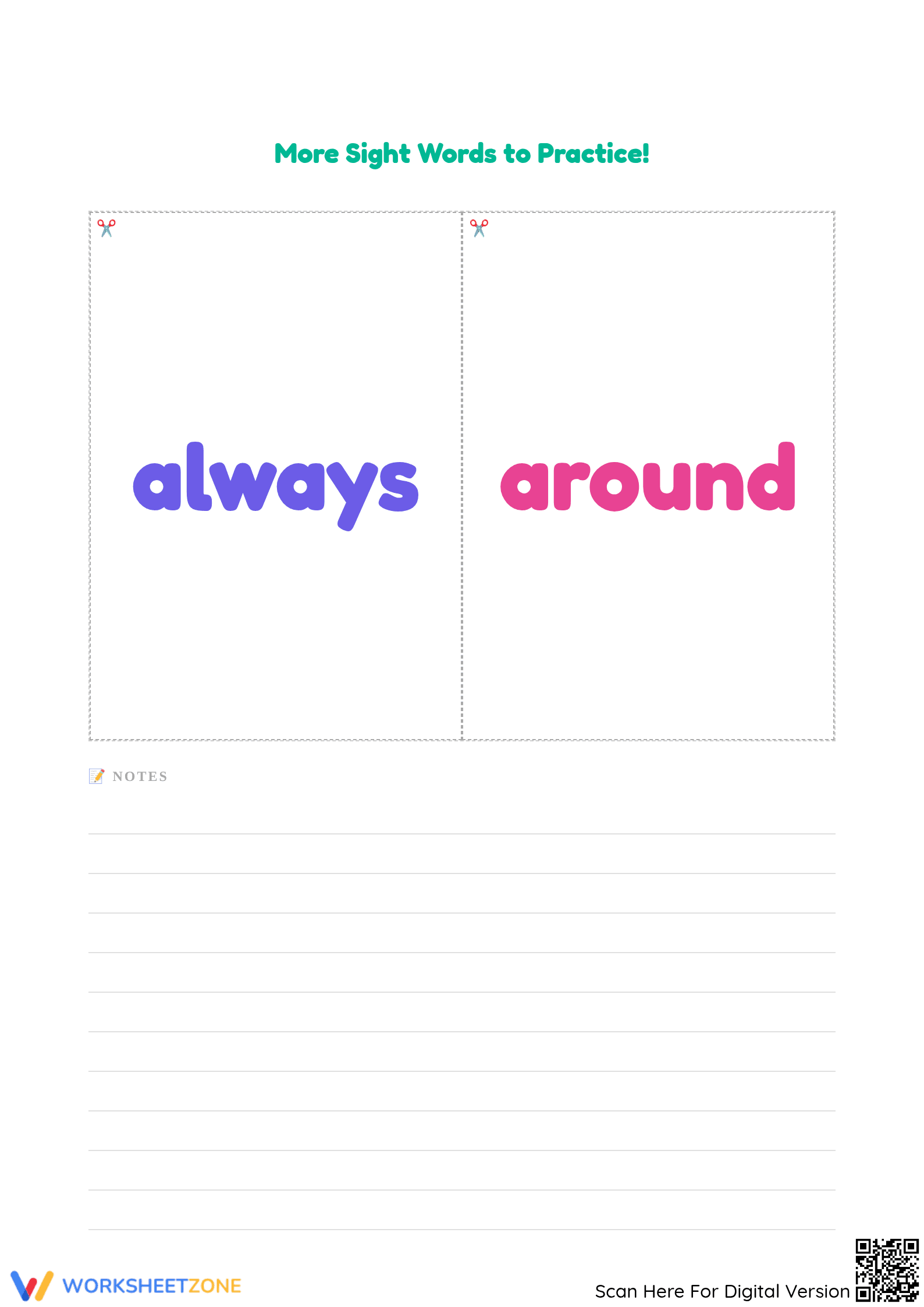
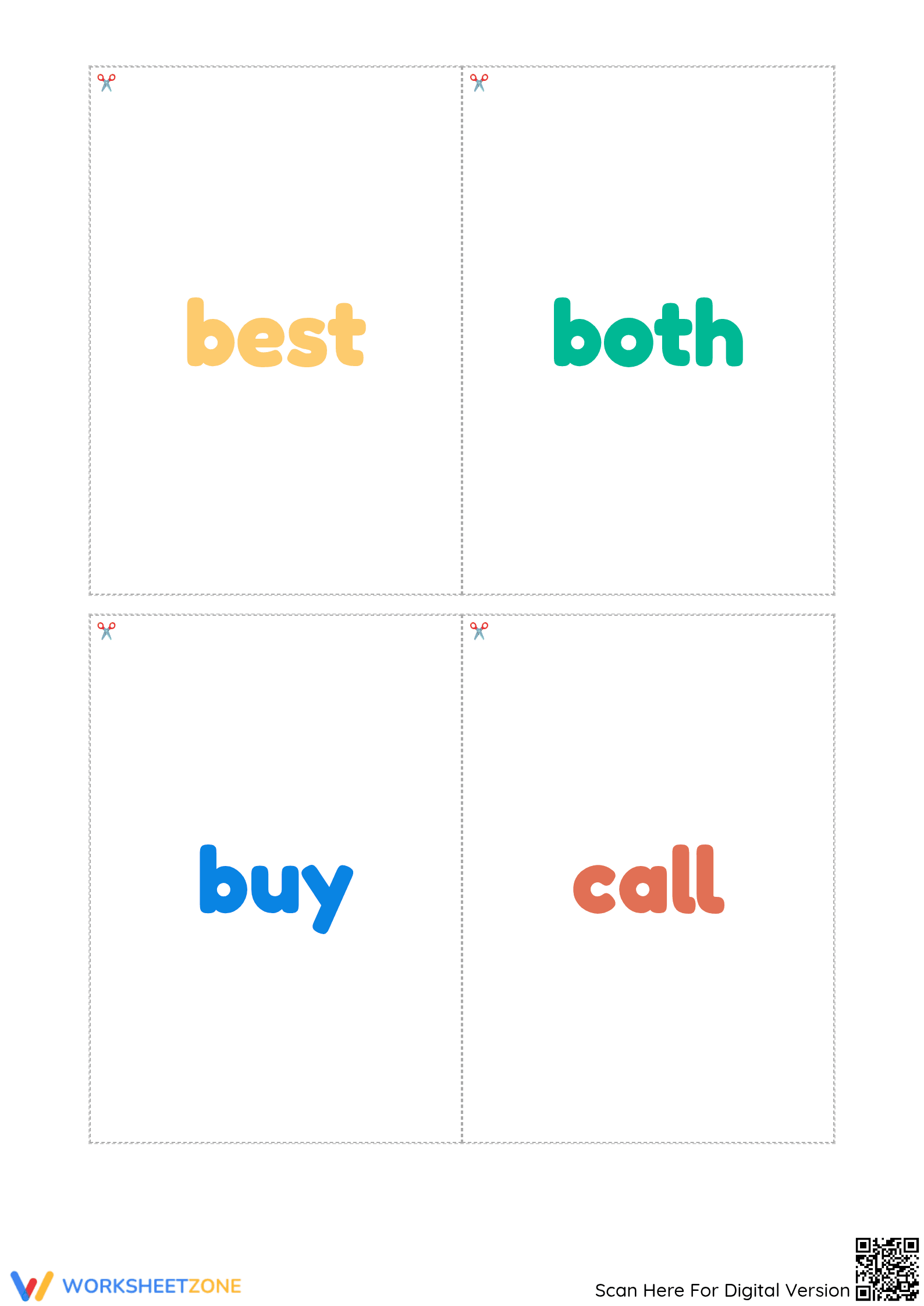
This resource includes four pages of brightly colored, easy-to-read flashcards featuring twelve essential first-grade sight words. The words included are ask, ate, back, because, been, before, always, around, best, both, buy, and call. Each page contains dashed cut-lines for quick preparation, and includes a dedicated notes section at the bottom for teachers or parents to track student progress or jot down instructional reminders.
Skill Progression
- Guided practice: Introduce the 12 sight words in a small group setting, modeling the pronunciation and using each word in a simple sentence to establish context.
- Supported practice: Have students work in pairs using the flashcards, taking turns reading the words and providing peer support when a word is forgotten.
- Independent practice: Students can review the cards individually or take them home for daily repetition, taping them around the house for continuous exposure.
This gradual-release approach ensures students move confidently from teacher-led introduction to independent mastery.
Standards Alignment
Aligned to primary standard CCSS.ELA-LITERACY.RF.1.3.G: Recognize and read grade-appropriate irregularly spelled words. It also supports CCSS.ELA-LITERACY.RF.1.4 by building the word recognition needed for fluent reading. Both standard codes can be copied directly into lesson plans, IEP goals, or district curriculum mapping tools.
How to Use It
These flashcards are highly versatile for daily classroom routines. Use them during morning meeting as a quick whole-class review before direct instruction, or place them in a literacy center for independent practice. As a formative assessment tip, observe students as they flip through the cards; note which words require hesitation or phonetic decoding attempts, and isolate those specific cards for targeted review. Expected completion time is 10 to 15 minutes per session.
Who It's For
This resource is primarily designed for first-grade students developing their early reading skills, but it also serves as an excellent intervention tool for second graders needing fluency support or advanced kindergarteners ready for a challenge. To differentiate, reduce the deck size for students who feel overwhelmed, introducing only three to four new words at a time. Pair these flashcards with leveled reading passages so students can immediately identify their newly learned sight words in context.
Developing automaticity with high-frequency words is a critical milestone in early literacy development. Aligned with CCSS.ELA-LITERACY.RF.1.3.G, this resource helps students read grade-appropriate irregularly spelled words with speed and accuracy. According to a comprehensive EdReports 2024 analysis of foundational reading skills, students who engage in consistent, spaced repetition of sight words demonstrate significantly higher reading comprehension scores by the end of first grade. Because these specific words often defy standard phonetic decoding rules, repeated visual exposure through tactile tools like flashcards is absolutely essential for moving words into a student's long-term memory. By integrating these twelve targeted words into daily classroom routines or home practice, educators and parents provide the exact repetition required to build confident, fluent readers who can focus on text meaning rather than struggling with basic decoding.


