


























Views
Downloads
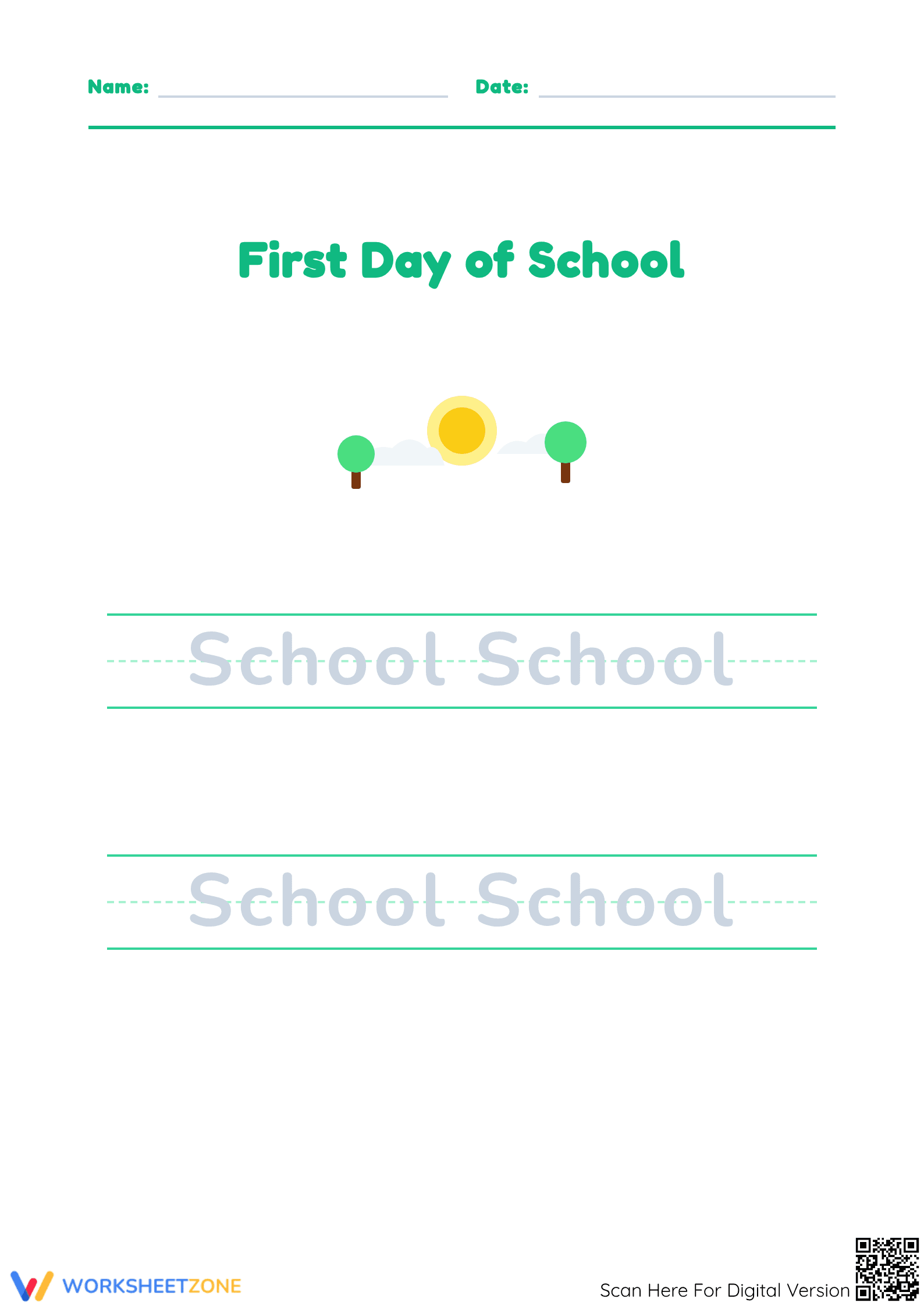


First Day of School Writing Practice | Essential Grade K-1
Paste this activity's link or code into your existing LMS (Google Classroom, Canvas, Teams, Schoology, Moodle, etc.).
Students can open and work on the activity right away, with no student login required.
You'll still be able to track student progress and results from your teacher account.
This Grade K-1 handwriting worksheet helps young learners master the word "school" through guided tracing and independent writing. By focusing on letter formation and word recognition, students build the fine motor skills necessary for early literacy success. It is the perfect activity for the first week of the academic year.
At a Glance
At a Glance
- Grade: K-1 · Subject: ELA & Handwriting
- Standard:
CCSS.ELA-LITERACY.L.K.1.A— Print many upper- and lowercase letters correctly during writing tasks- Skill Focus: Word tracing and letter formation
- Format: 2 pages · 6 tracing tasks · Answer key included · PDF
- Best For: Back-to-school morning work or centers
- Time: 10–15 minutes
What's Inside
The 2-page PDF features a clean, seasonal design with large primary-ruled lines. Page one provides four opportunities to trace the word "School" with dashed-line guides. Page two continues with two additional tracing prompts followed by ample blank lines for independent practice. The layout includes space for student names and dates to help with classroom organization.
Zero-Prep Workflow
Teachers can implement this resource in under 2 minutes. Simply print the 2-page PDF, distribute it to students during morning arrival or a writing center rotation, and review the letter formation as students work. Because the instructions are visual and intuitive, it serves as an excellent first-day activity that requires no prior explanation or teacher setup.
Standards Alignment
This resource aligns with `CCSS.ELA-LITERACY.L.K.1.A`, which requires students to print many upper- and lowercase letters. It also supports `CCSS.ELA-LITERACY.RF.K.1.B` by helping students recognize that spoken words are represented in written language by specific sequences of letters. Both standard codes can be copied directly into lesson plans, IEP goals, or district curriculum mapping tools.
How to Use It
Use this worksheet as a bell ringer on the first day of school to keep students engaged while you handle administrative tasks. It also works well as a formative assessment to observe pencil grip and fine motor control early in the term. Expect students to complete both pages within 10 to 15 minutes depending on their developmental level.
Who It's For
This activity is designed for Kindergarten and First Grade students, including those requiring occupational therapy support for handwriting. It pairs naturally with a first-day read-aloud book or an anchor chart about school rules and vocabulary to provide a cohesive thematic experience for early learners.
According to the RAND AIRS 2024 report, consistent handwriting practice in early childhood is a significant predictor of later reading and writing fluency. This worksheet targets CCSS.ELA-LITERACY.L.K.1.A by providing structured tracing of the high-frequency word "school," which bridges the gap between letter recognition and word production. Research from Fisher & Frey (2014) emphasizes the importance of the gradual release of responsibility; this resource follows that model by moving from guided tracing to independent writing lines. By engaging with these 6 tracing tasks, students reinforce the muscle memory required for legible print. This printable is an evidence-based tool for establishing foundational literacy habits during the critical first week of school, ensuring that students meet developmental milestones for letter formation and spatial awareness on the page without unnecessary cognitive load.


