


























Views
Downloads
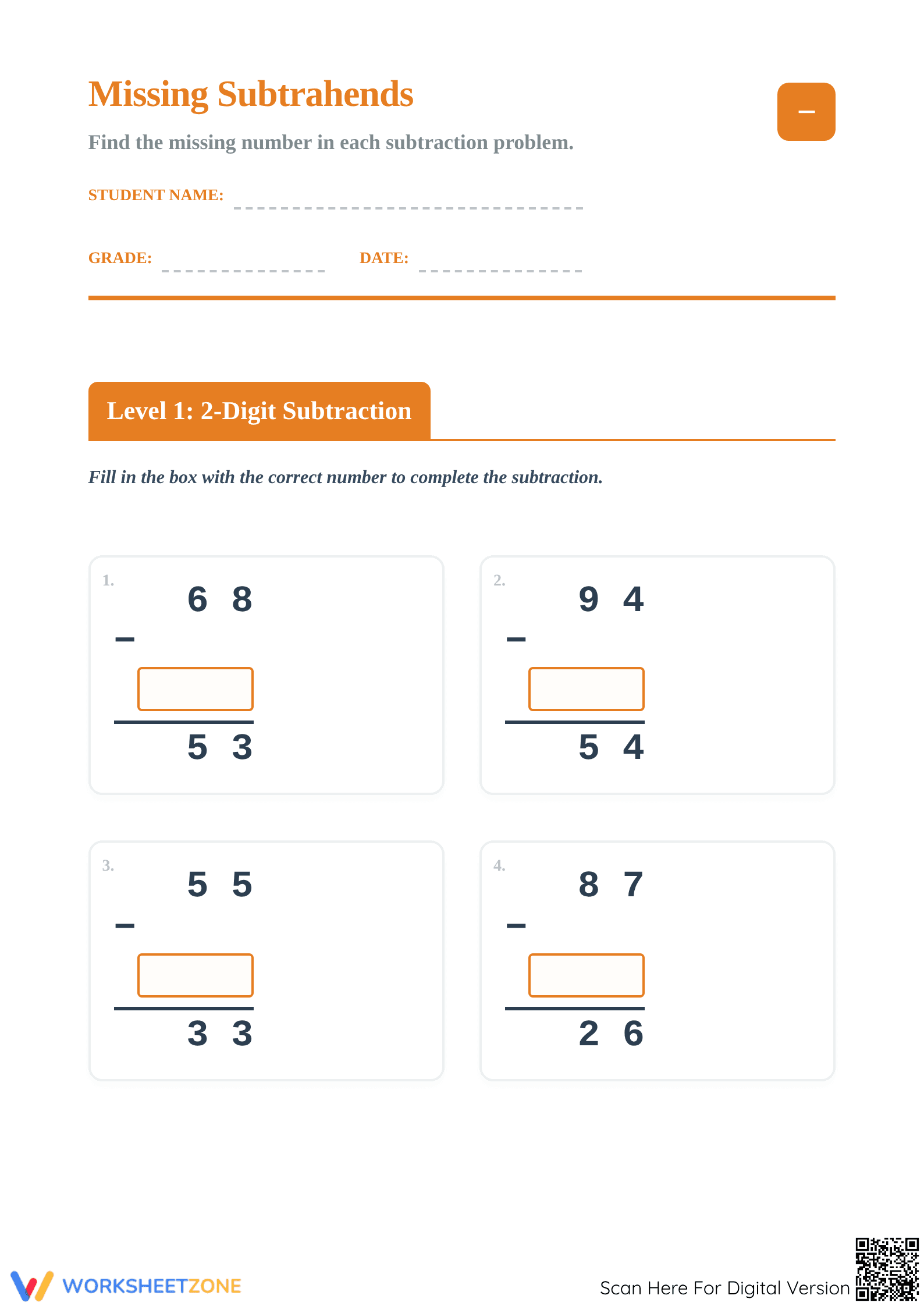
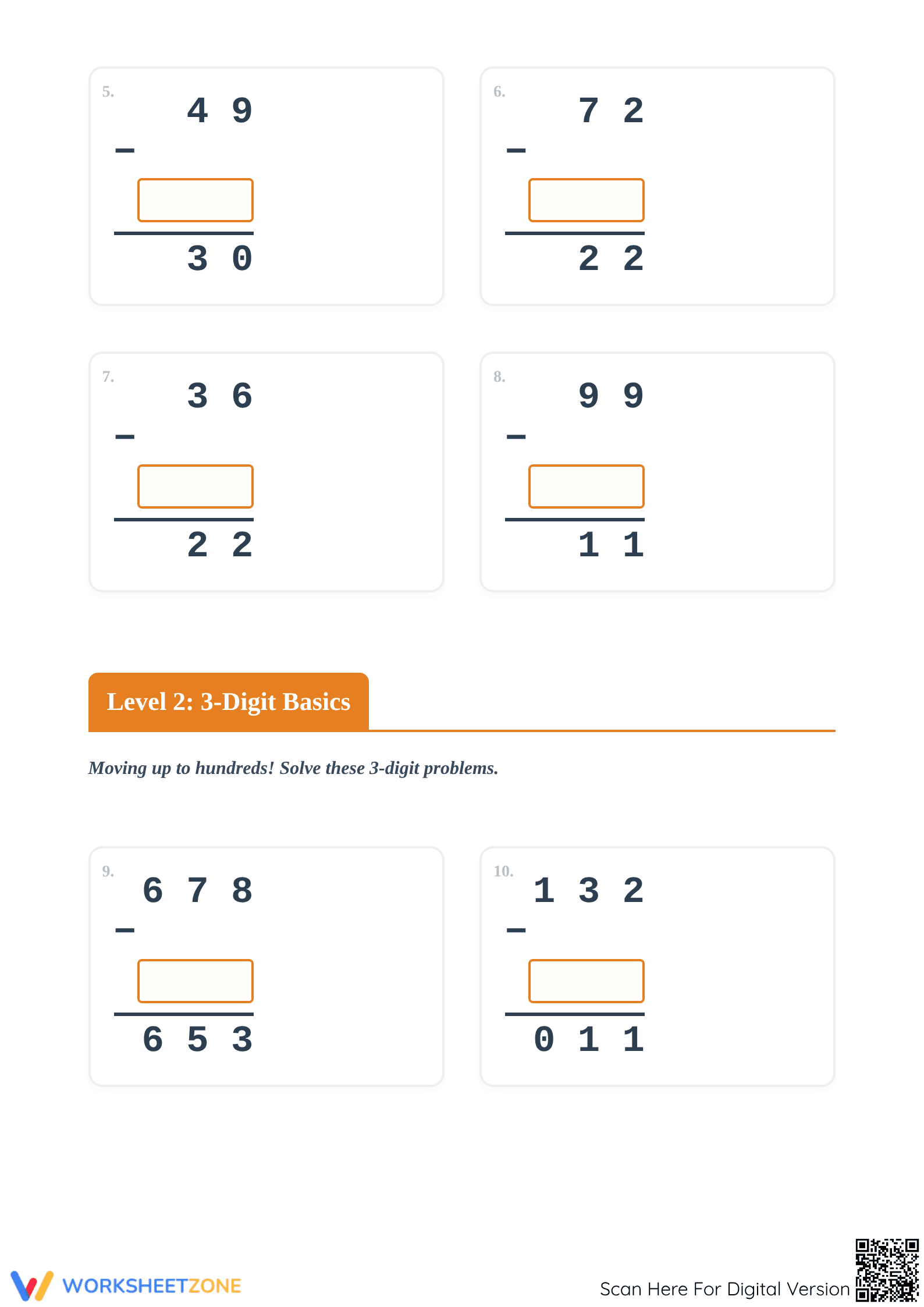
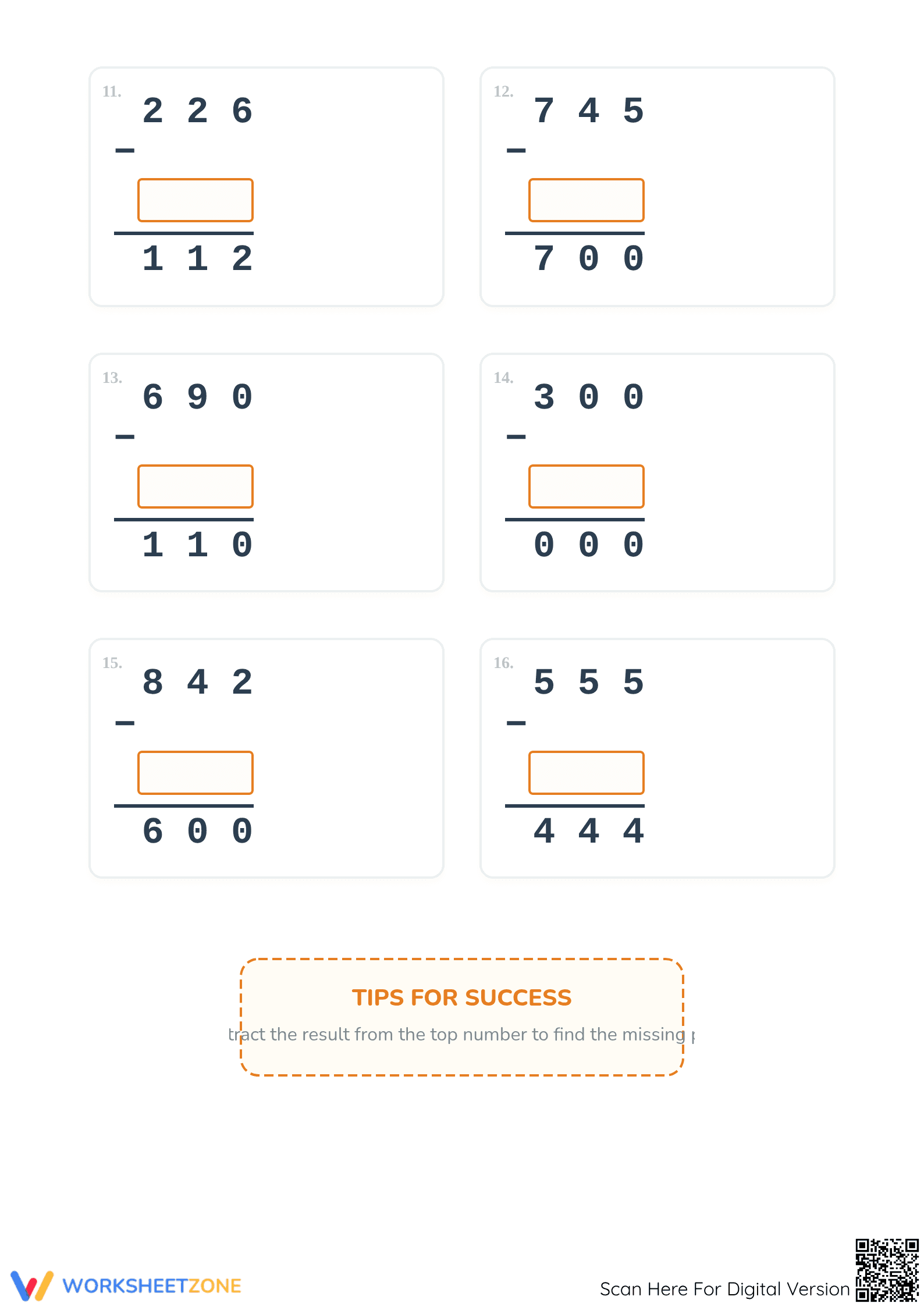
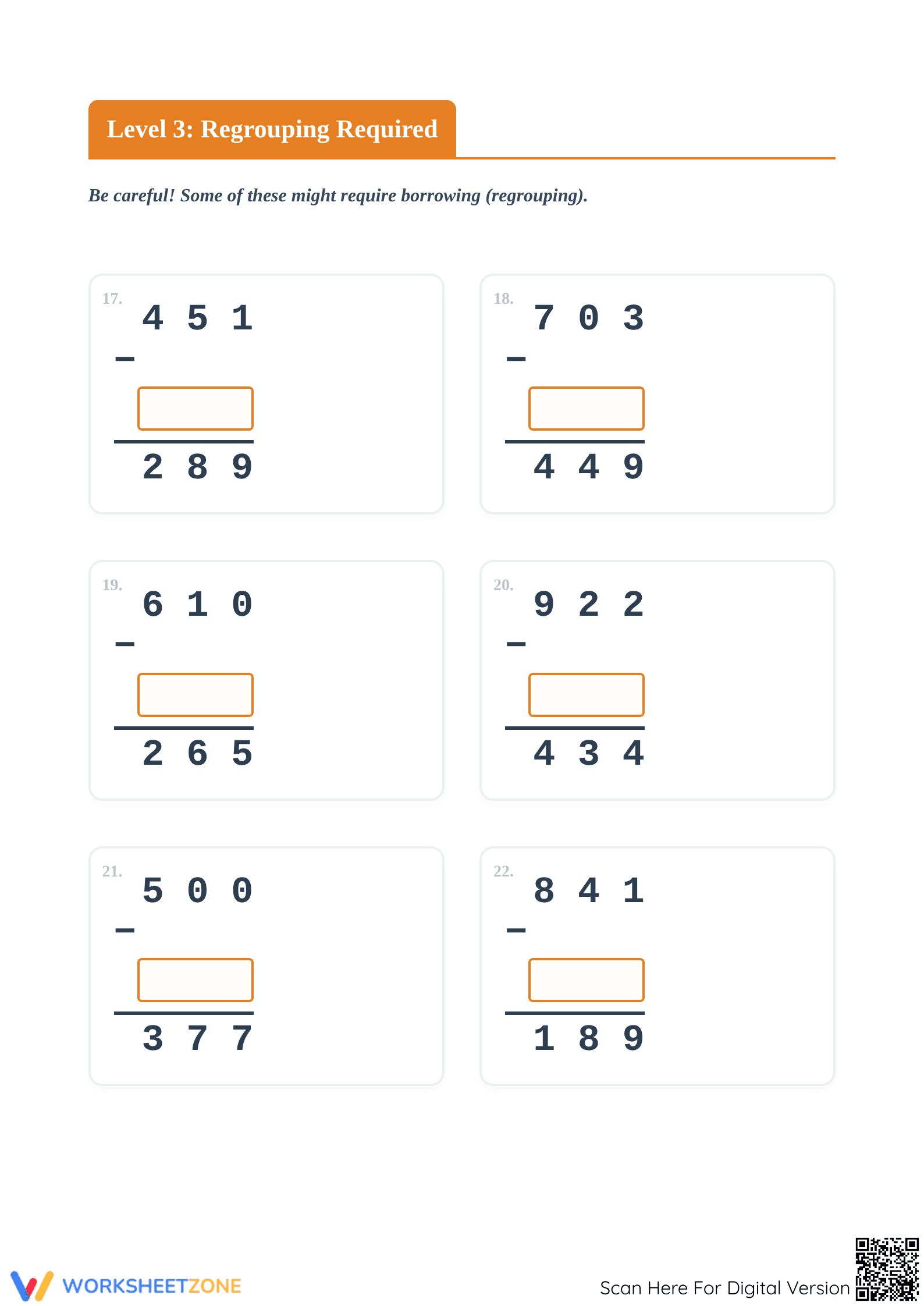

Printable Missing Number Subtraction Worksheet | Grade 2
Paste this activity's link or code into your existing LMS (Google Classroom, Canvas, Teams, Schoology, Moodle, etc.).
Students can open and work on the activity right away, with no student login required.
You'll still be able to track student progress and results from your teacher account.
Mastering Missing Numbers in Subtraction
This worksheet offers focused practice for second-grade students on finding the missing number in subtraction problems. Through a series of structured equations, learners will reinforce their understanding of part-part-whole relationships and the inverse connection between addition and subtraction, building a solid foundation for more complex algebraic thinking.
At a Glance
- Grade: 2 · Subject: Math
- Standard:
CCSS.MATH.CONTENT.2.OA.A.1— Use addition and subtraction to solve problems with unknowns in all positions.- Skill Focus: Finding the missing number in subtraction equations
- Format: 5 pages · 48 problems · Answer key included · PDF
- Best For: Independent practice, homework, or formative assessment
- Time: 15–25 minutes
What's Inside
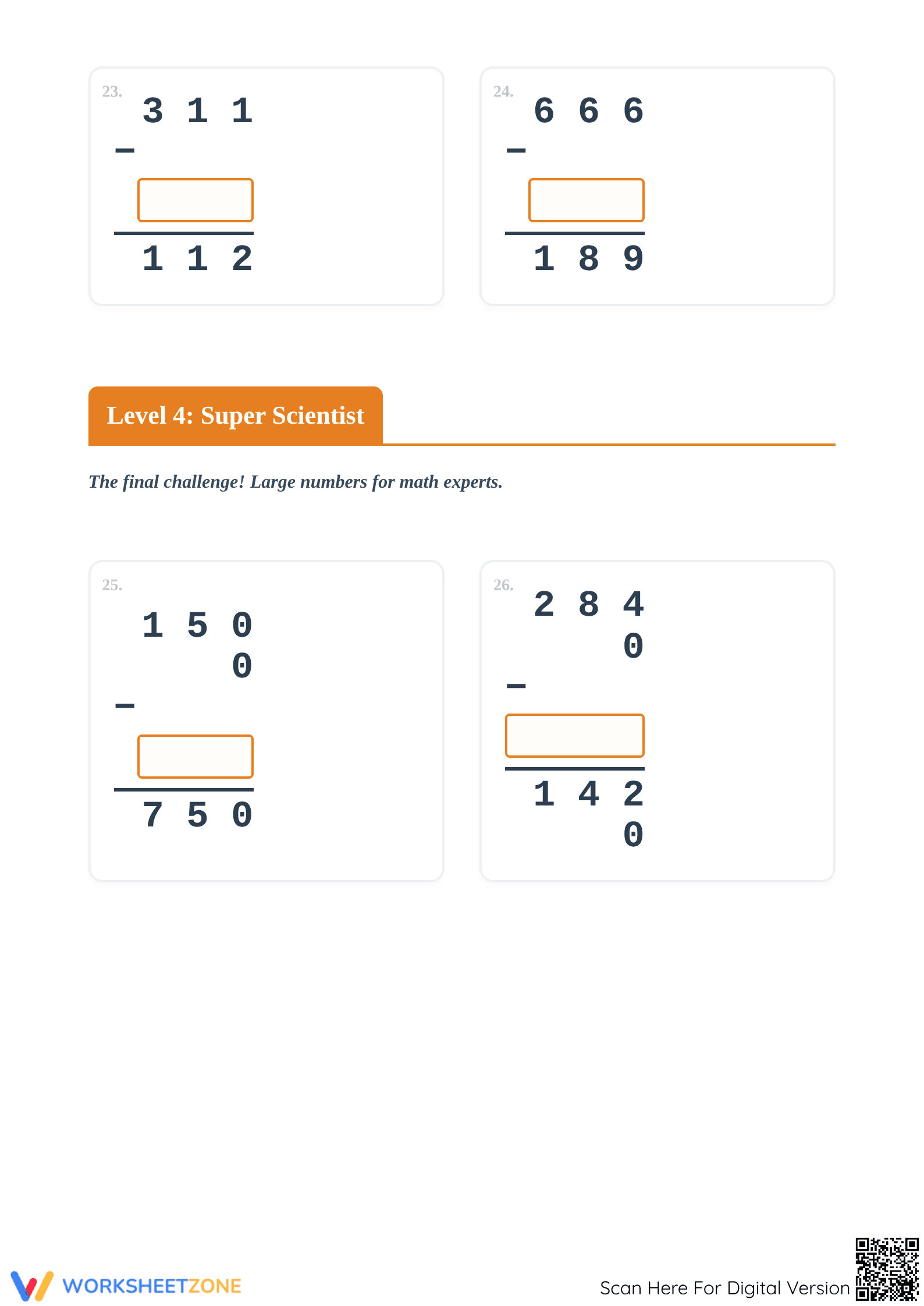
This resource includes four pages of practice problems, totaling 48 unique subtraction equations where the unknown is varied between the minuend, subtrahend, and difference. A complete, single-page answer key is provided for quick and easy grading, allowing teachers or students to efficiently check their work.
A Structured Approach to Practice
This worksheet can be used to follow a gradual-release model.
- Guided Practice: The teacher can model solving problems on the first page. Students work through the first 12 problems with support.
- Supported Practice: The next two pages are ideal for partner work. Students collaborate on 24 problems, discussing strategies.
- Independent Practice: The final page serves as an independent check for understanding. This structure reflects the 'I Do, We Do, You Do' instructional approach.
Standards Alignment for Lesson Planning
This worksheet aligns with Common Core standard CCSS.MATH.CONTENT.2.OA.A.1, which focuses on solving problems with unknowns in all positions. It builds the essential procedural skill needed to master this standard. The code can be copied directly into lesson plans, IEP goals, or district curriculum maps.
How to Use It in Your Classroom
Use this worksheet after a mini-lesson for immediate practice or as a homework assignment. For formative assessment, observe which problem types are most challenging for students (e.g., missing minuend vs. subtrahend) to guide future instruction. A single page should take about 5-7 minutes to complete.
Who It's For
Designed for second graders, this is also great for third-grade review. To differentiate, provide students with a number line. For an extension, have students write a word problem to match an equation. This resource pairs well with instruction on fact families or part-part-whole models.
Foundational algebraic skills, such as solving for an unknown in an equation, are a critical predictor of later math success. This worksheet targets CCSS.MATH.CONTENT.2.OA.A.1, which involves using addition and subtraction to find unknowns in various positions. The structured practice provided helps students move from concrete understanding to procedural fluency. Research highlighted by Fisher & Frey (2014) emphasizes the importance of moving from guided to independent practice, a structure this worksheet facilitates. By mastering the ability to find a missing number, students develop a flexible understanding of operations required for higher-level mathematics. This exercise in operational dexterity is a key component of early numeracy, providing a reliable method for assessing a student's grasp of the inverse relationship between addition and subtraction.


