


























Views
Downloads


Printable Figurative Language Worksheet | Grade 5 ELA
Paste this activity's link or code into your existing LMS (Google Classroom, Canvas, Teams, Schoology, Moodle, etc.).
Students can open and work on the activity right away, with no student login required.
You'll still be able to track student progress and results from your teacher account.
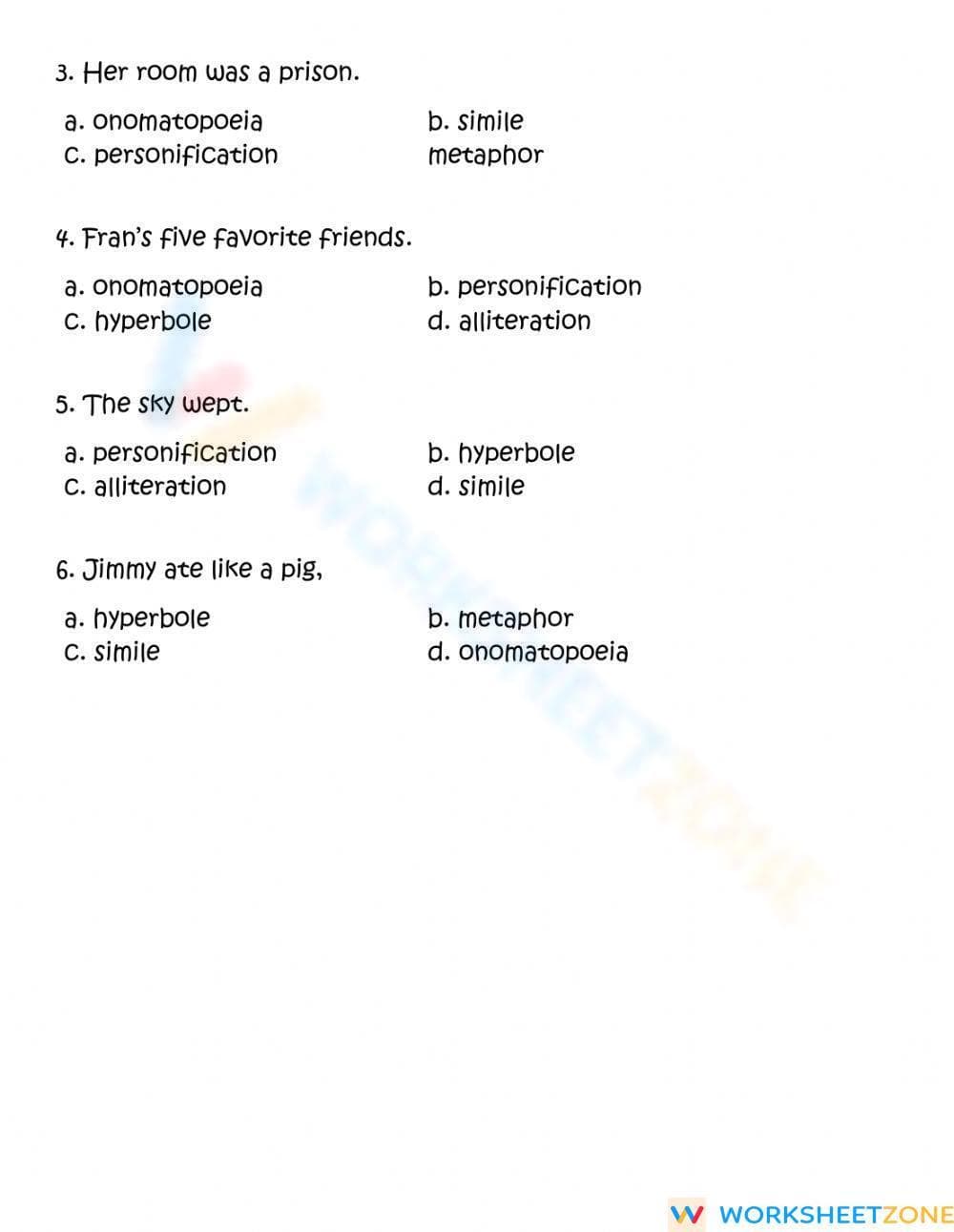
This worksheet provides essential, focused practice on identifying figurative language for fifth-grade students. Through ten targeted multiple-choice questions, learners will strengthen their ability to distinguish between similes, metaphors, personification, and hyperbole. It's designed to build a foundational understanding of non-literal language, preparing students for more complex literary analysis.
At a Glance
- Grade: 5 · Subject: ELA
- Standard:
CCSS.ELA-LITERACY.L.5.5— Interpret figurative language, including similes and metaphors, in context.- Skill Focus: Figurative Language Identification
- Format: 2 pages · 10 problems · Answer key included · PDF
- Best For: Bell-ringers, homework, or formative assessment
- Time: 10–15 minutes
This two-page PDF includes a student worksheet and a full answer key. The worksheet has ten multiple-choice questions, each with a sentence containing a figurative device. The clean layout and clear font help students focus on the task.
Skill Progression
- Guided practice: Initial questions use clear similes with "like" or "as" to build confidence.
- Supported practice: The worksheet then introduces metaphors and personification, requiring students to identify more abstract comparisons.
- Independent practice: Final questions challenge students with hyperboles and subtle examples, requiring them to distinguish between multiple figurative language types.
This structure follows a gradual-release model, scaffolding learning from simple recognition to more complex analysis.
Standards Alignment
This worksheet is aligned with CCSS.ELA-LITERACY.L.5.5, requiring students to interpret figurative language like similes and metaphors. Completing the tasks demonstrates understanding of this key literary standard. The code can be copied directly into lesson plans, IEP goals, or curriculum maps.
How to Use It
Use this resource as a bell-ringer to activate prior knowledge or as an exit ticket to assess comprehension after a lesson. A teacher can use it for formative assessment by observing student work on the initial questions. Most students will complete the worksheet in approximately 10 to 15 minutes.
Who It's For
Primarily for fifth-grade ELA students, this resource also supports learners in nearby grades needing reinforcement. It is an effective tool for English Language Learners (ELLs) who benefit from explicit practice with idiomatic language. Pair this worksheet with a classroom anchor chart that defines each figurative language type for a complete instructional activity.
This worksheet provides targeted practice for CCSS.ELA-LITERACY.L.5.5, focusing on the crucial middle-grade skill of interpreting figurative language. By distinguishing between similes, metaphors, personification, and hyperboles, students develop the analytical foundation required for deeper text comprehension. Research from Fisher & Frey (2014) emphasizes the importance of moving students from surface-level reading to deeper understanding, a process supported by explicit skill practice like this. The worksheet's multiple-choice format offers immediate, concrete feedback, a practice that builds student confidence and metacognitive awareness. This resource provides a direct, evidence-based method for teachers to assess and reinforce student mastery of non-literal language, a key predictor of future reading success. The content is structured to ensure that students can demonstrate their understanding in a clear, measurable way, directly applicable to classroom assessment and data tracking.


