




























Views
Plays

Essential Extension of Mendelian Genetics Worksheet

Paste this activity's link or code into your existing LMS (Google Classroom, Canvas, Teams, Schoology, Moodle, etc.).
Students can open and work on the activity right away, with no student login required.
You'll still be able to track student progress and results from your teacher account.
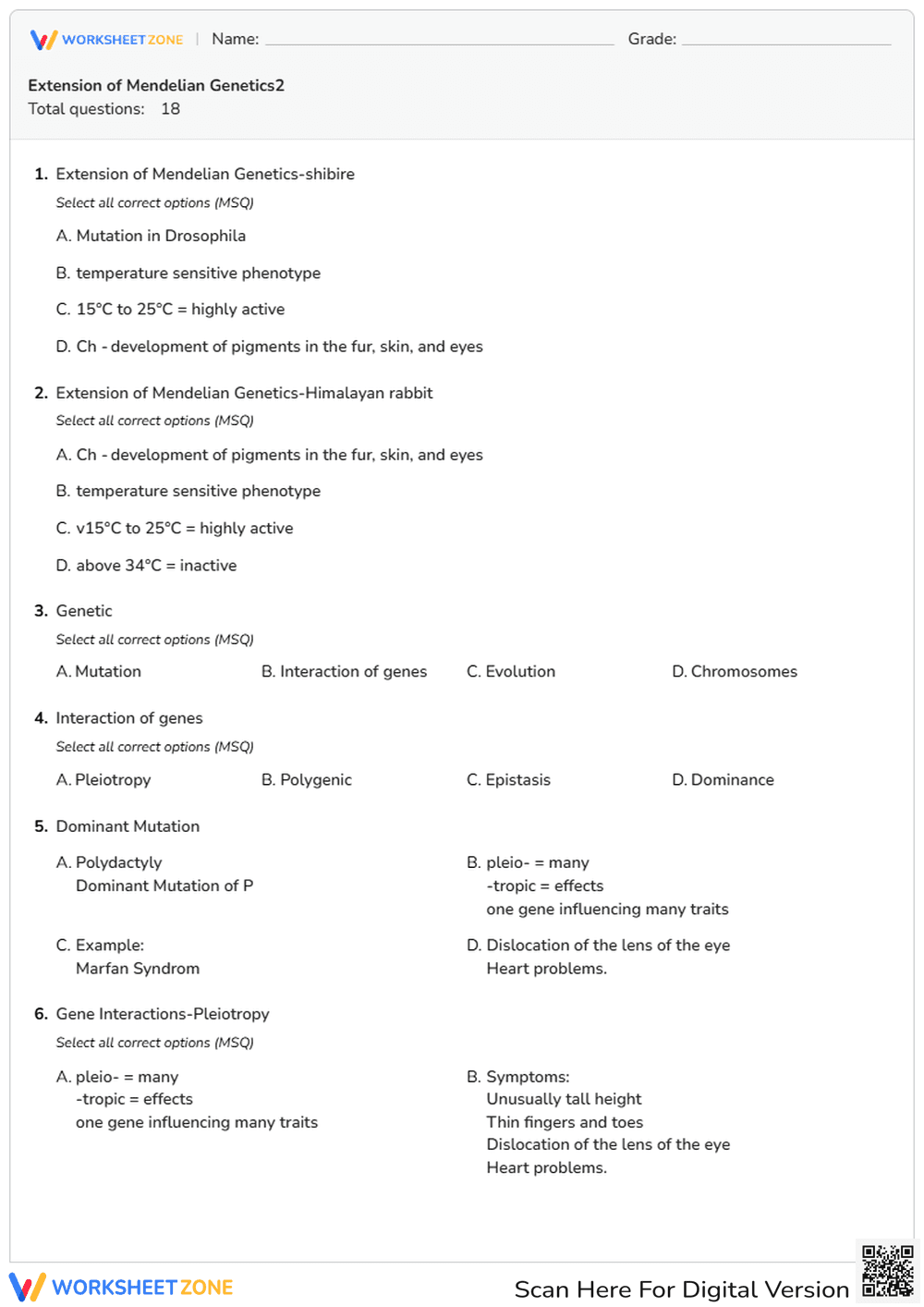
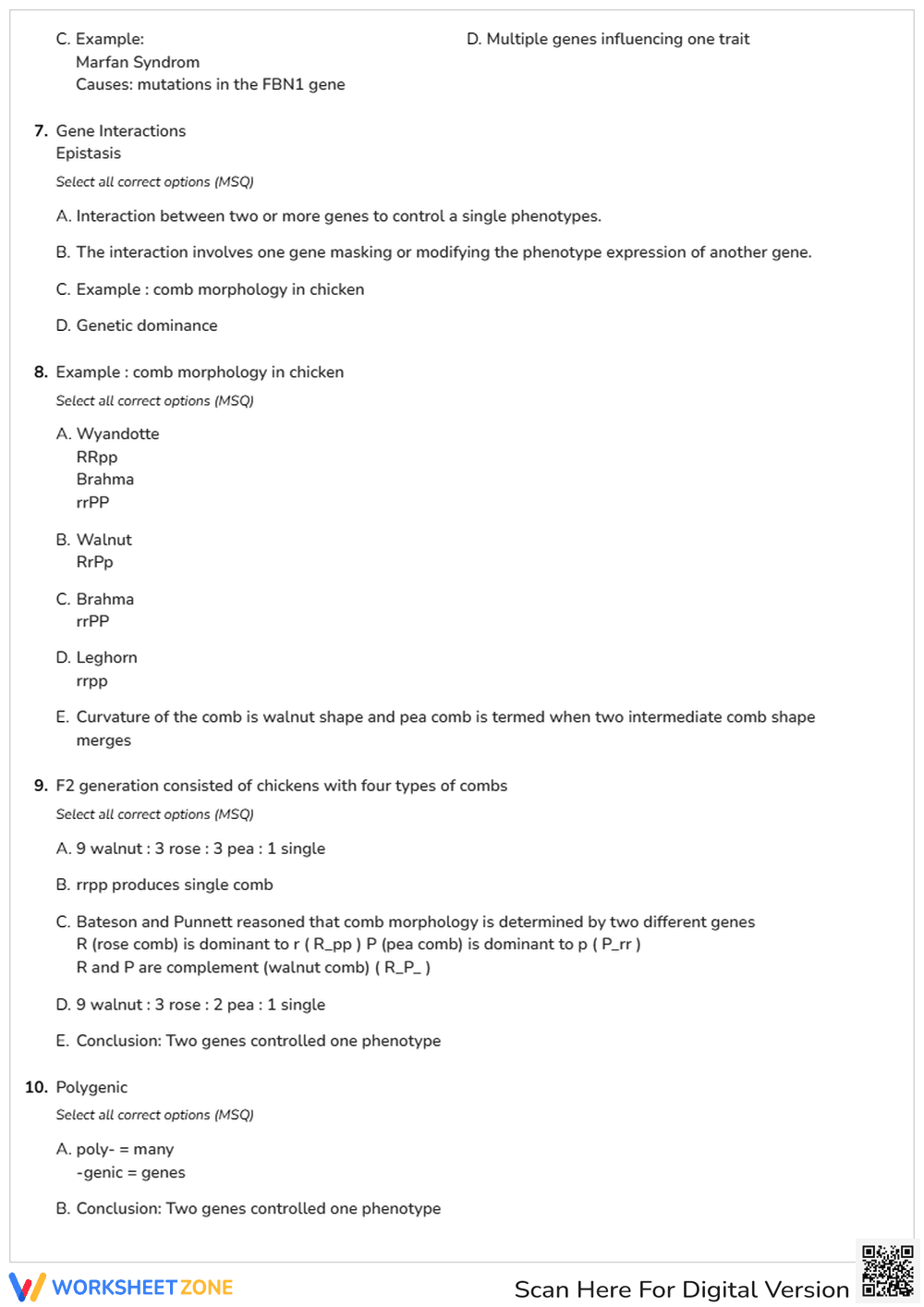
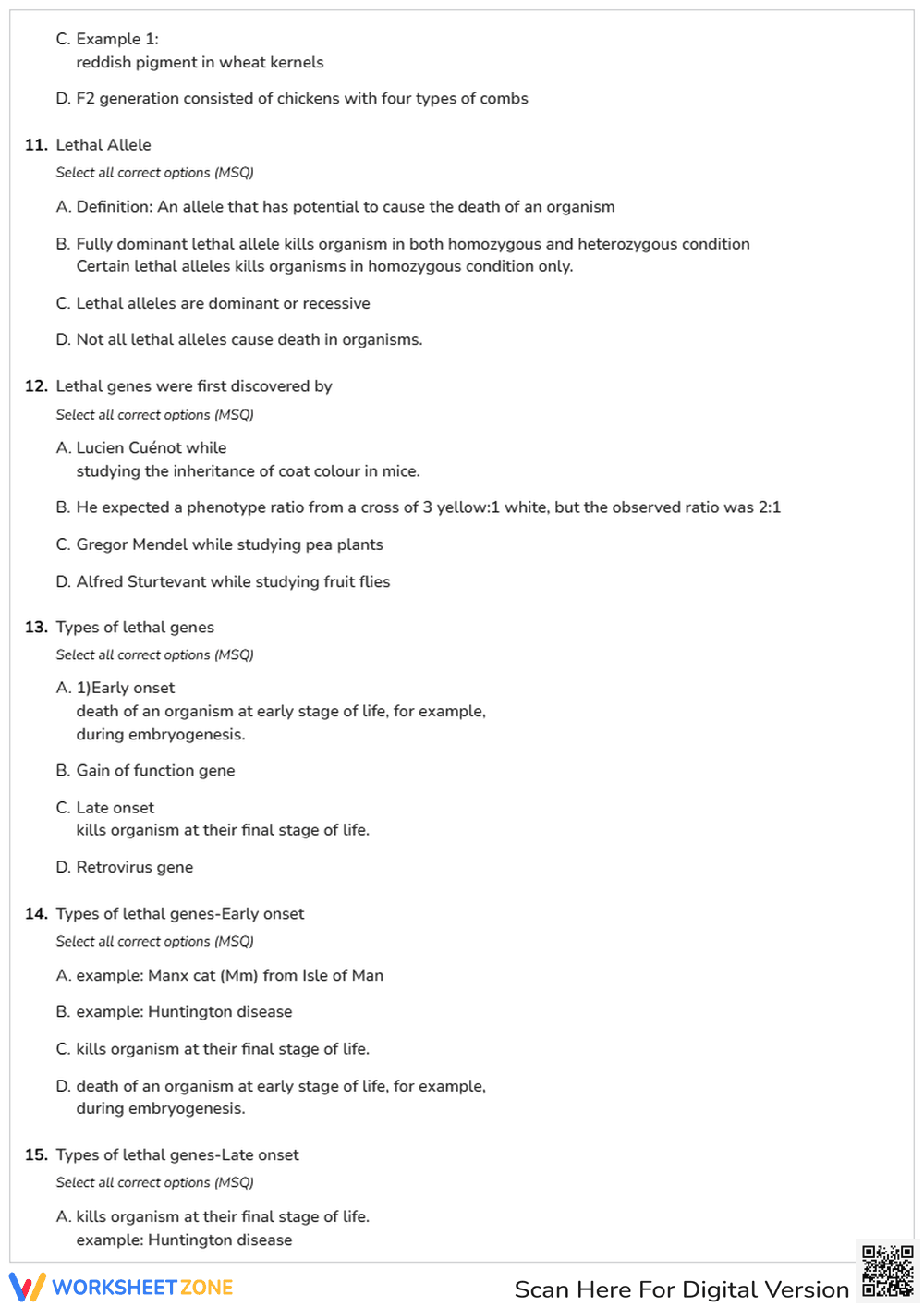
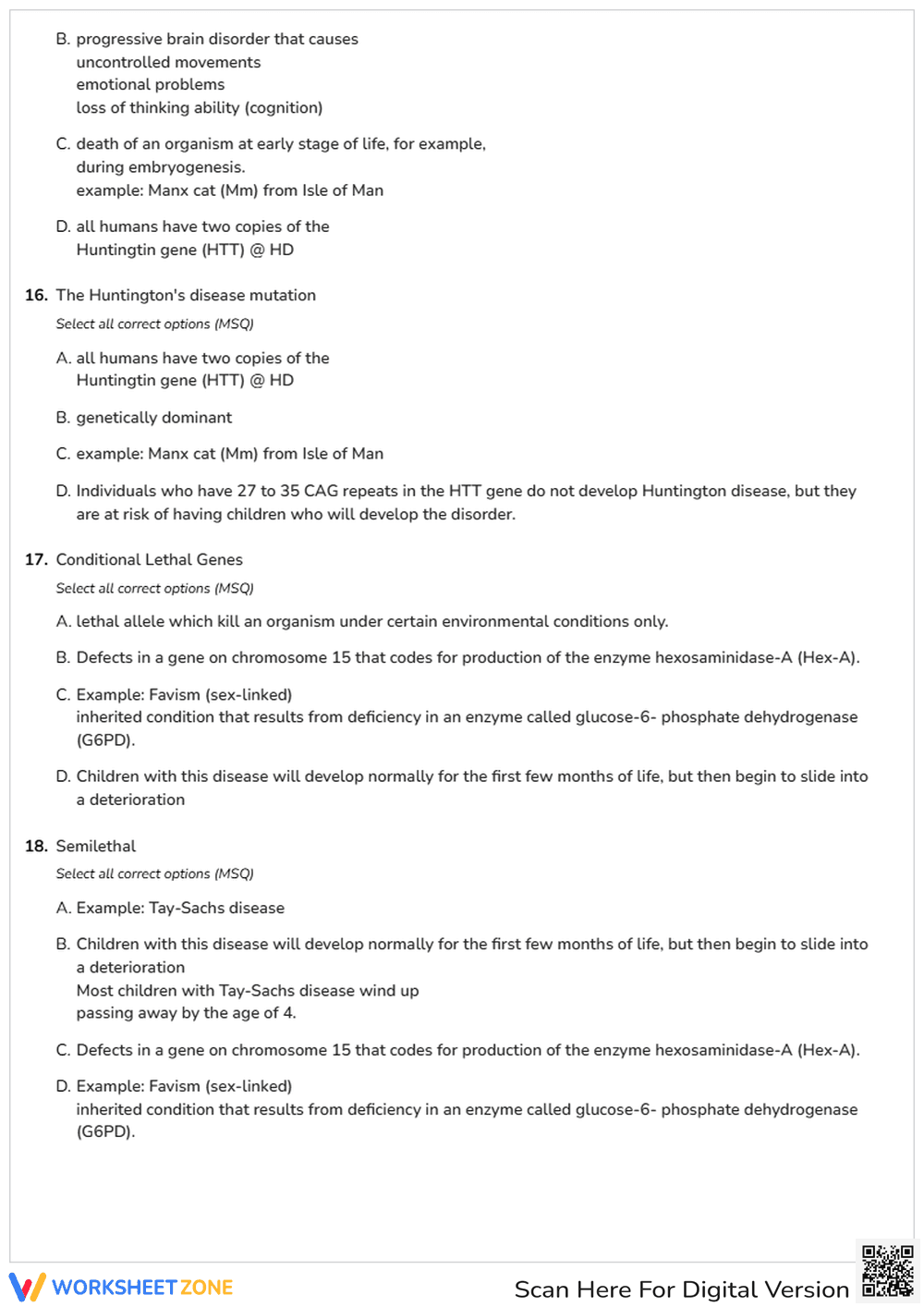
This advanced biology worksheet facilitates a deep understanding of inheritance patterns that extend beyond simple dominance. Students analyze 18 complex scenarios involving epistasis, pleiotropy, and lethal alleles to predict phenotypic outcomes. By engaging with these multi-select questions, learners bridge the gap between basic Mendelian principles and modern genomic realities.
At a Glance
- Grade: College/HS · Subject: Biology
- Standard:
HS-LS3-3— Apply concepts of statistics and probability to explain the variation and distribution of expressed traits- Skill Focus: Non-Mendelian Inheritance Patterns
- Format: 4 pages · 18 problems · Answer key included · PDF
- Best For: Unit Assessment or AP Exam Prep
- Time: 30–45 minutes
The resource contains four comprehensive pages of rigorous assessment material. It features 18 multi-select questions (MSQ) that require students to identify all correct biological statements regarding specific genetic phenomena. Key topics include the Himalayan rabbit temperature-sensitive phenotype, comb morphology in chickens (epistasis), and human conditions like Marfan Syndrome and Huntington’s disease. The structured layout ensures clear readability for high-stakes testing environments.
Zero-Prep Workflow
- Print: Generate the 4-page PDF and print for your cohort in under 60 seconds.
- Distribute: Hand out the assessment as a quiet individual activity or a collaborative review.
- Review: Use the included answer key to facilitate a rapid 5-minute grading session or peer-review.
Total teacher preparation time is approximately 2 minutes, making it an ideal resource for substitute plans or unexpected schedule shifts.
Standards Alignment
Aligned primarily to `HS-LS3-3`, this resource requires students to apply concepts of probability to explain trait variation. It specifically addresses how multiple genes or environmental factors influence the distribution of expressed traits. Additionally, it supports standards related to molecular genetics and protein function. Both standard codes can be copied directly into lesson plans, IEP goals, or district curriculum mapping tools.
How to Use It
Use this worksheet as a summative assessment following a lecture on gene interactions. It is particularly effective when assigned after students have mastered basic Punnett squares but before they begin population genetics. For formative use, have students work in pairs to justify their "Select all" choices, providing a window into their reasoning processes. Completion typically ranges from 30 to 45 minutes.
Who It's For
This material is tailored for Advanced Placement (AP) Biology students, undergraduate introductory genetics learners, and high-achieving high school seniors. It pairs naturally with a detailed lecture on chromosomal inheritance or an anchor chart detailing the differences between co-dominance and incomplete dominance.
According to research by Fisher & Frey (2014) on the gradual release of responsibility, structured assessments like this 18-question genetics quiz are vital for moving students toward independent mastery of complex scientific concepts. The use of multi-select questions (MSQ) challenges the learner to evaluate the validity of multiple biological claims simultaneously, which aligns with the cognitive demands of the HS-LS3-3 standard. By focusing on non-Mendelian extensions such as lethal alleles and polygenic traits, the worksheet addresses common misconceptions in heredity. Data from the NAEP suggests that students who engage with varied problem types in genetics demonstrate higher retention of abstract biological mechanisms. This resource provides the necessary scaffolding to transition from simple probability to the nuanced understanding required in collegiate-level life sciences. It serves as a robust tool for evidence-based instruction in modern science classrooms.


