


























0
Views
0
Downloads

0.0
0
Save
0 Likes
Share
Exploring Non-Standard Measurement Activities
0 Views
0 Downloads
Paste this activity's link or code into your existing LMS (Google Classroom, Canvas, Teams, Schoology, Moodle, etc.).
Students can open and work on the activity right away, with no student login required.
You'll still be able to track student progress and results from your teacher account.
Information
Description
What It Is:
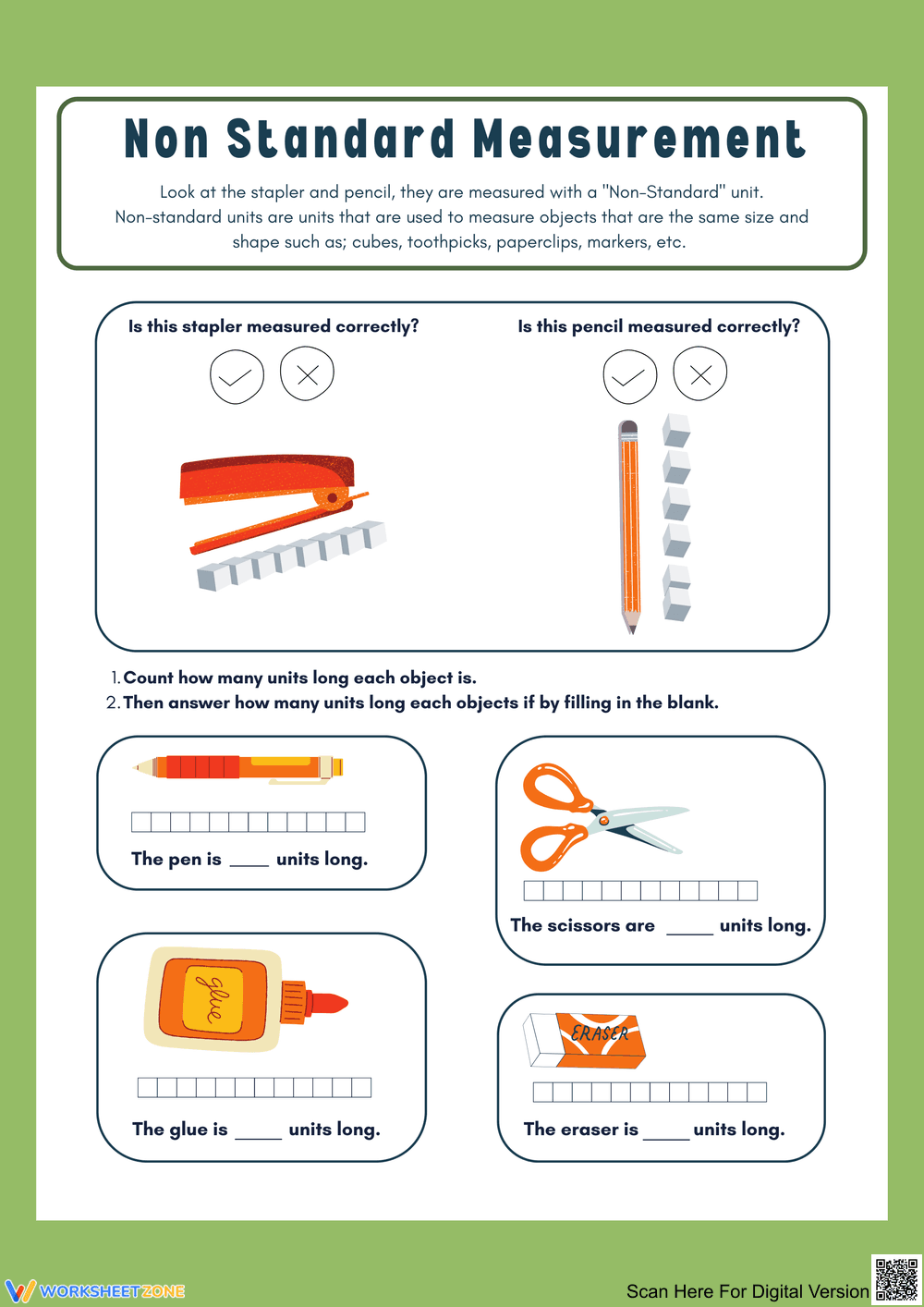
This worksheet focuses on non-standard measurement, helping students learn how to measure common classroom objects like staplers, pencils, and scissors using unconventional units such as cubes or paperclips.
Why Use It:
This activity nurtures measurement skills and enhances understanding of relative size and length in a fun and engaging manner.
How to Use It:
• Look at the visuals on the worksheet.
• Count how many non-standard units long each object is.
• Fill in the blanks with the appropriate measurements.
Grade Suitability:
Best for Kindergarten to Grade 2.
• Younger kids focus area: Introducing measurement concepts.
• Older students focus area: Reinforcing measuring skills with practical applications.
Target Users:
This worksheet is designed for teachers and parents to support their students' learning in measurement.
This worksheet focuses on non-standard measurement, helping students learn how to measure common classroom objects like staplers, pencils, and scissors using unconventional units such as cubes or paperclips.
Why Use It:
This activity nurtures measurement skills and enhances understanding of relative size and length in a fun and engaging manner.
How to Use It:
• Look at the visuals on the worksheet.
• Count how many non-standard units long each object is.
• Fill in the blanks with the appropriate measurements.
Grade Suitability:
Best for Kindergarten to Grade 2.
• Younger kids focus area: Introducing measurement concepts.
• Older students focus area: Reinforcing measuring skills with practical applications.
Target Users:
This worksheet is designed for teachers and parents to support their students' learning in measurement.


