


























Views
Downloads


Printable Muscular System Evolution Worksheet | Grade 8-10
Paste this activity's link or code into your existing LMS (Google Classroom, Canvas, Teams, Schoology, Moodle, etc.).
Students can open and work on the activity right away, with no student login required.
You'll still be able to track student progress and results from your teacher account.
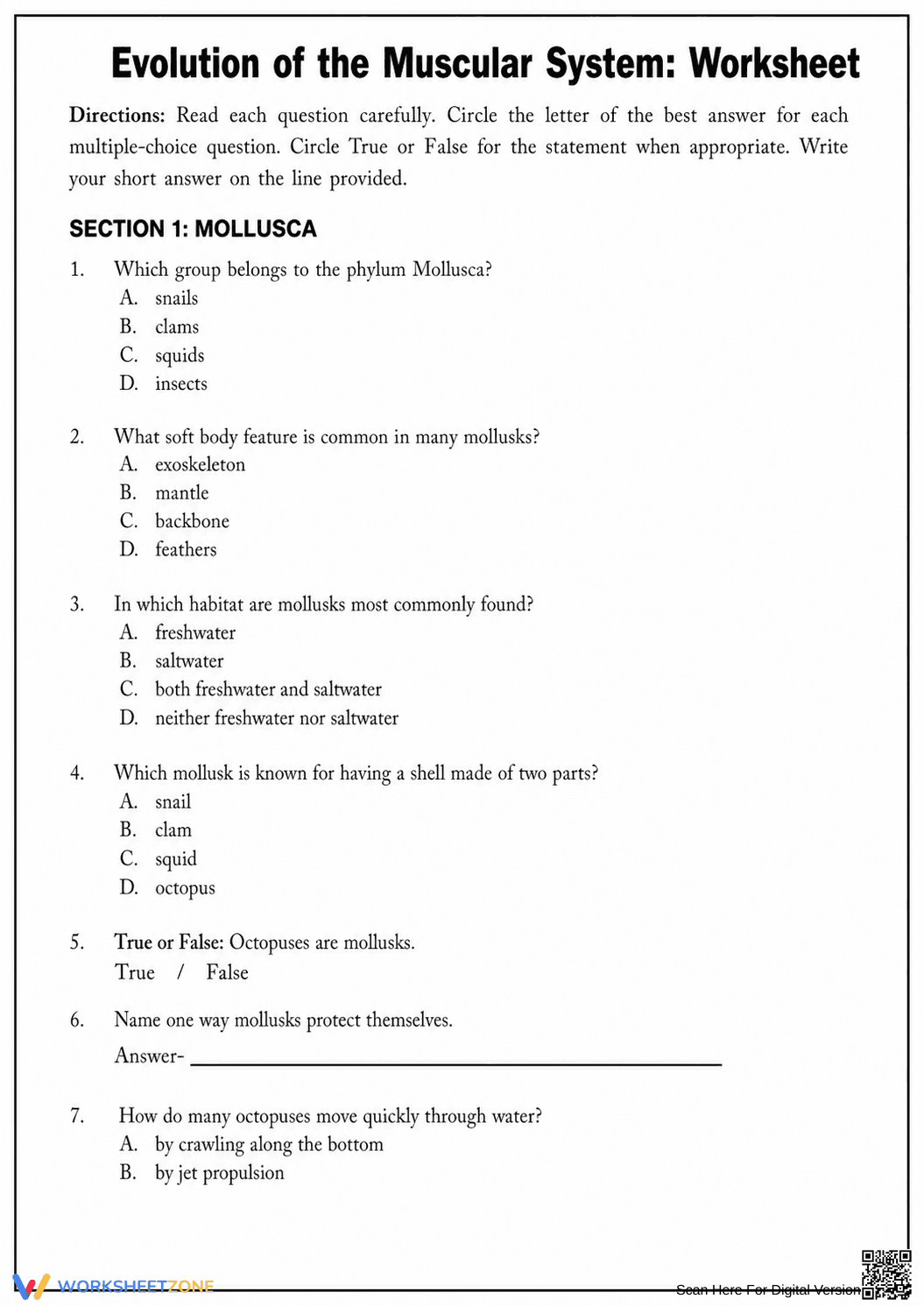
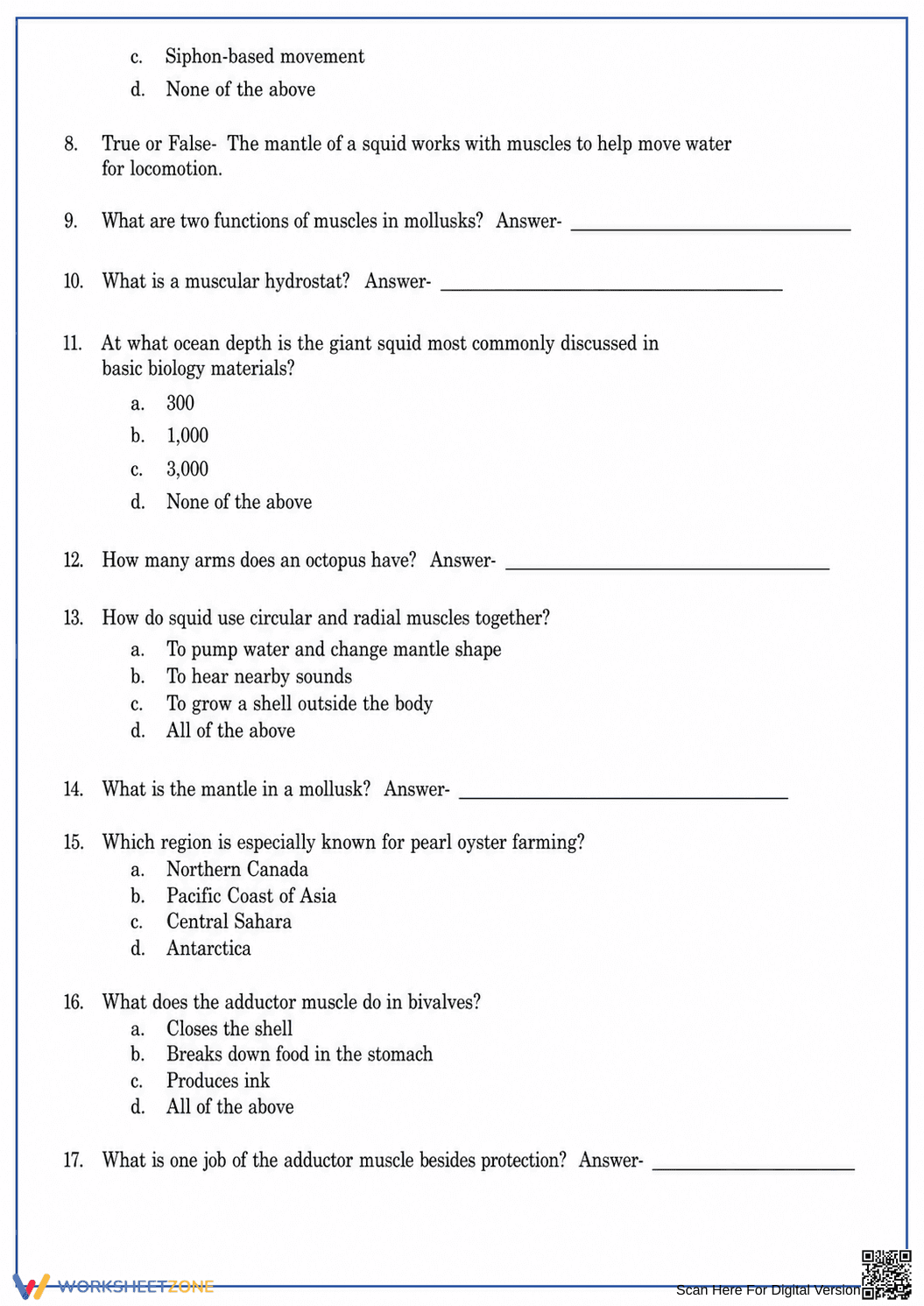
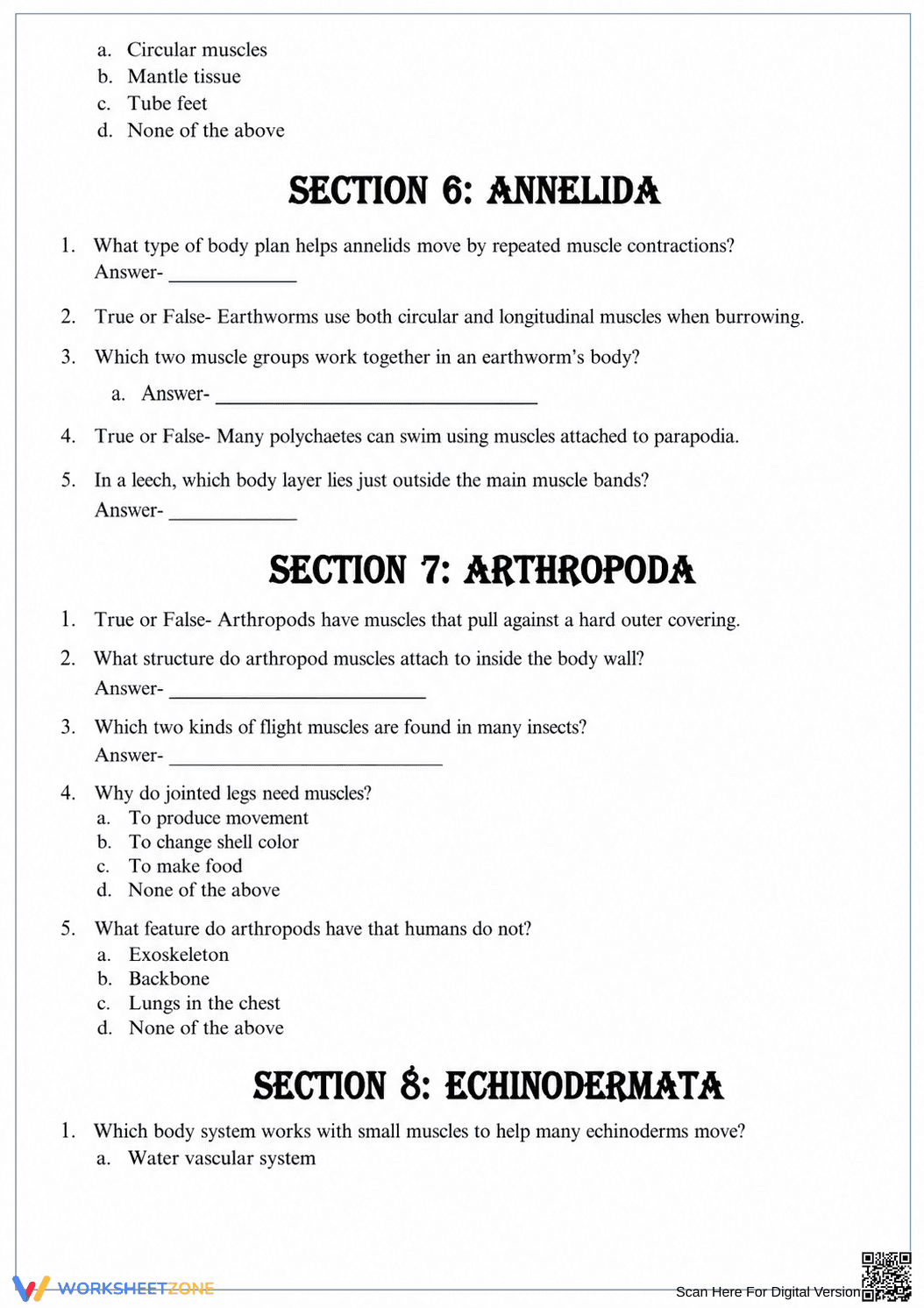
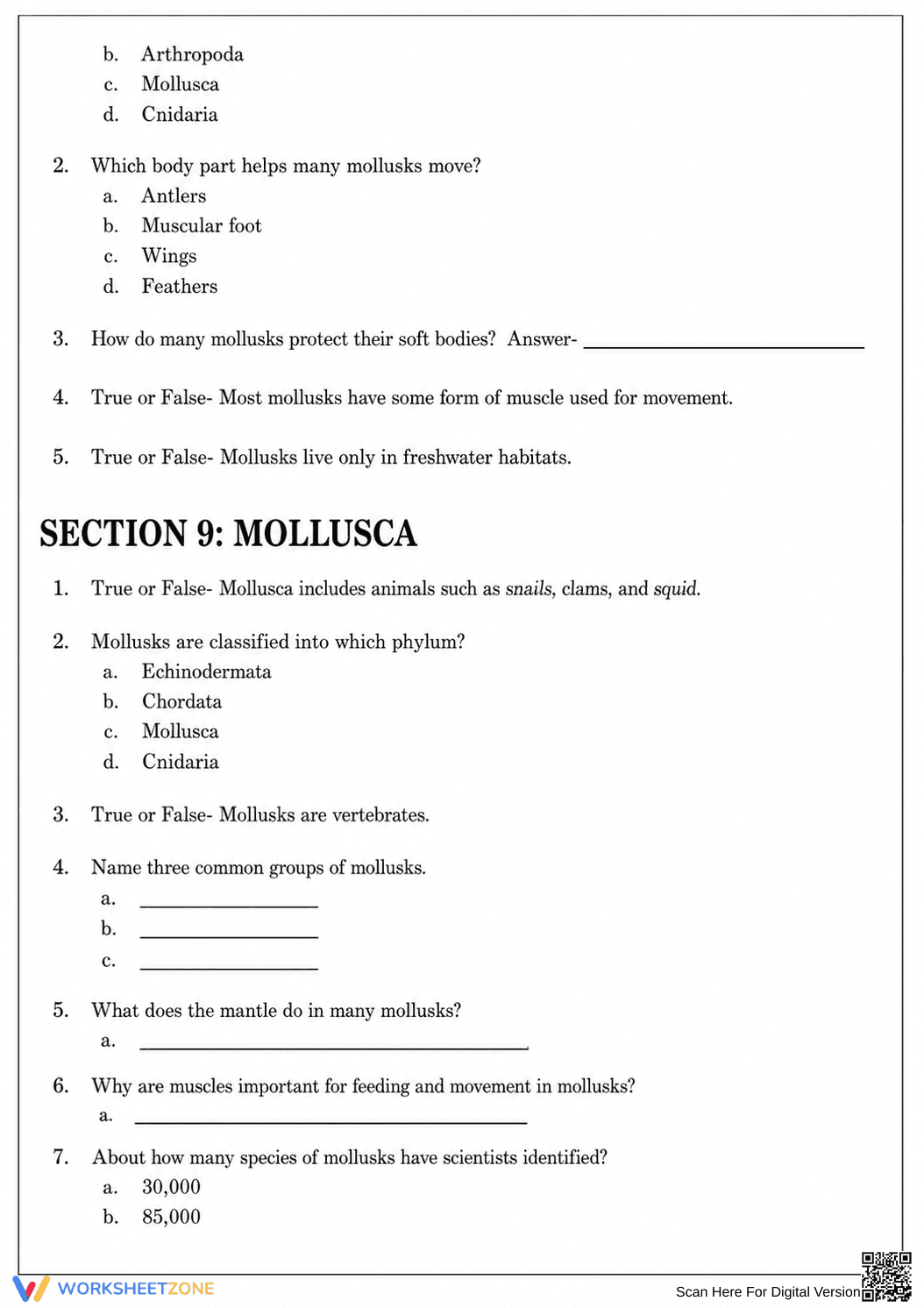
This comprehensive biology worksheet guides students through the evolutionary development of the muscular system across diverse invertebrate phyla. By analyzing the anatomical structures of mollusks, echinoderms, annelids, and arthropods, learners will understand how muscle functions adapted to support locomotion, feeding, and survival in various environments.
At a Glance
- Grade: 8 · Subject: Biology
- Standard:
MS-LS4-2— Infer evolutionary relationships by comparing anatomical similarities and differences.- Skill Focus: Invertebrate Muscular Evolution
- Format: 7 pages · 66 problems · PDF
- Best For: Independent practice and review
- Time: 45–60 minutes
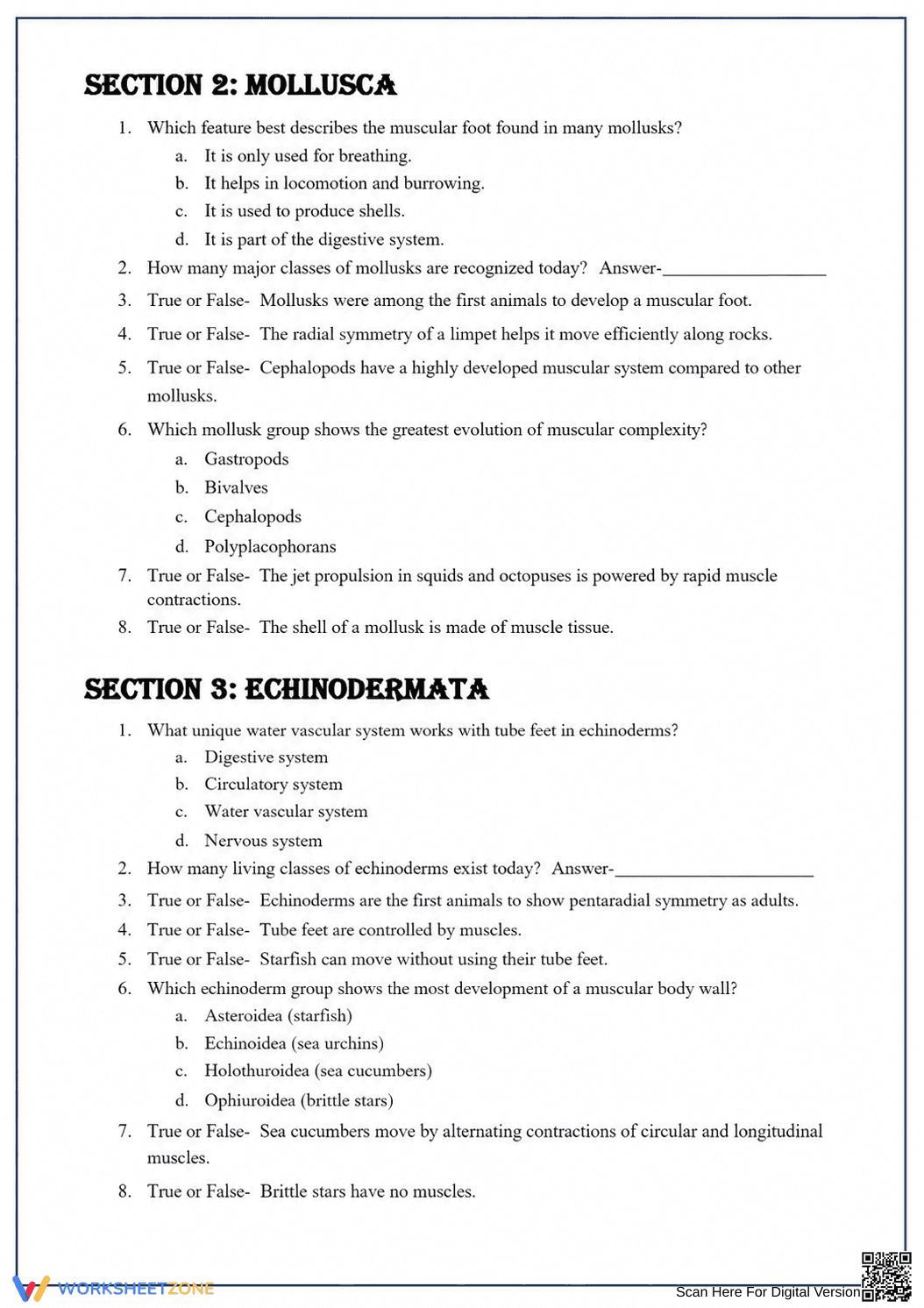
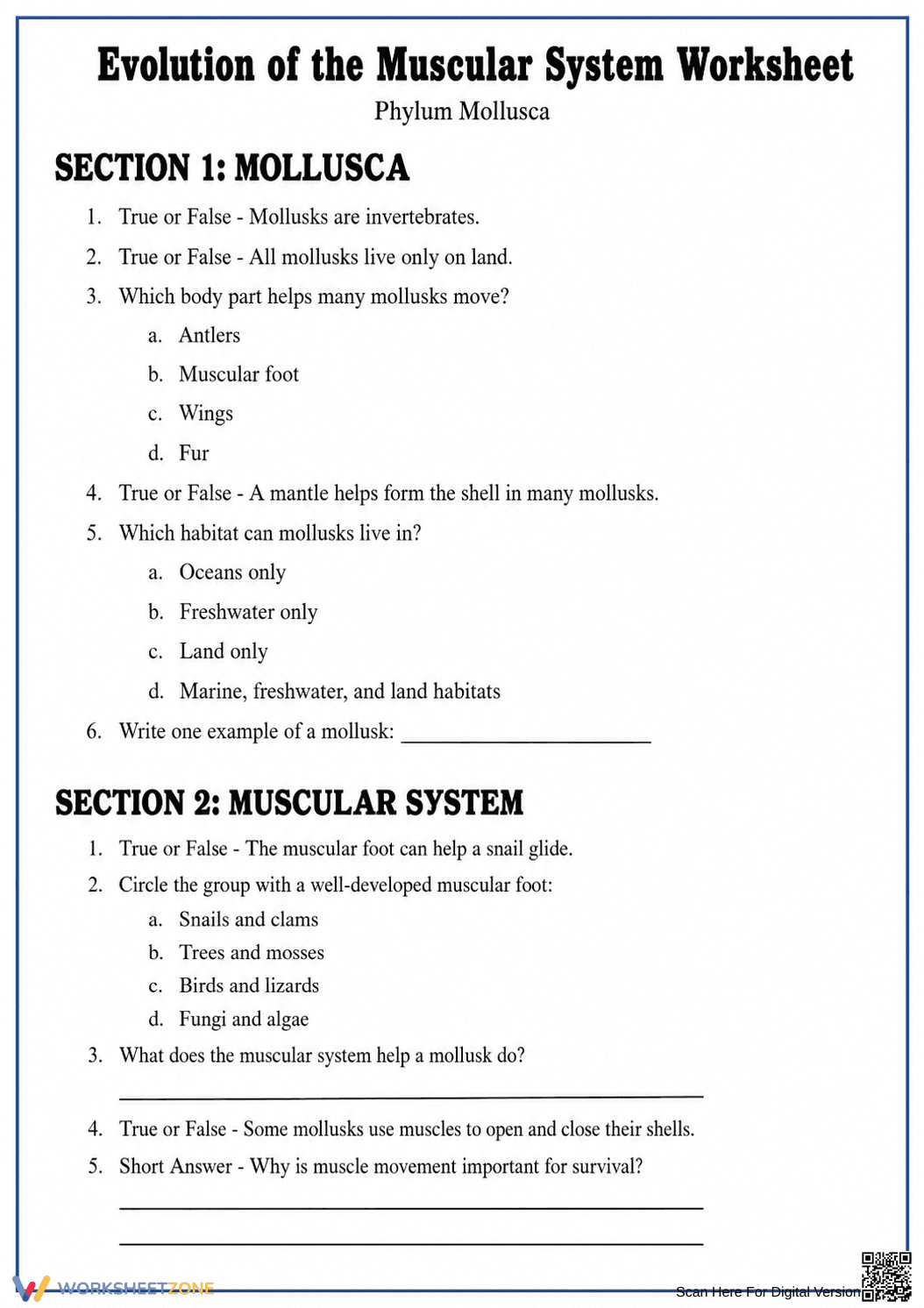
This extensive seven-page packet features 66 targeted questions divided into distinct sections based on animal phyla. Students will encounter a mix of multiple-choice, true/false, and short-answer questions. The structured format allows learners to systematically explore the muscular adaptations of specific groups, from the muscular foot of mollusks to the complex flight muscles of arthropods, reinforcing key biological concepts without requiring additional setup.
- Guided practice: Initial sections introduce basic true/false and multiple-choice questions about mollusk anatomy, helping students build foundational vocabulary and confidence.
- Supported practice: Middle sections transition into comparing different phyla, such as the water vascular system in echinoderms versus the segmented muscles in annelids, requiring deeper analytical thinking.
- Independent practice: Final short-answer questions demand that students synthesize their knowledge to explain why specific muscular adaptations are critical for an organism's survival. This gradual-release approach ensures steady comprehension.
This resource is aligned to MS-LS4-2, requiring students to apply scientific ideas to construct an explanation for the anatomical similarities and differences among modern organisms to infer evolutionary relationships. It also supports high school life science standards regarding hierarchical structural organization in multicellular organisms. Both standard codes can be copied directly into lesson plans, IEP goals, or district curriculum mapping tools.
Deploy this worksheet as an independent review packet after direct instruction on invertebrate zoology or animal body systems. It serves exceptionally well as a comprehensive study guide before a unit exam. For formative assessment, teachers can review the short-answer responses to gauge whether students grasp the connection between an organism's environment and its muscular adaptations. Expect students to complete the full packet over one to two 45-minute class periods.
This resource is designed for middle school and early high school biology students studying animal classification and comparative anatomy. The varied question types provide natural scaffolding, making it accessible for diverse learners who benefit from starting with recognition tasks before moving to synthesis. Pair this packet with visual anchor charts or 3D models of invertebrate anatomy to maximize student engagement and comprehension.
Aligning instruction with MS-LS4-2 to help students infer evolutionary relationships by comparing anatomical similarities and differences is a cornerstone of modern science education. According to a 2024 report by EdReports, science curricula that integrate comparative anatomy tasks significantly improve students' ability to construct evidence-based evolutionary arguments. By examining the muscular systems of diverse phyla—from the simple hydrostatic skeletons of annelids to the jointed appendages of arthropods—students develop a more robust understanding of biological adaptation and survival strategies. Structured practice packets that combine multiple-choice recall with short-answer synthesis allow educators to accurately measure this comprehension across different cognitive levels. Utilizing targeted worksheets ensures that learners can systematically process complex anatomical variations, ultimately fostering higher-order analytical skills essential for advanced biological studies, laboratory work, and standardized science assessments.


