


























Views
Downloads
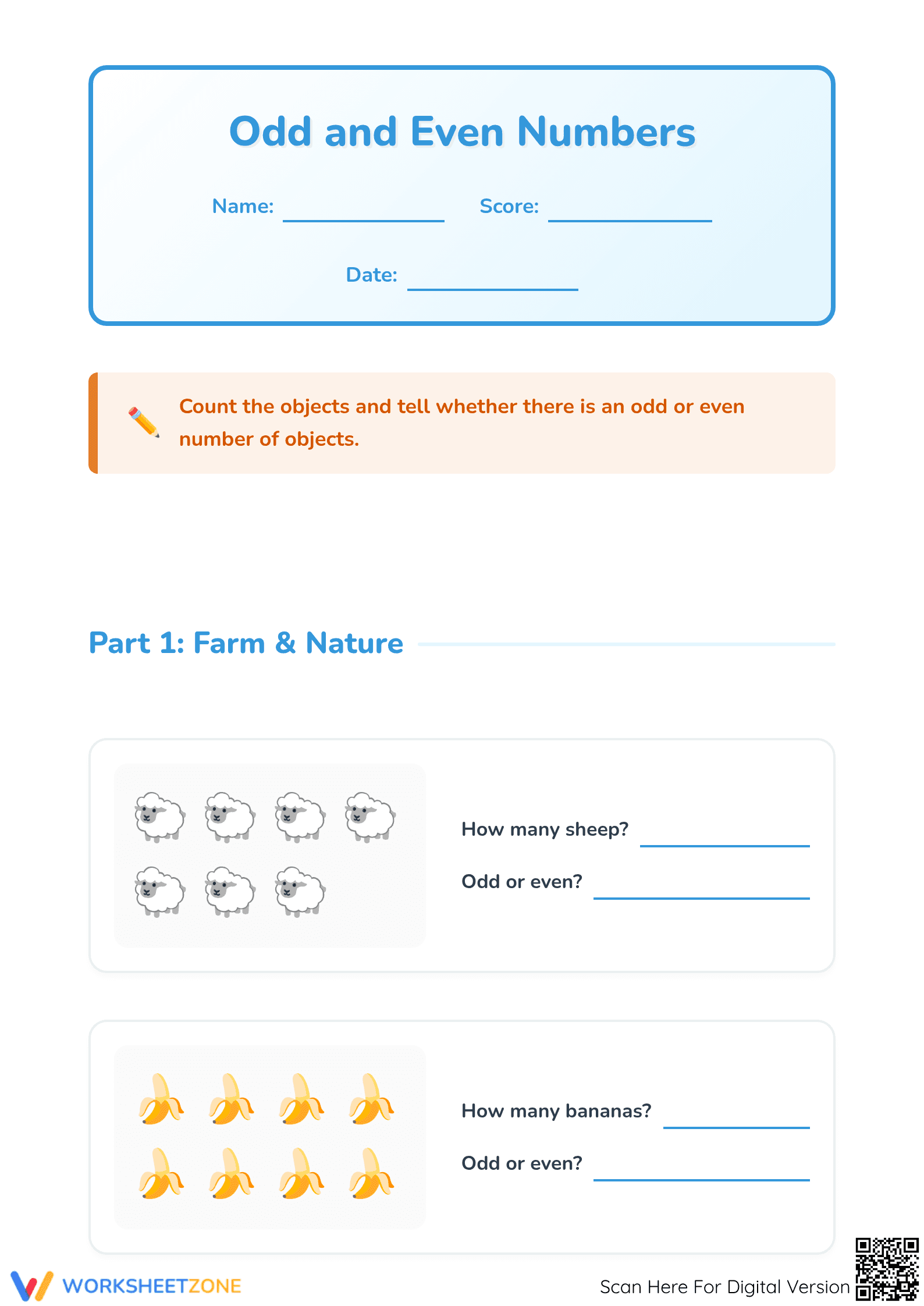
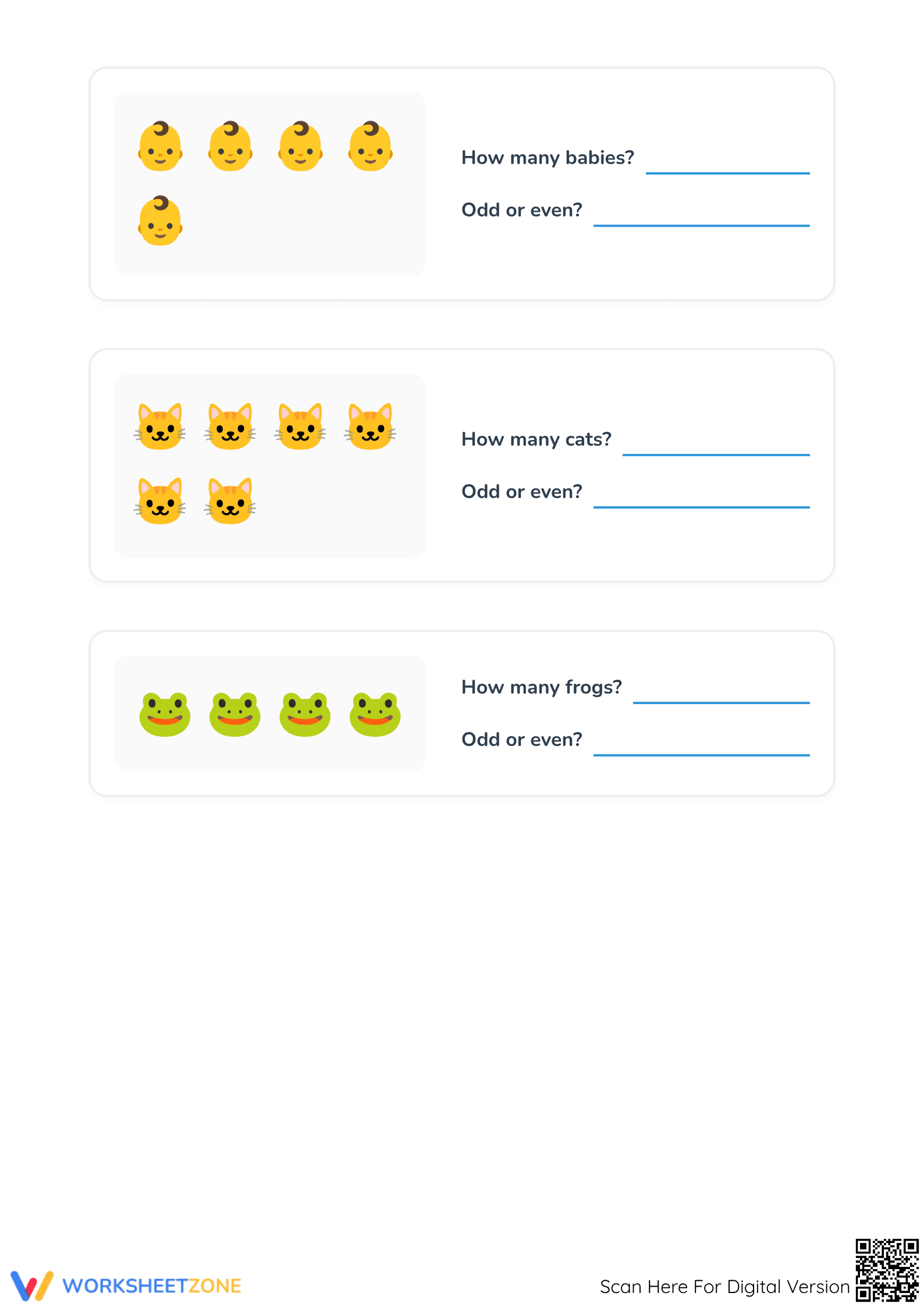
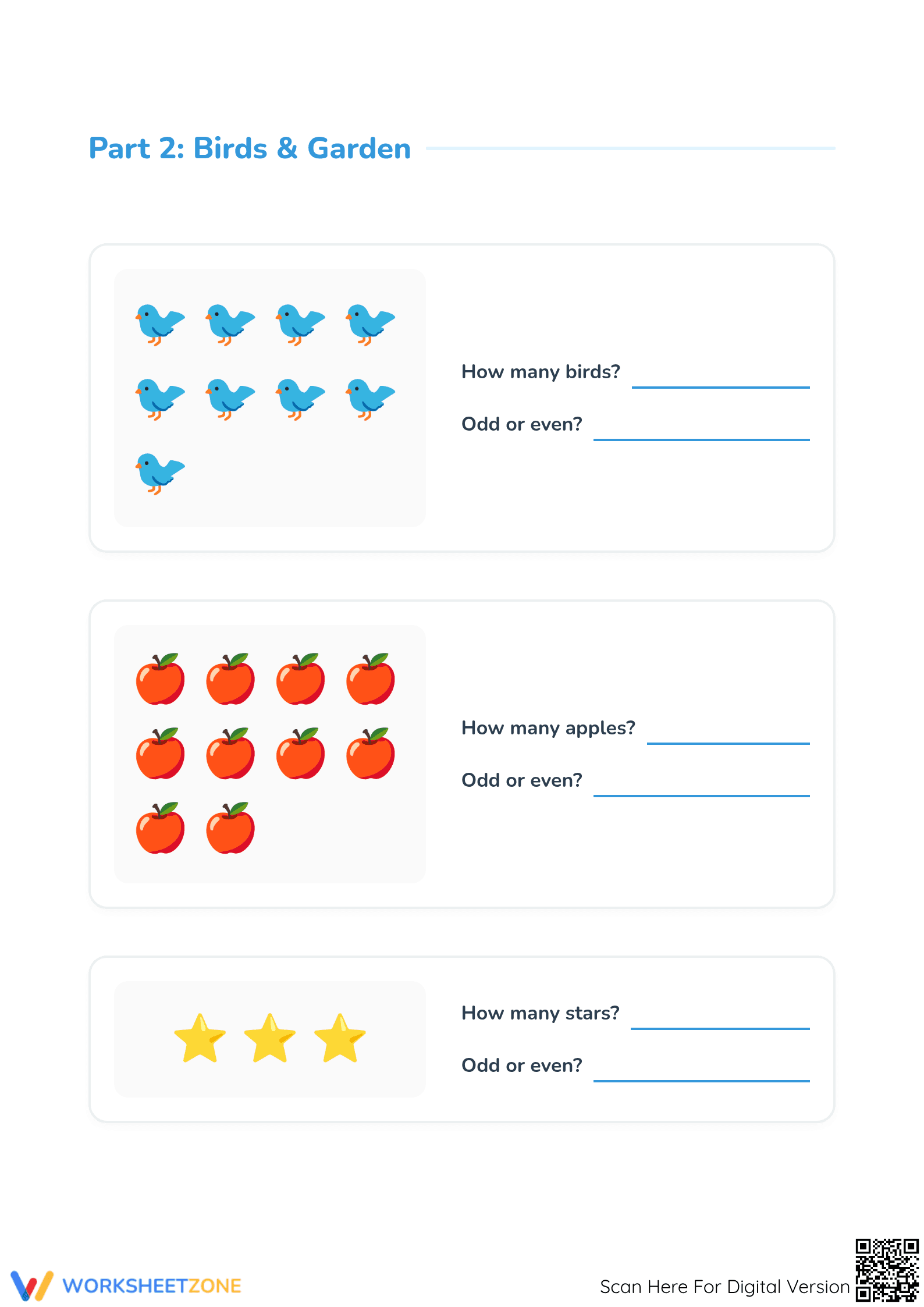
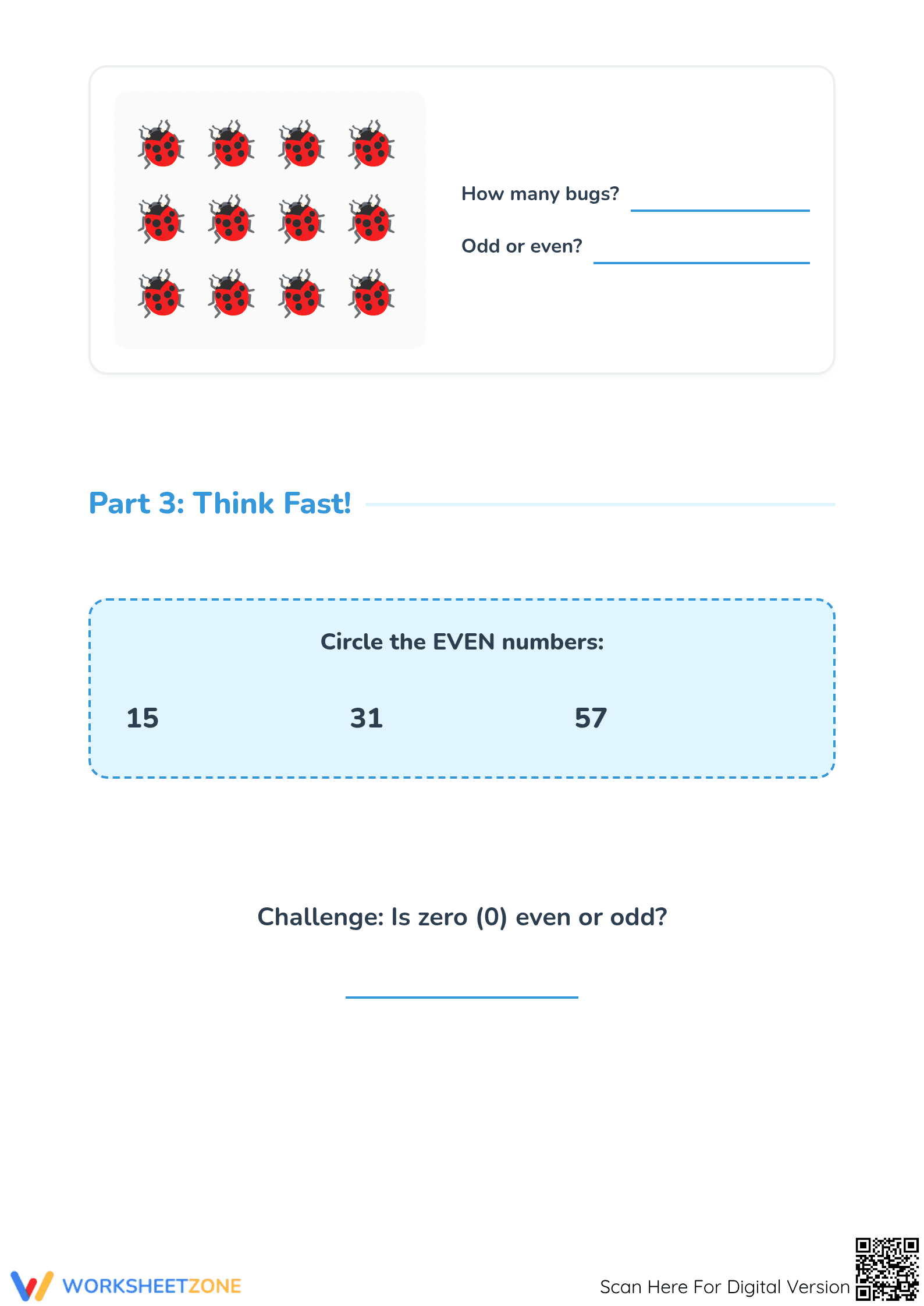

Essential Even and Odd Numbers Worksheet | Grade 2 Printable
Paste this activity's link or code into your existing LMS (Google Classroom, Canvas, Teams, Schoology, Moodle, etc.).
Students can open and work on the activity right away, with no student login required.
You'll still be able to track student progress and results from your teacher account.
This Grade 2 math worksheet provides comprehensive practice for identifying even and odd numbers through both visual groups and numerical representations. Students engage with 40 distinct tasks to master the fundamental concept of parity, ensuring they can reliably distinguish numbers. This ready-to-print resource is designed to simplify classroom instruction while delivering measurable student progress.
At a Glance
At a Glance
- Grade: 2 · Subject: Math
- Standard:
CCSS.MATH.CONTENT.2.OA.C.3— Determine whether a group of objects has an even or odd number of members- Skill Focus: Even and odd number identification
- Format: 4 pages · 40 problems · Answer key included · PDF
- Best For: Small group instruction or daily math centers
- Time: 20–30 minutes
What's Inside
The 4-page PDF features four distinct activity types. Learners start by analyzing groups of objects, like stars and hearts, to determine parity. The pack progresses to numerical identification where students circle even integers and cross out odd ones. It includes a sorting activity to reinforce categorization skills. A complete answer key is provided for immediate feedback and easy assessment.
Zero-Prep Workflow
Teachers can implement this resource in three simple steps. First, print the document directly from the PDF (1 minute). Second, distribute the pages for independent practice; no extra materials are required (30 seconds). Third, use the included answer key to verify student work, bringing total teacher involvement to under two minutes. It is ideal for substitute folders or morning work.
Standards Alignment
This resource is aligned to CCSS.MATH.CONTENT.2.OA.C.3. It requires students to determine if a group of objects (up to 20) has an even or odd number of members. The code can be copied directly into lesson plans, IEP goals, or district curriculum mapping tools.
How to Use It
Introduce the worksheet as a follow-up to a pairs-based manipulative lesson. It works effectively as a 'check for understanding' exit ticket or a math center station. For students needing support, encourage them to draw lines connecting pairs in the object section to visualize the mathematical logic of even numbers.
Who It's For
This worksheet is designed for Grade 2 students but serves as an excellent intervention for Grade 3 learners. It supports diverse classroom needs with clear visual cues and straightforward instructions. Pair this with a 100-square chart or anchor chart for students who require additional numerical scaffolding.
Research from RAND AIRS 2024 highlights that early numeracy concepts, specifically the distinction between even and odd numbers, serve as a foundational bridge to algebraic thinking. This worksheet addresses CCSS.MATH.CONTENT.2.OA.C.3 by requiring students to move from concrete object counting to abstract numeral identification. By engaging with multiple representations—including sets of fruit, shapes, and three-digit integers—learners internalize parity as a recurring pattern rather than an isolated fact. Fisher & Frey (2014) emphasize that structured practice with immediate feedback, facilitated here by the comprehensive answer key, accelerates the transition from guided to independent mastery. This resource provides the necessary volume of practice to ensure students can reliably classify numbers up to 150, supporting future success with division properties. Educators can use these 40 targeted tasks to identify misconceptions in parity logic while fulfilling district-mandated standards for Grade 2 mathematics curriculum mapping.


