




























Views
Downloads

Essential Synthesizing Facts Worksheet | Grade 8 ELA

Paste this activity's link or code into your existing LMS (Google Classroom, Canvas, Teams, Schoology, Moodle, etc.).
Students can open and work on the activity right away, with no student login required.
You'll still be able to track student progress and results from your teacher account.
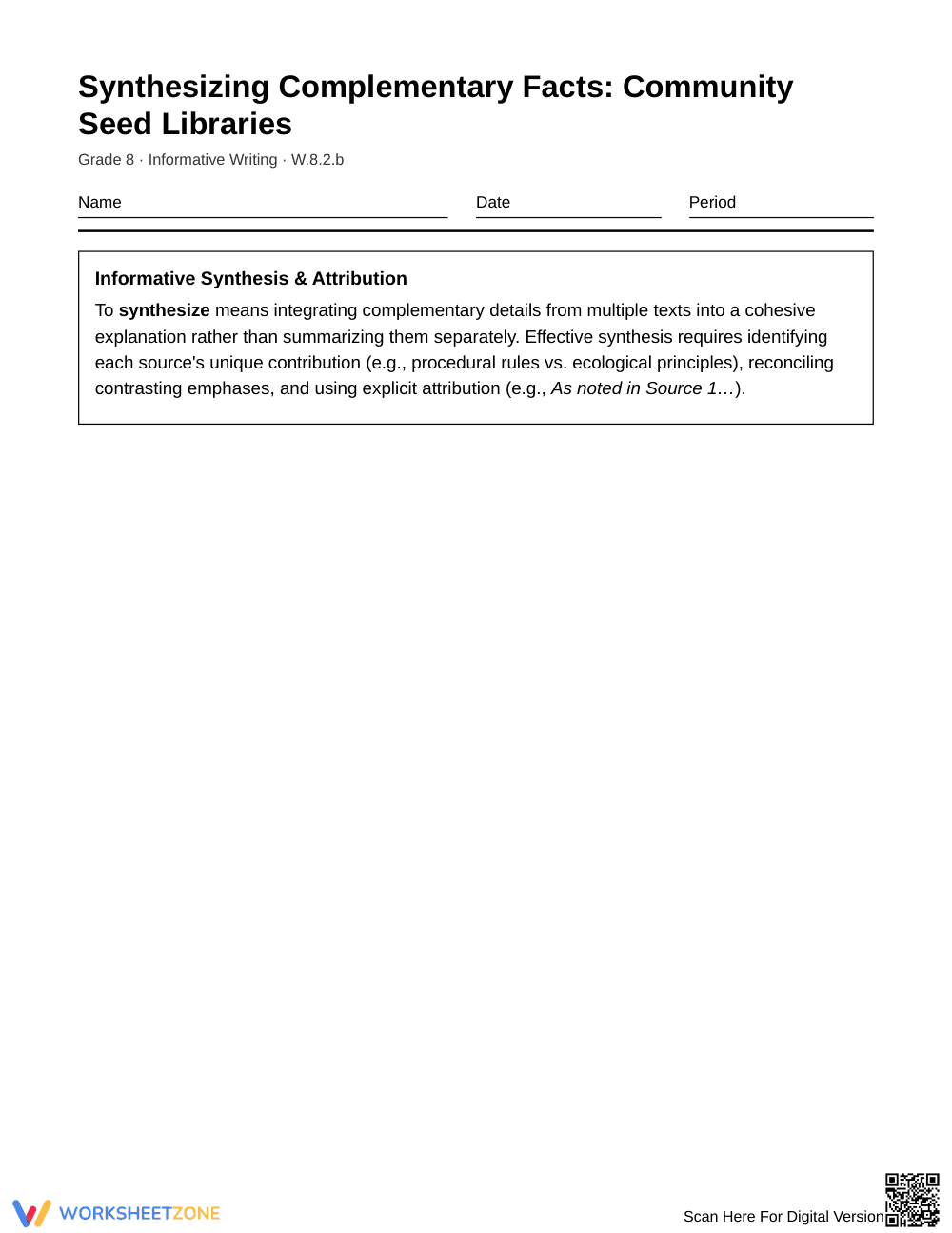
This Grade 8 informative writing worksheet develops students' ability to synthesize complementary facts from dual informational texts into a cohesive explanation. Working with paired passages on community seed libraries, learners evaluate distinct source perspectives, map operational procedures to biological rationale, and draft a well-attributed synthesis paragraph that balances competing textual details.
At a Glance
- Grade: 8 · Subject: ELA
- Standard:
W.8.2.b— Develop topics with well-chosen facts, definitions, details, and quotations- Skill Focus: Synthesizing complementary source facts
- Format: 5 pages · 8 problems · Answer key included · PDF
- Best For: Informative writing units and source analysis
- Time: 45–60 minutes
What's Inside
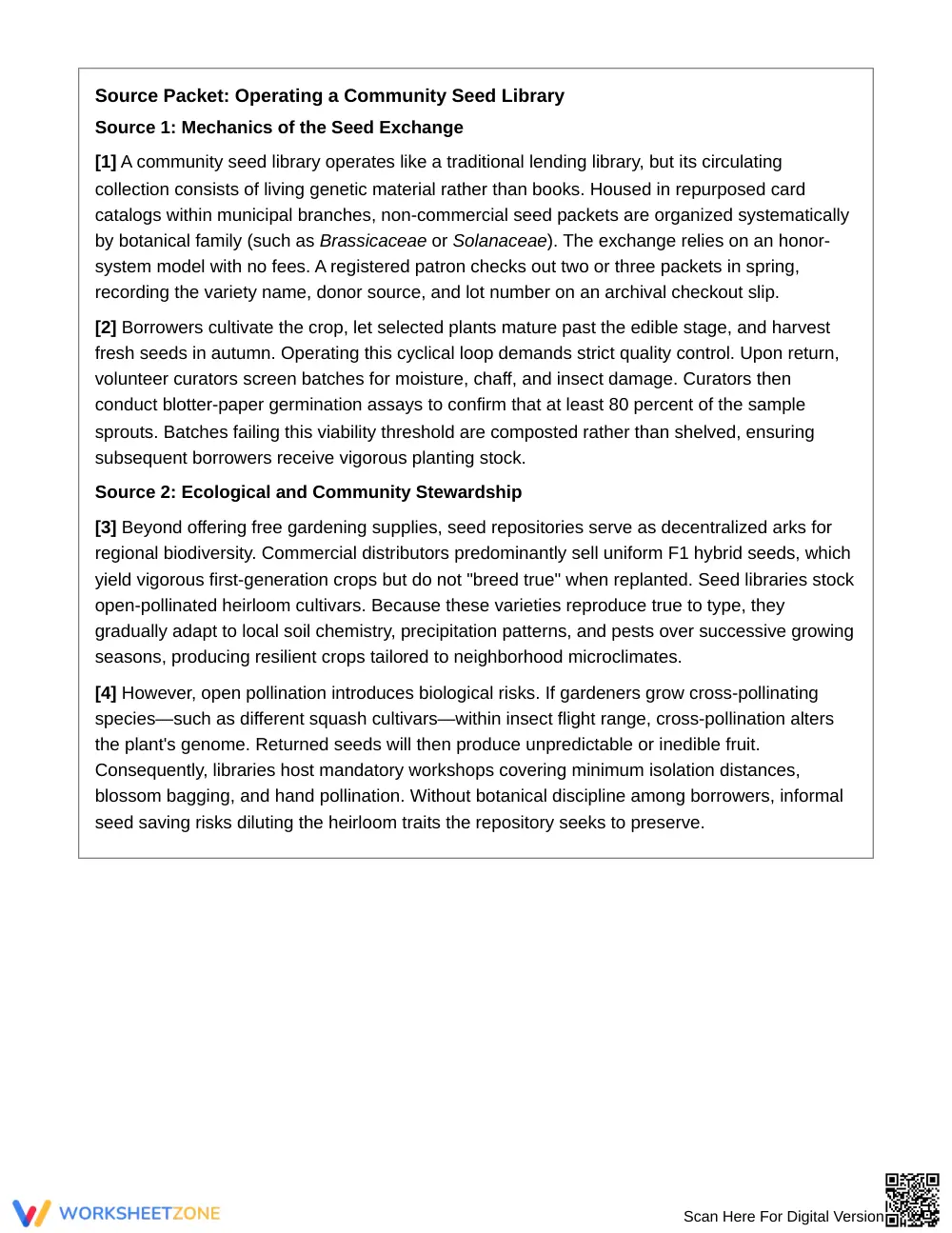
This 5-page printable packet presents two rich informational texts exploring the operational procedures and ecological science behind seed exchanges. The resource contains 8 rigorous tasks divided across three sequential phases: multiple-choice and short-answer source analysis, an evidence synthesis grid, an error critique exercise, and a 250-to-350-word synthesis drafting prompt with an evidence audit.
Skill Progression
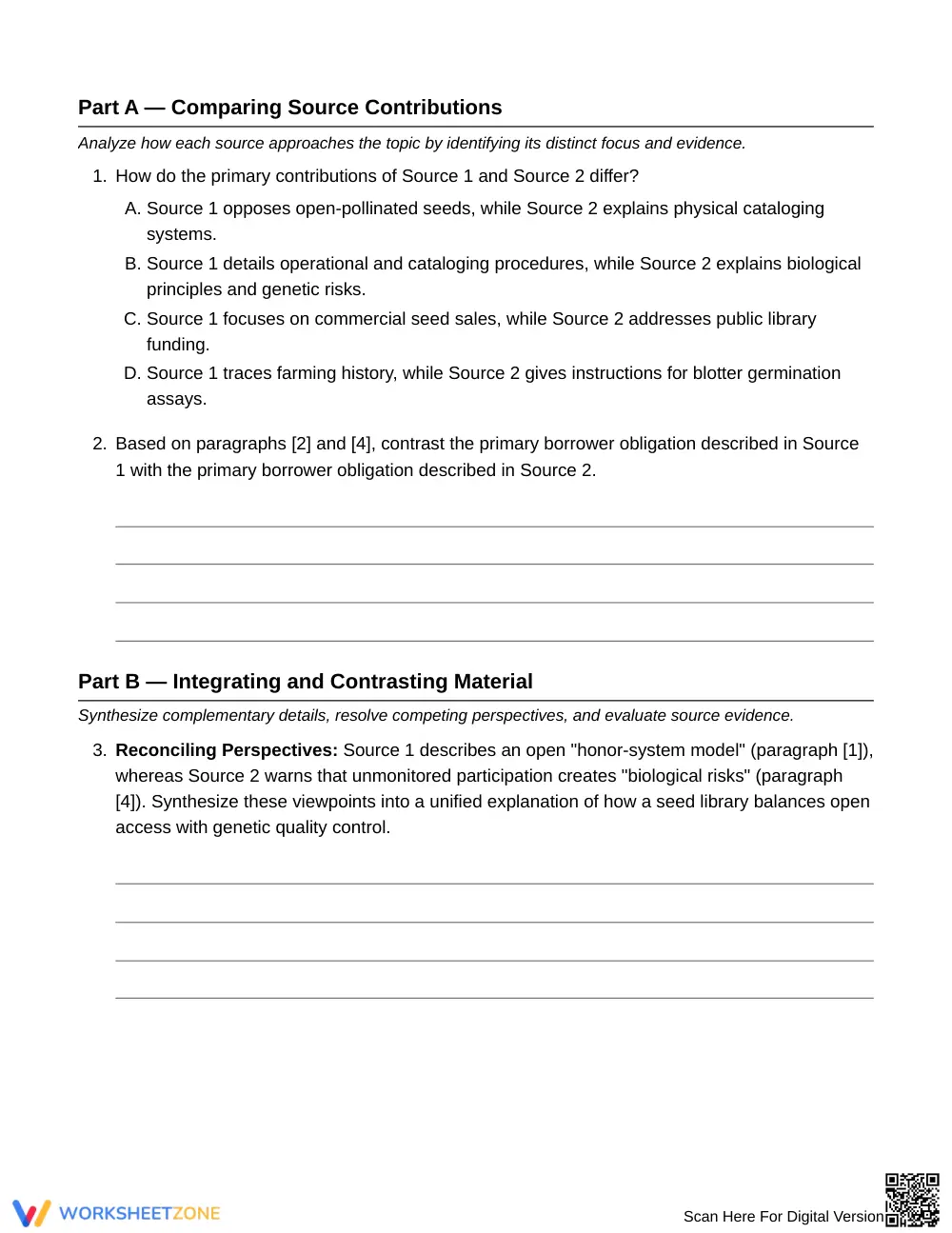
- Guided Practice (Part A, 2 tasks): Students identify distinct source contributions and compare borrower obligations across procedural and biological texts using multiple-choice and targeted short-response prompts.
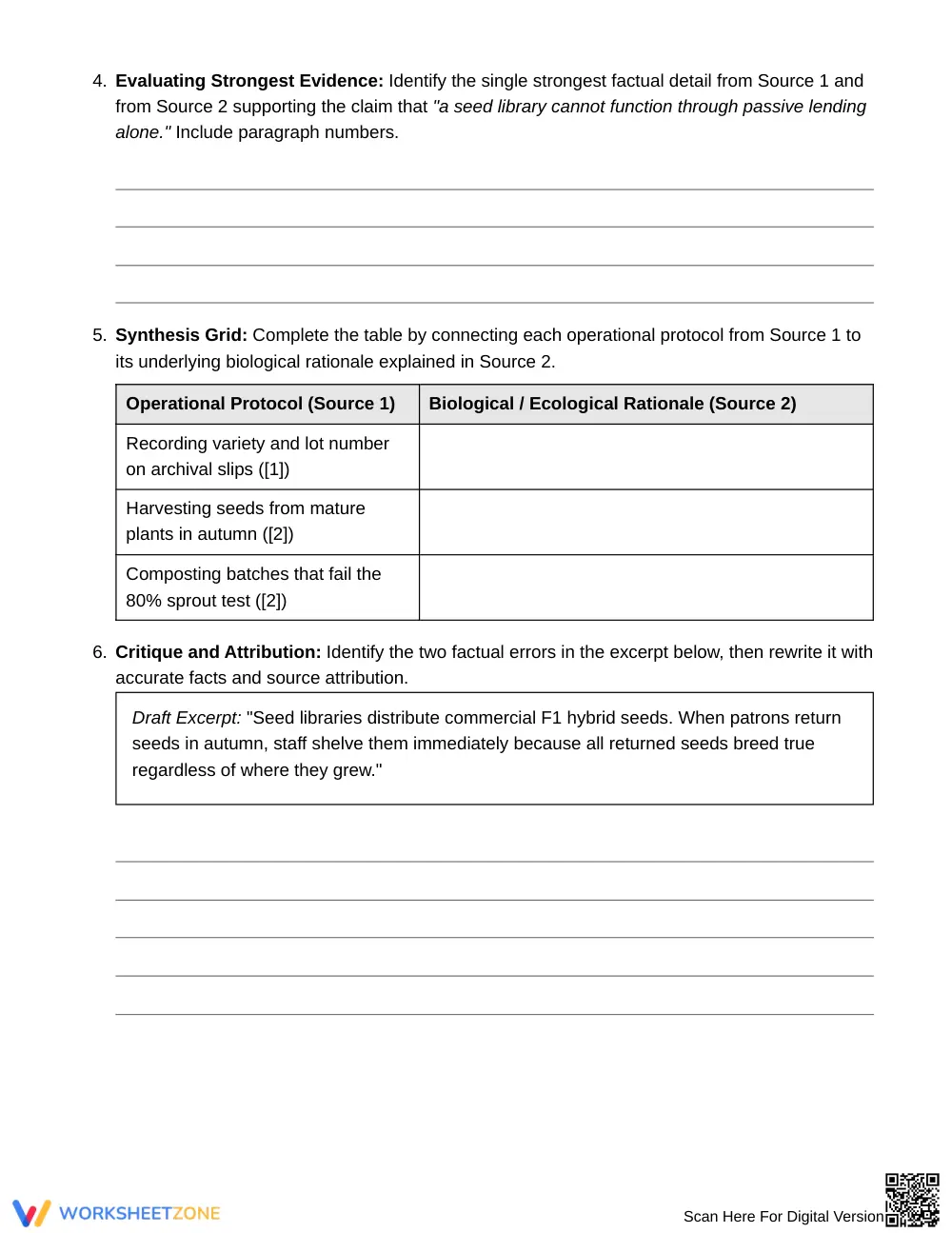
- Supported Practice (Part B, 4 tasks): Students reconcile contrasting viewpoints, evaluate the strongest evidence, match operational steps to biological principles in a structured synthesis grid, and correct a flawed summary with proper attribution.
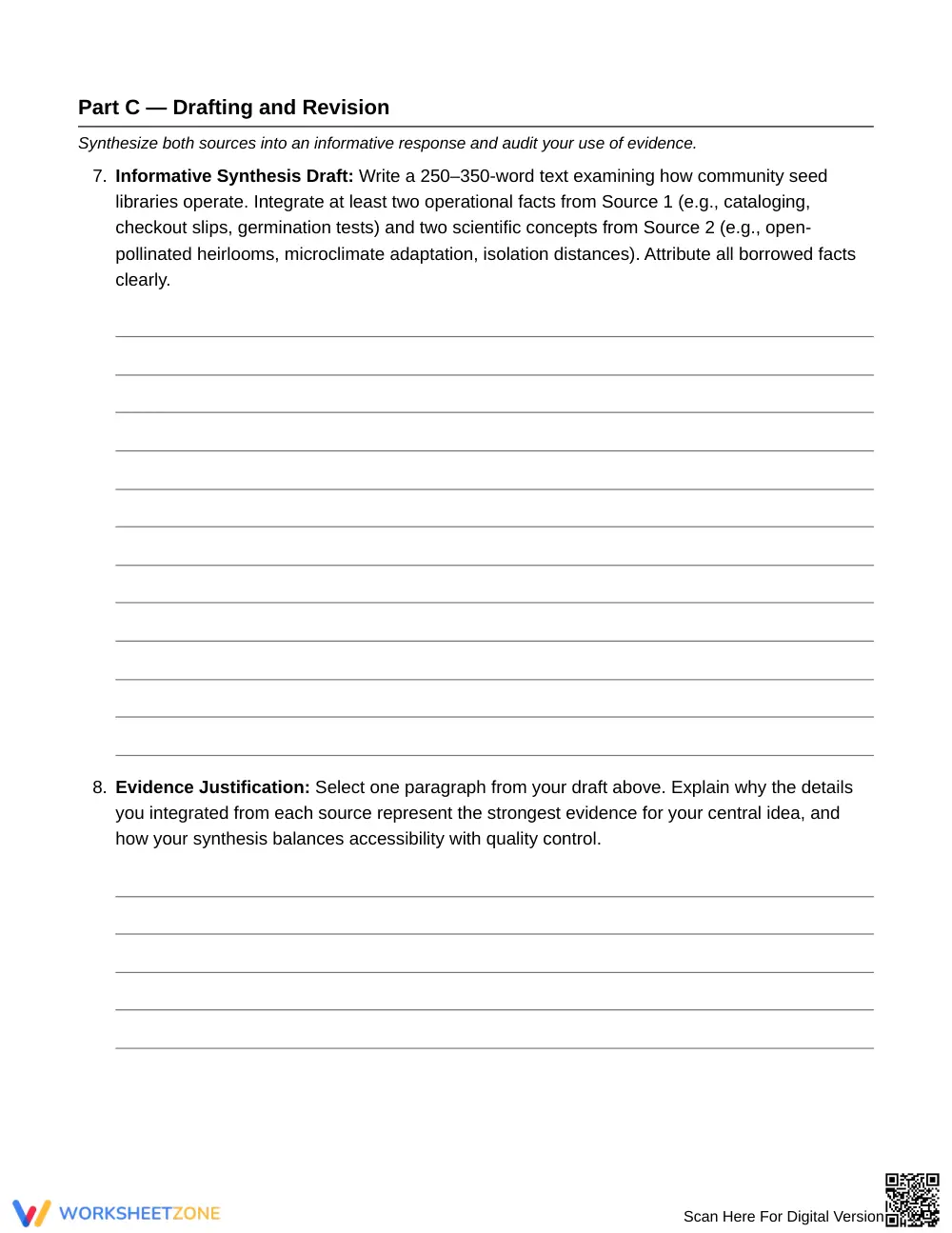
- Independent Practice (Part C, 2 tasks): Students compose an extended informative synthesis integrating operational and scientific facts, followed by an evidence justification explaining their source integration.
This sequence embodies a gradual-release instructional model, moving learners from analytical source deconstruction to fully synthesized original writing.
Standards Alignment
This resource aligns directly to `W.8.2.b`: develop the topic with relevant, well-chosen facts, definitions, concrete details, quotations, or other information and examples. It also reinforces `RI.8.9` as students analyze two texts addressing the same topic with different emphases. Both standard codes can be copied directly into lesson plans, IEP goals, or district curriculum mapping tools.
How to Use It
Implement this worksheet during the drafting phase of an informative writing unit after introducing multi-source research techniques. It functions effectively as a paired-text workshop where students complete Parts A and B collaboratively before drafting Part C independently. During instruction, circulate to check the synthesis grid in Part B; students struggling to link procedural rules to biological reasons will need targeted intervention before beginning their draft. Expected completion time is 45 to 60 minutes.
Who It's For
This worksheet targets Grade 8 general education students, advanced Grade 7 writers, and high school students needing structured practice with source attribution. Pair this activity with an anchor chart detailing transition phrases for source integration (such as whereas, conversely, and building upon).
Synthesizing multiple informational texts is a critical milestone in middle school literacy development. According to research on structured literacy instruction by Fisher & Frey (2014), explicit instruction in cross-text synthesis significantly enhances students' ability to construct complex, evidence-grounded arguments and informative explanations. When middle school writers learn to reconcile complementary perspectives rather than merely summarizing isolated passages, their reading comprehension and written coherence improve markedly. This 5-page worksheet targets standard W.8.2.b by providing 8 scaffolded tasks that guide Grade 8 learners through source deconstruction, comparative analysis, error analysis, and extended informative composition. The included synthesis grid and evidence audit ensure that students learn to attribute facts accurately while developing rich, well-supported explanations across content areas.


