




























Views
Downloads


Essential Informative Writing Worksheet | Grade 8 ELA

Paste this activity's link or code into your existing LMS (Google Classroom, Canvas, Teams, Schoology, Moodle, etc.).
Students can open and work on the activity right away, with no student login required.
You'll still be able to track student progress and results from your teacher account.
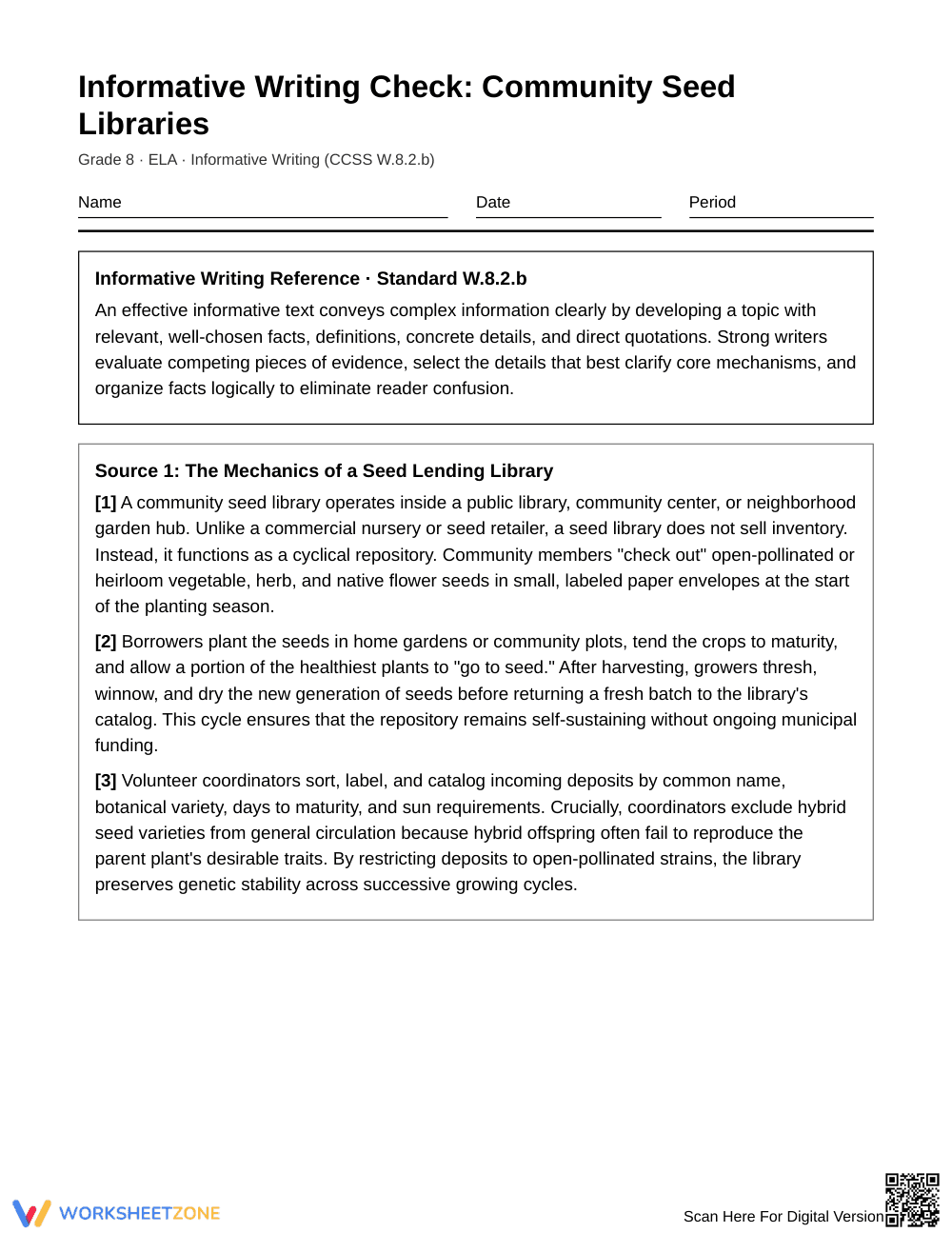
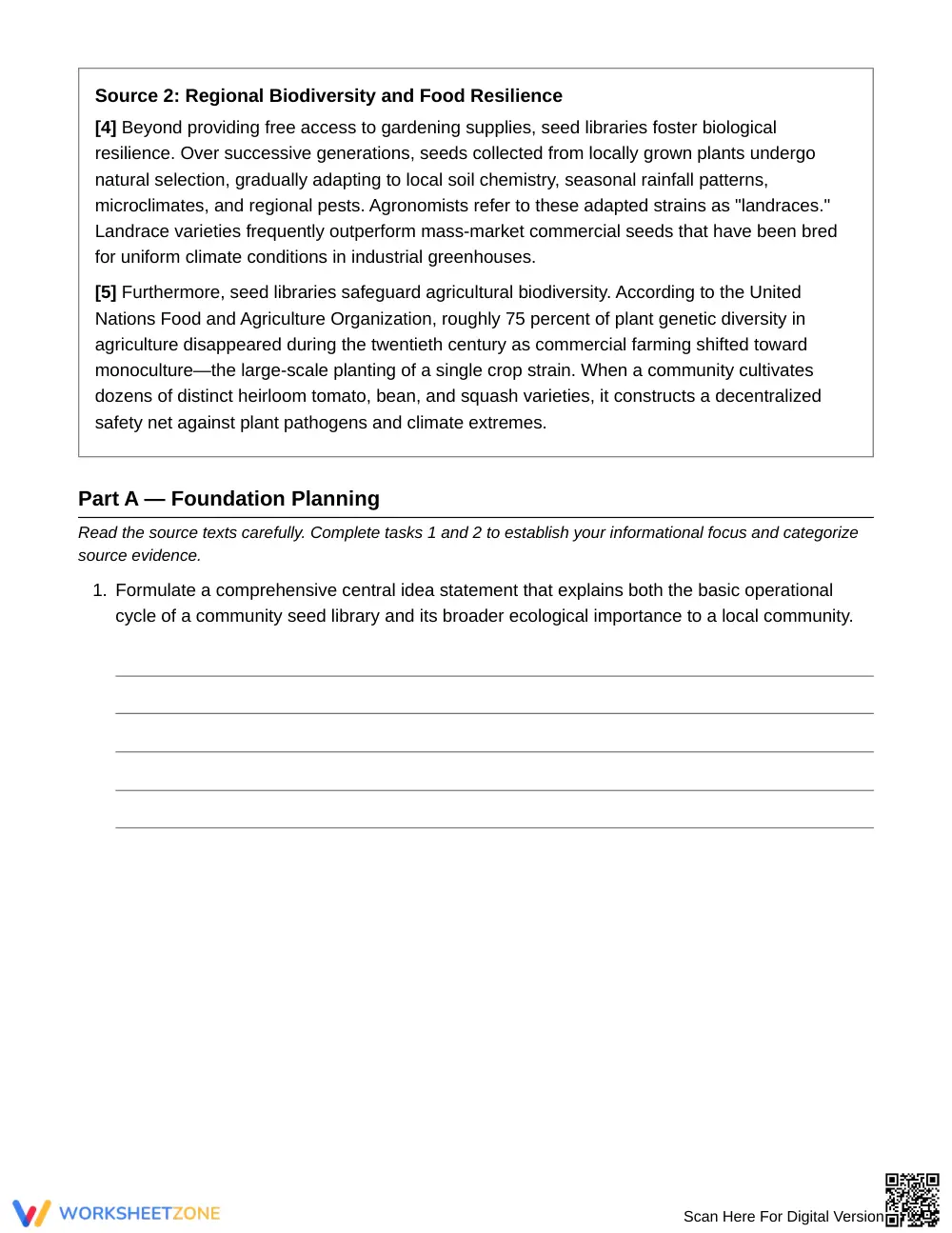
Mastering informative writing requires students to synthesize complex evidence, eliminate reader confusion, and structure factual explanations logically. This 5-page worksheet provides middle school learners with two informational texts about community seed libraries, guiding them through text analysis, evidence matrix organization, analytical short responses, and independent multi-paragraph drafting to develop comprehensive explanatory writing skills.
At a Glance
- Grade: 8 · Subject: ELA
- Standard:
W.8.2.b— Develop topics with well-chosen, relevant facts, definitions, and quotations- Skill Focus: Informative Writing Check
- Format: 5 pages · 8 problems · Answer key included · PDF
- Best For: Informative writing assessment and practice
- Time: 45–60 minutes
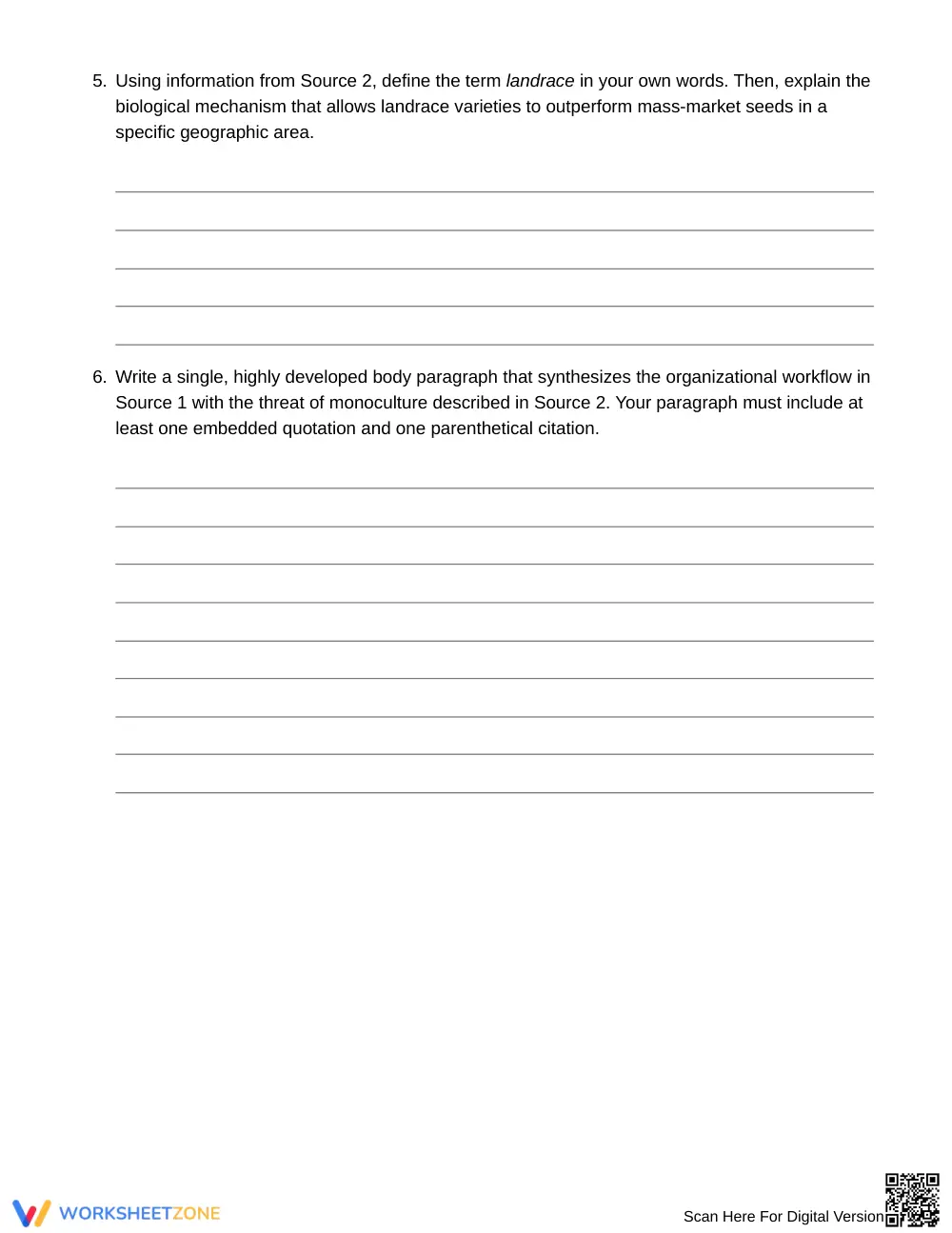
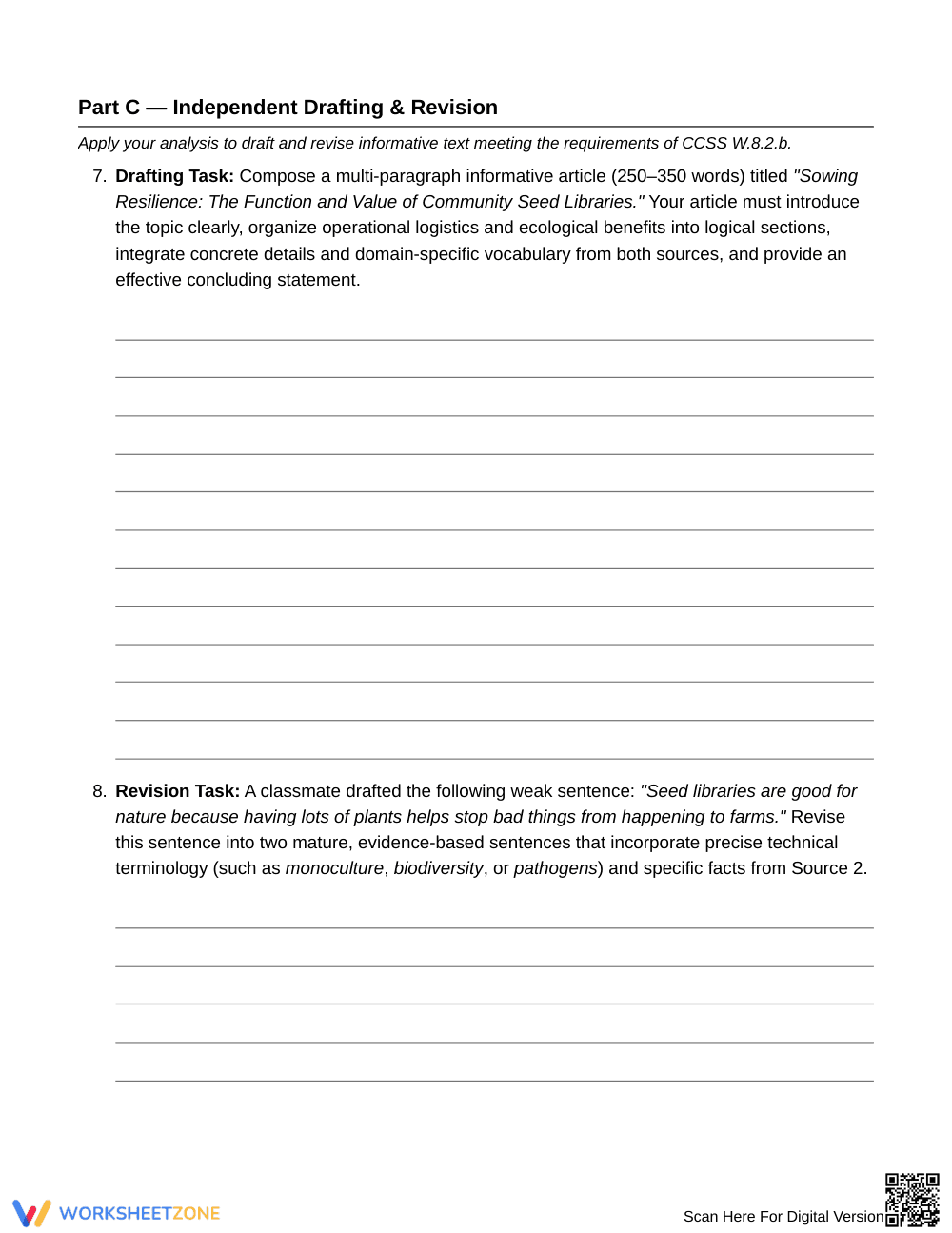
This resource features two comprehensive nonfiction passages exploring the mechanics of community seed lending repositories and regional agricultural biodiversity. Across 5 structured pages, students complete 8 rigorous tasks including an evidence planning matrix, analytical concept explanations, quotation integration exercises, full-length article drafting, and sentence-level revision. A complete 4-page exemplar answer key is included.
Skill Progression
- Guided Practice (Tasks 1–2): Students establish a central idea statement and extract key evidence into a structured planning matrix with direct source references.
- Supported Practice (Tasks 3–6): Learners evaluate evidence strength, define domain-specific terms, clarify public misconceptions, and compose a synthesized body paragraph using embedded citations.
- Independent Practice (Tasks 7–8): Students draft a complete 250-to-350-word informative article and execute targeted sentence revisions incorporating technical academic vocabulary.
This sequence follows a gradual-release instructional model, transitioning students from scaffolded source analysis to independent written composition.
Standards Alignment
This worksheet is aligned directly to primary standard W.8.2.b: Develop the topic with relevant, well-chosen facts, definitions, concrete details, quotations, or other information and examples. It also reinforces reading informational text integration standard RI.8.1 by requiring textual evidence for all analytical claims. Both standard codes can be copied directly into lesson plans, IEP goals, or district curriculum mapping tools.
How to Use It
Administer this worksheet during an informative writing unit after direct instruction on evidence integration. Use Parts A and B as a collaborative mid-unit checkpoint, monitoring student evidence matrices to identify misconceptions before drafting. Alternatively, assign the full resource as an end-of-unit summative assessment. Expected completion time is 45 to 60 minutes.
Who It's For
This activity is designed for Grade 8 ELA classrooms, advanced Grade 7 writers, and intervention groups requiring structured writing support. Differentiate by providing sentence starters for the extended response or pairing the worksheet with an informational mentor text during whole-class modeling.
Developing proficiency in informative writing under standard W.8.2.b requires students to actively select, evaluate, and integrate domain-specific evidence rather than simply summarizing source material. Research from Fisher & Frey (2014) highlights that structured graphic organizers and tiered writing prompts facilitate the gradual release of responsibility, enabling learners to consolidate factual comprehension before engaging in complex compositional tasks. By combining paired informational passages on community seed libraries with an analytical evidence matrix, targeted synthesis questions, and authentic drafting exercises, this resource reinforces critical thinking and expository clarity. Middle school writers learn to contrast competing details, define specialized vocabulary such as landraces and monoculture, and embed accurate citations smoothly within structured paragraphs. As empirical studies demonstrate, systematic practice with evidence categorization directly improves student writing quality, academic vocabulary acquisition, and standard-aligned performance across diverse classroom settings.


