




























Views
Downloads


Essential Explanatory Scope Worksheet | Grade 8 ELA

Paste this activity's link or code into your existing LMS (Google Classroom, Canvas, Teams, Schoology, Moodle, etc.).
Students can open and work on the activity right away, with no student login required.
You'll still be able to track student progress and results from your teacher account.
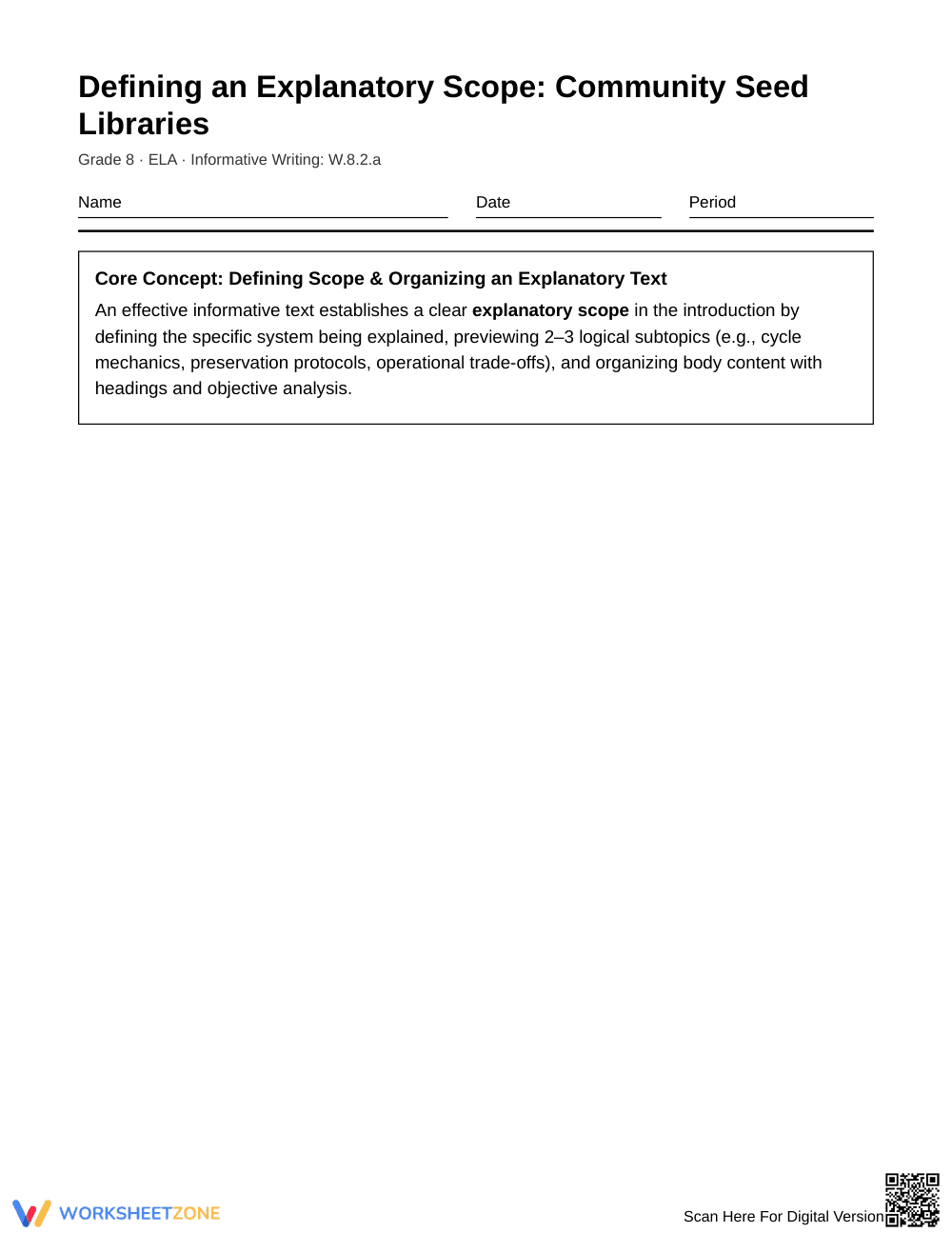
This informative writing worksheet trains Grade 8 students to establish a precise explanatory scope and preview organizational structures. Working with a source text on community seed libraries, eighth graders analyze thesis clarity, organize evidence into logical categories, and draft focused introductions that launch objective, multiparagraph explanations.
At a Glance
- Grade: 8 · Subject: ELA
- Standard:
W.8.2.a— Introduce a topic clearly, previewing what is to follow, and organize ideas into broader categories- Skill Focus: Defining an Explanatory Scope
- Format: 5 pages · 8 problems · Answer key included · PDF
- Best For: Informative essay introduction and outline instruction
- Time: 45–60 minutes
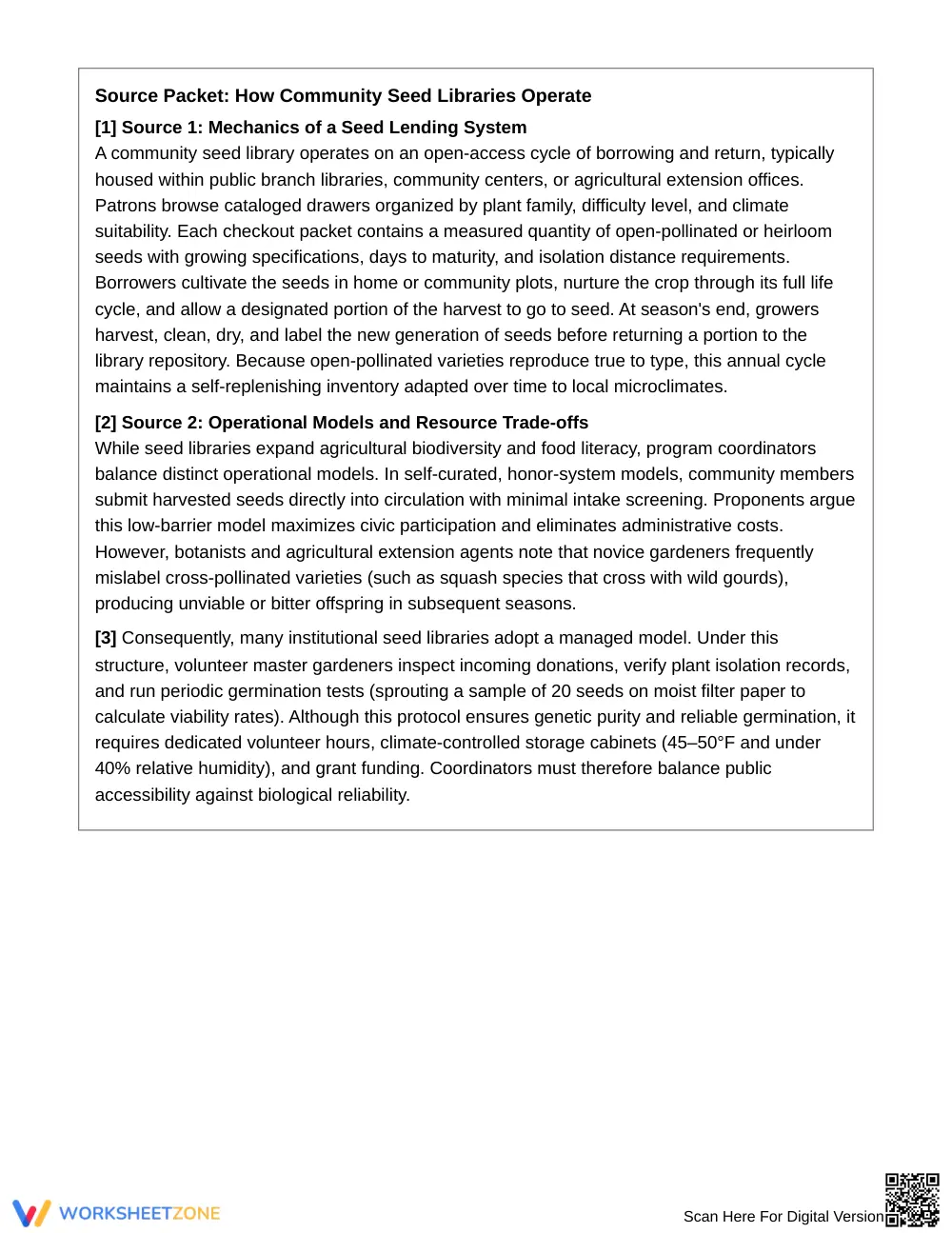
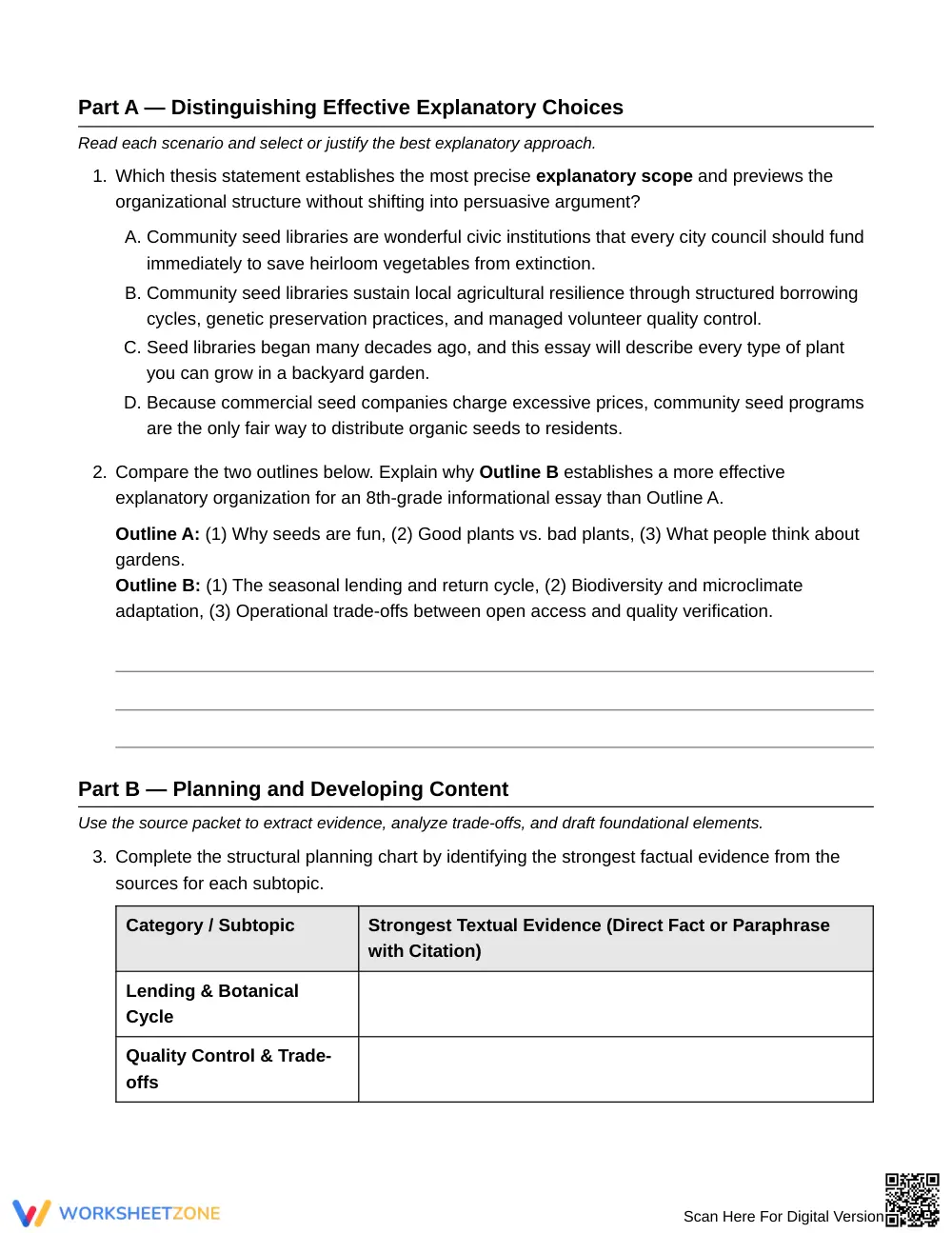
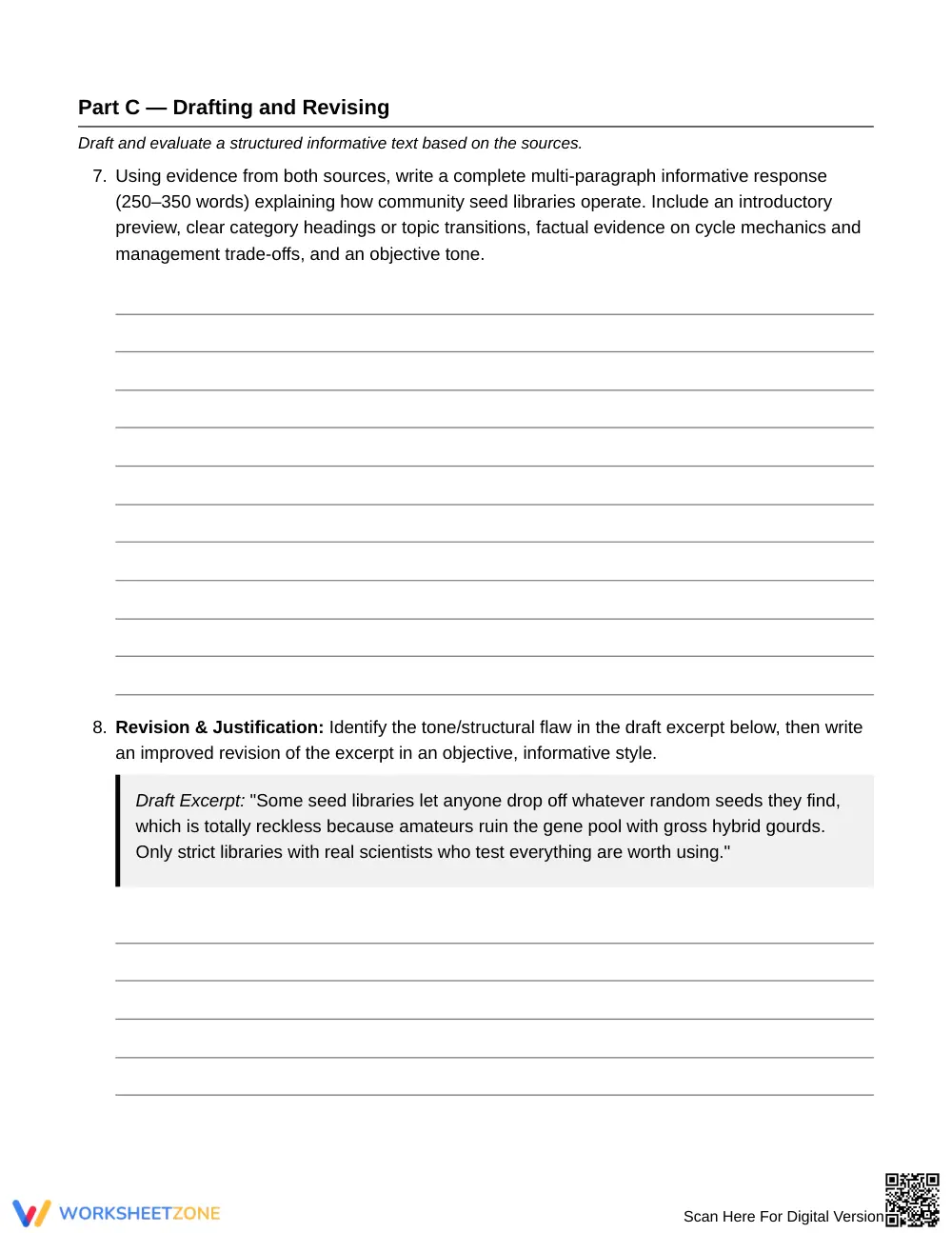
The 5-page worksheet provides a dual-source background text exploring seed lending cycles, cataloging protocols, and management trade-offs. Across 8 structured tasks, students evaluate thesis statements, critique organizational outlines, extract categorized evidence into a planning chart, draft an introduction with previewed subtopics, and write a 250-word synthesis essay. A 4-page answer key provides model responses and evaluation criteria.
Skill Progression
- Guided practice (Tasks 1–2): Students analyze modeled thesis statements to isolate explanatory scope from argument and evaluate structural outlines.
- Supported practice (Tasks 3–6): Learners complete a categorized planning matrix, synthesize operational trade-offs objectively, justify sequencing decisions, and draft an introductory preview.
- Independent practice (Tasks 7–8): Writers produce a multiparagraph explanatory response using category headings, then identify and correct subjective tone in an unpolished draft.
This progression applies a gradual-release model, moving writers from structural evaluation to independent drafting.
Standards Alignment
This resource targets W.8.2.a: introduce a topic clearly, previewing what is to follow, and organize ideas into broader categories. It also reinforces W.8.2.b by requiring relevant evidence to develop subtopics. Both standard codes can be copied directly into lesson plans, IEP goals, or district curriculum mapping tools.
How to Use It
Use this packet during an informational writing unit or as a performance task. For formative assessment, inspect Task 1 and Task 6 to ensure students preview subtopics objectively before drafting body paragraphs. The activities require 45 to 60 minutes across one or two class sessions.
Who It's For
Designed for Grade 8 ELA classrooms, this resource supports students who need practice narrowing essay topics. Structured charts assist emerging writers, while comparative operational models challenge advanced learners. Pair this packet with an anchor chart on objective explanatory transitions.
According to Fisher & Frey (2014), explicit scaffolding of informational text structure allows middle school writers to internalize organizational frameworks and transition successfully toward independent composition. This Grade 8 informative writing worksheet operationalizes standard W.8.2.a by targeting the skill of defining an explanatory scope, guiding students to delineate topic boundaries and preview structural pathways rather than drifting into argumentative opinion. Through 8 structured tasks centered on community seed libraries, learners evaluate thesis precision, organize evidence across parallel subtopics, and compose introductory paragraphs featuring clear categorical roadmaps. The scaffolded progression from outline critique to independent drafting reinforces structural clarity, objective register, and informational synthesis. By providing concrete mentor models and guided planning tools, this resource ensures eighth-grade writers develop the foundational organizational stamina required for high school expository discourse and standards mastery across all academic content areas.


