




























Views
Downloads

Essential Explaining Exceptions Worksheet | Grade 8 ELA

Paste this activity's link or code into your existing LMS (Google Classroom, Canvas, Teams, Schoology, Moodle, etc.).
Students can open and work on the activity right away, with no student login required.
You'll still be able to track student progress and results from your teacher account.
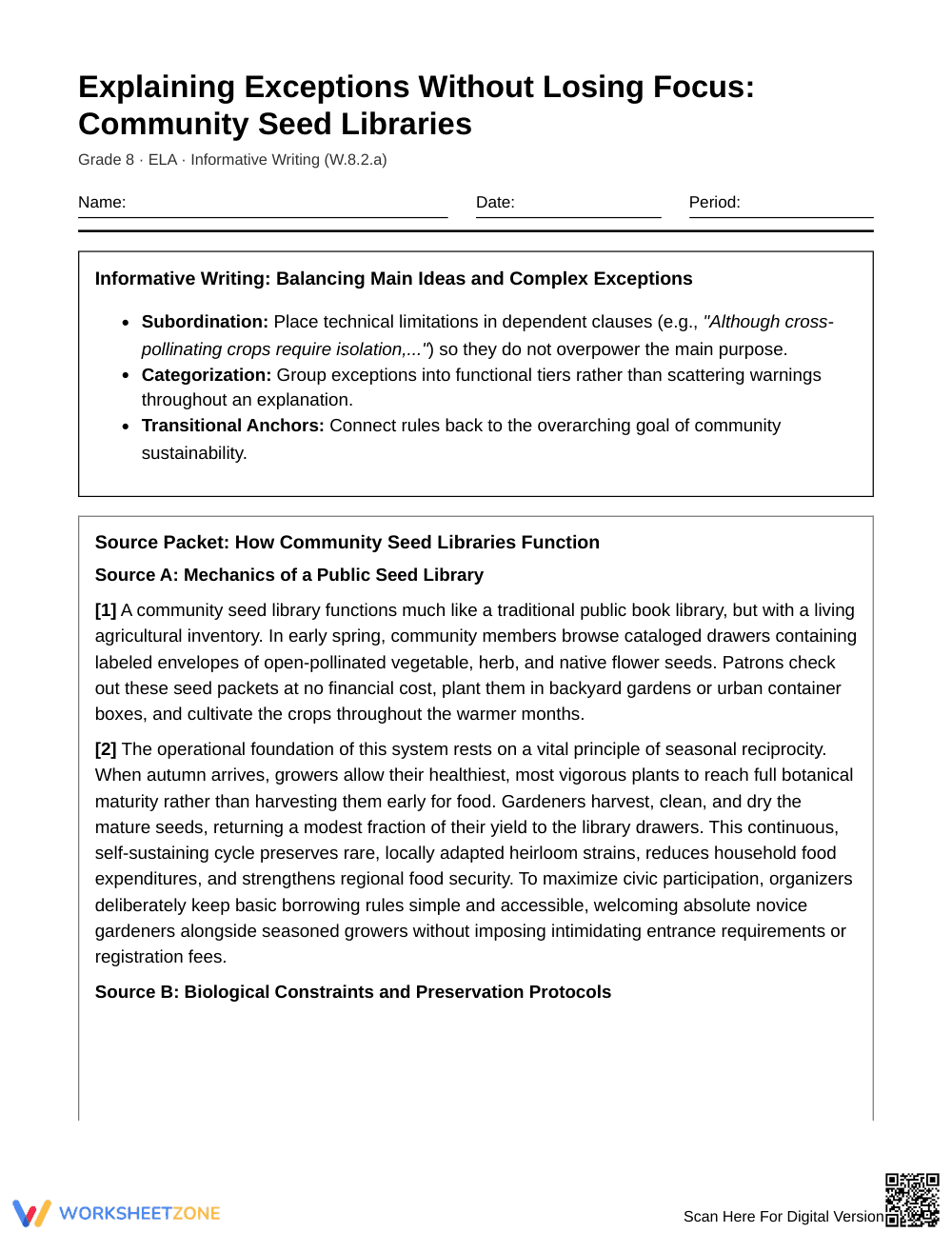
This Grade 8 informative writing worksheet teaches students how to address technical limitations, biological constraints, and procedural exceptions without derailing their central informative focus. Students analyze agricultural seed library texts, revise flawed drafts, and compose a balanced explanation using syntactic subordination and structured categorization.
At a Glance
- Grade: 8 · Subject: ELA
- Standard:
W.8.2.a— Introduce a topic clearly, previewing contents and organizing ideas into broader categories- Skill Focus: Explain Exceptions Without Losing the Main Focus
- Format: 5 pages · 8 problems · Answer key included · PDF
- Best For: Informative writing direct instruction and draft revision
- Time: 45–60 minutes
What's Inside
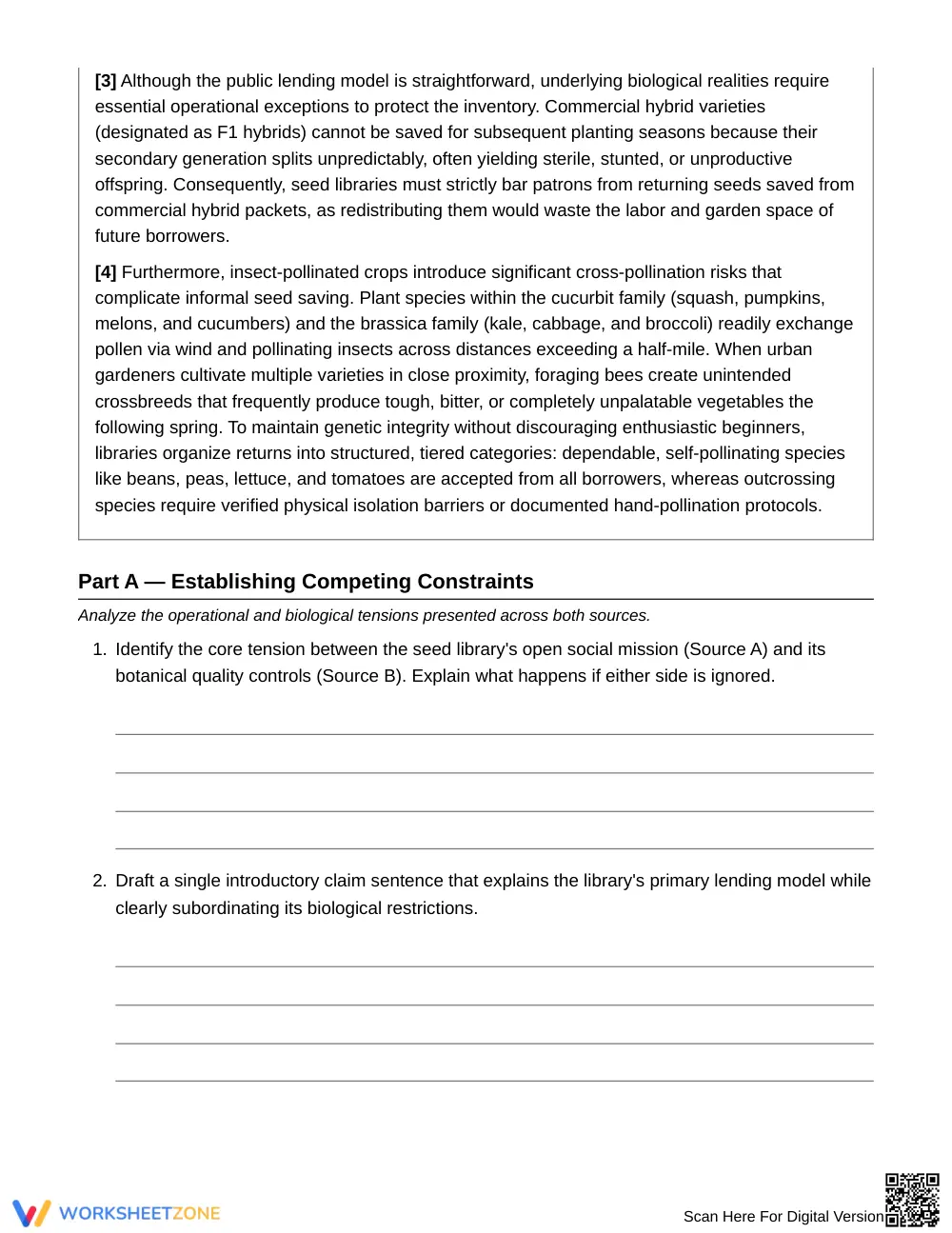
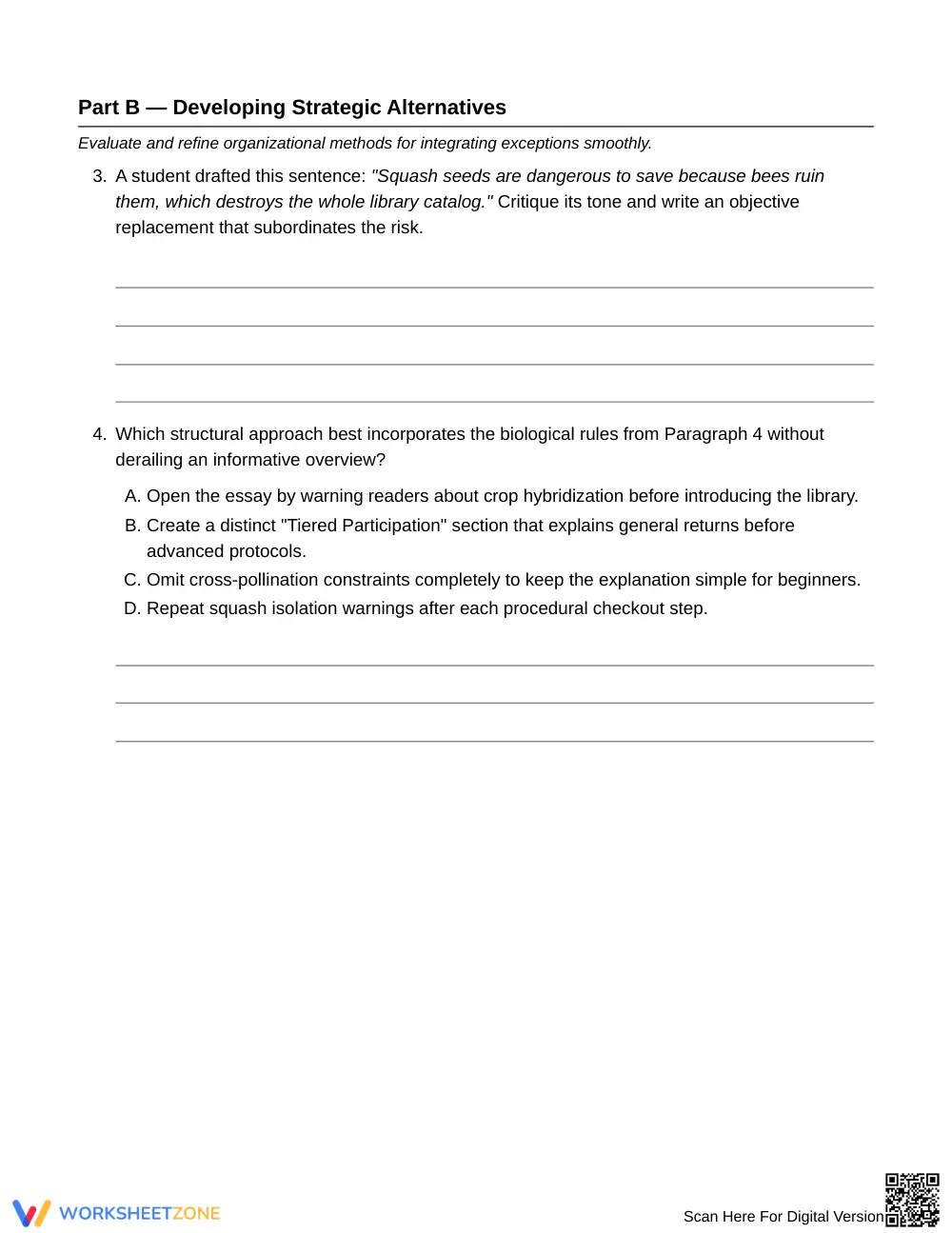
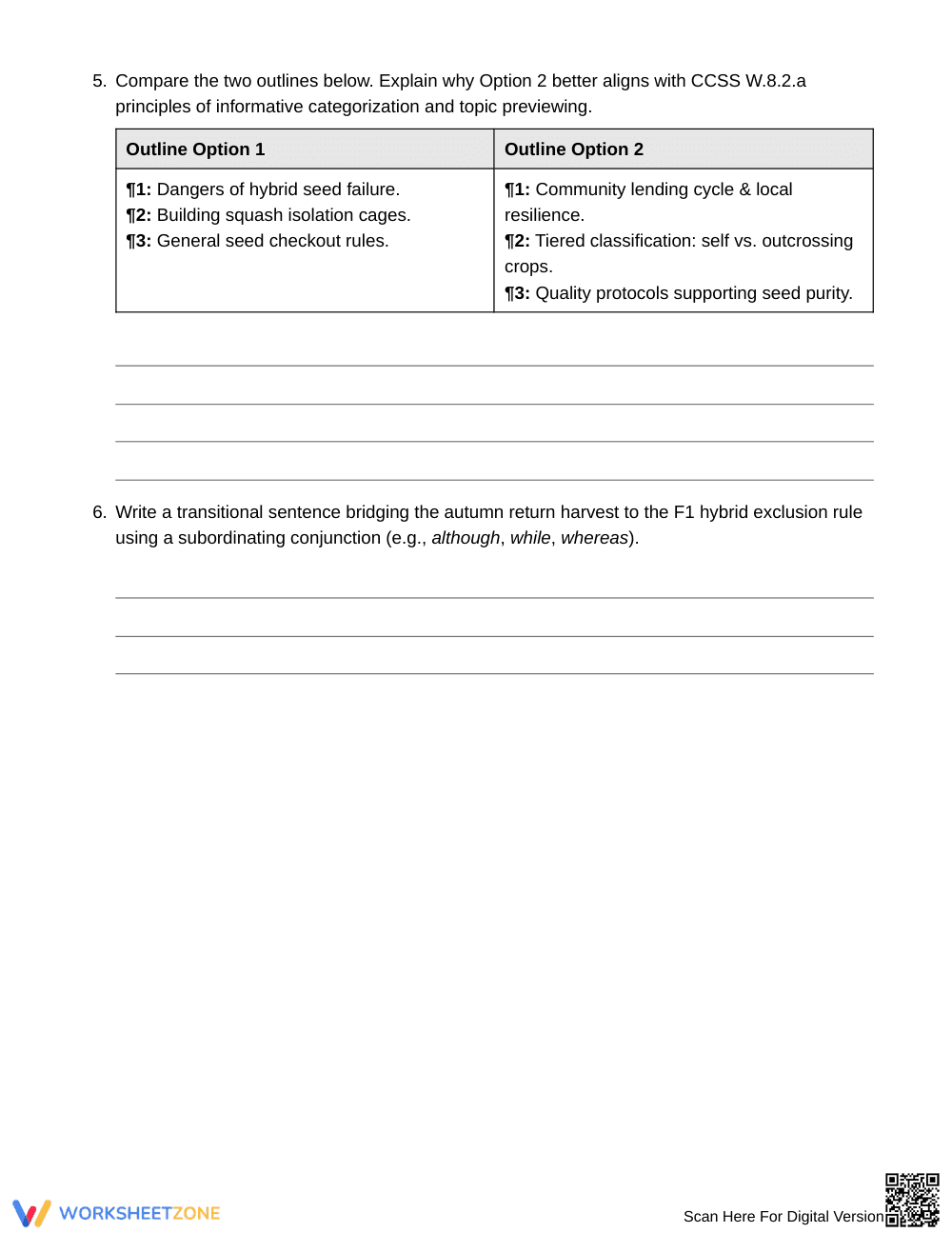
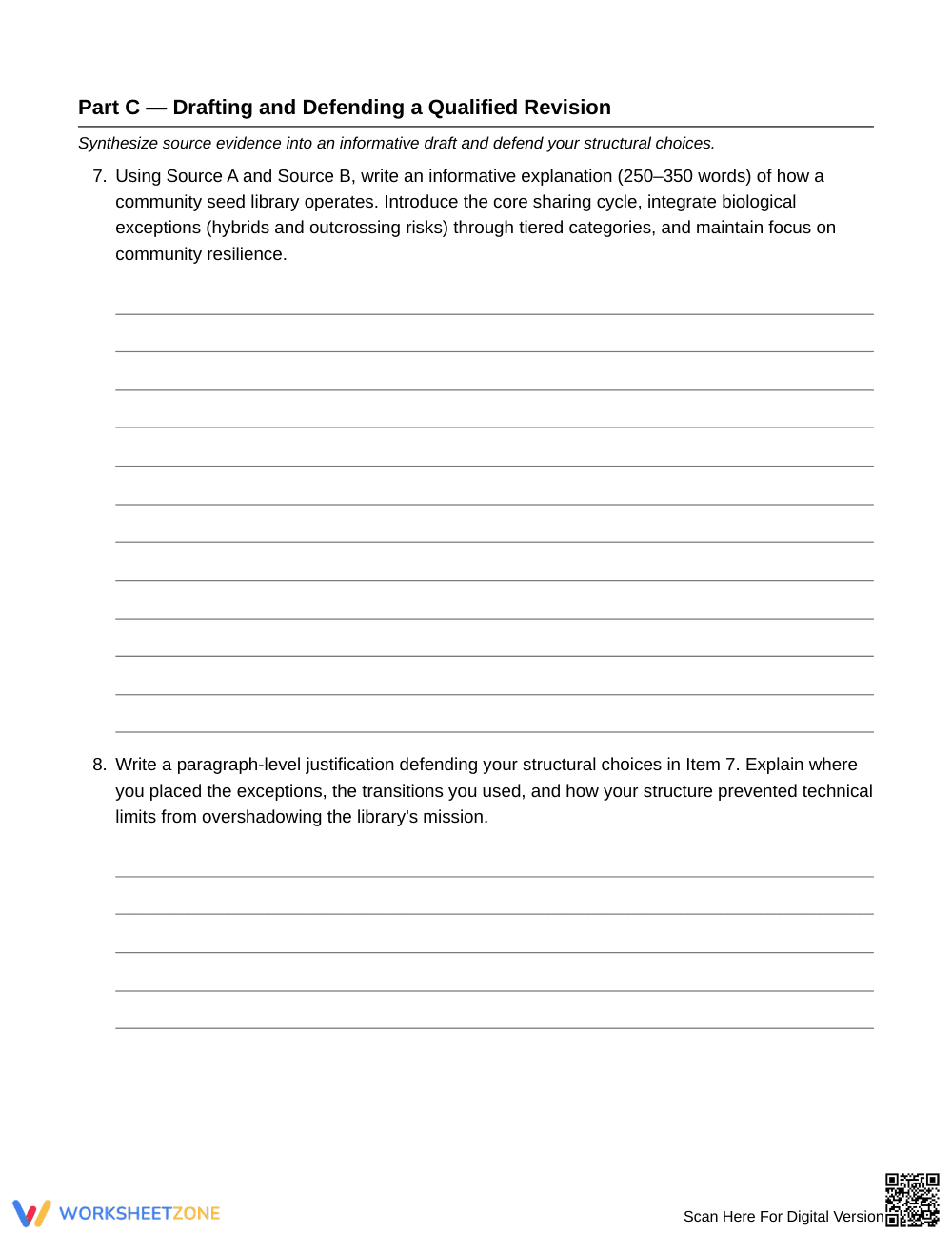
The 5-page printable resource provides a dual-text informational packet on community seed libraries, followed by 8 targeted analytical and writing tasks. Students evaluate operational models, examine cross-pollination risks, critique biased draft sentences, select optimal essay outlines, and compose a 250-to-350-word synthesis with a written structural defense. A comprehensive 4-page answer key provides complete model responses.
Skill Progression
- Guided Practice (Part A, Items 1–2): Students analyze competing institutional constraints across paired texts and craft an introductory thesis that subordinates technical seed-saving rules beneath the library's civic mission.
- Supported Practice (Part B, Items 3–6): Students critique hyperbolic tone, evaluate structural outlines for informative categorization, and draft complex transitions using subordinating conjunctions.
- Independent Practice (Part C, Items 7–8): Students draft an extended informational response synthesizing complex exceptions and author a metacognitive justification defending their organizational choices.
This sequence implements a gradual-release architecture, moving writers from diagnostic analysis to independent rhetorical synthesis.
Standards Alignment
This resource aligns directly with CCSS W.8.2.a, which requires eighth-grade writers to introduce a topic clearly, preview what is to follow, and organize ideas, concepts, and information into broader categories. It also supports standard W.8.2.c through its targeted practice with transitional phrases and subordinate clauses. Both standard codes can be copied directly into lesson plans, IEP goals, or district curriculum mapping tools.
How to Use It
Deploy this activity during the drafting phase of an informative writing unit. Have students work through Parts A and B collaboratively after direct instruction on complex sentence structures. Use Item 3 as an immediate formative checkpoint to assess whether students can distinguish neutral informative phrasing from alarmist claims. Allocate 45 to 60 minutes for full completion.
Who It's For
This instructional packet is designed for general eighth-grade ELA classes, advanced middle school writers, and co-taught inclusion settings. Sentence frames and outline models provide built-in scaffolds for developing writers. Pair this printable with mentor informational essays or direct instruction on complex subordinating conjunctions.
According to research from Fisher & Frey (2014) on disciplinary literacy, middle school writers frequently struggle to integrate conflicting evidence and technical qualifications without obscuring their primary explanatory purpose. Common Core standard W.8.2.a addresses this developmental hurdle by emphasizing macro-level text organization, functional category grouping, and precise topic previewing. This Grade 8 ELA worksheet operationalizes these evidence-based instructional principles through 8 scaffolded tasks grounded in authentic informational texts about community seed libraries. By guiding students through syntactic subordination, tone refinement, and comparative outline evaluation prior to extended drafting, the resource equips learners to balance overarching main ideas with nuanced operational exceptions. The structured analytical progression ensures measurable mastery of informational complexity across diverse learning environments.


