




























Views
Downloads



Essential Developing Ideas Worksheet | Grade 8 ELA

Paste this activity's link or code into your existing LMS (Google Classroom, Canvas, Teams, Schoology, Moodle, etc.).
Students can open and work on the activity right away, with no student login required.
You'll still be able to track student progress and results from your teacher account.
This informative writing worksheet guides Grade 8 students to develop ideas using concrete details, source evidence, and comparisons. Working through paired informational passages on community seed libraries, students master thesis development, comparative analysis, paragraph outlining, and extended essay drafting with self-assessment.
At a Glance
- Grade: 8 · Subject: ELA
- Standard:
W.8.2.b— Develop topics with relevant facts, definitions, concrete details, and comparisons- Skill Focus: Develop Ideas with Examples and Comparisons
- Format: 5 pages · 8 problems · Answer key included · PDF
- Best For: Informative writing practice and drafting
- Time: 45–60 minutes
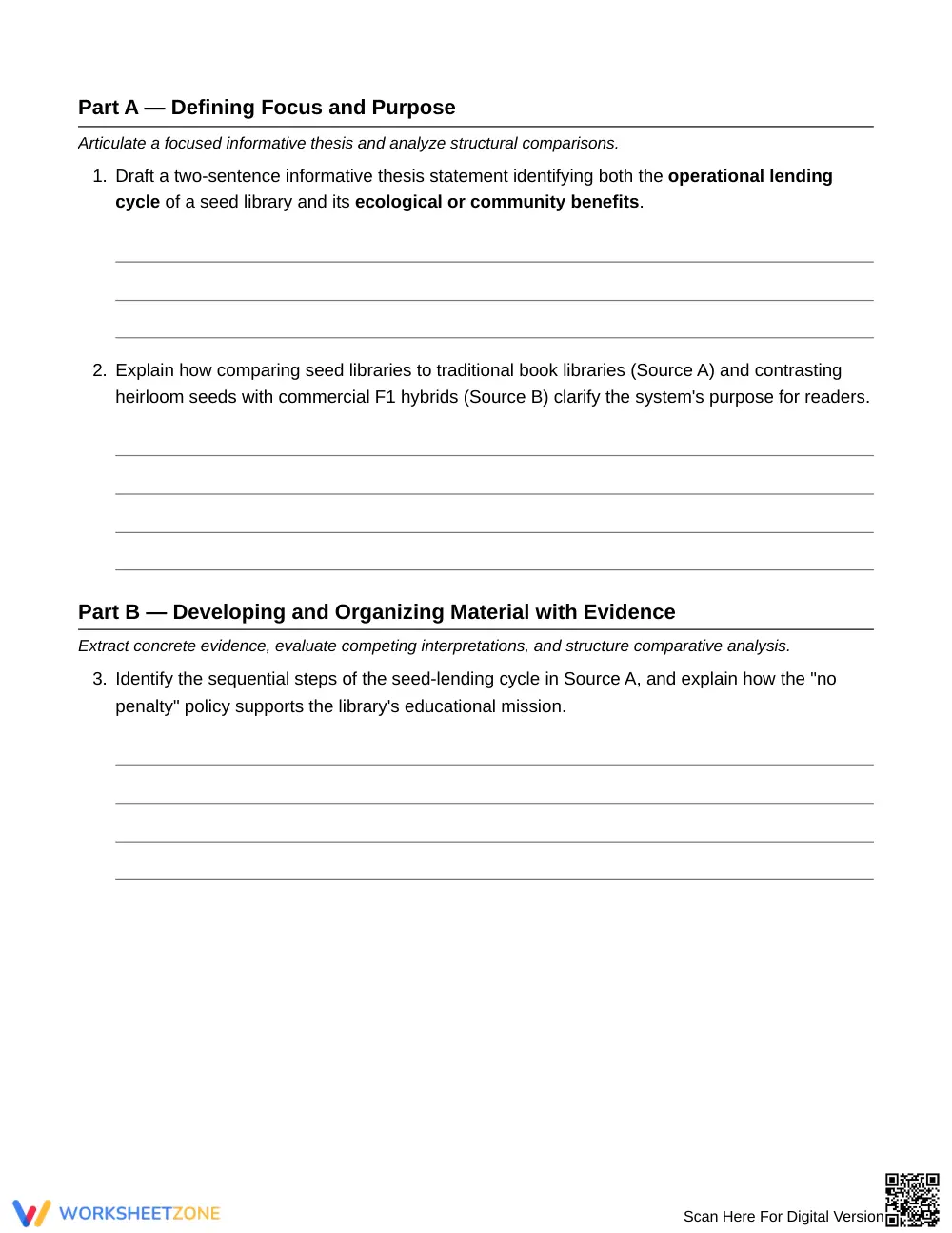
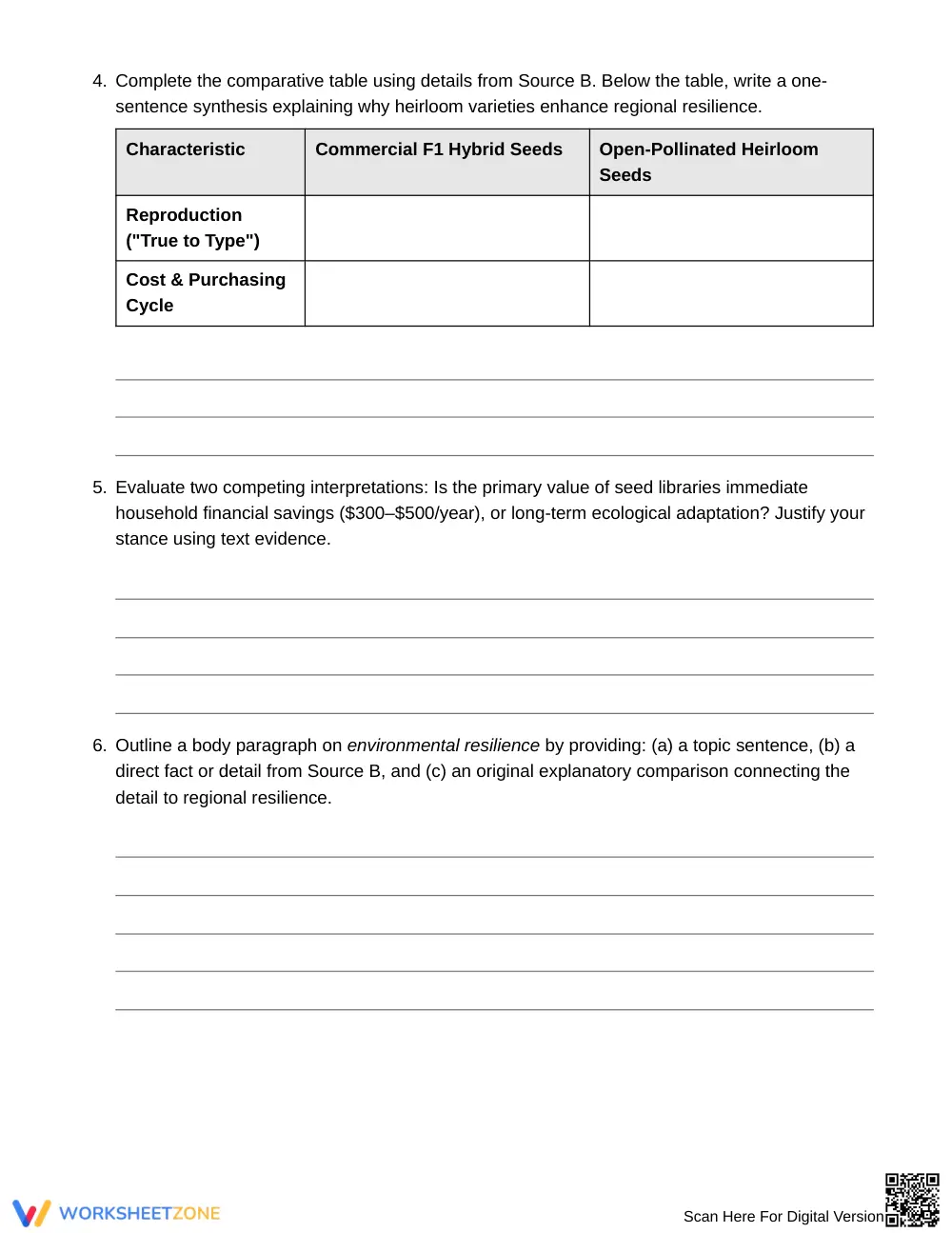
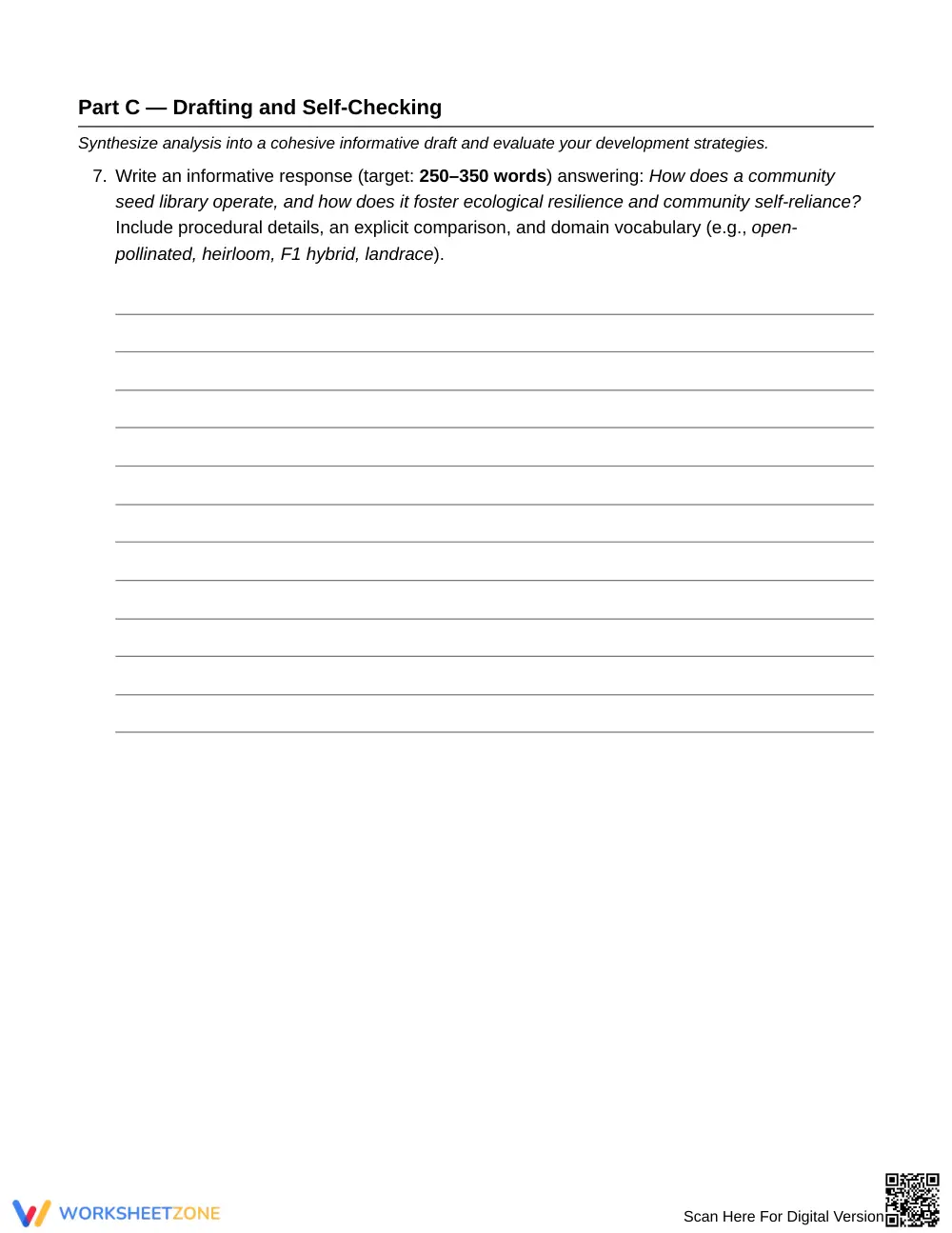
This 5-page printable resource includes an informational source text on community seed libraries and agricultural biodiversity. Across 8 tasks, students draft a thesis, complete a comparative matrix contrasting commercial hybrid and heirloom seeds, build a paragraph outline, and write an extended 250- to 350-word synthesis. A student revision checklist and a 3-page annotated answer key are included.
Skill Progression
- Guided practice (Tasks 1–2): Students analyze source texts, drafting an informative thesis and evaluating structural comparisons.
- Supported practice (Tasks 3–6): Learners complete a comparison matrix, assess competing claims, and organize an evidence-based paragraph outline.
- Independent practice (Tasks 7–8): Students draft a multi-paragraph synthesis essay with domain vocabulary, followed by checklist self-assessment and targeted sentence revision.
This structured sequence follows the gradual release of responsibility model, guiding writers toward autonomous informative composition.
Standards Alignment
This worksheet aligns with `W.8.2.b`: "Develop the topic with relevant, well-chosen facts, definitions, concrete details, quotations, or other information and examples." It also supports `RI.8.1` through text-based comparative analysis. Both standard codes can be copied directly into lesson plans, IEP goals, or district curriculum mapping tools.
How to Use It
Use this resource during direct instruction on informative body paragraphs or as an end-of-unit drafting assessment. In a 45- to 60-minute session, have students complete Part B in pairs before writing their Part C individual draft. For formative assessment, check whether students craft original explanatory comparisons rather than only copying raw source figures.
Who It's For
Designed for Grade 8 ELA classrooms, this worksheet supports general education, honors, and intervention settings. Developing writers benefit from the graphic comparison table and paragraph outlines, while advanced students can expand on agricultural biodiversity. Pair this activity with an anchor chart on comparative transitions.
Grade 8 standard W.8.2.b requires students to develop informative topics by integrating relevant facts, definitions, concrete details, and purposeful comparisons. Research by Fisher & Frey (2014) underscores that structured gradual-release frameworks significantly improve middle school writing performance when direct textual analysis precedes independent drafting. By navigating paired expository sources on community seed libraries, this resource equips learners with explicit scaffolds, including structured comparison matrices and targeted paragraph outlines. Students move systematically from analyzing structural metaphors to generating cohesive 250- to 350-word synthesis essays supported by domain-specific vocabulary. Incorporating self-assessment checklists and sentence-level revisions reinforces metacognitive monitoring, enabling writers to independently evaluate evidence integration. This balanced approach directly bridges reading comprehension and rigorous informational composition, preparing eighth-grade students to meet grade-level writing expectations across diverse content areas with clarity, factual precision, and comparative depth.


