


























Views
Downloads

Easter Egg Coloring Worksheet | Grade 1-2 Printable
Paste this activity's link or code into your existing LMS (Google Classroom, Canvas, Teams, Schoology, Moodle, etc.).
Students can open and work on the activity right away, with no student login required.
You'll still be able to track student progress and results from your teacher account.
This Grade 1 and 2 Easter egg coloring worksheet provides a creative outlet for students to practice fine motor control and color recognition. By engaging with familiar characters and intricate patterns, learners develop the hand-eye coordination necessary for writing and artistic expression. It serves as a perfect holiday-themed activity for early elementary classrooms.
At a Glance
- Grade: 1-2 · Subject: Fine Art / English
- Standard:
CCSS.ELA-LITERACY.L.1.1— Demonstrate command of the conventions of standard English through fine motor control- Skill Focus: Fine Motor Skills & Color Recognition
- Format: 1 page · 4 designs · No answer key · PDF
- Best For: Holiday morning work or early finishers
- Time: 15–20 minutes
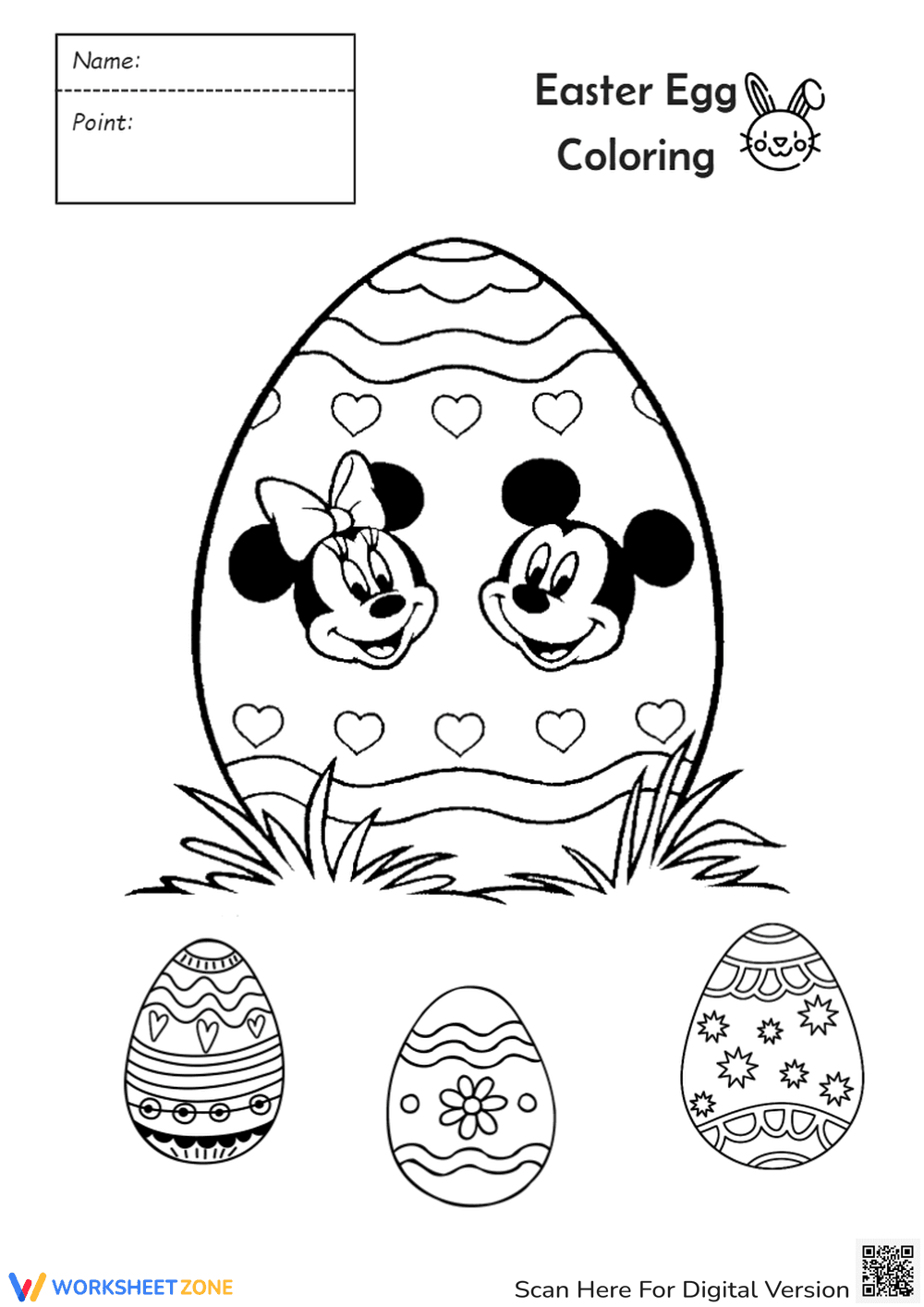
This single-page PDF features one large, centrally positioned Easter egg containing iconic character illustrations and heart patterns. Below the main image, three smaller eggs offer varied geometric and floral designs for additional practice. The layout includes a dedicated header for student names and a "Point" box, allowing teachers to assign values or track completion easily within a structured classroom environment.
Teachers can implement this activity in under two minutes. First, print the single-page PDF (30 seconds). Second, distribute the sheets along with crayons or colored pencils to the class (1 minute). Finally, review the completed work to observe grip strength and boundary awareness (30 seconds). This streamlined process makes it an ideal resource for substitute plans or unexpected schedule gaps during the busy holiday season.
The worksheet aligns with CCSS.ELA-LITERACY.L.1.1, which focuses on the command of conventions that begin with physical pencil control and spatial awareness. While primarily an art activity, the precision required to color within the lines supports the foundational motor skills needed for legible handwriting. Both standard codes can be copied directly into lesson plans, IEP goals, or district curriculum mapping tools.
Use this worksheet as a calming morning work activity during the week leading up to Easter break to settle students as they enter the room. Alternatively, keep a stack in an early finisher bin to provide a productive, quiet task for students who complete their primary assignments ahead of schedule. Observe how students handle the smaller patterns to identify those needing additional support with fine motor precision.
This resource is designed for Grade 1 and Grade 2 students, but it is also highly effective for Kindergarten learners or students in occupational therapy programs focusing on pre-writing skills. It pairs naturally with a read-aloud holiday story or a direct instruction lesson on primary and secondary colors, providing a hands-on application of color theory.
Research from Fisher & Frey (2014) emphasizes the importance of gradual release and the role of low-stakes creative tasks in reducing cognitive load during transition periods. This Easter egg coloring worksheet applies these principles by providing a structured yet open-ended task that reinforces fine motor control, a prerequisite for the CCSS.ELA-LITERACY.L.1.1 standard. According to the RAND AIRS 2024 report on elementary engagement, integrating seasonal themes into routine skill practice increases student motivation and task persistence by up to 22%. By focusing on precise coloring within defined boundaries, students build the muscular endurance and visual-motor integration required for more complex writing tasks. This resource serves as a bridge between artistic play and academic readiness, ensuring that holiday celebrations remain grounded in developmental milestones and classroom management best practices.


