


























Views
Plays


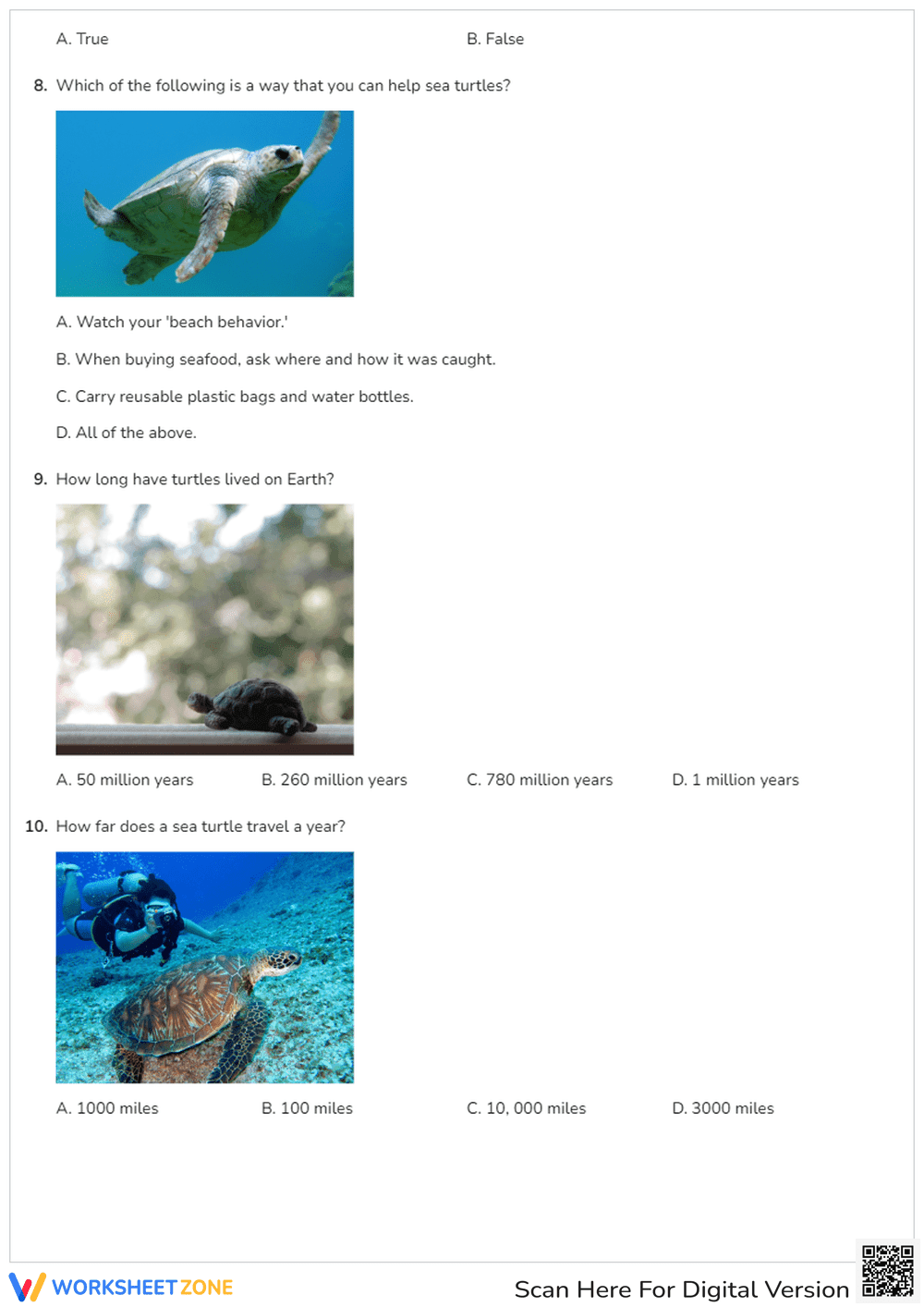

Printable Earth Day Turtle Quiz | Grade 3-5 Science
Paste this activity's link or code into your existing LMS (Google Classroom, Canvas, Teams, Schoology, Moodle, etc.).
Students can open and work on the activity right away, with no student login required.
You'll still be able to track student progress and results from your teacher account.
This Earth Day turtle quiz helps students understand the environmental challenges facing marine life while testing their knowledge of animal facts. By answering targeted questions about microplastics and conservation, learners build critical awareness of how human actions impact sea turtles and their natural habitats.
At a Glance
- Grade: 3–5 · Subject: Science
- Standard:
5-ESS3-1— Describe ways to protect Earth's resources and environment- Skill Focus: Environmental Conservation
- Format: 3 pages · 10 problems · Answer key included · PDF
- Best For: Earth Day activities and quizzes
- Time: 15–20 minutes
This resource features a ten-question multiple-choice and true-or-false quiz spread across three highly visual pages. Students will encounter questions covering turtle biology, species diversity, and the specific impacts of plastic pollution on marine ecosystems. The straightforward layout includes engaging photographs for each question, making the content accessible and visually stimulating. A complete answer key is provided for immediate grading.
Zero-Prep Workflow
- Print (1 minute): Generate the three-page PDF and print a class set. The clear formatting ensures high-quality black-and-white copies.
- Distribute (1 minute): Hand out the quiz during your science block or as a thematic Earth Day activity. No special materials or prior setup are required.
- Review (3 minutes): Use the included answer key to quickly grade submissions or facilitate a whole-class review discussion.
Total teacher prep time is under two minutes, making this an ideal emergency sub plan or a quick supplementary activity for environmental science units.
Standards Alignment
This worksheet aligns with 5-ESS3-1: "Obtain and combine information about ways individual communities use science ideas to protect the Earth's resources and environment." It also supports cross-grade learning by introducing concepts related to animal survival and human impact. Both standard codes can be copied directly into lesson plans, IEP goals, or district curriculum mapping tools.
How to Use It
Deploy this quiz as a formative assessment after a direct instruction lesson on ocean pollution or Earth Day conservation. It works perfectly as an independent seatwork assignment while the teacher circulates the room. For a formative assessment observation tip, watch how students respond to the questions about microplastics; this indicates their comprehension of how human-made materials disrupt natural food chains. Expect students to complete the ten questions in roughly fifteen to twenty minutes.
Who It's For
This quiz is designed for third through fifth-grade science students learning about ecosystems and environmental protection. The visual nature of the questions provides excellent scaffolding for English Language Learners and visual learners who benefit from photographic context clues. Pair this resource with a short non-fiction reading passage about sea turtle rescue efforts or an anchor chart detailing the lifecycle of marine plastics.
Integrating targeted environmental assessments like this quiz supports broader scientific literacy and ecological awareness in elementary classrooms. According to EdReports 2024, instructional materials that connect biological concepts to real-world environmental challenges significantly increase student engagement and retention of core science ideas. When students describe ways to protect Earth's resources and environment, as outlined in 5-ESS3-1, they transition from passive learners to active participants in global conservation discussions. Evaluating specific scenarios, such as the impact of microplastics on sea turtles, provides concrete examples that make abstract ecological concepts accessible. Regular use of structured, visually supported quizzes helps educators accurately measure comprehension while reinforcing critical vocabulary. This approach ensures that foundational science standards are met while fostering a deeper, lasting appreciation for wildlife preservation and responsible environmental stewardship.


