


























Views
Downloads
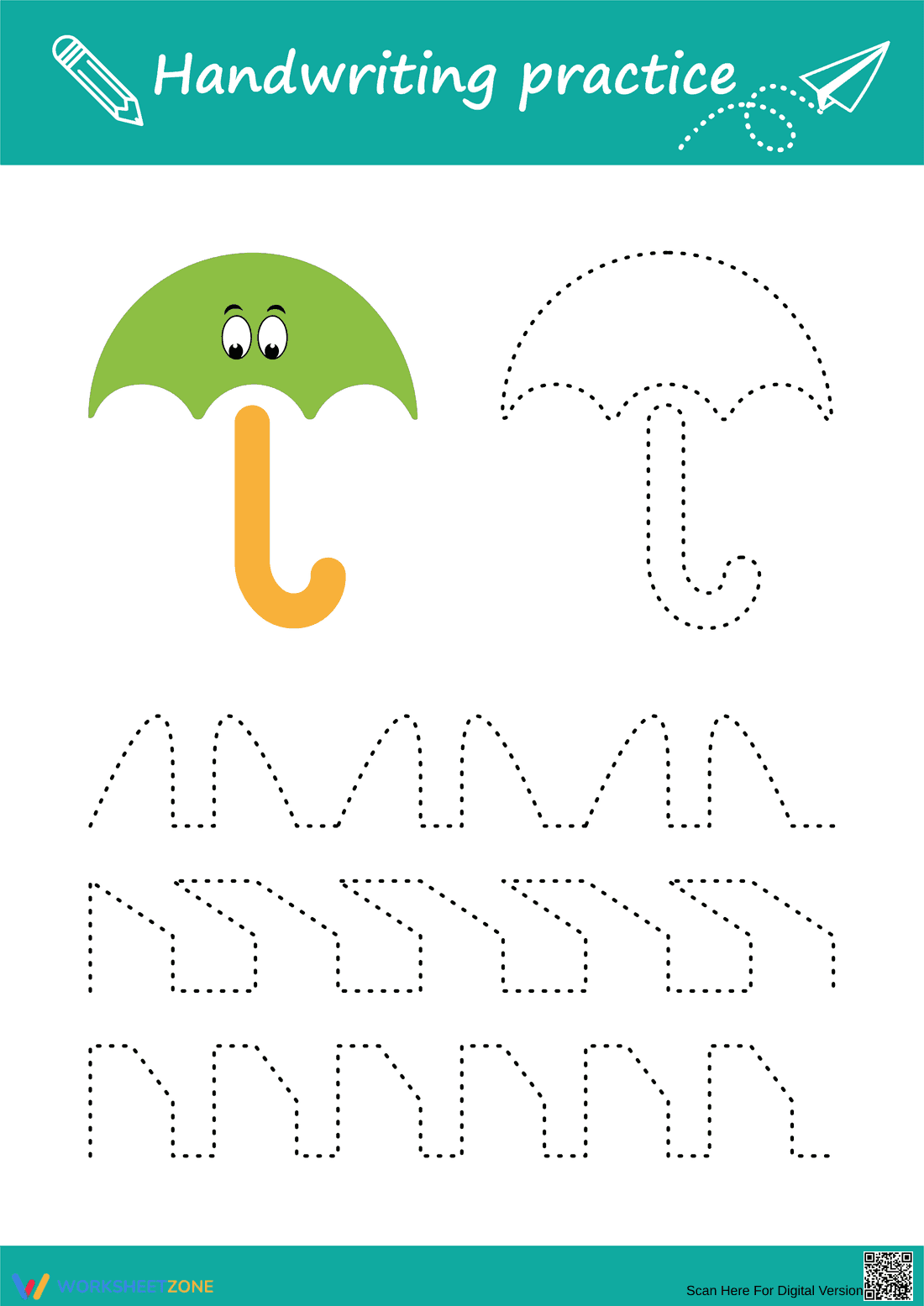

Printable Umbrella Tracing Worksheet | Pre-K & K
Paste this activity's link or code into your existing LMS (Google Classroom, Canvas, Teams, Schoology, Moodle, etc.).
Students can open and work on the activity right away, with no student login required.
You'll still be able to track student progress and results from your teacher account.
This foundational handwriting worksheet helps early learners develop essential fine motor control and pre-writing skills. By tracing an umbrella and three distinct line patterns, students practice the pencil grip and hand-eye coordination required for future letter formation. The engaging visual theme keeps young learners focused.
At a Glance
- Grade: Pre-K & K · Subject: Handwriting
- Standard:
CCSS.ELA-LITERACY.L.K.1.A— Print many upper- and lowercase letters- Skill Focus: Line tracing and fine motor control
- Format: 1 page · 4 tracing tasks · PDF
- Best For: Morning work or centers
- Time: 10–15 minutes
This single-page resource features four distinct tracing activities designed to build hand strength and precision. At the top, students trace the curved canopy and hooked handle of an umbrella. Below, three rows of dashed lines offer progressive practice with zig-zags, slanted steps, and wavy patterns. These strokes mimic the directional movements needed for writing letters.
Zero-Prep Workflow
This worksheet requires zero teacher preparation.
- Print (30 seconds): Download the PDF and print. The dashed lines print clearly.
- Distribute (1 minute): Hand out with pencils or crayons. The intuitive layout means students understand the task immediately.
- Review (Ongoing): Monitor pencil grip and stroke direction. Total prep time is under two minutes, making it ideal for sub plans.
Standards Alignment
This pre-writing activity aligns with foundational skills leading up to CCSS.ELA-LITERACY.L.K.1.A, which requires students to print many upper- and lowercase letters. By mastering the straight, slanted, and curved lines in this tracing exercise, students build the exact motor pathways necessary for standard letter formation. The standard code can be copied directly into lesson plans, IEP goals, or district curriculum mapping tools.
How to Use It
Use this tracing worksheet as a morning work activity to settle students while activating fine motor muscles. Alternatively, place it in an independent literacy center for self-directed practice. While students work, observe their pencil grip and posture, offering gentle corrections to establish healthy writing habits. Most students will complete the page within 10 to 15 minutes.
Who It's For
This resource is designed for Preschool and Kindergarten students developing pre-writing abilities. It is also effective for occupational therapy or special education where students require targeted fine motor intervention. For differentiation, provide thicker markers for students needing more control, or pair this worksheet with a tactile activity like tracing lines in sand.
Developing fine motor skills through targeted tracing activities is a critical precursor to fluent handwriting and overall academic success. This worksheet supports the foundational steps toward CCSS.ELA-LITERACY.L.K.1.A by having students print many upper- and lowercase letters through the mastery of basic strokes. According to a comprehensive EdReports 2024 analysis on early literacy foundations, explicit instruction and repeated practice in fine motor control significantly improve a child's ability to produce legible text later in their academic journey. When young learners practice tracing varied patterns—such as the curves and zig-zags featured in this umbrella activity—they build the muscle memory and hand-eye coordination required for complex letter formation. Providing structured, engaging pre-writing tasks ensures that students develop the physical stamina needed for extended writing assignments in elementary school and beyond, setting a strong foundation for lifelong literacy.


