


























0
Views
0
Downloads

0.0
0
Save
0 Likes
Cranial Nerves Worksheet: Learn Anatomy
0 Views
0 Downloads
Paste this activity's link or code into your existing LMS (Google Classroom, Canvas, Teams, Schoology, Moodle, etc.).
Students can open and work on the activity right away, with no student login required.
You'll still be able to track student progress and results from your teacher account.
Information
Description
What It Is:
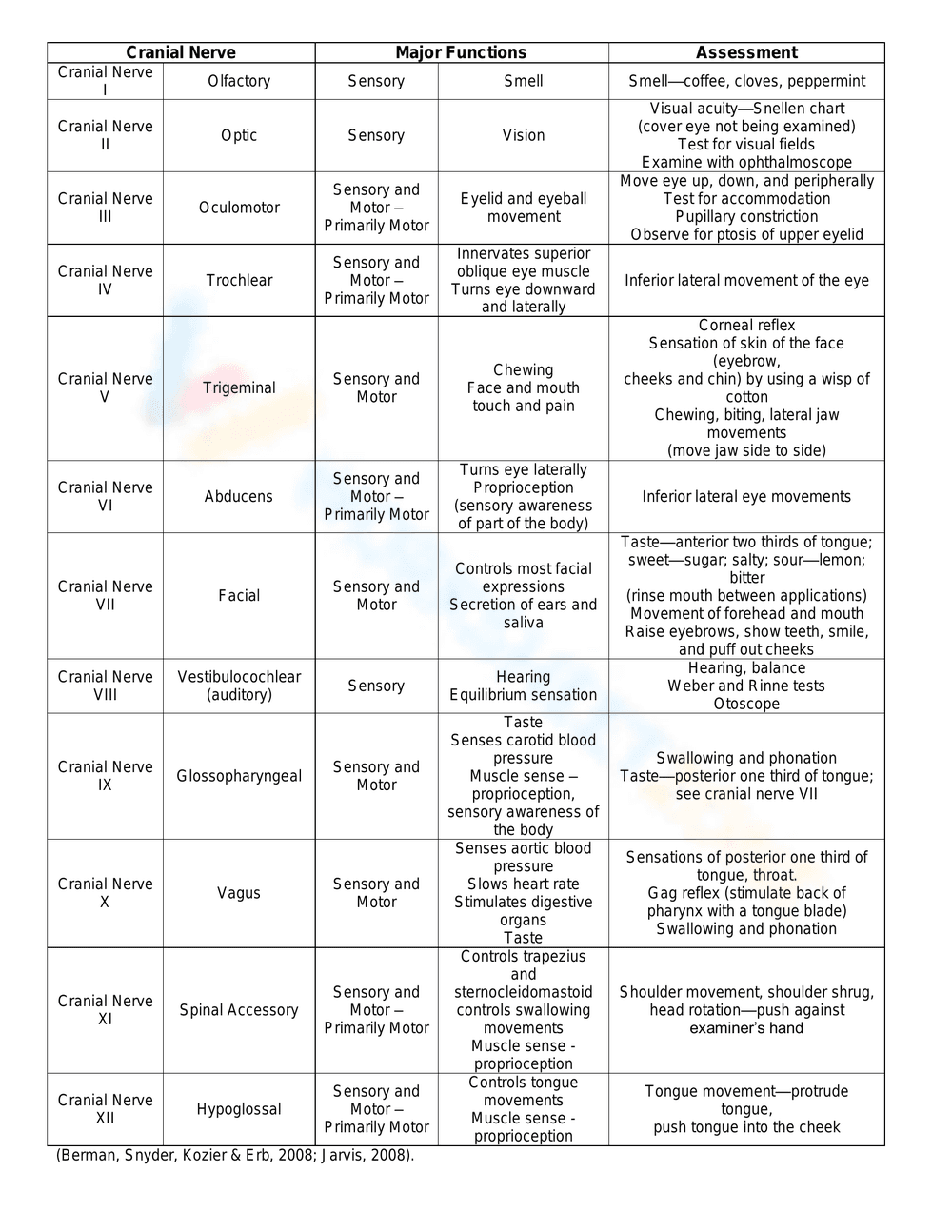
This is an educational worksheet presenting a table of the 12 cranial nerves. The table includes columns for the cranial nerve name (I-XII), their major functions (sensory, motor, or both), a brief description of the function, and an assessment method for each nerve. The assessments involve sensory tests (smell, taste, vision), motor function tests (eye movements, chewing, facial expressions), and reflexes.
Grade Level Suitability:
This worksheet is most suitable for college-level anatomy and physiology, nursing, or medical students. The content is detailed and requires a strong understanding of neuroanatomy and clinical assessment techniques. It is not appropriate for lower grade levels due to the complexity of the material.
Why Use It:
This worksheet provides a structured overview of the cranial nerves, their functions, and how to assess them clinically. It is beneficial for students learning about the nervous system, assisting in memorization of nerve functions, and understanding the clinical relevance of each nerve. It can also be used as a study guide or a quick reference for healthcare professionals.
How to Use It:
The worksheet can be used as a study aid by reviewing each nerve and its corresponding functions and assessments. Students can use it to test their knowledge by covering up columns and trying to recall the information. It can also be used in clinical settings to guide neurological examinations. Instructors can use it as a template for creating quizzes or exams.
Target Users:
The target users for this worksheet are medical students, nursing students, pre-med students, physician assistant students, and other healthcare professionals learning about or practicing neurological assessment. It is also suitable for instructors teaching neuroanatomy and physiology.
This is an educational worksheet presenting a table of the 12 cranial nerves. The table includes columns for the cranial nerve name (I-XII), their major functions (sensory, motor, or both), a brief description of the function, and an assessment method for each nerve. The assessments involve sensory tests (smell, taste, vision), motor function tests (eye movements, chewing, facial expressions), and reflexes.
Grade Level Suitability:
This worksheet is most suitable for college-level anatomy and physiology, nursing, or medical students. The content is detailed and requires a strong understanding of neuroanatomy and clinical assessment techniques. It is not appropriate for lower grade levels due to the complexity of the material.
Why Use It:
This worksheet provides a structured overview of the cranial nerves, their functions, and how to assess them clinically. It is beneficial for students learning about the nervous system, assisting in memorization of nerve functions, and understanding the clinical relevance of each nerve. It can also be used as a study guide or a quick reference for healthcare professionals.
How to Use It:
The worksheet can be used as a study aid by reviewing each nerve and its corresponding functions and assessments. Students can use it to test their knowledge by covering up columns and trying to recall the information. It can also be used in clinical settings to guide neurological examinations. Instructors can use it as a template for creating quizzes or exams.
Target Users:
The target users for this worksheet are medical students, nursing students, pre-med students, physician assistant students, and other healthcare professionals learning about or practicing neurological assessment. It is also suitable for instructors teaching neuroanatomy and physiology.


