




























Views
Downloads

Essential Cranial Nerve Lab Worksheet | Grades 10-12

Paste this activity's link or code into your existing LMS (Google Classroom, Canvas, Teams, Schoology, Moodle, etc.).
Students can open and work on the activity right away, with no student login required.
You'll still be able to track student progress and results from your teacher account.
This essential laboratory worksheet provides a structured framework for students to master the complexities of the human nervous system through clinical examination. By documenting specific testing procedures and expected physiological responses, learners bridge the gap between theoretical anatomy and practical medical application. This resource ensures students can systematically evaluate neurological function with precision and clarity.
At a Glance
- Grade: 10–12 · Subject: Biology / Anatomy
- Standard:
HS-LS1-2— Develop a model to illustrate the organization of interacting systems- Skill Focus: Neurological assessment and clinical documentation
- Format: 2 pages · 12 sections · Lab template · PDF
- Best For: Advanced biology labs and pre-medical tracks
- Time: 45–60 minutes
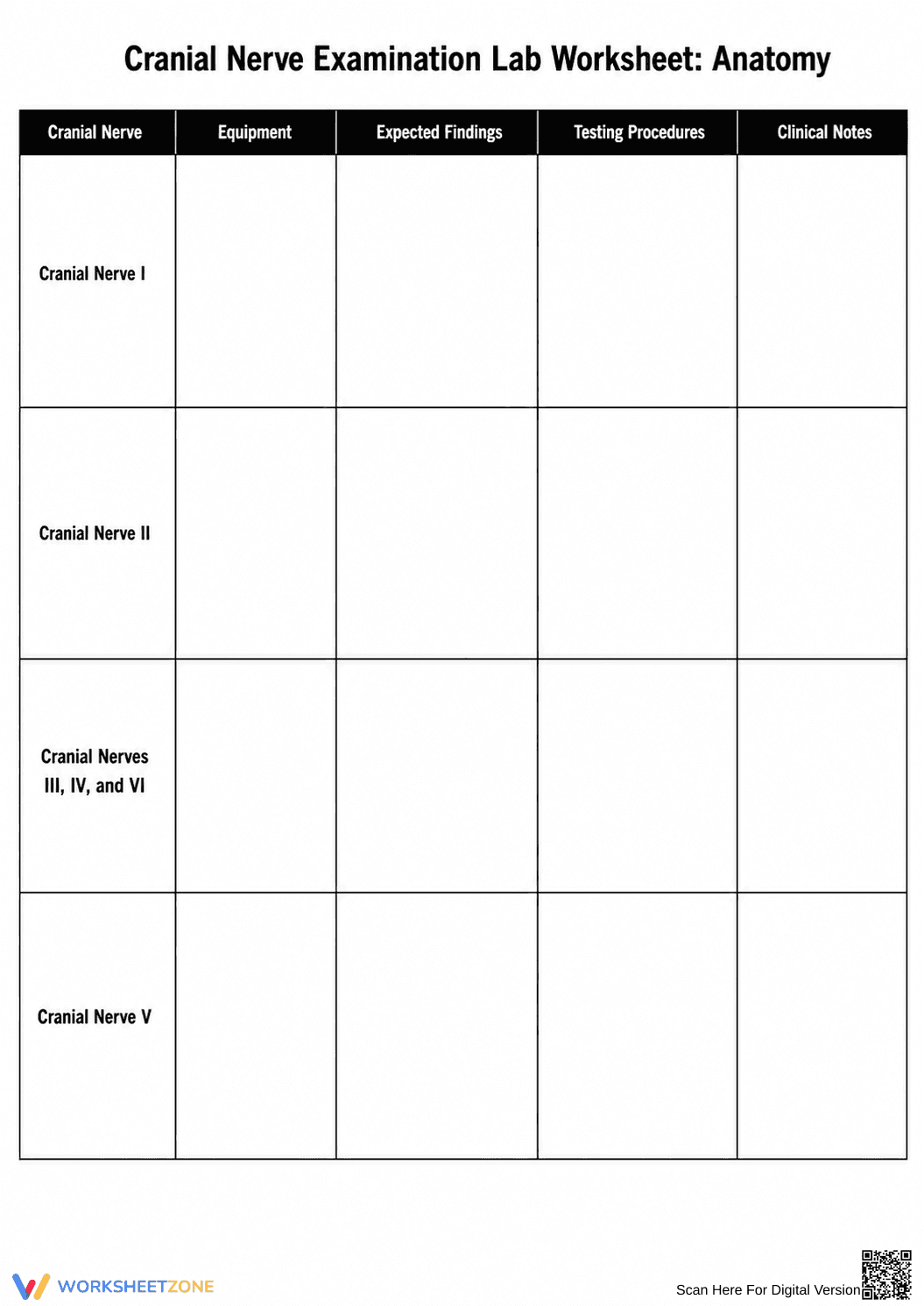
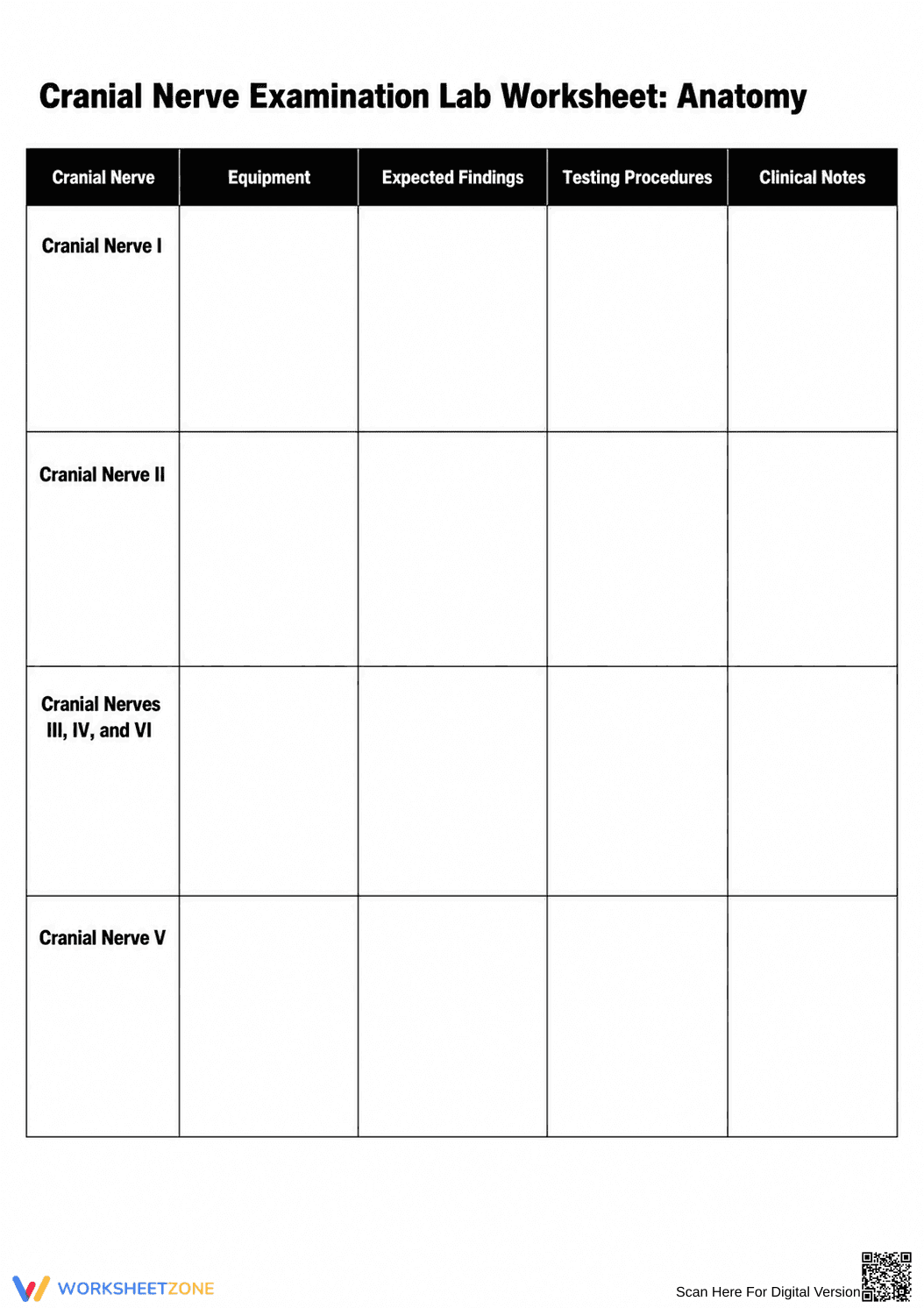
What's Inside: This 2-page laboratory template features a comprehensive 5-column organizational table. Students are prompted to identify necessary equipment, define expected findings, outline step-by-step testing procedures, and record clinical notes for all twelve cranial nerves. The layout includes dedicated rows for Cranial Nerve I through XII, providing ample space for detailed observations and professional-grade documentation without the clutter of unnecessary graphics.
Zero-Prep Workflow
- Print (1 minute): Select the 2-page PDF and print enough copies for your lab groups or individual students. No specialized software or teacher setup is required.
- Distribute (1 minute): Hand out the worksheets alongside your standard lab equipment (e.g., penlights, tuning forks, scent samples).
- Review (Ongoing): Use the structured columns to facilitate a quick walk-through of student findings during the lab session or as a final formative check.
This resource is specifically designed for high-school science teachers who need a professional, ready-to-use assessment tool that fits into a single class period or a multi-day anatomy unit.
Standards Alignment: This worksheet aligns with `HS-LS1-2`: "Develop and use a model to illustrate the hierarchical organization of interacting systems that provide specific functions within multicellular organisms." By mapping the specific sensory and motor functions of the cranial nerves, students demonstrate an understanding of how the nervous system coordinates complex bodily responses. This standard code can be copied directly into lesson plans, IEP goals, or district curriculum mapping tools.
How to Use It: Assign this worksheet during the "Explore" or "Elaborate" phase of a 5E instructional cycle. It serves as an excellent peer-to-peer laboratory activity where students take turns acting as the clinician and the patient. Teachers should look for students correctly identifying the difference between sensory and motor tests. Completion time typically ranges from 45 to 60 minutes depending on the depth of clinical notes required.
Who It's For: This resource is ideal for Grade 10-12 students in Advanced Placement (AP) Biology, Anatomy and Physiology, or Health Science Career and Technical Education (CTE) pathways. It pairs naturally with a nervous system anchor chart or a 3D brain model to help students visualize the exit points of each nerve from the brainstem.
According to the RAND AIRS 2024 report on science education, structured laboratory documentation significantly improves long-term retention of anatomical structures compared to passive reading. This worksheet utilizes a systematic 5-column approach to reinforce the HS-LS1-2 standard, requiring students to synthesize equipment needs with physiological outcomes. Research from Fisher & Frey (2014) suggests that the gradual release of responsibility in lab settings is most effective when students have a clear organizational scaffold to record their independent observations. By providing a professional-grade template for cranial nerve examination, this resource allows students to focus on the high-order task of clinical analysis rather than the low-order task of formatting. The inclusion of 12 distinct nerve sections ensures comprehensive coverage of the peripheral nervous system, making it a reliable tool for formative assessment in advanced secondary science classrooms and pre-professional health programs.


