


























Views
Downloads


Printable Crack the Code Worksheet | St. Patrick's Day
Paste this activity's link or code into your existing LMS (Google Classroom, Canvas, Teams, Schoology, Moodle, etc.).
Students can open and work on the activity right away, with no student login required.
You'll still be able to track student progress and results from your teacher account.
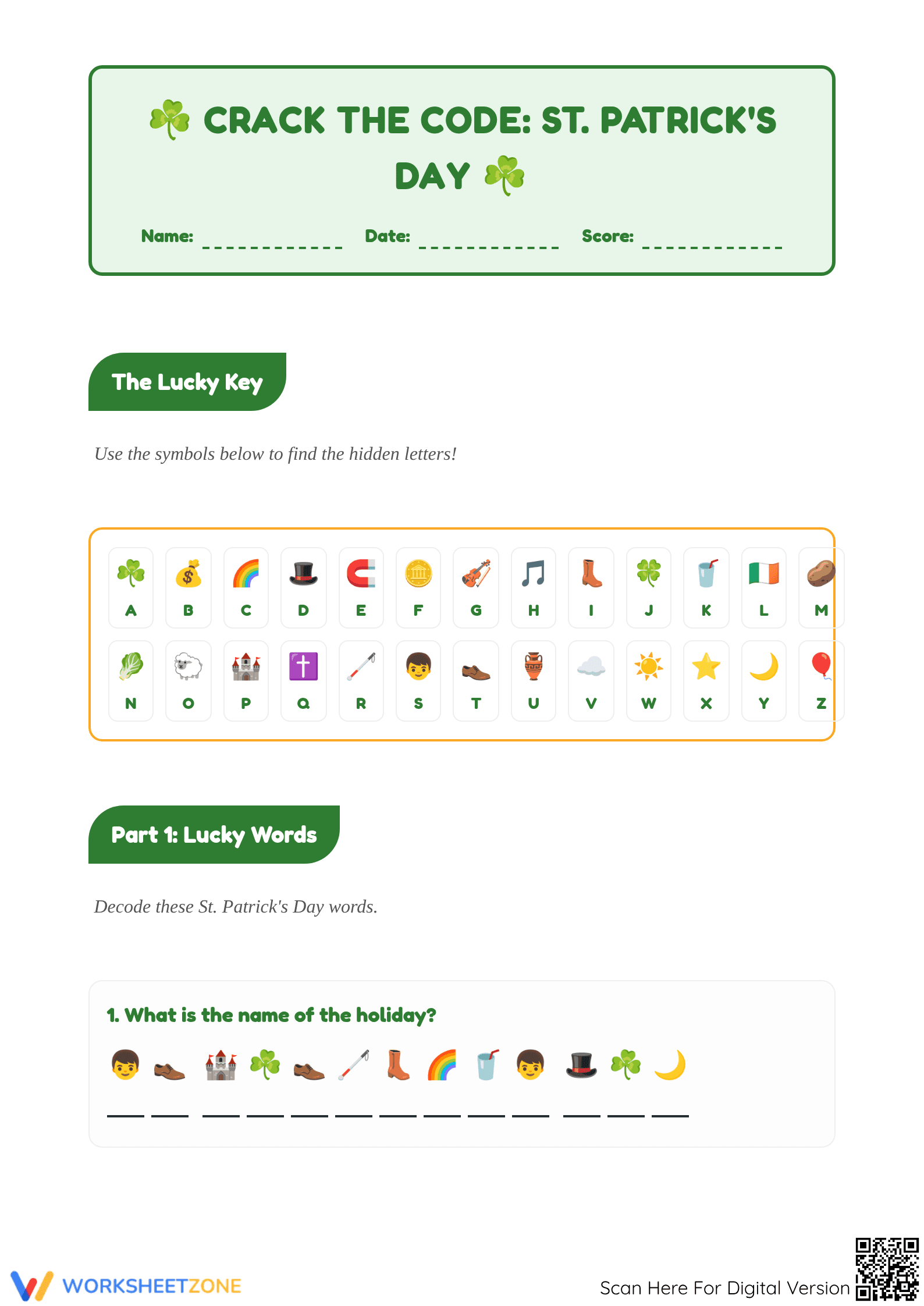
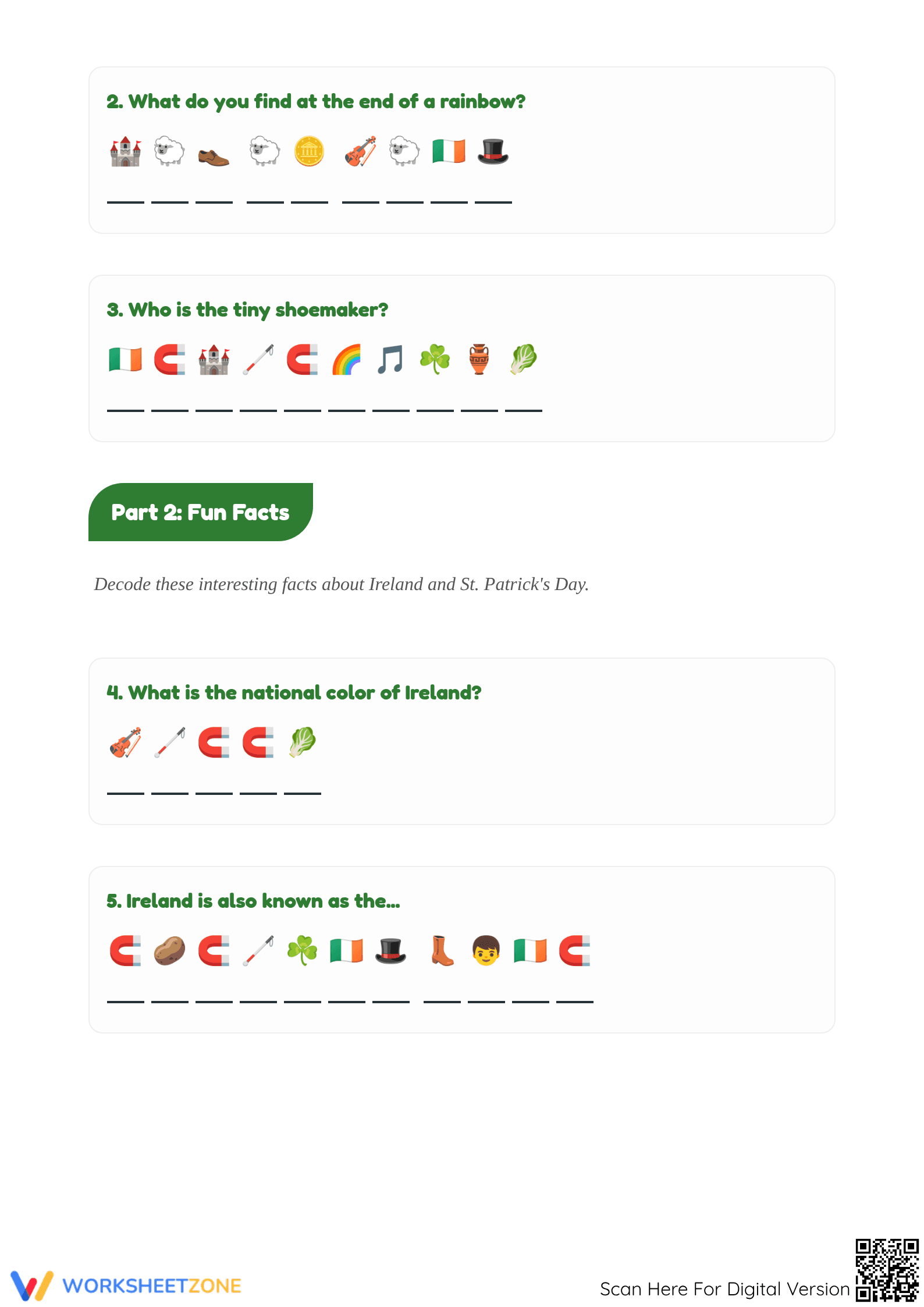
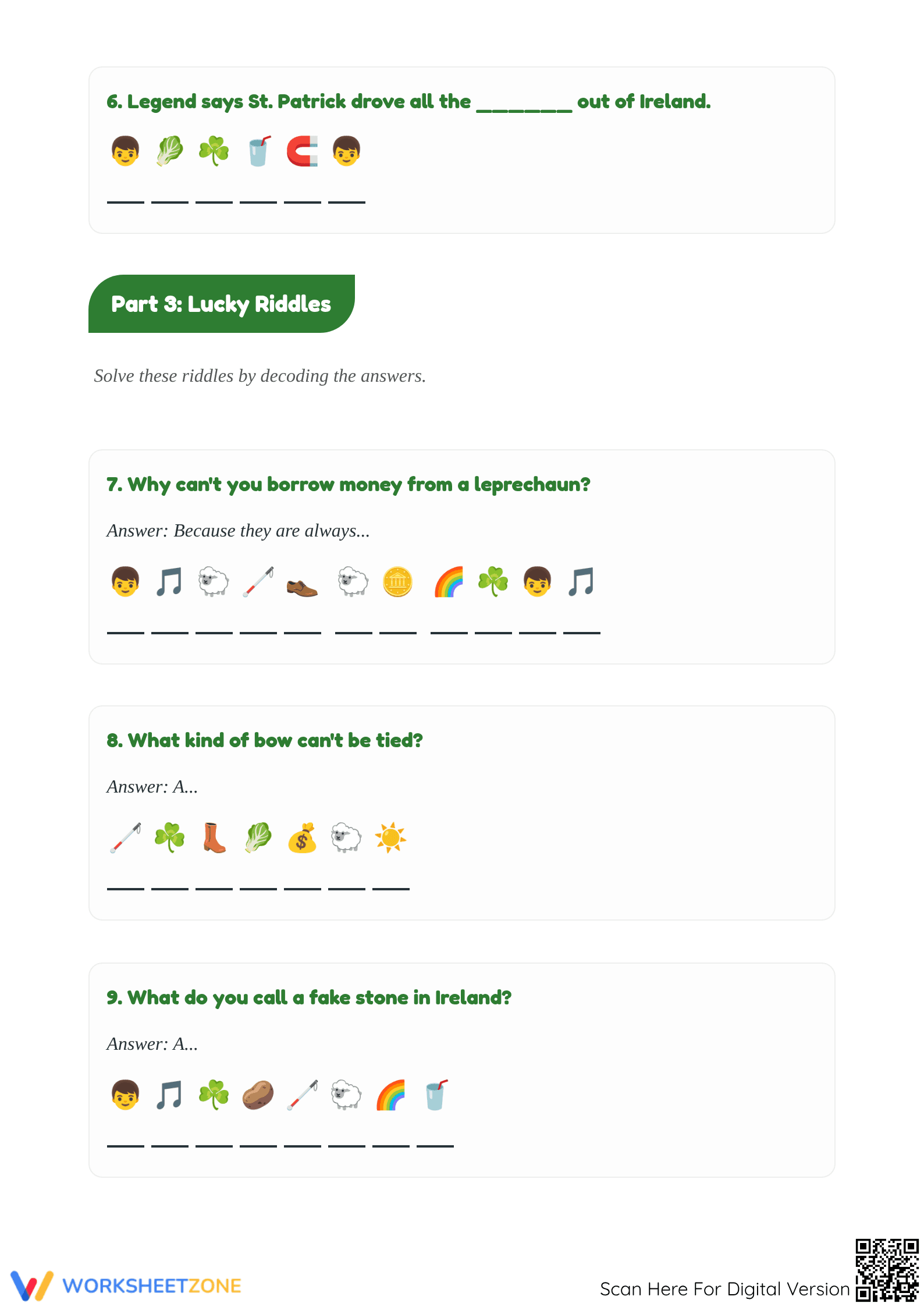
This St. Patrick's Day decoding packet engages students in 13 interactive tasks to build foundational spelling and vocabulary skills. By mapping unique seasonal symbols to letters, learners solve riddles and discover fascinating facts about Irish culture. It is an effective tool for maintaining academic rigor during holiday celebrations while fostering critical thinking.
At a Glance
- Grade: 1–3 · Subject: English Language Arts
- Standard:
CCSS.ELA-LITERACY.L.2.2— Demonstrate command of the conventions of standard English capitalization, punctuation, and spelling- Skill Focus: Symbol-to-Letter Mapping and Seasonal Vocabulary
- Format: 4 pages · 13 problems · Answer key included · PDF
- Best For: Holiday classroom activities or independent sub plans
- Time: 20–35 minutes
Inside this comprehensive 4-page PDF, you will find a "Lucky Key" that serves as the foundation for the entire packet. Students navigate four distinct parts: Lucky Words, Fun Facts, Lucky Riddles, and a final "Secret Legend" short story. Each section increases in complexity, moving from single words to complete sentences, all supported by a clear, high-contrast visual answer key for immediate teacher review.
This zero-prep resource is designed for maximum efficiency in busy classrooms. Teachers can follow a simple three-step workflow: First, print the 4-page packet (1 minute). Next, distribute the worksheets and model the "Lucky Key" (1 minute). Finally, students work independently while you review progress using the included key. Total prep time is under 2 minutes, making this an ideal sub-plan resource.
This worksheet is primarily aligned with `CCSS.ELA-LITERACY.L.2.2`, focusing on the conventions of standard English spelling. By requiring students to accurately transcribe letters based on symbols, it reinforces letter-sound correspondence and spelling patterns essential for primary grade literacy. The standard code can be copied directly into lesson plans, IEP goals, or district curriculum mapping tools to ensure instructional accountability.
Use this packet as a collaborative center activity where students work in pairs to "race" through the riddles, promoting peer discussion and cooperative learning. Alternatively, assign it as a holiday-themed assessment to check for attention to detail and letter recognition. During the activity, observe how students transition from the key to the workspace; this offers a valuable formative-assessment observation tip regarding their visual processing.
This resource is ideal for Grade 1 through Grade 3 students, particularly those who benefit from kinesthetic or visual-spatial tasks. It serves as an excellent differentiation tool when paired with a St. Patrick's Day reading passage or an anchor chart about Irish legends. For students needing more support, teachers can provide a partially filled key or work through the first "Lucky Word" as a guided group activity.
Literacy development in the early grades depends heavily on a student's ability to recognize and manipulate symbols, a skill that translates directly into fluent reading and accurate spelling. This St. Patrick's Day Crack the Code worksheet addresses CCSS.ELA-LITERACY.L.2.2 by providing 13 structured opportunities for students to apply spelling conventions within a high-interest, seasonal context. Research by Fisher & Frey (2014) emphasizes that gradual release of responsibility is most effective when students are given purposeful, independent tasks that reinforce direct instruction. By engaging with this packet, learners consolidate their understanding of letter-to-symbol relationships while building cultural literacy. The inclusion of riddles and a short story ensures that the cognitive load remains balanced between mechanical decoding and reading comprehension. This printable PDF serves as a robust evidence-based resource for primary educators seeking to integrate holiday themes with rigorous, standards-aligned literacy practice in the modern classroom.


