


























Views
Downloads

Essential Musical Instruments Crack the Code — Grade 2 Ready
Paste this activity's link or code into your existing LMS (Google Classroom, Canvas, Teams, Schoology, Moodle, etc.).
Students can open and work on the activity right away, with no student login required.
You'll still be able to track student progress and results from your teacher account.
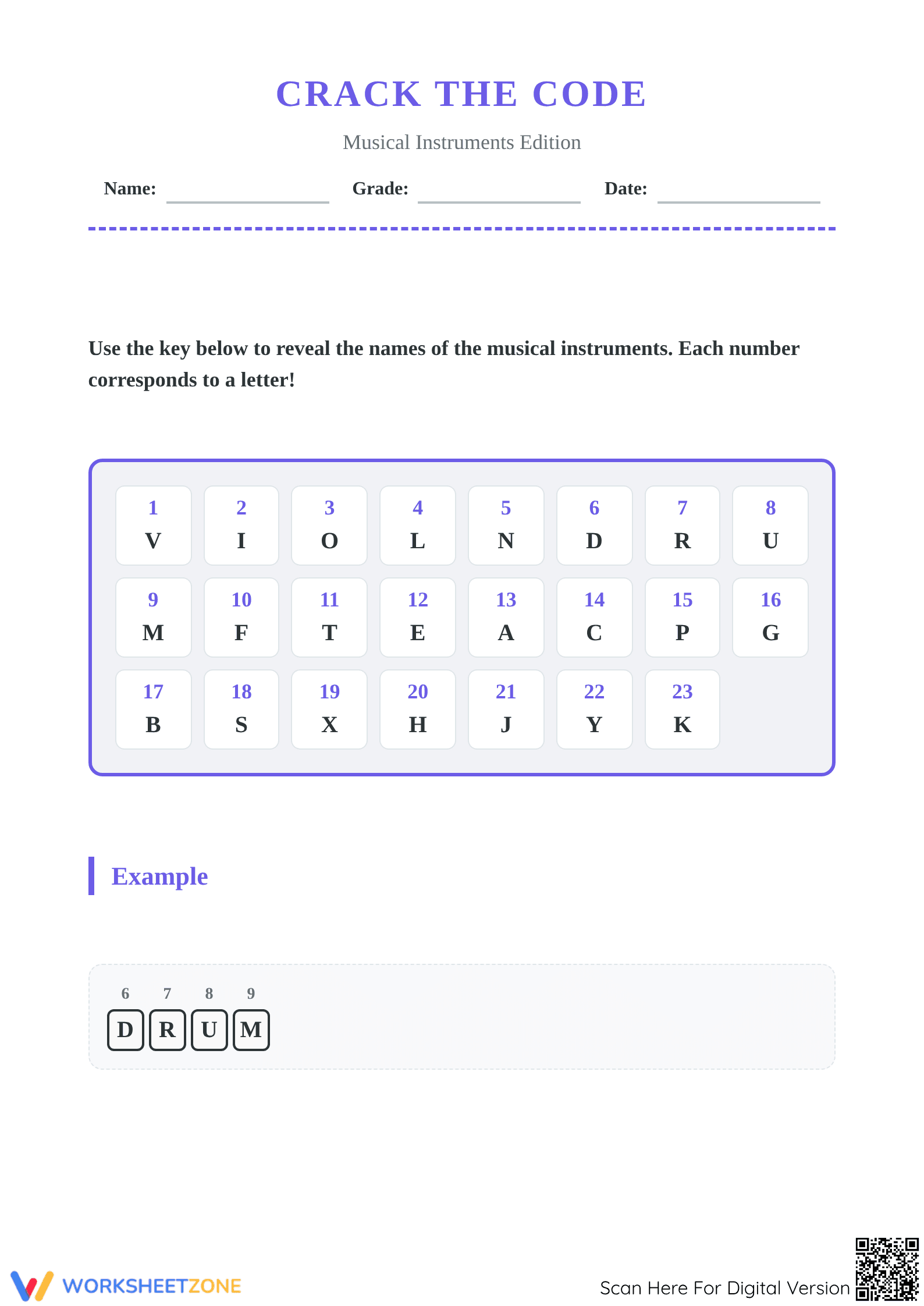
Strengthen student spelling and vocabulary recognition with this highly engaging musical instrument decoding activity. This resource tasks students with using a cipher-style key to reveal the names of common and advanced instruments, bridging the gap between phonetic awareness and orthographic precision. It provides a structured environment for independent practice that yields immediate satisfaction upon word discovery.
At a Glance
- Grade: 2 · Subject: English
- Standard:
CCSS.ELA-LITERACY.L.2.2— Use conventional spelling for high-frequency and studied words in writing tasks- Skill Focus: Decoding and instrument vocabulary
- Format: 5 pages · 23 problems · Answer key included · PDF
- Best For: Fast finishers and independent literacy centers
- Time: 25–35 minutes
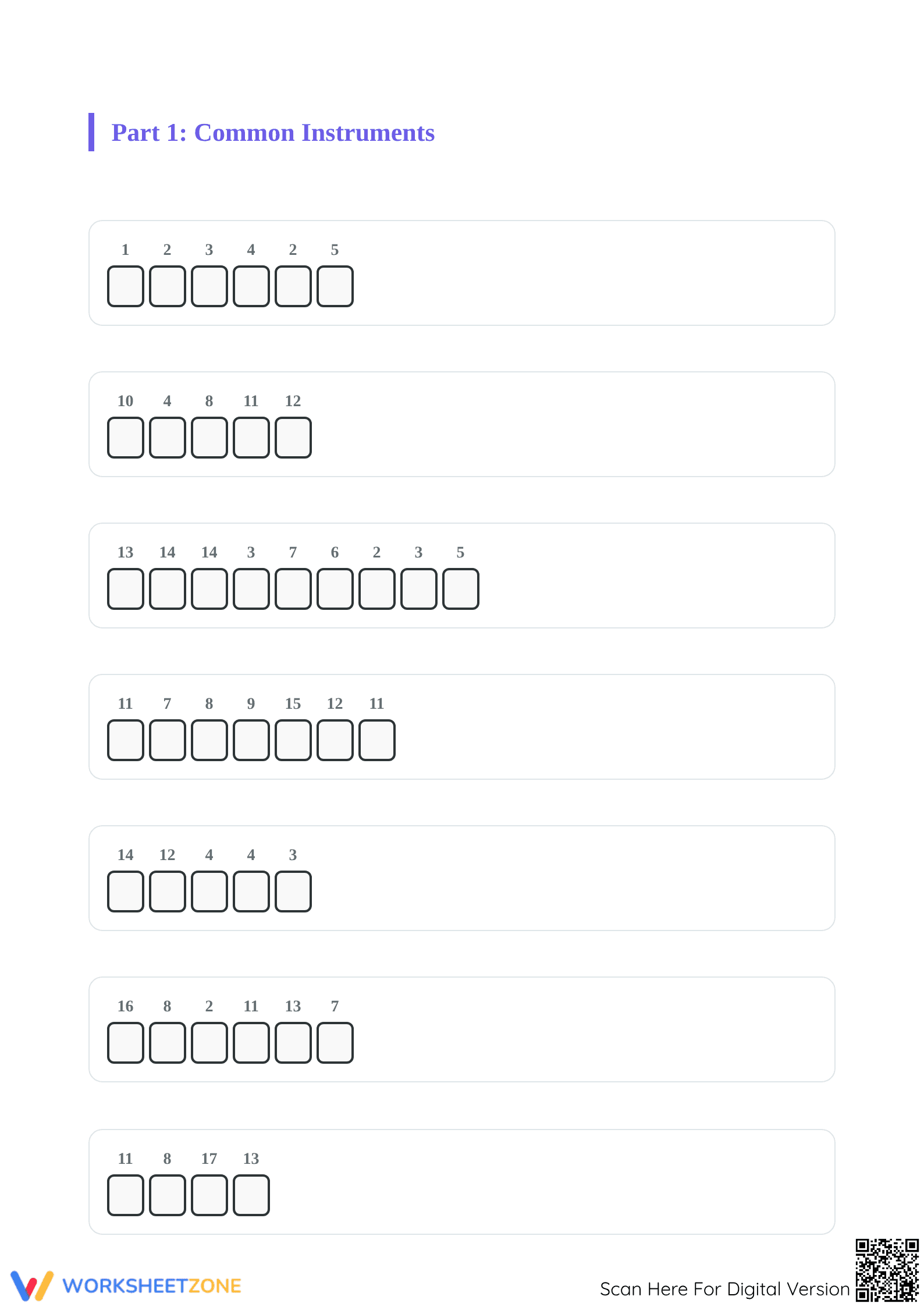
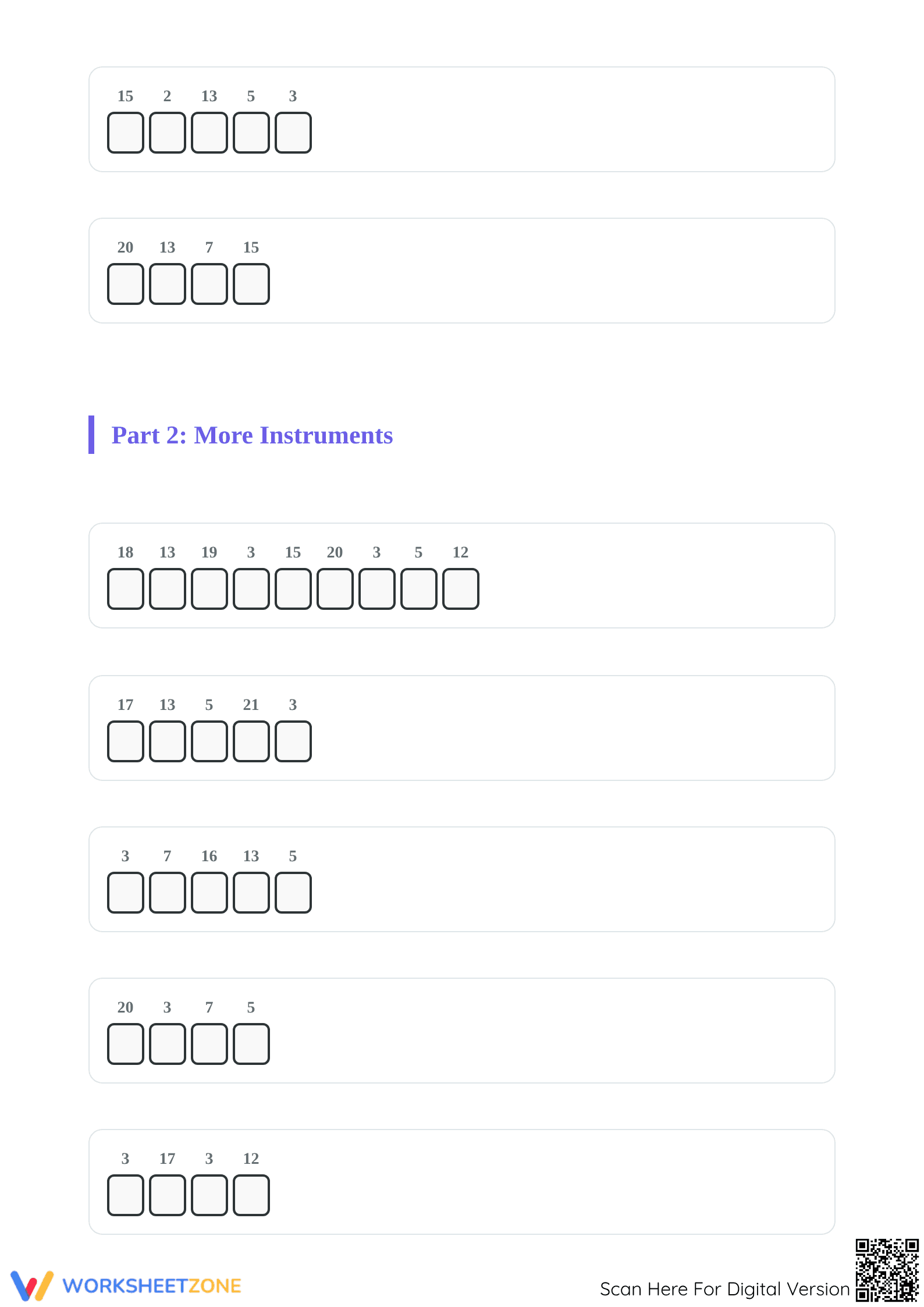
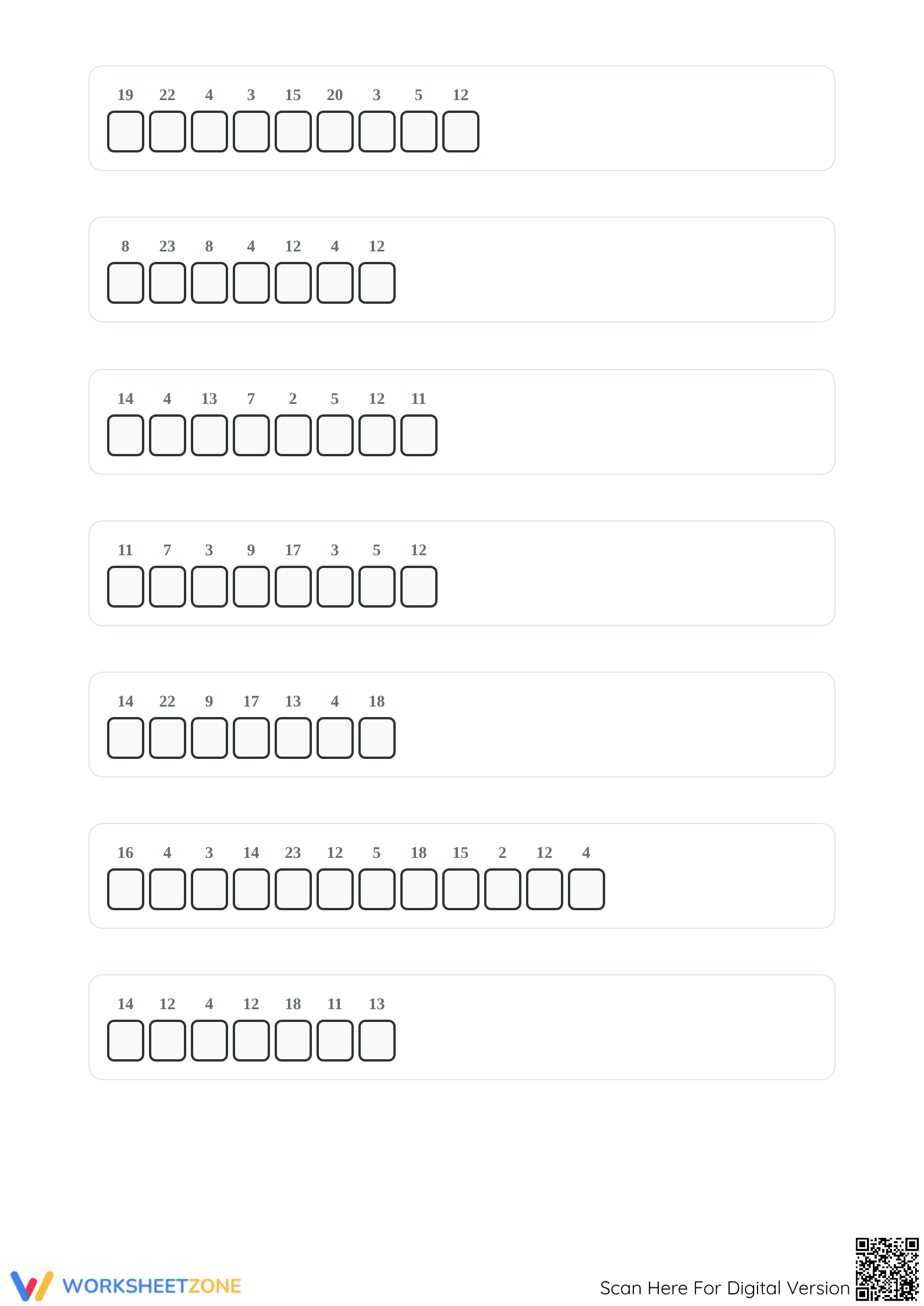
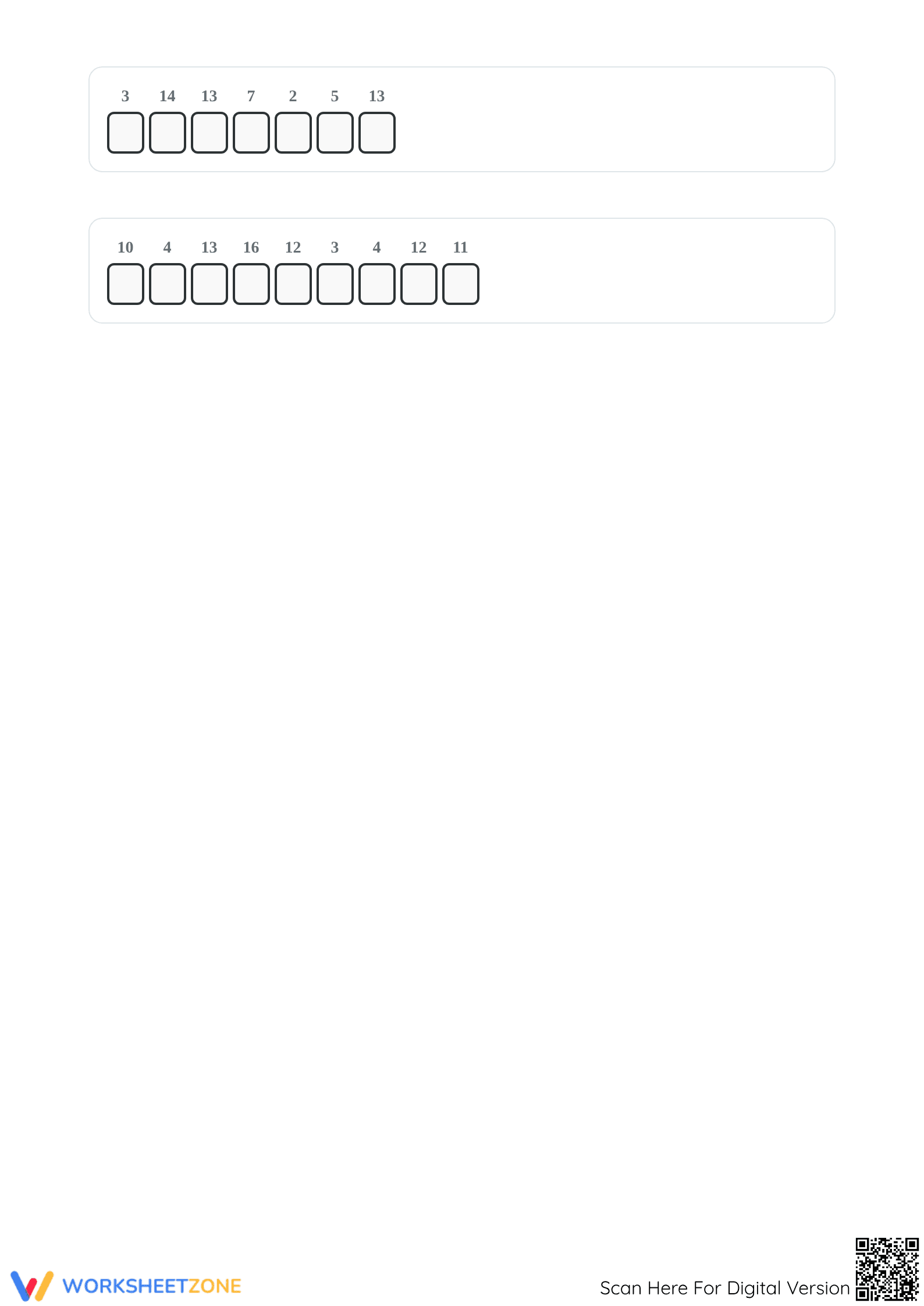
This comprehensive 5-page packet features 23 unique decoding challenges divided into two thematic sections: Common Instruments and More Instruments. Students navigate a letter-number correspondence key to spell out words ranging from the foundational "violin" to the complex "glockenspiel." The clear layout, combined with a worked example on the first page, ensures that learners can begin the task with minimal teacher intervention.
The zero-prep workflow is designed for maximum efficiency in the modern classroom. First, print the document which takes less than 30 seconds for a full class set. Second, distribute the packets and allow students to work through the decoding key independently, which typically occupies a 20-minute instructional block. Third, review the results using the included answer key to provide instant feedback. Total teacher preparation time remains under 2 minutes, making this an ideal solution for emergency sub plans.
This worksheet is strictly aligned to CCSS.ELA-LITERACY.L.2.2, focusing on the command of the conventions of standard English spelling. By requiring students to map numbers to specific letters to form words, the activity reinforces the structural composition of complex nouns. This standard code can be copied directly into lesson plans, IEP goals, or district curriculum mapping tools to demonstrate adherence to state and national literacy frameworks.
Teachers can implement this resource in two primary ways. Use it as a quiet transition activity during morning work to settle the class while building specialized vocabulary. Alternatively, use it as a formative assessment at the end of a music-themed unit to check for spelling accuracy and attention to detail. Educators should observe students during the decoding process to identify those who may struggle with letter-sound association or fine-motor precision when writing in the designated boxes.
This resource is specifically crafted for second-grade students but provides excellent review for third graders or a challenging extension for advanced first graders. It is particularly effective for English Language Learners (ELL) who benefit from the visual-spatial nature of the decoding key to learn new nouns. Pair this worksheet with an audio recording of the instruments to create a multi-sensory learning experience that connects spelling to sound.
According to research published in ScienceDirect TpT Analysis (2024), gamified spelling and vocabulary activities such as "crack the code" puzzles significantly increase student engagement and retention of specific domain-related terminology compared to traditional rote memorization methods. This worksheet addresses CCSS.ELA-LITERACY.L.2.2 by requiring students to accurately identify and spell the names of 23 distinct musical instruments using a letter-number correspondence key. By engaging the phonetic and structural recognition of words like "glockenspiel" and "xylophone" through a decoding process, students build neural pathways associated with complex orthographic patterns. This resource serves as a high-signal formative assessment tool for teachers to observe student precision in following multi-step directions and letter-sound association. The inclusion of an answer key ensures that independent practice is verifiable and self-correcting, which Fisher & Frey (2014) identify as a core component of the gradual release of responsibility model within effective literacy instruction blocks.


