


























Views
Downloads

Grade K Counting Adventure — Printable No-Prep Worksheet
Paste this activity's link or code into your existing LMS (Google Classroom, Canvas, Teams, Schoology, Moodle, etc.).
Students can open and work on the activity right away, with no student login required.
You'll still be able to track student progress and results from your teacher account.
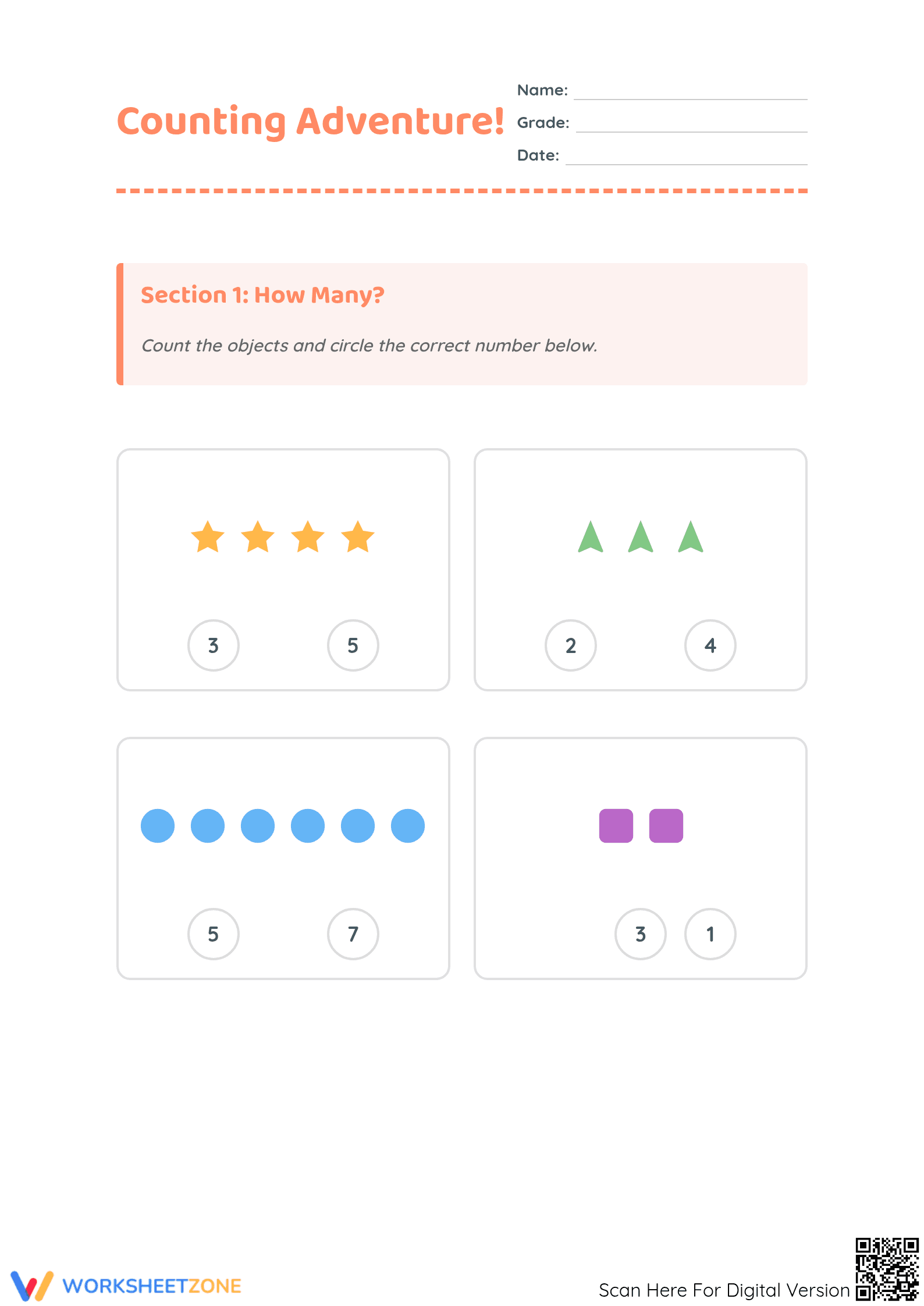
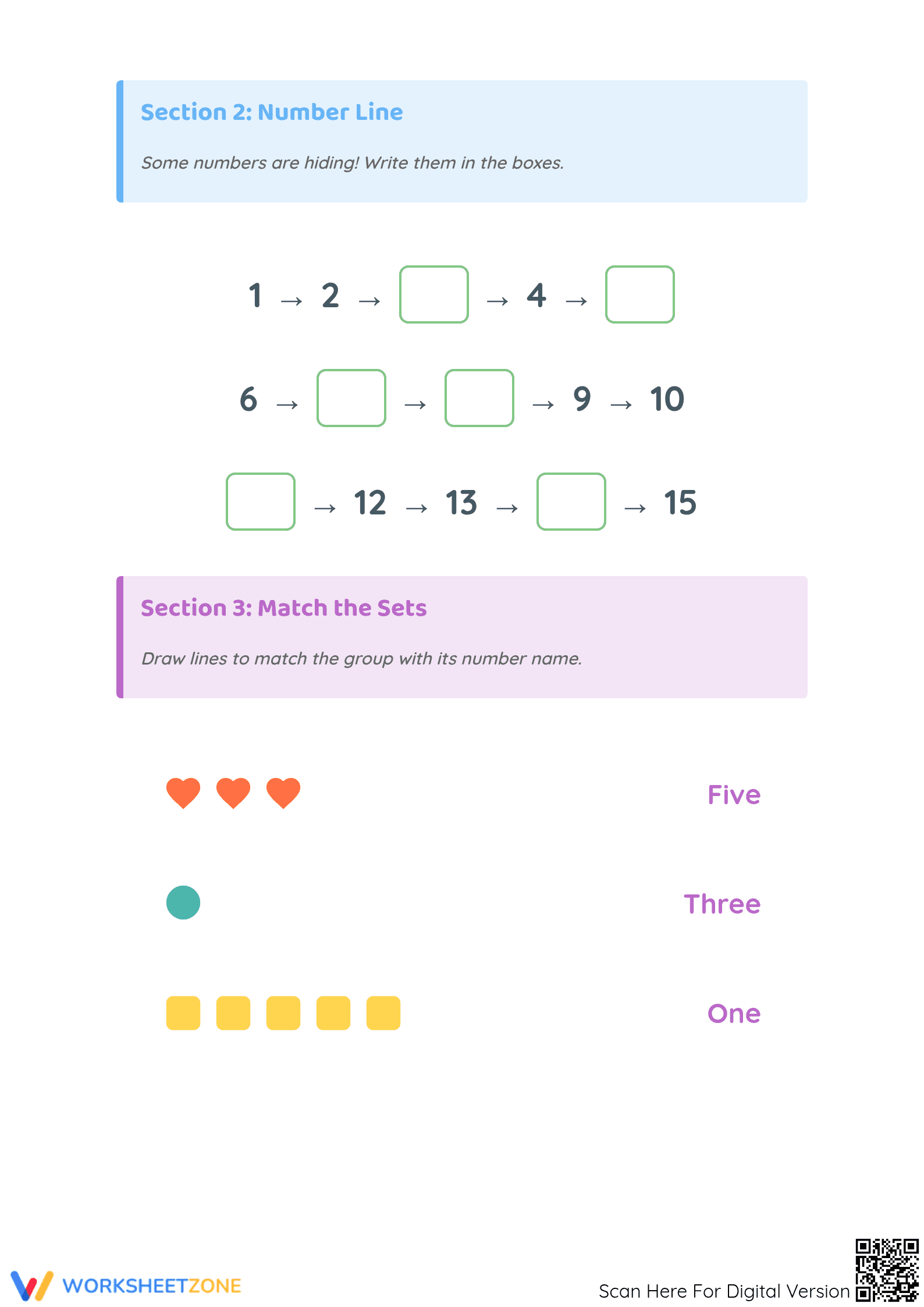
This 3-page worksheet transforms basic counting into a "Counting Adventure" for Kindergarten and Grade 1 students. By engaging with 17 diverse tasks—from object counting to number comparisons—learners solidify their understanding of cardinality. It is the perfect tool for building early numeracy confidence in any classroom or home setting.
At a Glance
- Grade: Kindergarten · Subject: Math
- Standard:
CCSS.MATH.CONTENT.K.CC.B.4— Understand the relationship between numbers and quantities; connect counting to cardinality.- Skill Focus: Counting and Number Relationships
- Format: 3 pages · 17 problems · Answer key included · PDF
- Best For: Daily math centers or formative assessment
- Time: 20–30 minutes
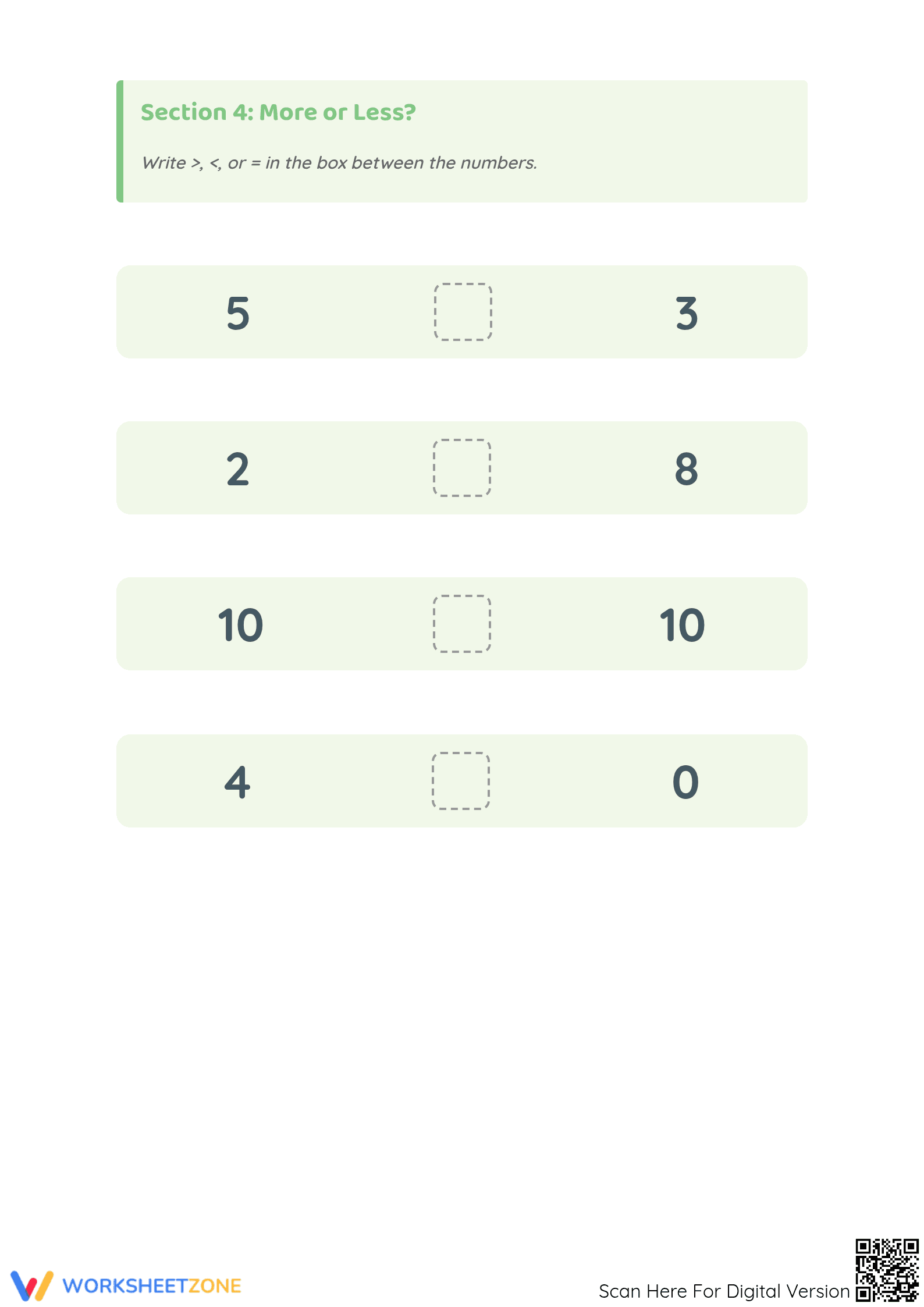
This 3-page PDF features 17 unique tasks divided into four distinct sections. Students begin by counting physical objects and identifying the correct numeral. The adventure continues with a number line completion task, set-to-word matching, and final challenges in comparing numerical values using greater than, less than, and equal to symbols. A complete answer key ensures grading is efficient and accurate.
Zero-Prep Workflow
- Print (30 seconds): Simply select the three pages and print enough copies for your small group or entire class. No prep required.
- Distribute (1 minute): Pass out the worksheets alongside pencils and crayons. The "Counting Adventure" theme provides immediate engagement without lengthy teacher introductions.
- Review (2 minutes): Use the included answer key to quickly check for student misconceptions during independent work time or as a final exit ticket evaluation.
Standards Alignment
The primary focus is CCSS.MATH.CONTENT.K.CC.B.4, which requires students to understand the relationship between numbers and quantities and connect counting to cardinality. Additionally, the worksheet supports CCSS.MATH.CONTENT.K.CC.A.2 through missing number sequences and CCSS.MATH.CONTENT.K.CC.C.7 via numerical comparisons. Both standard codes can be copied directly into lesson plans, IEP goals, or district curriculum mapping tools.
How to Use It
Use this resource during the independent practice portion of a math lesson on counting. Introduce the sections one at a time to keep students focused on specific skills. For formative assessment, observe students during the "More or Less" section to see if they can transition from object counting to abstract numerical comparison. Expected completion time is 20 to 30 minutes.
Who It's For
This worksheet is designed for Kindergarten and Grade 1 students who are developing foundational numeracy skills. It offers scaffolded support through visual objects while challenging learners to match number words and symbols. It pairs naturally with a number line anchor chart or a "counting to 20" direct instruction lesson to reinforce the sequential nature of numbers.
According to the foundational research of Fisher & Frey (2014), the gradual release of responsibility model is most effective when students are provided with structured opportunities for independent application of new skills. This "Counting Adventure" worksheet embodies this principle by moving students through a logical progression from concrete object representation (Section 1) to abstract numerical reasoning and comparison (Section 4). By engaging with 17 varied tasks, students internalize the CCSS.MATH.CONTENT.K.CC.B.4 standard, which emphasizes the critical connection between counting and cardinality. Modern educational analysis suggests that multi-modal practice—incorporating visual, linguistic, and symbolic representations—is essential for long-term retention in early mathematics. This resource provides that essential variety, ensuring that learners do not merely memorize sequences but truly understand the quantitative value of numbers. The inclusion of a clear answer key allows for immediate feedback, a factor known to significantly improve learning outcomes in early childhood settings.


