


























Views
Downloads
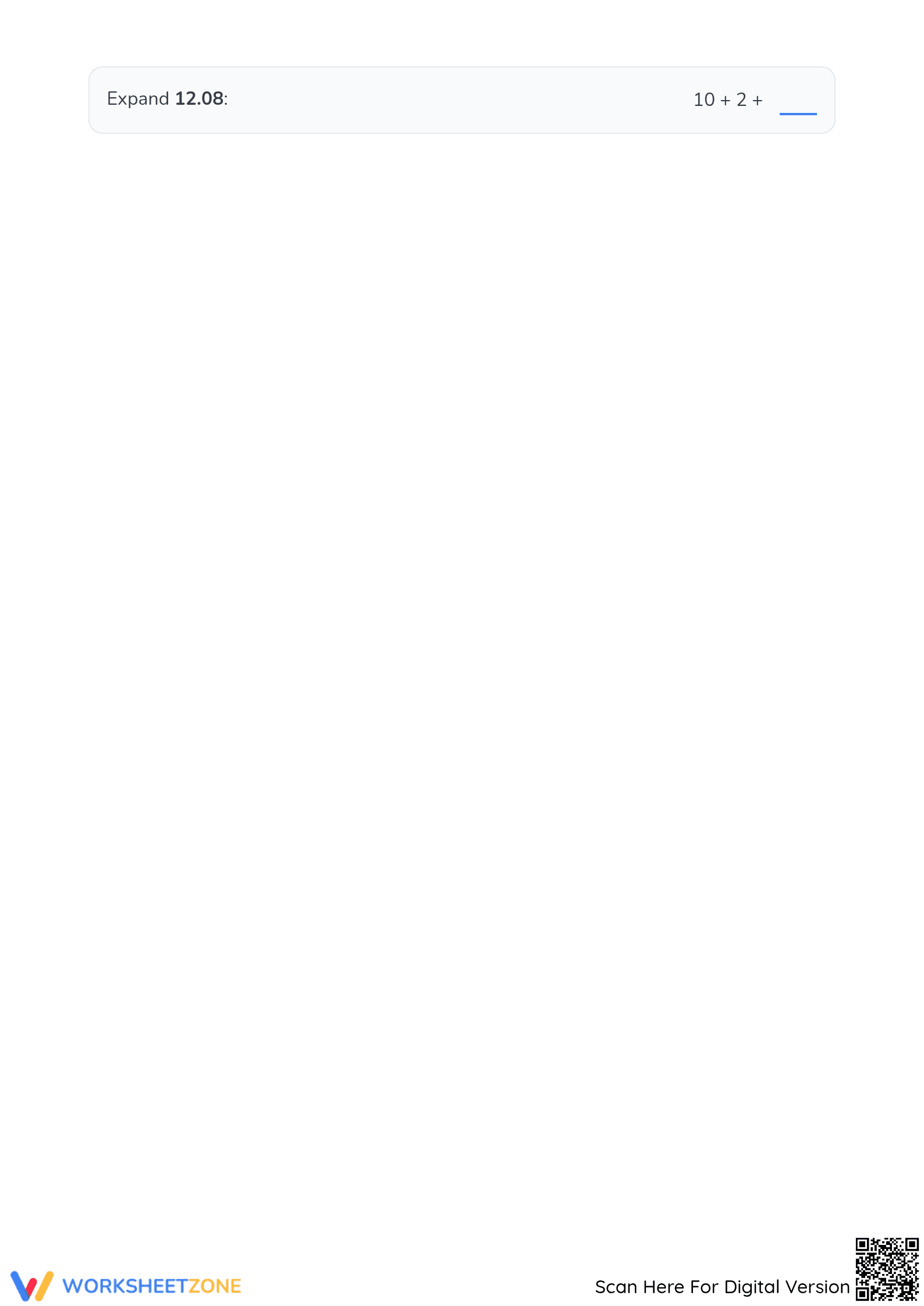

Essential Grade 5 Math: Convert Decimals to Fractions Worksheet
Paste this activity's link or code into your existing LMS (Google Classroom, Canvas, Teams, Schoology, Moodle, etc.).
Students can open and work on the activity right away, with no student login required.
You'll still be able to track student progress and results from your teacher account.
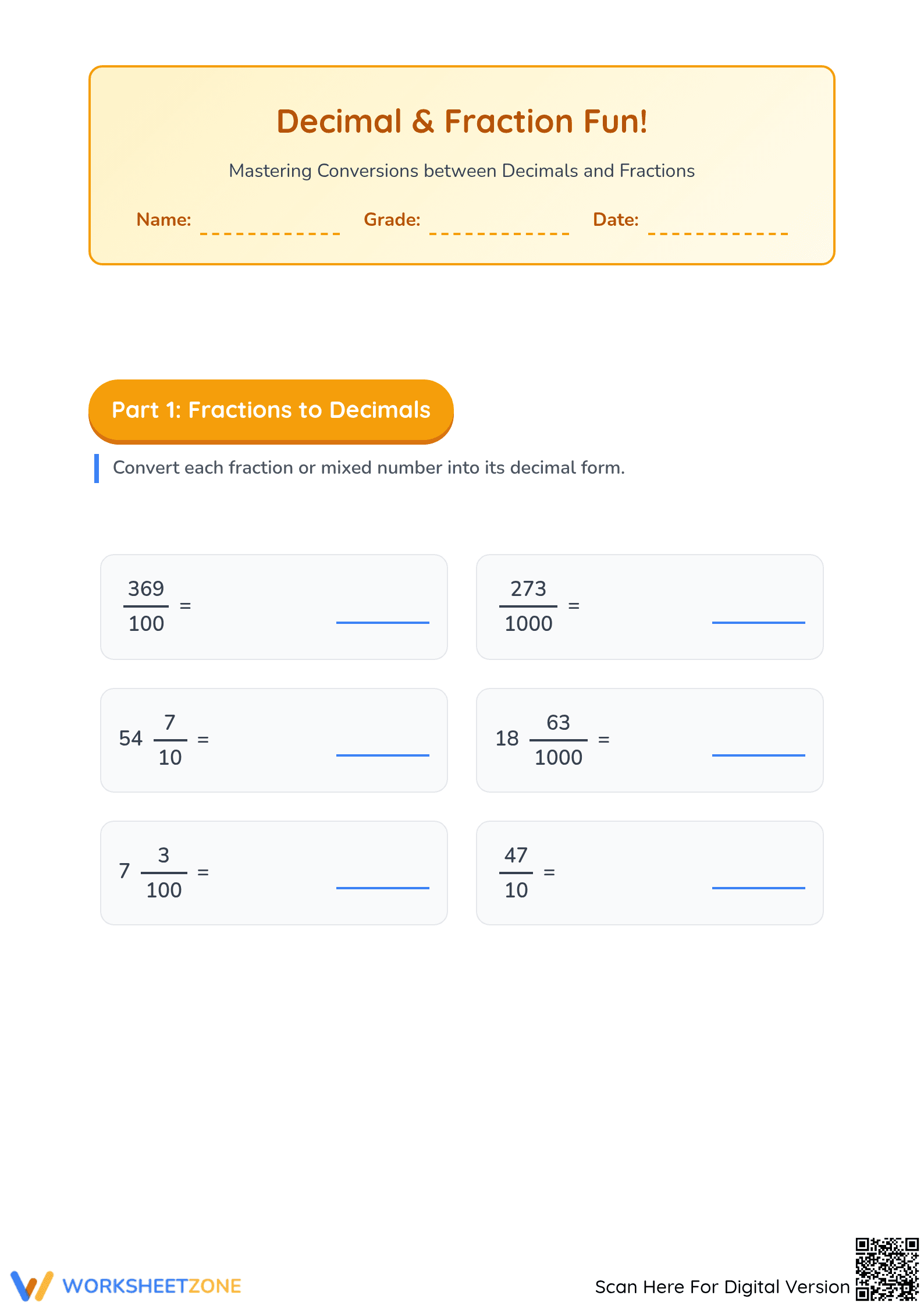
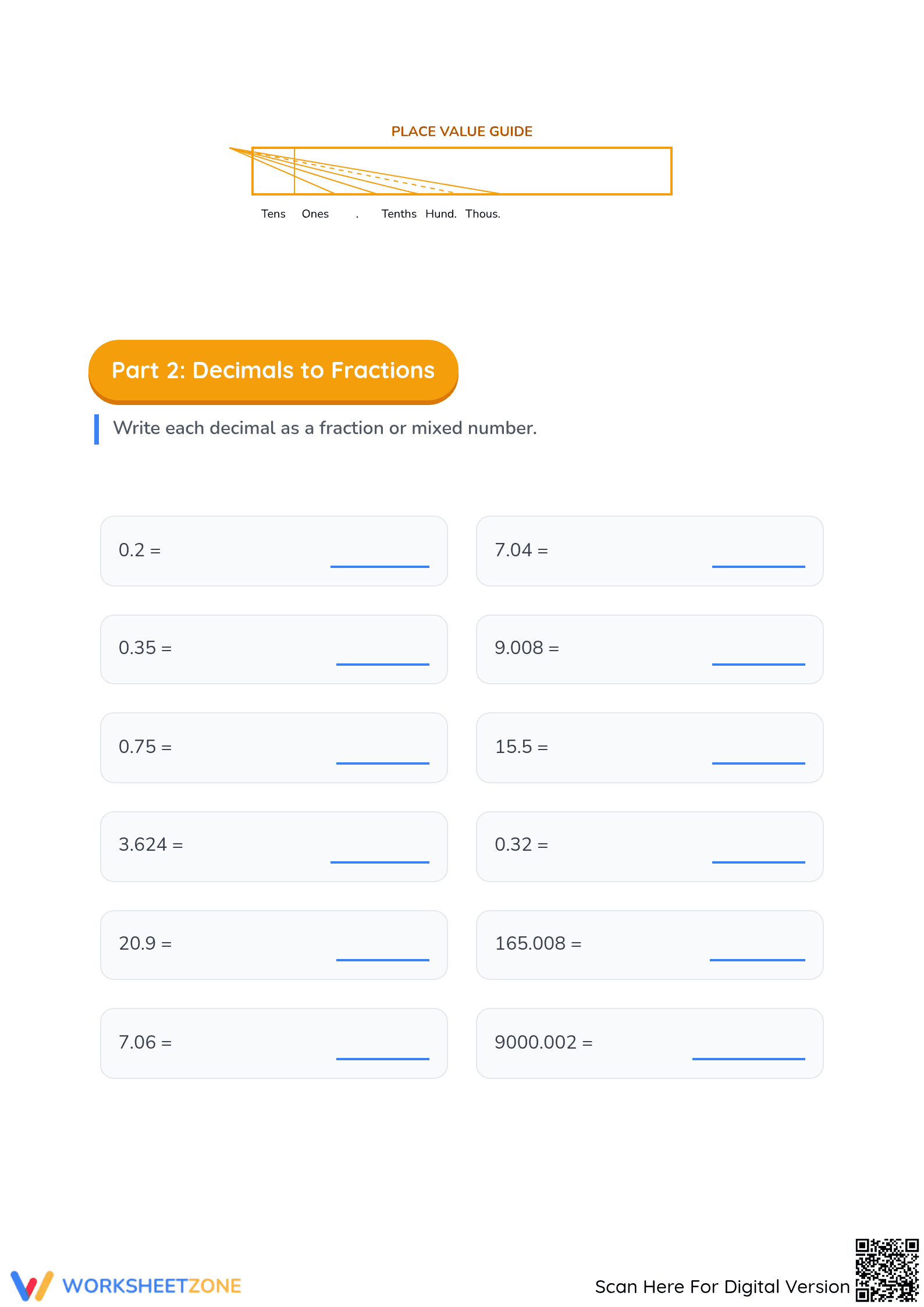
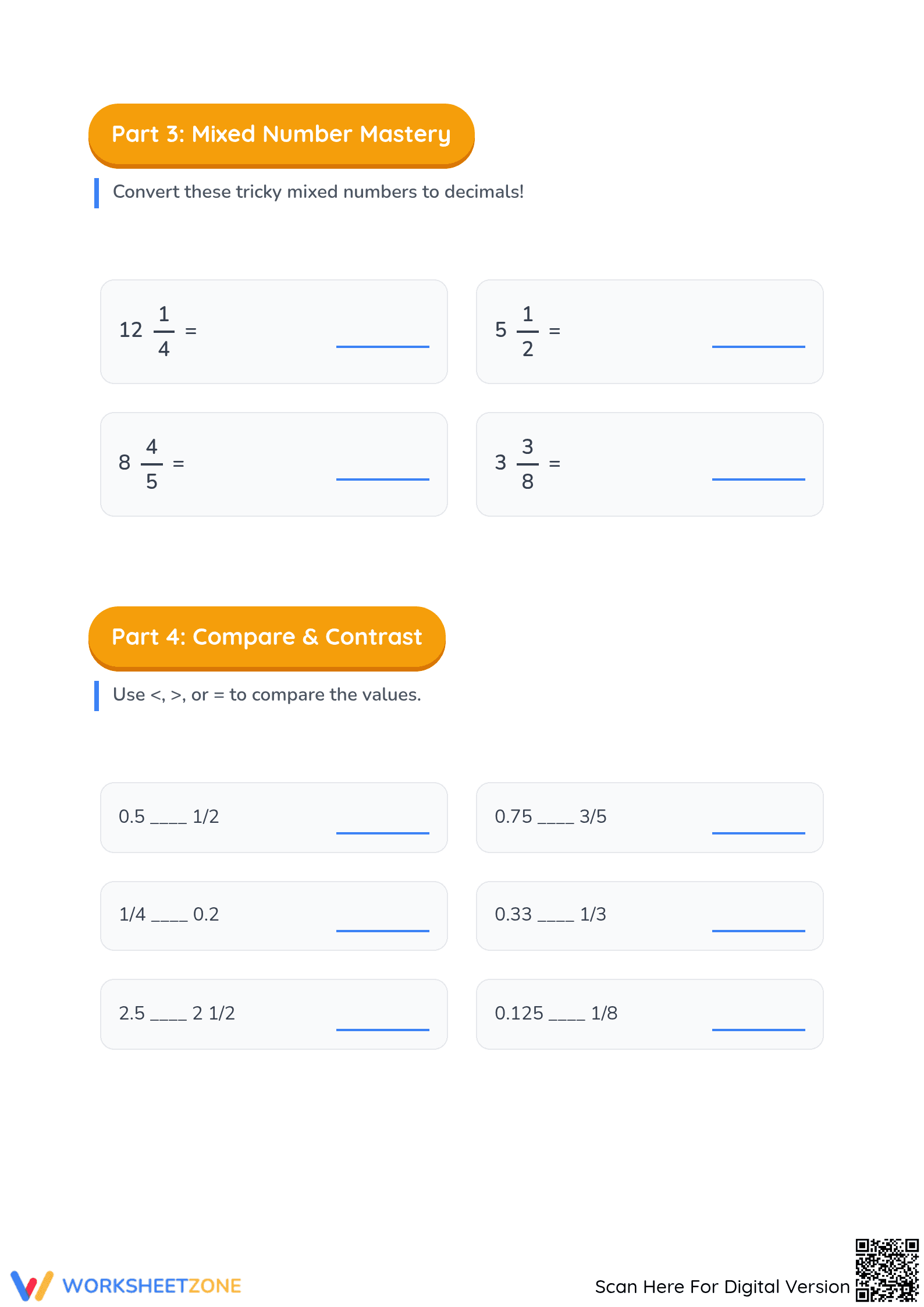
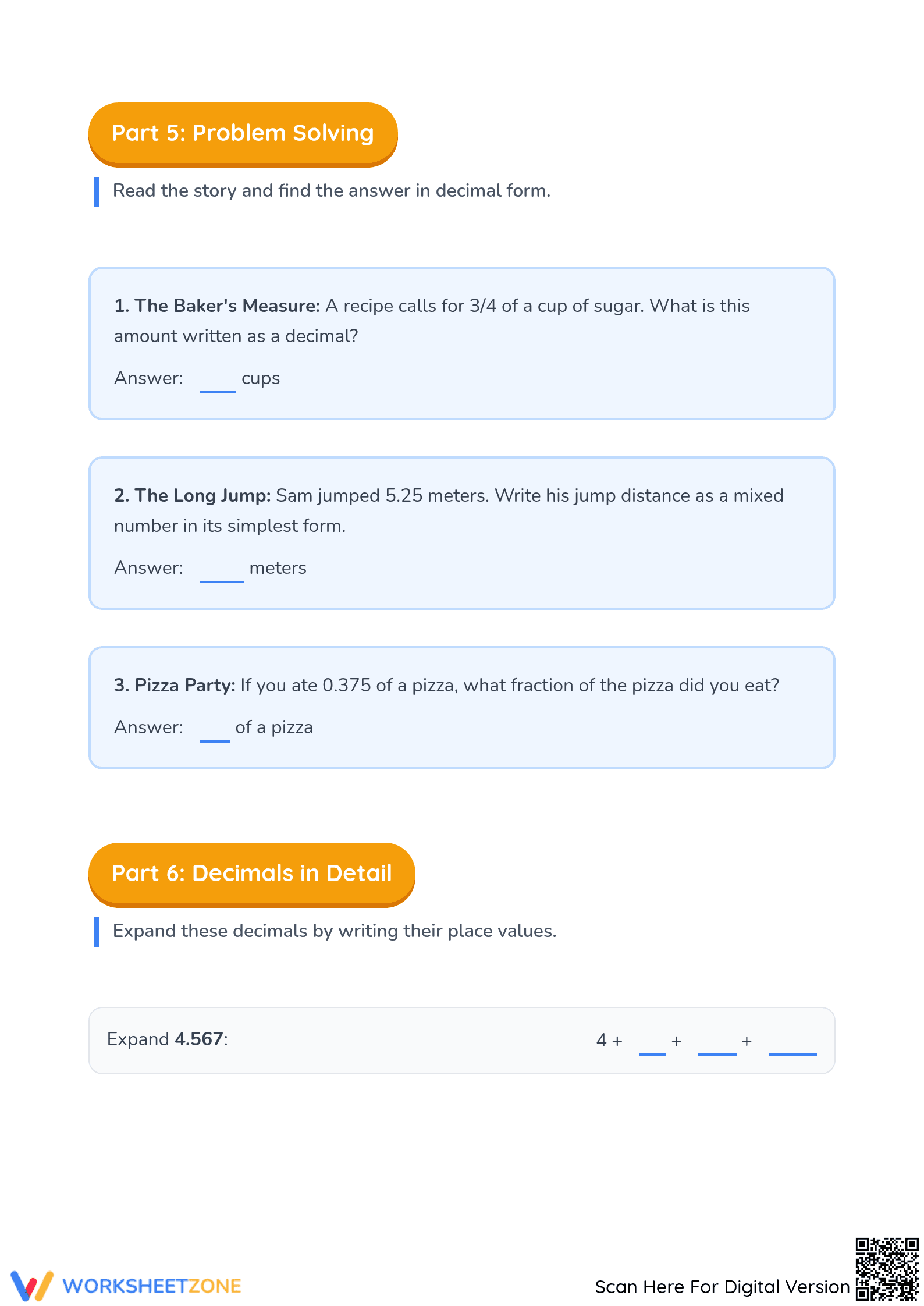
This comprehensive Grade 5 math worksheet package provides students with intensive practice in bridging the gap between decimal notation and fractional representation. By working through structured conversion exercises, learners build the procedural fluency required to master place value and rational number operations. This five-page set ensures students can confidently translate tenths, hundredths, and thousandths into their fractional equivalents.
At a Glance
- Grade: 5 · Subject: Math
- Standard:
CCSS.MATH.CONTENT.4.NF.C.6— Use decimal notation for fractions with denominators 10 or 100- Skill Focus: Decimal and Fraction Conversion
- Format: 5 pages · 50 problems · Answer key included · PDF
- Best For: Independent practice and sub plans
- Time: 25–40 minutes
What's Inside: This resource contains five distinct pages of practice, totaling 50 conversion problems. The tasks progress from simple tenths and hundredths to more challenging thousandths, providing a thorough review of the base-ten system. Each page is clearly formatted with ample white space for student calculations, and a complete answer key is provided to facilitate rapid grading or student self-correction.
The Zero-Prep Workflow is designed for maximum efficiency in the modern classroom. Teachers can print the entire five-page packet in less than one minute and distribute it immediately for independent work. Because the instructions are self-explanatory and the progression is logical, students can begin working with zero teacher intervention. Reviewing the work is equally fast using the included answer key, making this an ideal choice for emergency sub plans or morning work routines.
This resource is aligned to the primary standard `CCSS.MATH.CONTENT.4.NF.C.6`, which requires students to use decimal notation for fractions with denominators 10 or 100. It also supports `CCSS.MATH.CONTENT.5.NBT.A.3` by reinforcing the reading and writing of decimals to thousandths. Both standard codes can be copied directly into lesson plans, IEP goals, or district curriculum mapping tools to ensure compliance with state and national benchmarks.
How to Use It: Use this worksheet as a summative assessment after a unit on decimals, or as a formative check-in during direct instruction. One effective strategy is to assign one page per day as a "warm-up" to keep conversion skills sharp. Teachers should observe students as they work to ensure they are correctly identifying the denominator based on the decimal's place value. Expect most students to complete the full 50-problem set within a 40-minute class period.
Who It's For: This resource is tailored for Grade 4, 5, and 6 students who are developing or refining their understanding of rational numbers. It is particularly useful for students who benefit from repetitive, low-distraction practice to solidify new concepts. Pair this worksheet with a place value anchor chart or a decimal-to-fraction conversion table to provide additional support for English language learners or students with IEP accommodations.
According to the RAND AIRS 2024 report on mathematics instructional materials, the ability to fluently navigate the relationship between decimal notation and fractional representation is a critical gateway skill for success in middle school algebra. This 5-page worksheet package provides the high-volume, structured practice necessary to move students from conceptual understanding to procedural fluency. By focusing on denominators of 10, 100, and 1,000, students develop a robust mental model of the base-ten system. Aligned strictly to CCSS.MATH.CONTENT.4.NF.C.6, this resource ensures that Grade 4, 5, and 6 learners can accurately express fractions with denominators 10 or 100 as decimals. Such targeted practice is supported by Fisher & Frey (2014) as an essential component of the gradual release of responsibility, allowing for independent mastery of place value concepts that underpin complex arithmetic operations in higher-level mathematics. Access this printable resource to strengthen decimal-fraction bridge skills.


