


























Views
Downloads


Printable Counting Pokemon Worksheet | Grade 1 Math
Paste this activity's link or code into your existing LMS (Google Classroom, Canvas, Teams, Schoology, Moodle, etc.).
Students can open and work on the activity right away, with no student login required.
You'll still be able to track student progress and results from your teacher account.
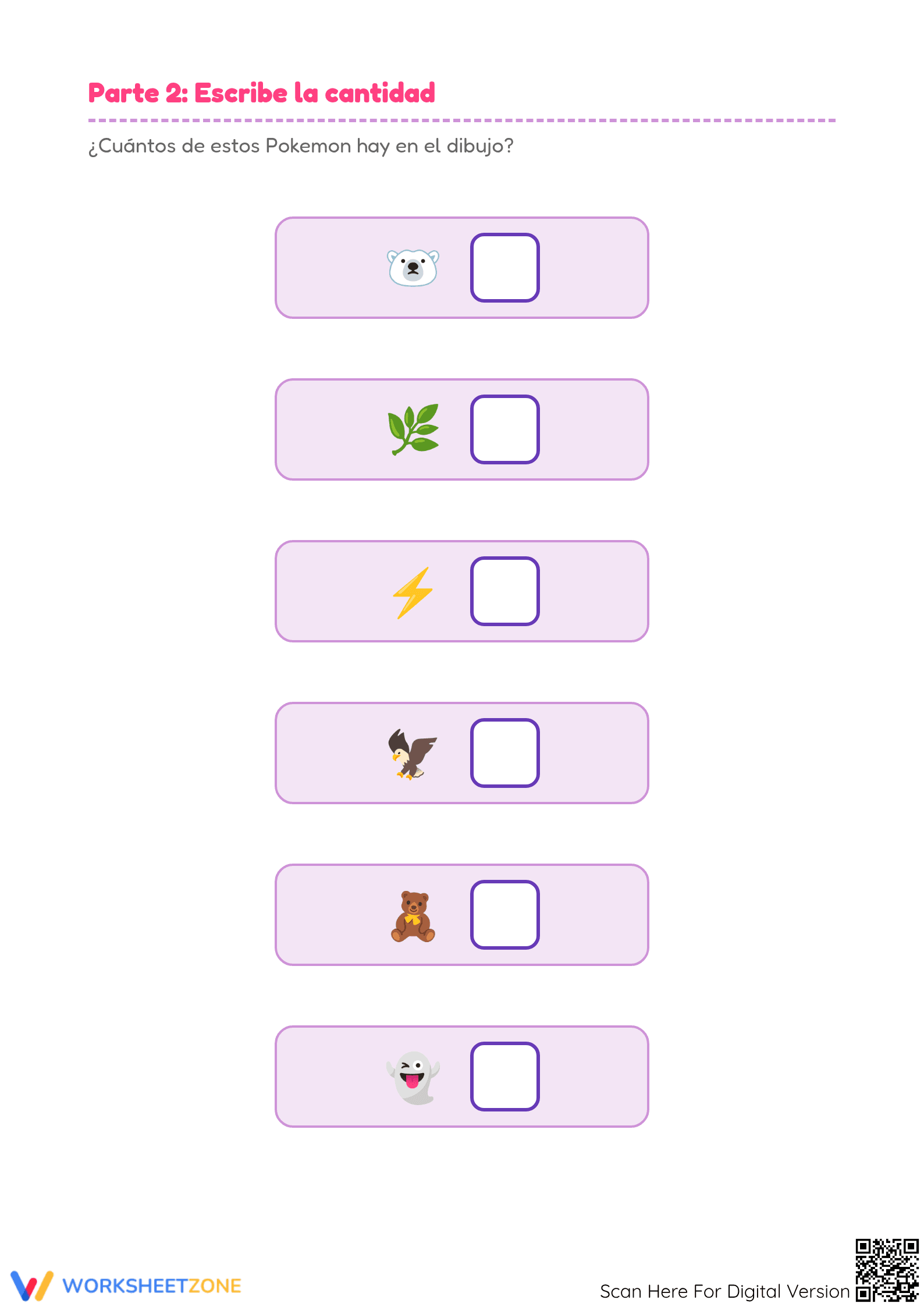
This Grade 1 counting worksheet provides essential practice for students learning to associate numerical values with sets of objects. By counting familiar characters, learners develop one-to-one correspondence and cardinality skills. Students will count various groups and record the total, reinforcing the fundamental link between visual quantities and written numbers.
At a Glance
- Grade: 1 · Subject: Math
- Standard:
CCSS.MATH.CONTENT.1.NBT.A.1— Count objects and write numbers to represent quantities- Skill Focus: Counting and Cardinality
- Format: 4 pages · 32 problems · Answer key included · PDF
- Best For: Independent math center practice
- Time: 15–20 minutes
What's Inside
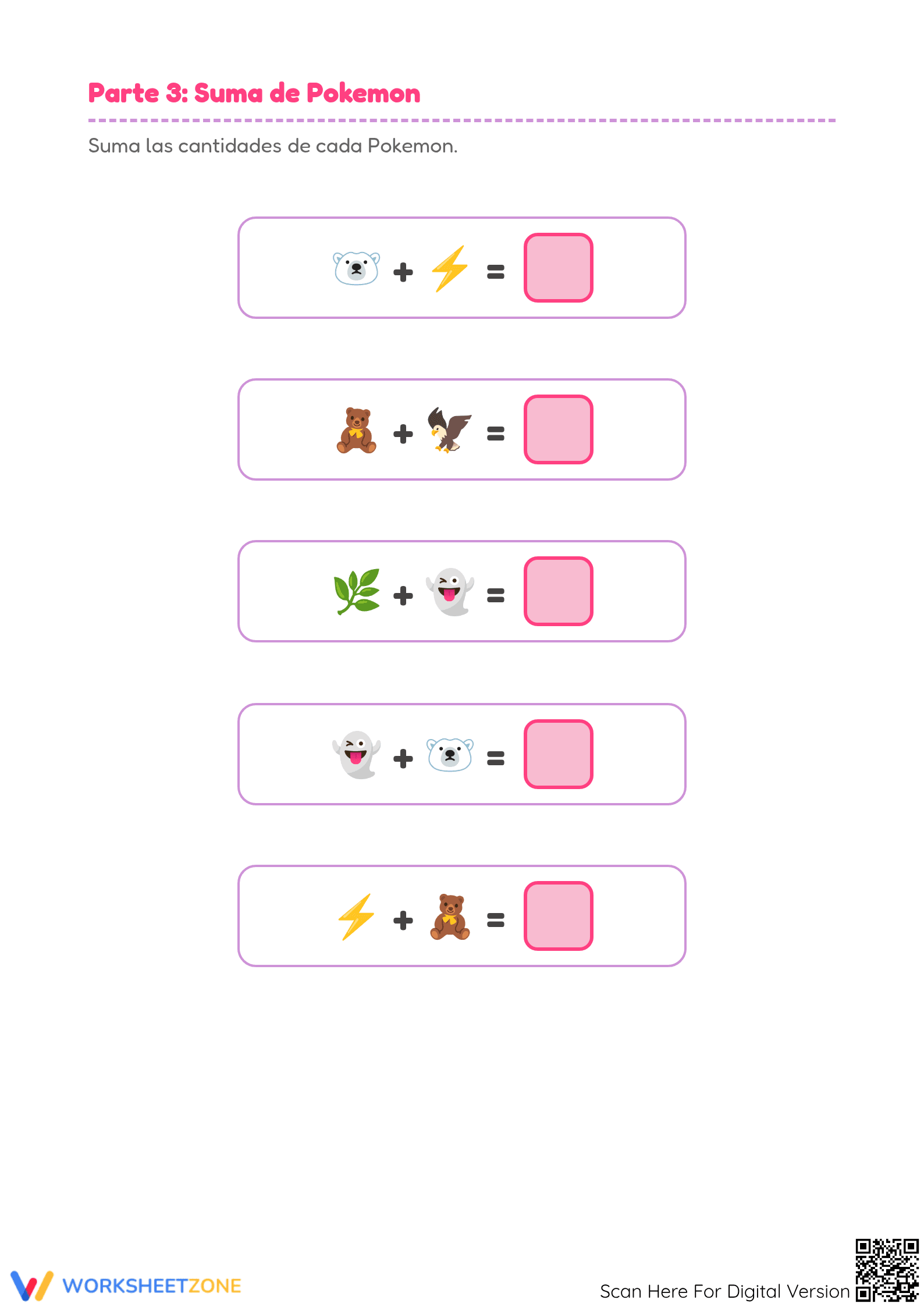
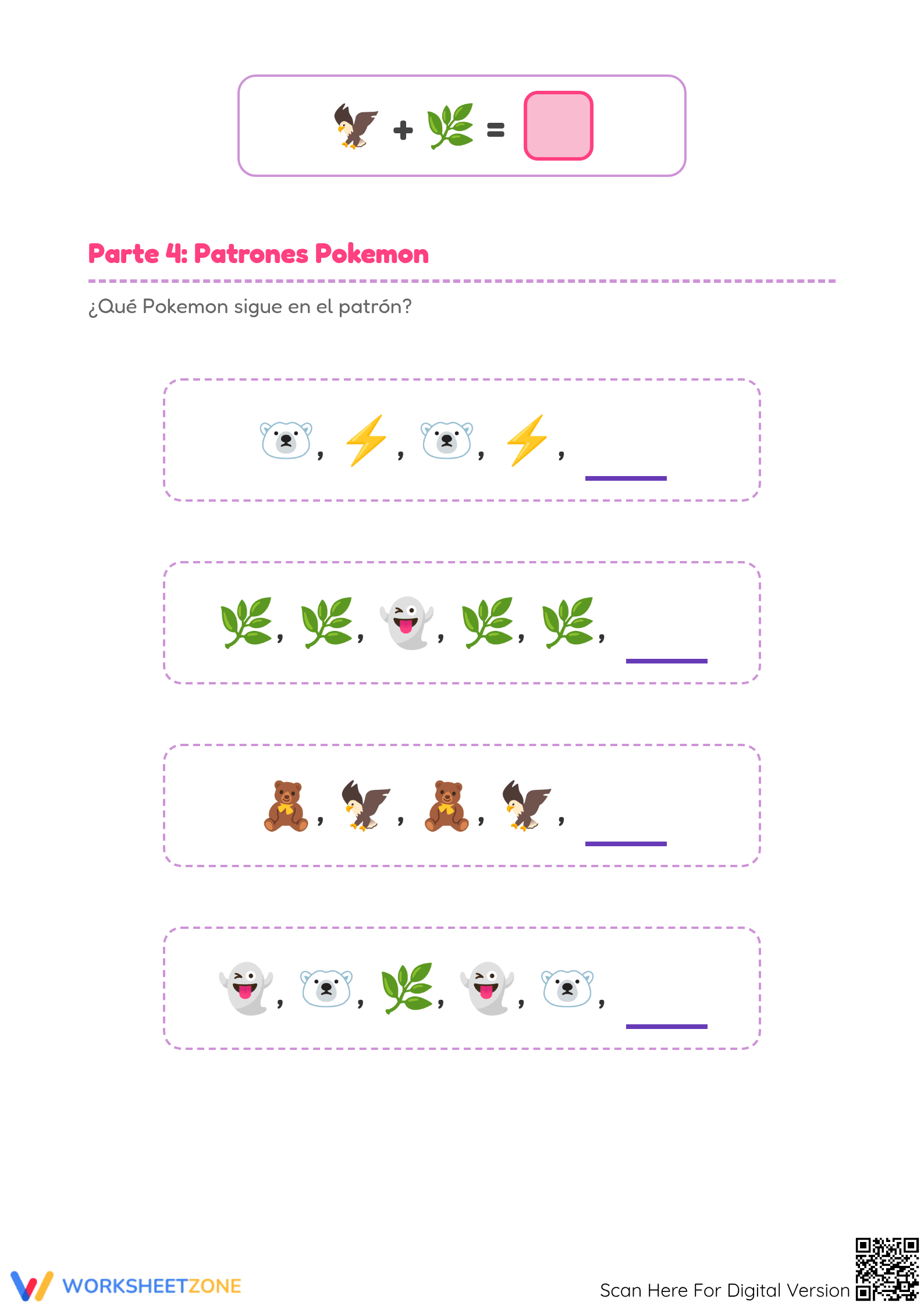
This comprehensive set contains four pages of targeted counting tasks, featuring clear boxes and engaging visual aids. Each page includes eight distinct counting problems, providing a total of 32 opportunities for practice. The download also includes a full answer key for rapid grading or student self-checking, ensuring a smooth instructional flow.
Zero-Prep Workflow
The zero-prep design allows for immediate classroom integration. First, print the four-page PDF, which takes less than thirty seconds on a standard school printer. Second, distribute the sheets to students for independent work or as part of a math rotation; no complex instructions or teacher modeling are required. Finally, use the included answer key to review student work in under one minute.
Standards Alignment
The primary alignment for this resource is CCSS.MATH.CONTENT.1.NBT.A.1, which focuses on counting to 120 and representing quantities with written numerals. It also supports CCSS.MATH.CONTENT.K.CC.B.4 for students requiring reinforcement of basic cardinality. Both standard codes can be copied directly into lesson plans, IEP goals, or district curriculum mapping tools.
How to Use It
Use this worksheet as a formative assessment during your morning work block to gauge student readiness for more complex operations. Alternatively, assign it as a quiet-time activity following direct instruction on number sense. For a quick check, observe students as they count: those who touch each object show strong one-to-one correspondence, while others may be ready for mental counting.
Who It's For
This resource is designed for Grade 1 students, but serves as an excellent review for Grade 2 learners or an extension for Kindergarten. It is particularly effective for English Language Learners who benefit from the visual support of counting objects. This worksheet pairs naturally with physical manipulatives or a classroom number line to bridge concrete and representational learning.
According to the NAEP 2024 math framework analysis, the ability to accurately count and represent quantities, as defined in CCSS.MATH.CONTENT.1.NBT.A.1, is a critical predictor of later success in algebraic thinking. Research indicates that students who master basic cardinality in early elementary grades are more likely to perform at proficiency levels in middle school mathematics. This worksheet addresses these foundational needs by providing repetitive practice in a low-stakes format. By engaging with visual counting tasks, students build the cognitive scaffolds necessary for mental math. The use of familiar visual themes reduces cognitive load, allowing learners to focus purely on the mathematical task of counting and recording data. Consistent exposure to these types of structured number sense activities ensures that students develop the fluency required for the transition from counting to addition. This practice effectively bridges the gap between concrete objects and abstract numerals in the early math curriculum.


