


























Views
Downloads

Consonant Blends Worksheet: Printable Phonics for Preschool
Paste this activity's link or code into your existing LMS (Google Classroom, Canvas, Teams, Schoology, Moodle, etc.).
Students can open and work on the activity right away, with no student login required.
You'll still be able to track student progress and results from your teacher account.
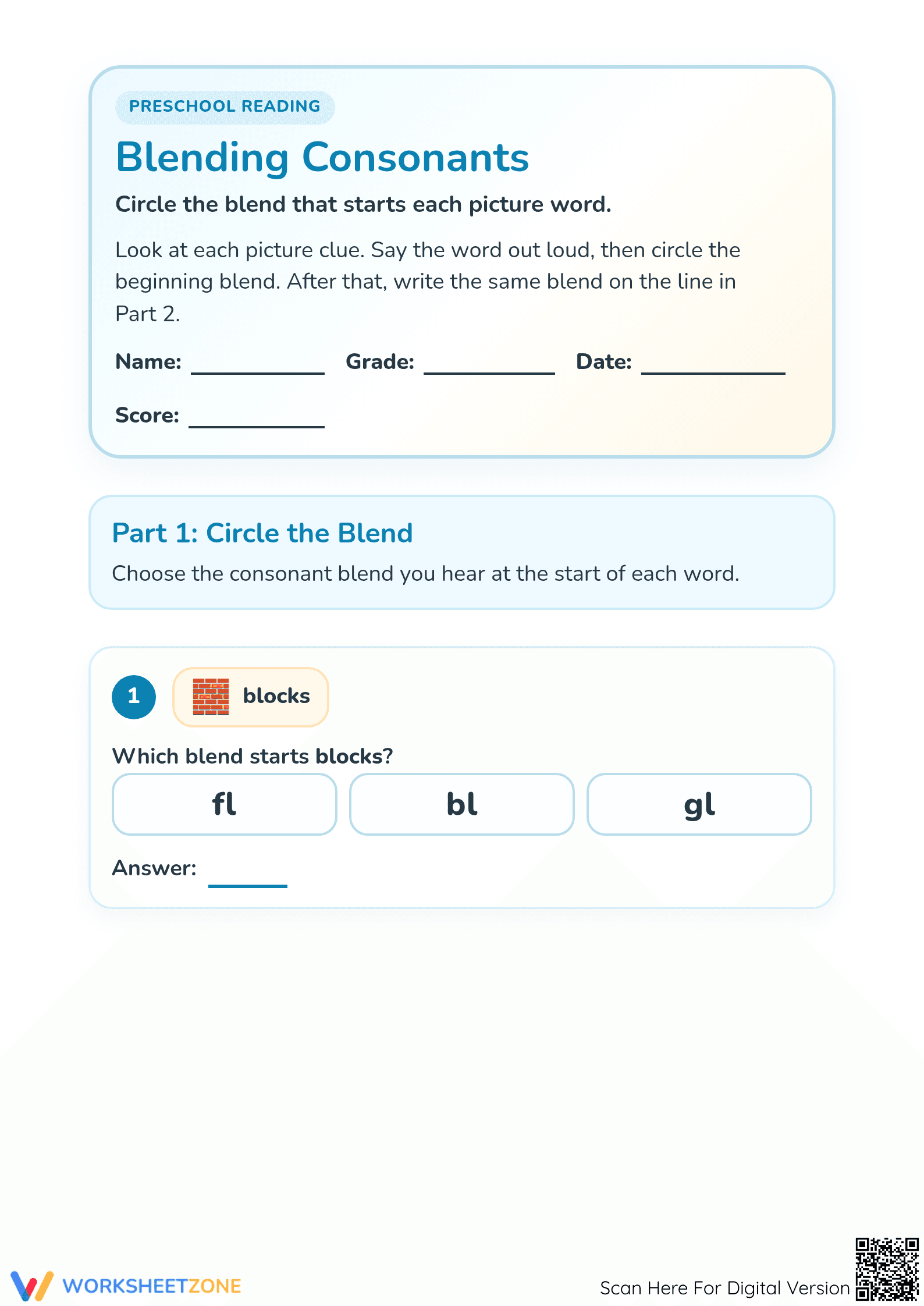
This Preschool phonics worksheet focuses on blending consonants to help young learners identify starting sounds in common words. Students practice phonemic awareness by circling the correct blend and then writing it, ensuring they connect auditory sounds with their written representations. This dual-approach task builds a strong foundation for early reading and pronunciation skills.
At a Glance
- Grade: Preschool · Subject: ELA
- Standard:
CCSS.ELA-LITERACY.RF.K.2.b— Isolate and pronounce the initial and final sounds in three-phoneme words- Skill Focus: Initial Consonant Blends
- Format: 4 pages · 12 problems · Answer key included · PDF
- Best For: Early literacy centers and phonics practice
- Time: 15–20 minutes
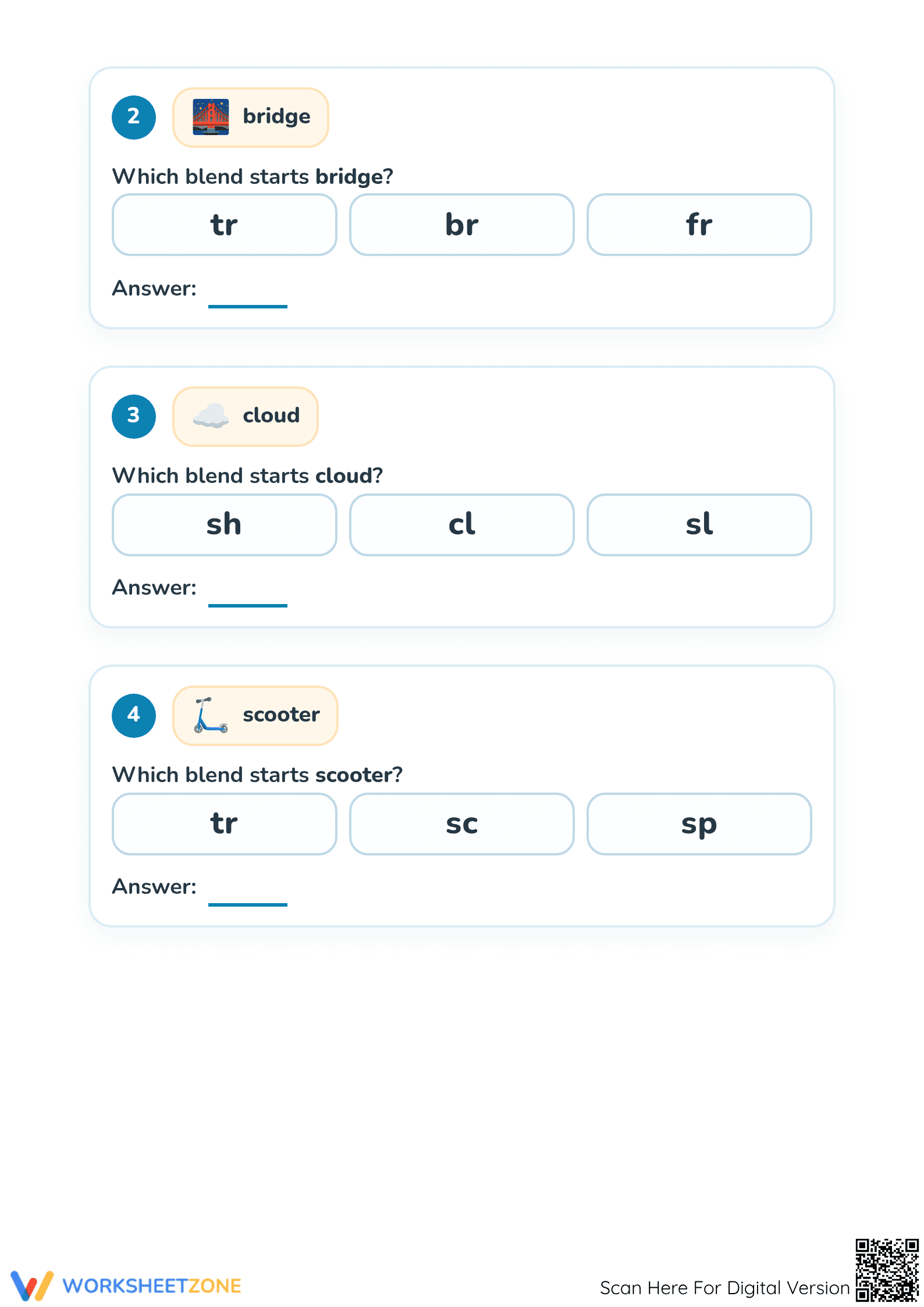
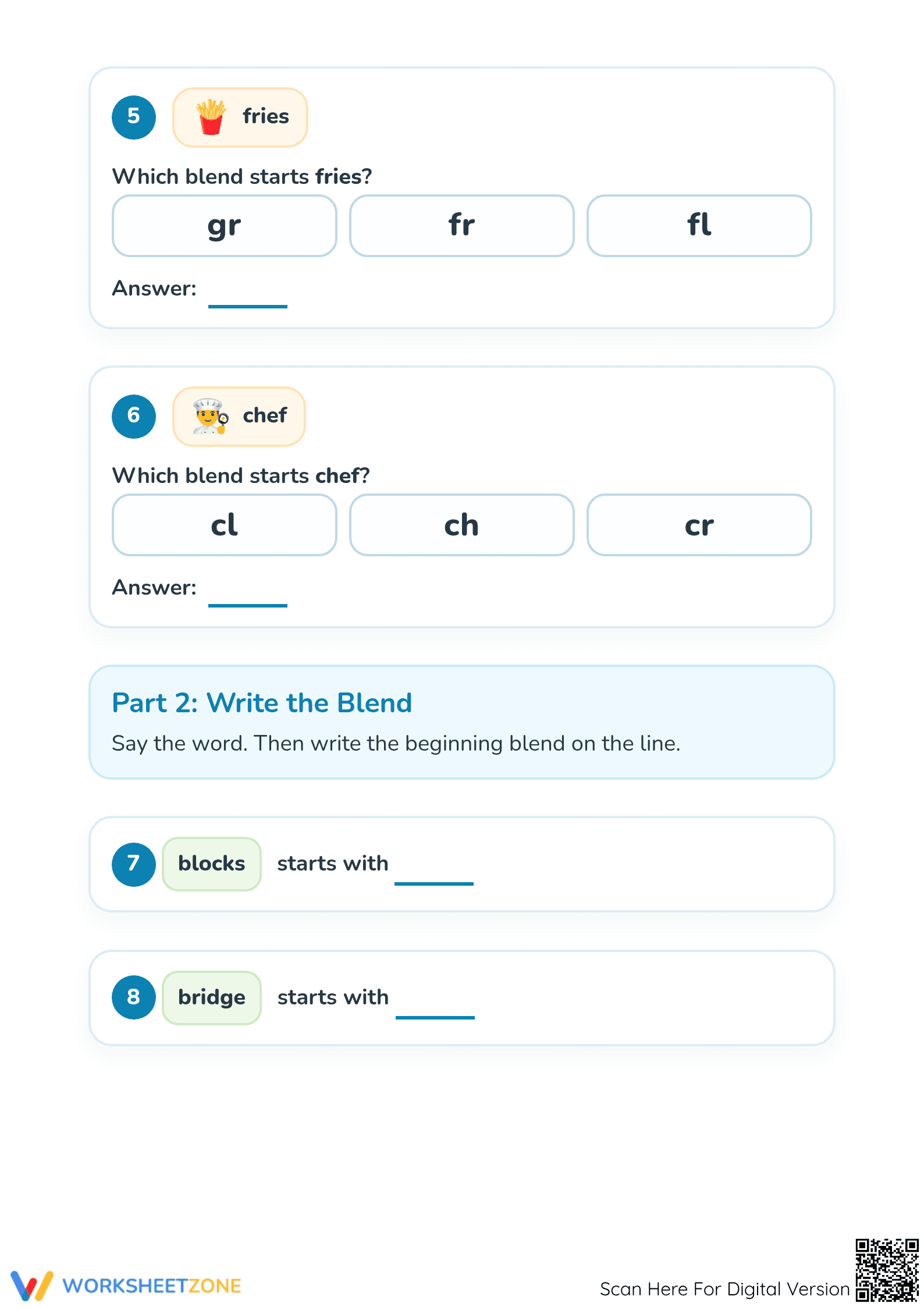
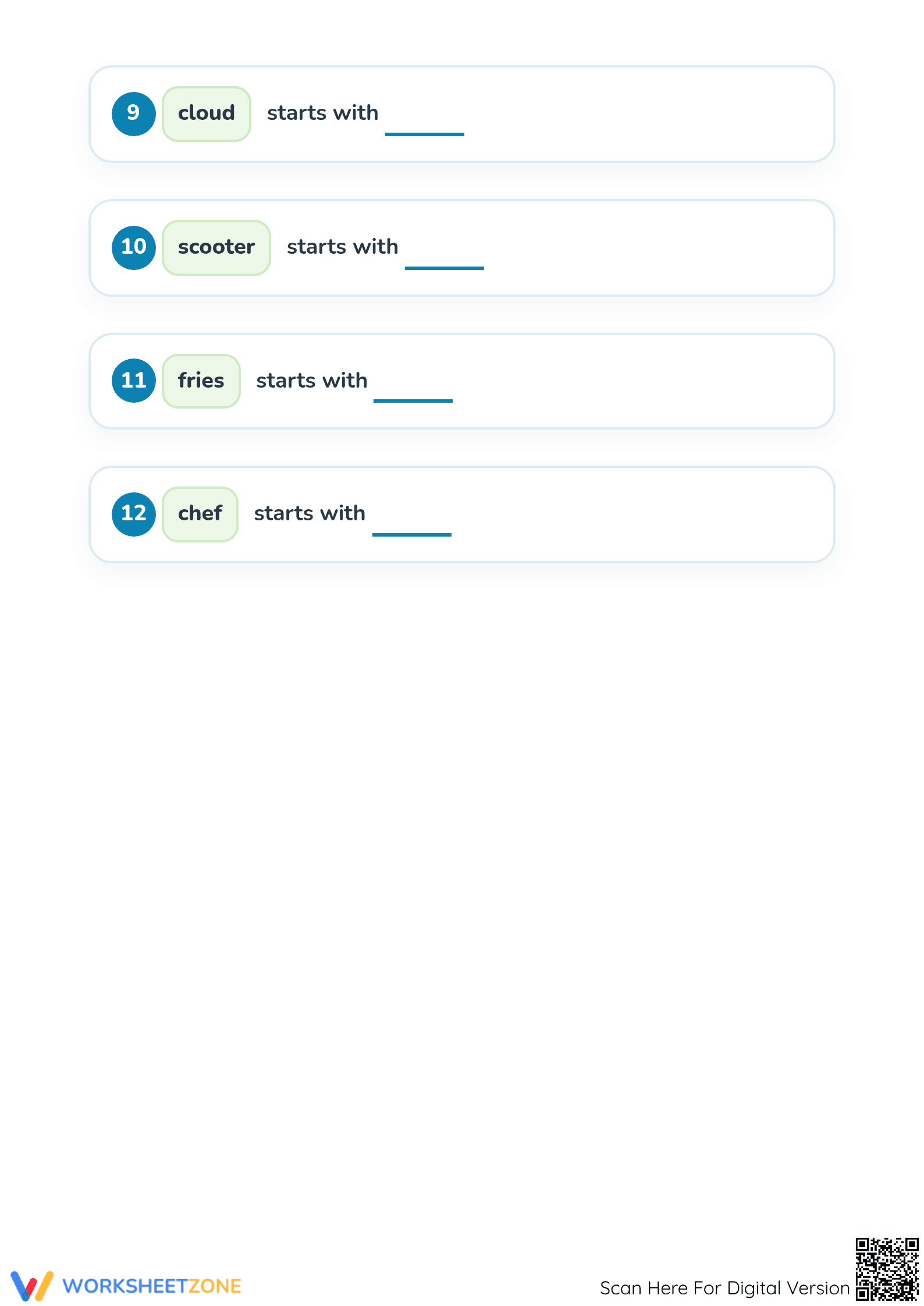
This four-page PDF includes 12 structured problems divided into two distinct parts. Part 1 features visual picture clues like blocks, bridges, and clouds, where students choose between three possible consonant blends. Part 2 transitions to independent practice, requiring students to write the correct blend from memory or review. A comprehensive answer key is included for quick grading.
Teachers can implement this resource in under two minutes. Step 1: Print the four-page PDF (30 seconds). Step 2: Distribute to students and read the clear, numbered instructions aloud (1 minute). Step 3: Review student answers using the provided key during small-group instruction or as a quick exit ticket (30 seconds). This zero-prep format makes it an ideal choice for substitute plans or emergency literacy blocks.
The primary standard addressed is CCSS.ELA-LITERACY.RF.K.2.b, which focuses on isolating and pronouncing the initial sounds in words. This worksheet specifically targets consonant blends and digraphs (bl, br, cl, sc, fr, ch), which are critical for developing phonetic decoding abilities in early readers. Both standard codes can be copied directly into lesson plans, IEP goals, or district curriculum mapping tools.
Use this worksheet during the guided practice phase of a phonics lesson after introducing consonant blends with anchor charts. It serves as an excellent formative assessment to check if students can distinguish between similar sounds like "cl" and "sl." Alternatively, assign it as a morning work activity to reinforce pronunciation through verbal repetition of the picture clues. We expect students to complete the full set in approximately 15 to 20 minutes.
This resource is designed for Preschool and Kindergarten students who are beginning their journey into phonetic blending. It is ideal for ESL/ELL learners who need visual support to connect vocabulary with specific consonant sounds. Pair this worksheet with a short reading passage or a phonics anchor chart to see these beginning sounds applied in a broader literacy context.
According to the RAND AIRS 2024 report on early literacy interventions, phonemic awareness activities that combine auditory isolation with written reproduction significantly accelerate reading readiness in Preschool learners. This worksheet targets initial consonant blends through a 12-task sequence that aligns with CCSS.ELA-LITERACY.RF.K.2.b, requiring students to isolate and pronounce starting sounds. By providing visual anchors like "scooter" and "blocks," the resource reduces cognitive load while students master the complex task of blending multiple consonants into a single distinct sound. Research from Fisher & Frey (2014) emphasizes that such structured practice is essential for moving students from phonetic recognition to independent decoding. This Printable No-Prep Worksheet is a Complete guide for educators seeking to improve pronunciation accuracy and phonics mastery in early childhood classrooms, providing a Proven method for classroom-ready skill building.


