


























Views
Downloads


Grade 3 Concrete and Abstract Nouns — Essential Worksheet
Paste this activity's link or code into your existing LMS (Google Classroom, Canvas, Teams, Schoology, Moodle, etc.).
Students can open and work on the activity right away, with no student login required.
You'll still be able to track student progress and results from your teacher account.
This Grade 3 ELA worksheet provides targeted practice for identifying and classifying concrete and abstract nouns. Students analyze 10 sentences to distinguish between physical objects and intangible ideas or feelings. By mastering this distinction, learners improve their grammatical precision and descriptive writing capabilities while meeting core literacy requirements.
At a Glance
- Grade: 3 · Subject: ELA
- Standard:
CCSS.ELA-LITERACY.L.3.1.C— Form and use abstract nouns like feelings or qualities- Skill Focus: Concrete vs. Abstract Nouns
- Format: 3 pages · 20 problems · Answer key included · PDF
- Best For: Independent practice or homework
- Time: 15–20 minutes
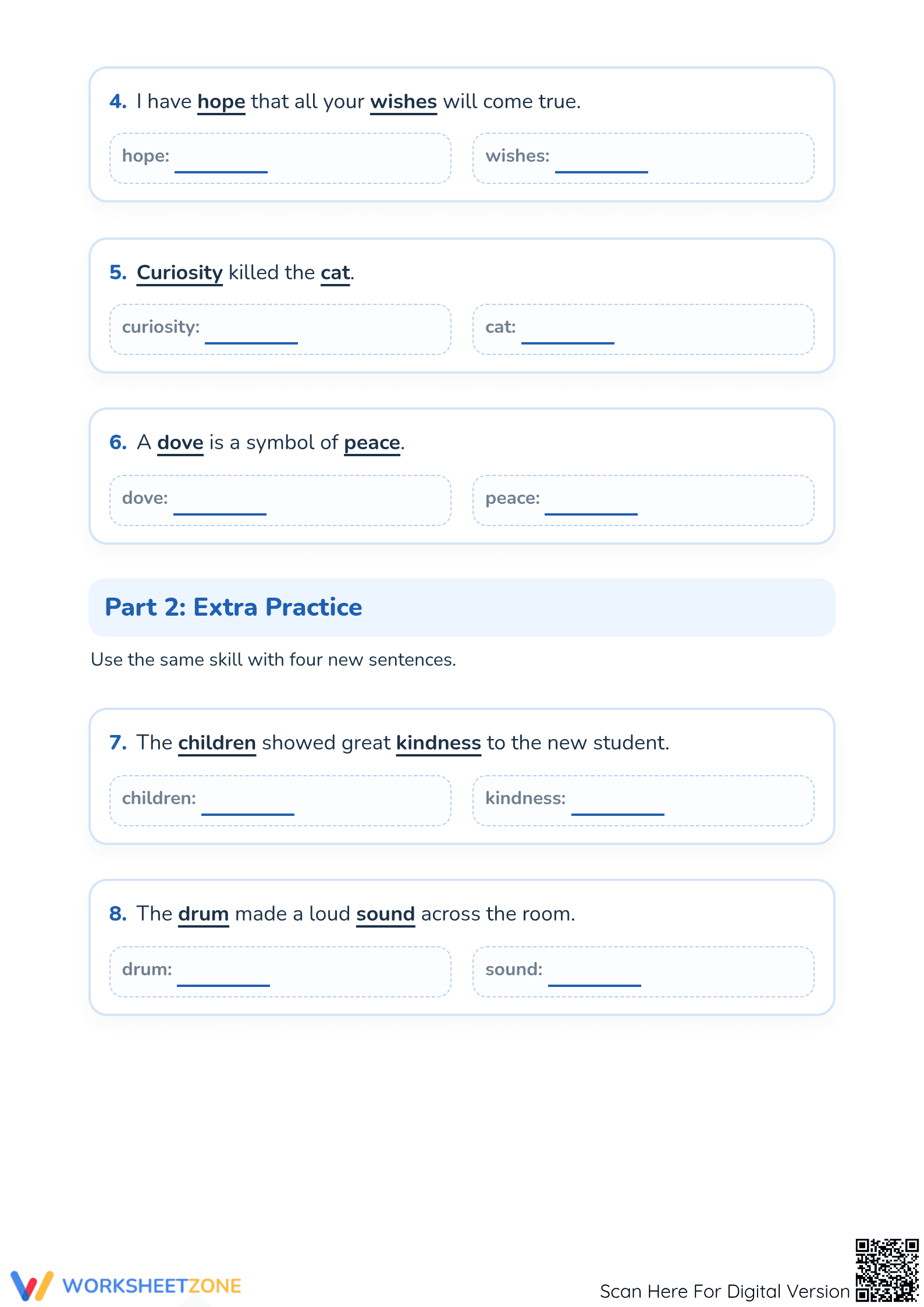
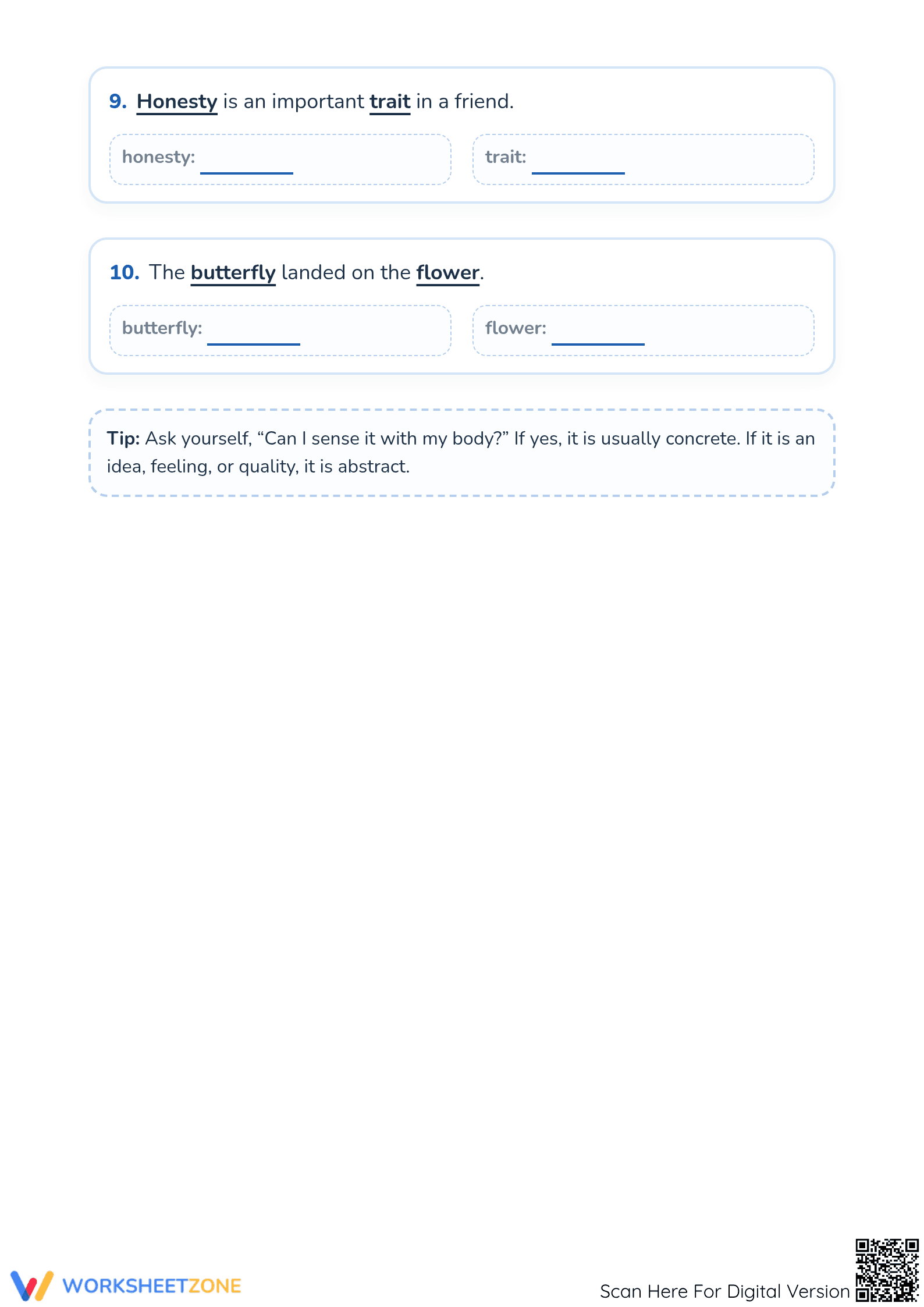
The resource contains three pages of structured exercises. Part 1 features six sentences with two underlined nouns each, requiring students to label them as "C" or "A". Part 2 offers four additional sentences for extra practice. A helpful "Tip" box on the final page provides a sensory check strategy. A full answer key is included for quick grading.
This resource is designed for immediate classroom implementation. Teachers can print the three-page PDF in under 30 seconds, distribute it to the class in one minute, and use the provided answer key to review student work in less than two minutes. It serves as an ideal "grab-and-go" activity for substitute folders or morning work.
The primary focus is CCSS.ELA-LITERACY.L.3.1.C, which requires students to form and use abstract nouns. By contrasting them with concrete nouns, students build a deeper understanding of how different word classes function within a sentence. Both standard codes can be copied directly into lesson plans, IEP goals, or district curriculum mapping tools.
Assign this worksheet during the "You Do" phase of a gradual release lesson on word classes. It works effectively as a formative assessment to check for understanding after a direct instruction session. Expect students to complete the 20 classifications in approximately 15 to 20 minutes depending on their individual reading speed.
This worksheet is tailored for third-grade students but can support fourth graders needing a grammar refresher. It is particularly helpful for English Language Learners (ELLs) who benefit from the clear sensory definitions provided. Pair this with a physical "noun hunt" around the classroom for a multi-sensory experience that reinforces the concept.
Research from Fisher & Frey (2014) emphasizes the importance of categorical thinking in language acquisition, particularly when distinguishing between literal and figurative concepts. This worksheet aligns with those findings by requiring students to apply the sensory-check heuristic to classify nouns. By isolating the skill of identifying abstract nouns (CCSS.ELA-LITERACY.L.3.1.C), the resource reduces cognitive load and allows for focused mastery. Studies in the RAND AIRS 2024 report suggest that structured, single-skill practice sheets significantly improve retention of grammatical rules compared to mixed-review formats alone. This 3-page PDF provides the necessary repetition for Grade 3 students to internalize the difference between tangible objects and intangible qualities, ensuring they meet foundational literacy benchmarks. The inclusion of a sensory tip box further supports the scaffolding necessary for diverse learners to achieve independent proficiency in lexical word classes.


