


























Views
Downloads

Concrete and Abstract Nouns Worksheet | Grade 3 Essential
Paste this activity's link or code into your existing LMS (Google Classroom, Canvas, Teams, Schoology, Moodle, etc.).
Students can open and work on the activity right away, with no student login required.
You'll still be able to track student progress and results from your teacher account.
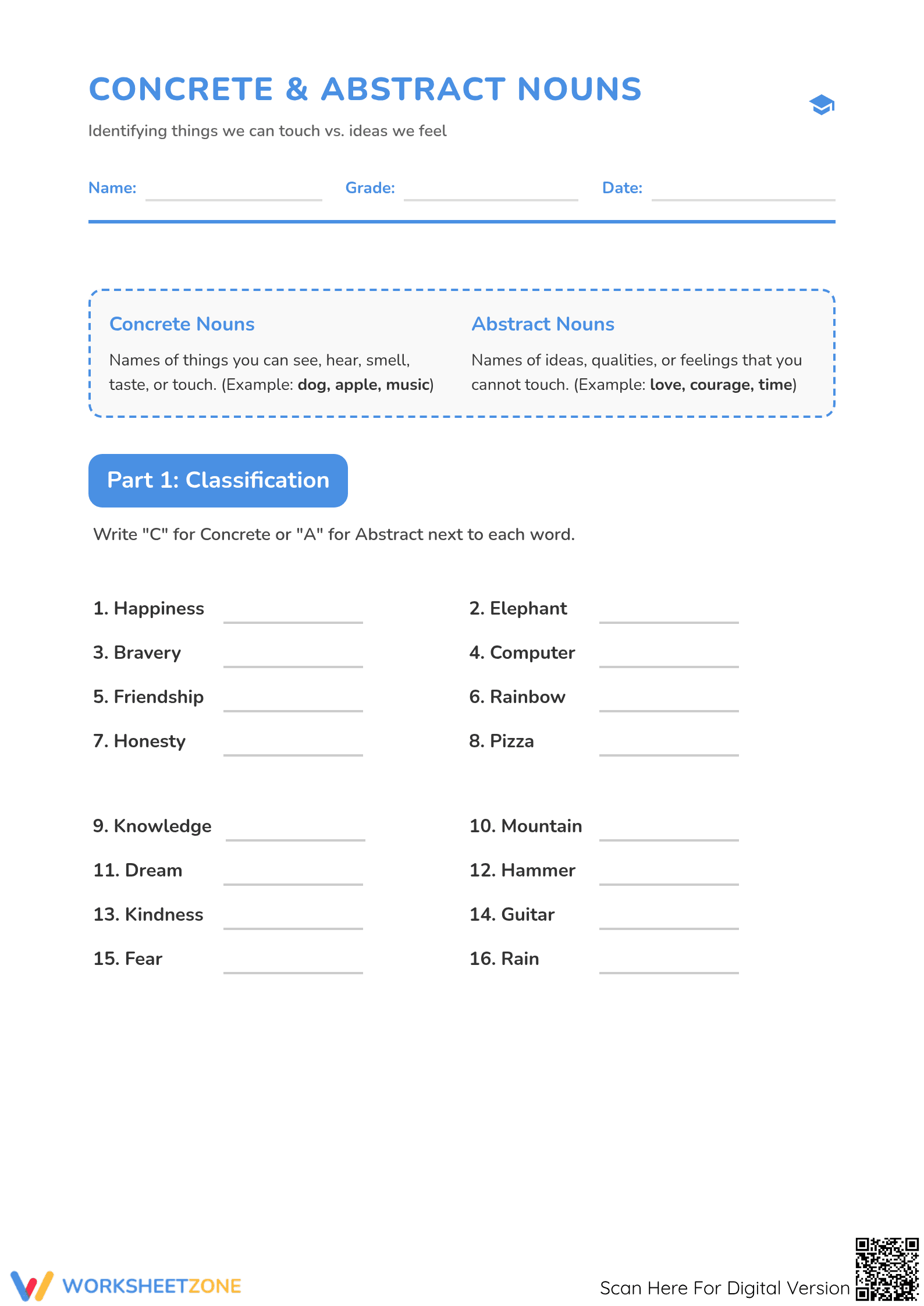
This Grade 3 ELA worksheet provides a comprehensive framework for students to distinguish between tangible objects and intangible concepts. By engaging with 29 distinct tasks, learners develop a concrete understanding of how different noun types function within sentences. This resource ensures students can accurately identify and apply lexical categories in their own writing.
At a Glance
- Grade: 3 · Subject: ELA
- Standard:
CCSS.ELA-LITERACY.L.3.1.C— Explain the function of nouns and their specific roles in sentences- Skill Focus: Concrete vs. Abstract Nouns
- Format: 3 pages · 29 problems · Answer key included · PDF
- Best For: Independent practice and grammar reinforcement
- Time: 20–30 minutes
What's Inside
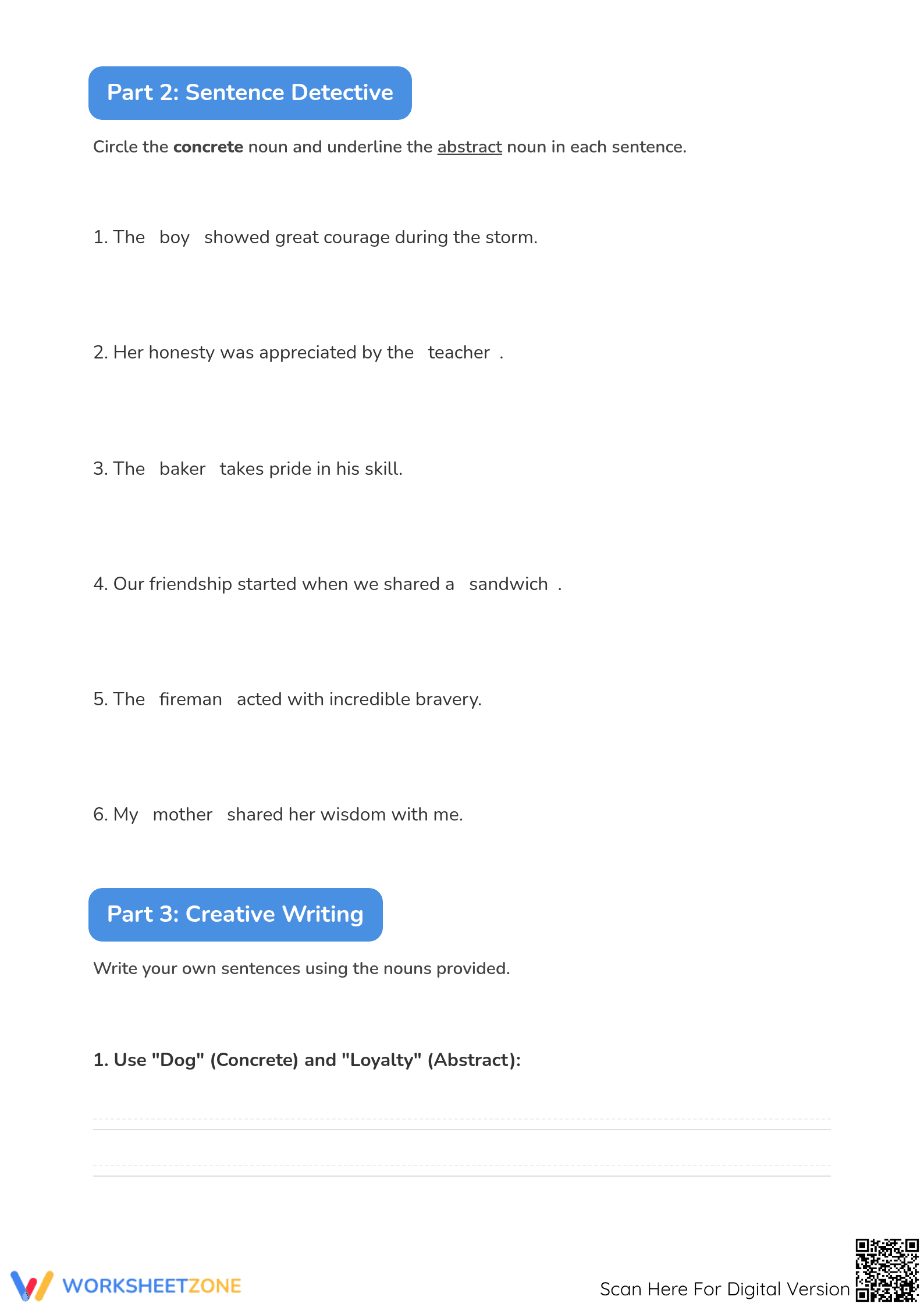
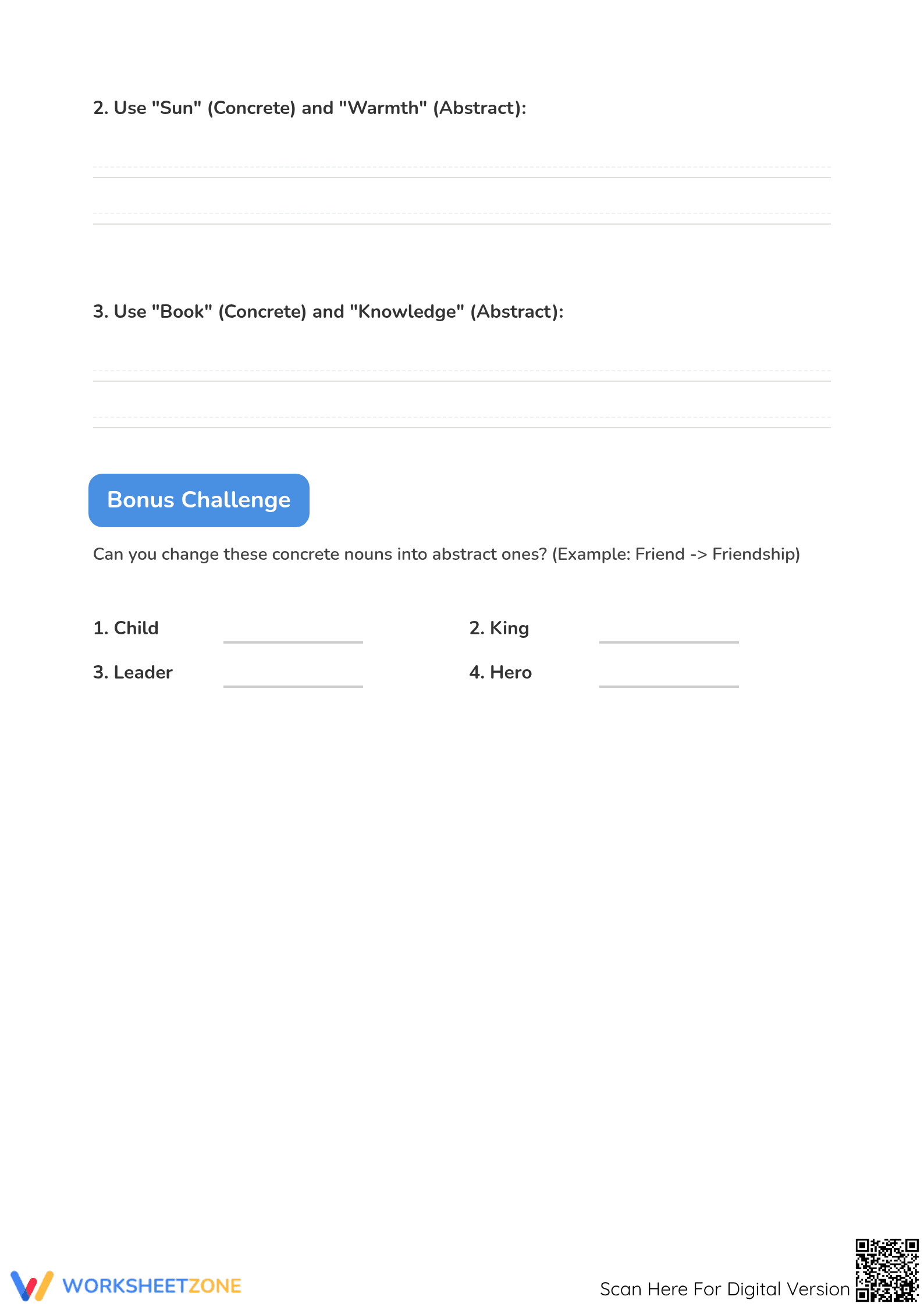
The packet contains three pages of structured activities designed to build mastery. It begins with a 16-item classification task where students label words as concrete or abstract. The second page features a "Sentence Detective" section with 6 sentences for identification and a creative writing prompt. The final page includes two additional writing prompts and a bonus challenge focused on word transformation. A full answer key is provided for immediate feedback.
Zero-Prep Workflow
- Print: Select the three-page PDF and print enough copies for your class in under 30 seconds.
- Distribute: Hand out the worksheets as a bell-ringer or independent practice during your grammar block.
- Review: Use the included answer key to conduct a quick whole-class check or peer-grading session in 5 minutes.
This design allows for immediate classroom implementation, making it an ideal solution for substitute plans or last-minute curriculum needs.
Standards Alignment
This resource is aligned with CCSS.ELA-LITERACY.L.3.1.C, which requires students to explain the function of nouns and use them correctly. By focusing on the distinction between physical objects and abstract ideas like "bravery" or "friendship," students meet the foundational requirements for third-grade language standards. Both standard codes can be copied directly into lesson plans, IEP goals, or district curriculum mapping tools.
How to Use It
Use this worksheet during the "You Do" phase of a gradual release lesson. After introducing the definitions of concrete and abstract nouns, assign the classification page to check for initial understanding. The creative writing section serves as a formative assessment to see if students can apply the concepts in context. Expected completion typically takes 20 to 30 minutes depending on student writing speed.
Who It's For
This resource is designed for Grade 3 students but is also highly effective for older English Language Learners (ELL) who need targeted practice with lexical categories. It pairs naturally with a classroom anchor chart or a short mentor text that highlights emotional themes. The clear layout supports students who benefit from structured, predictable task formats.
According to research by Fisher & Frey (2014) on the gradual release of responsibility, providing students with structured opportunities to categorize and then apply new linguistic concepts is essential for long-term retention. This worksheet facilitates that process by moving from simple identification to complex sentence generation. The inclusion of 29 tasks ensures sufficient repetition for mastery of CCSS.ELA-LITERACY.L.3.1.C. By distinguishing between things we can touch and ideas we feel, students build the cognitive schema necessary for advanced reading comprehension and descriptive writing. Educational analysis suggests that explicit instruction in word classes, particularly the shift from concrete to abstract thinking in the third grade, correlates with higher performance on standardized ELA assessments. This resource provides the necessary scaffolding to bridge that developmental gap effectively within a standard classroom timeframe.


