


























Views
Downloads

Essential Concrete and Abstract Nouns Worksheet | Grade 3
Paste this activity's link or code into your existing LMS (Google Classroom, Canvas, Teams, Schoology, Moodle, etc.).
Students can open and work on the activity right away, with no student login required.
You'll still be able to track student progress and results from your teacher account.
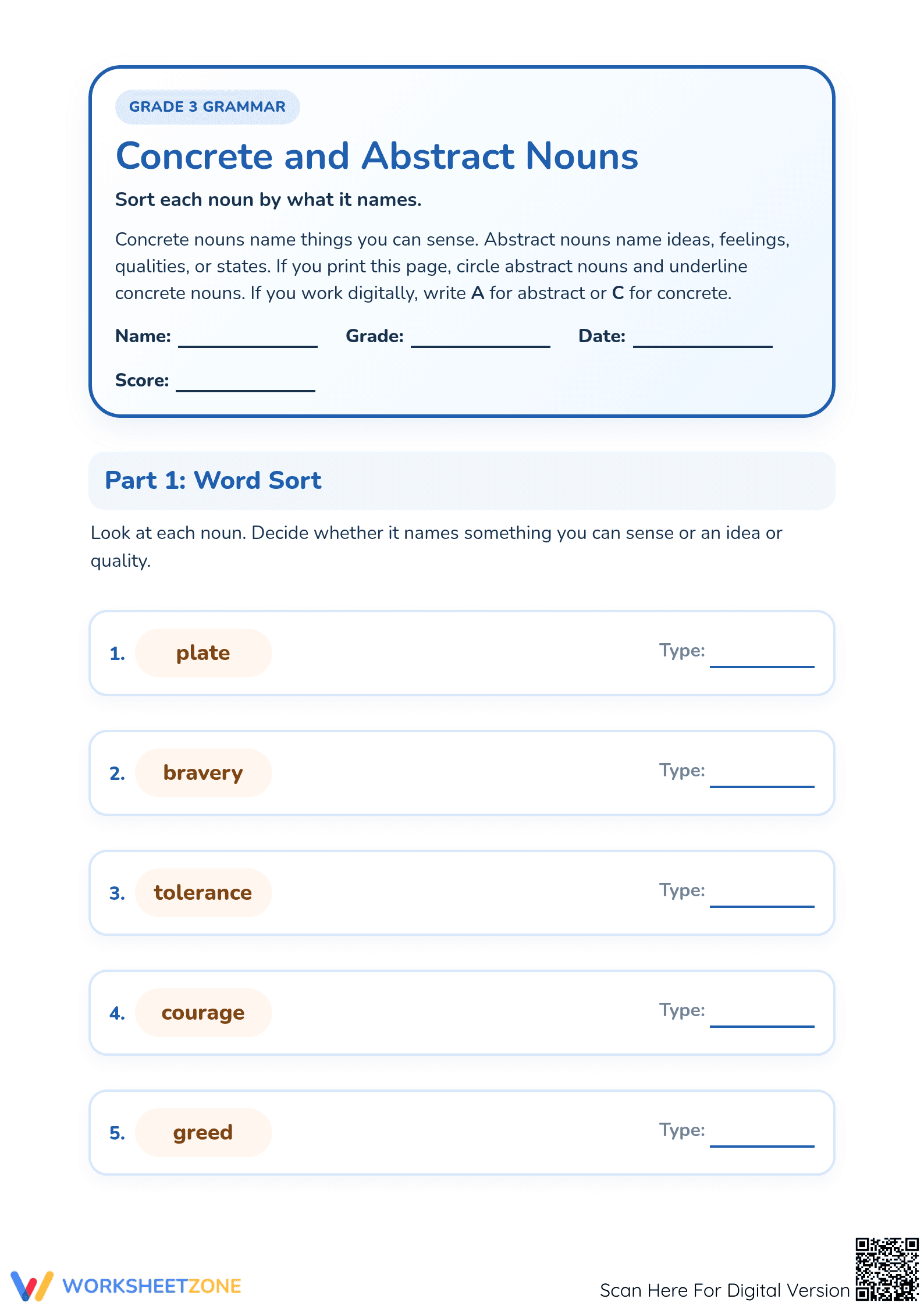
This Grade 3 grammar worksheet provides comprehensive practice with concrete and abstract nouns. Students learn to distinguish between physical objects they can sense and intangible ideas or emotions. By categorizing 16 different words and analyzing nouns within sentences, learners build the foundational linguistic awareness necessary for descriptive writing and reading comprehension.
At a Glance
- Grade: 3 · Subject: ELA
- Standard:
CCSS.ELA-LITERACY.L.3.1.C— Explain the function of nouns and their specific roles in sentences- Skill Focus: Concrete vs. Abstract Nouns
- Format: 3 pages · 16 problems · Answer key included · PDF
- Best For: Independent practice or homework
- Time: 15–20 minutes
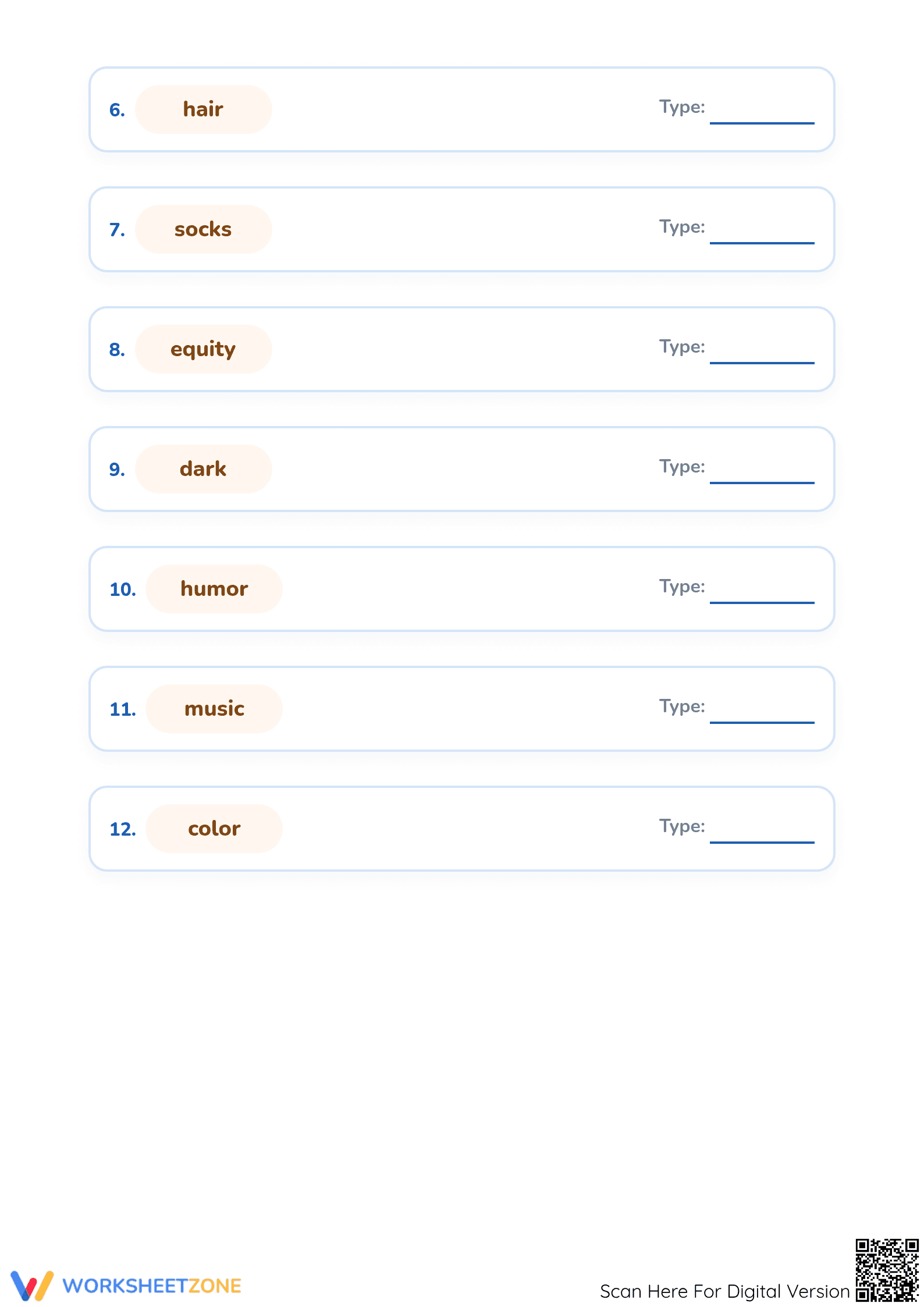
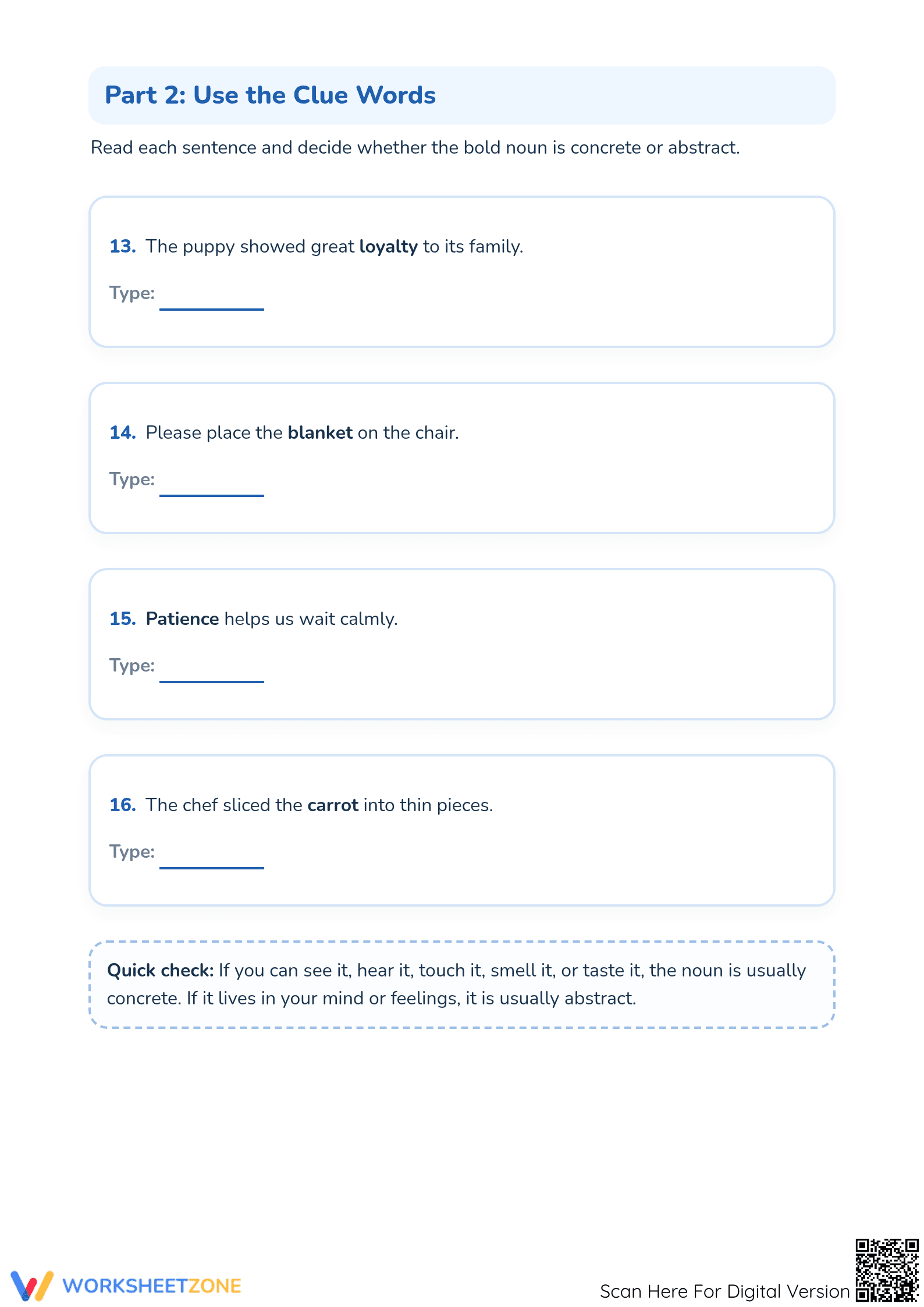
This 3-page PDF includes a structured two-part activity. Part 1 features a 12-item word sort where students identify nouns like "bravery" and "plate." Part 2 offers 4 sentence-based problems requiring students to evaluate nouns in context. A "Quick Check" anchor box provides immediate support, and a full 3-page answer key ensures easy grading.
Teachers can implement this resource in under 2 minutes. Simply print the 3-page set and distribute it to students. Because the worksheet includes a built-in "Quick Check" definition box, no prior lecture is required for review sessions. After completion, use the provided answer key for a 60-second whole-class check or individual grading. It is an ideal choice for emergency sub plans.
This resource aligns with CCSS.ELA-LITERACY.L.3.1.C, focusing on the specific functions of nouns. It helps students move beyond simple naming to understanding the nuances of lexical categories. Both standard codes can be copied directly into lesson plans, IEP goals, or district curriculum mapping tools.
Use this as a formative assessment after an introductory lesson on parts of speech. It works well as a "silent work" station or a sub plan due to the self-explanatory instructions. Observe if students struggle more with the abstract concepts like "equity" versus concrete items like "socks" to guide your next small-group session. Completion typically takes 15 to 20 minutes.
Designed for third-grade students mastering grammar basics, this packet is also suitable for fourth-grade review or English Language Learners (ELL) who need clear definitions of intangible concepts. Pair this with a sensory bin activity or an anchor chart for maximum impact in the classroom.
Research by Fisher & Frey (2014) emphasizes the importance of categorical word knowledge in developing academic vocabulary. This worksheet addresses CCSS.ELA-LITERACY.L.3.1.C by requiring students to differentiate between sensory-based concrete nouns and conceptual abstract nouns. By engaging with 16 distinct lexical items across three pages, students reinforce the mental schemas necessary for complex sentence construction. The inclusion of a "Quick Check" scaffold aligns with the gradual release of responsibility model, ensuring students have the support needed to achieve mastery. Educational analysis suggests that explicit instruction in noun types significantly improves a student's ability to interpret figurative language and abstract themes in literature. This resource provides the structured repetition required for long-term retention of these essential grammatical distinctions in the elementary classroom.


