


























Views
Downloads

Printable Compound Words Worksheet | Grade 4 ELA
Paste this activity's link or code into your existing LMS (Google Classroom, Canvas, Teams, Schoology, Moodle, etc.).
Students can open and work on the activity right away, with no student login required.
You'll still be able to track student progress and results from your teacher account.
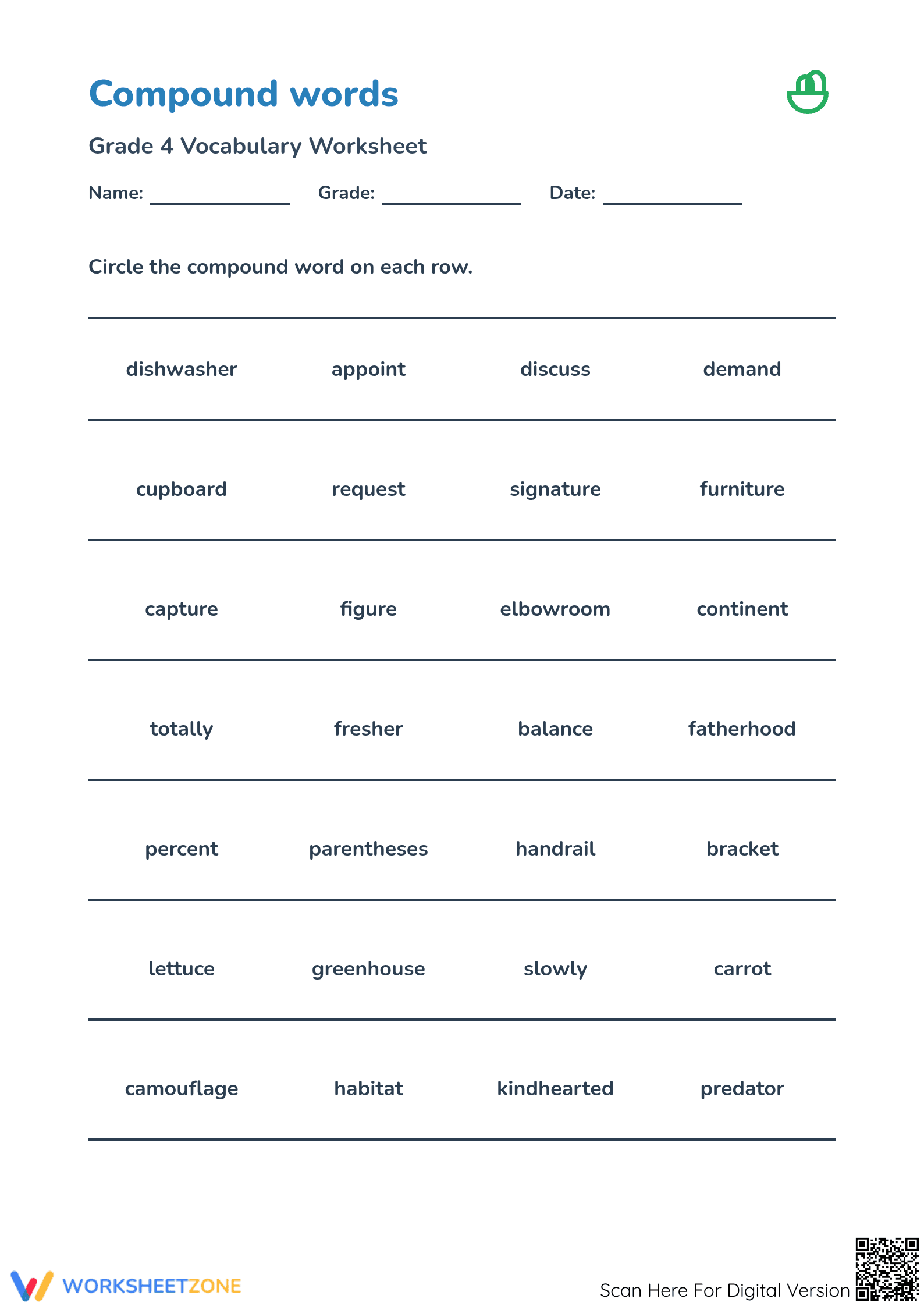
This Grade 4 vocabulary worksheet helps students identify and understand compound words by distinguishing them from standard multi-syllable words. By analyzing groups of words and selecting the correct compound term, learners build essential morphological skills that improve both reading comprehension and spelling accuracy.
At a Glance
- Grade: 4 · Subject: ELA
- Standard:
CCSS.ELA-LITERACY.L.4.4— Determine the meaning of unknown words- Skill Focus: Identifying compound words
- Format: 2 pages · 8 problems · Answer key included · PDF
- Best For: Independent practice and vocabulary building
- Time: 10–15 minutes
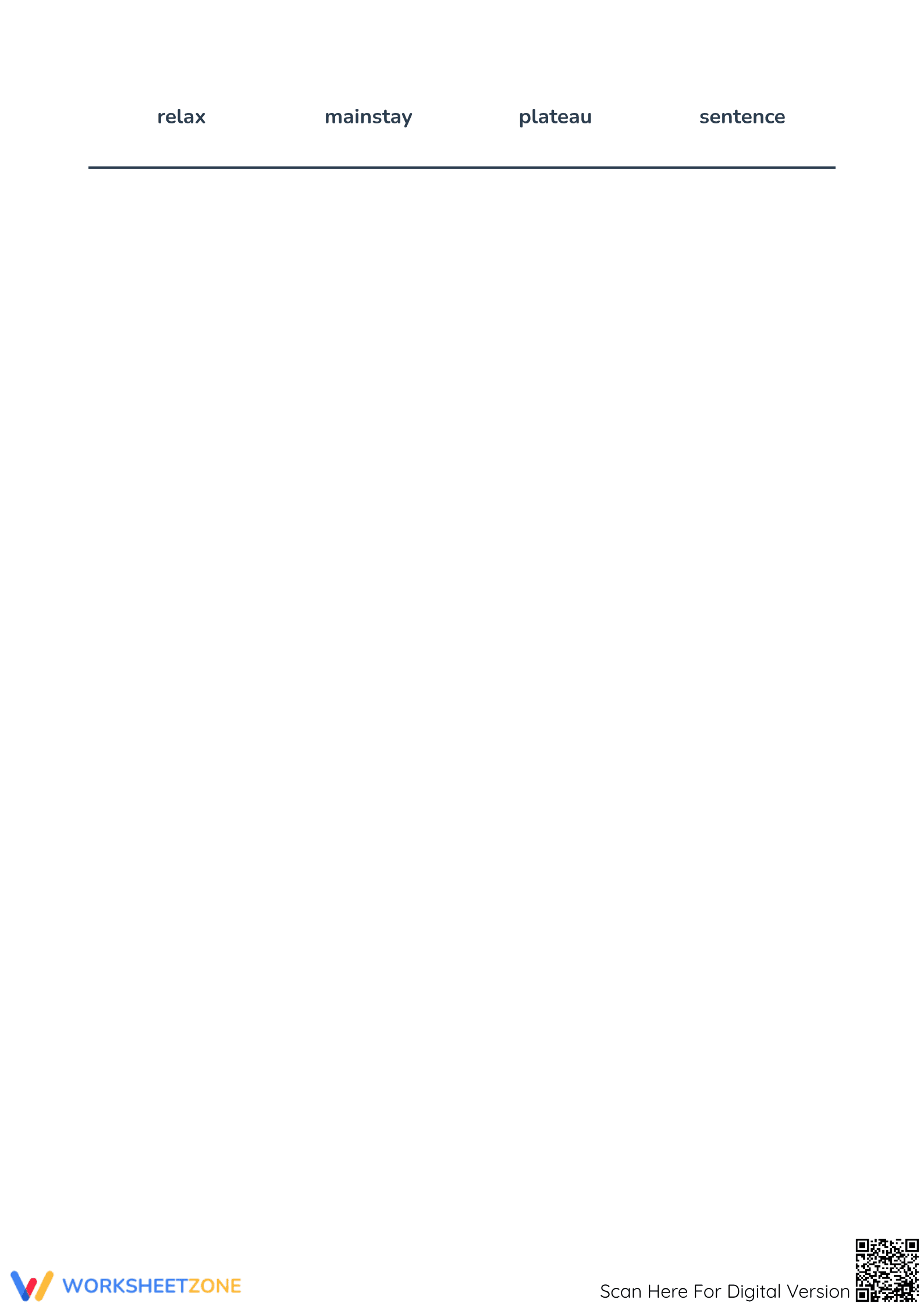
This resource features a straightforward, two-page layout containing eight distinct problem rows. In each row, students are presented with four different vocabulary words and must circle the single compound word among the distractors. The carefully selected distractors include multi-syllable words and words with affixes, challenging students to truly recognize the joining of two independent base words. A complete answer key is provided to ensure quick and accurate grading.
Designed for maximum efficiency, this activity requires virtually no teacher setup.
- Print (1 minute): Simply download the PDF and print the two-page student handout.
- Distribute (1 minute): Hand out the worksheets as a quick morning work task or literacy center activity.
- Review (2 minutes): Use the included answer key to rapidly check student responses or allow for peer grading.
With a total prep time of under two minutes, this resource is an excellent addition to any emergency sub plan or last-minute schedule change.
This worksheet is aligned to primary standard CCSS.ELA-LITERACY.L.4.4, which requires students to determine or clarify the meaning of unknown and multiple-meaning words and phrases based on grade 4 reading and content. Recognizing compound words is a foundational step in using word parts to determine meaning. Both standard codes can be copied directly into lesson plans, IEP goals, or district curriculum mapping tools.
Integrate this worksheet into your literacy block after direct instruction on word morphology. It serves as an excellent independent practice activity to solidify the concept of joining two base words. Alternatively, use it as a quick formative assessment during morning work to gauge retention from previous lessons. While students work, observe whether they are confusing words with prefixes or suffixes (like "fresher" or "totally") with true compound words (like "fatherhood" or "greenhouse"). Expected completion time is a brief 10 to 15 minutes.
This activity is primarily designed for fourth-grade students developing their structural analysis skills. It is also highly effective for third graders needing an extension or fifth graders requiring a quick review of foundational vocabulary concepts. Pair this worksheet with a visual anchor chart displaying common compound words to support English Language Learners or students needing additional scaffolding.
Mastering word structure is a critical component of reading fluency and comprehension. Standard CCSS.ELA-LITERACY.L.4.4 emphasizes the ability to determine the meaning of unknown words by analyzing their parts. According to Fisher & Frey (2014), explicit instruction in morphology, including the identification of compound words, significantly enhances students' ability to decode complex texts and expands their expressive vocabulary. When learners can quickly recognize that a word is composed of two familiar base words, their cognitive load during reading decreases, allowing for deeper comprehension of the overall text. This targeted practice worksheet provides the exact repetition needed to build that automaticity. By isolating the skill of identifying compound words among carefully chosen distractors, educators can ensure students are developing robust structural analysis strategies that will serve them across all academic subjects.


