


























Views
Downloads

Essential Compound Nouns Worksheet | Grade 2-3 ELA
Paste this activity's link or code into your existing LMS (Google Classroom, Canvas, Teams, Schoology, Moodle, etc.).
Students can open and work on the activity right away, with no student login required.
You'll still be able to track student progress and results from your teacher account.
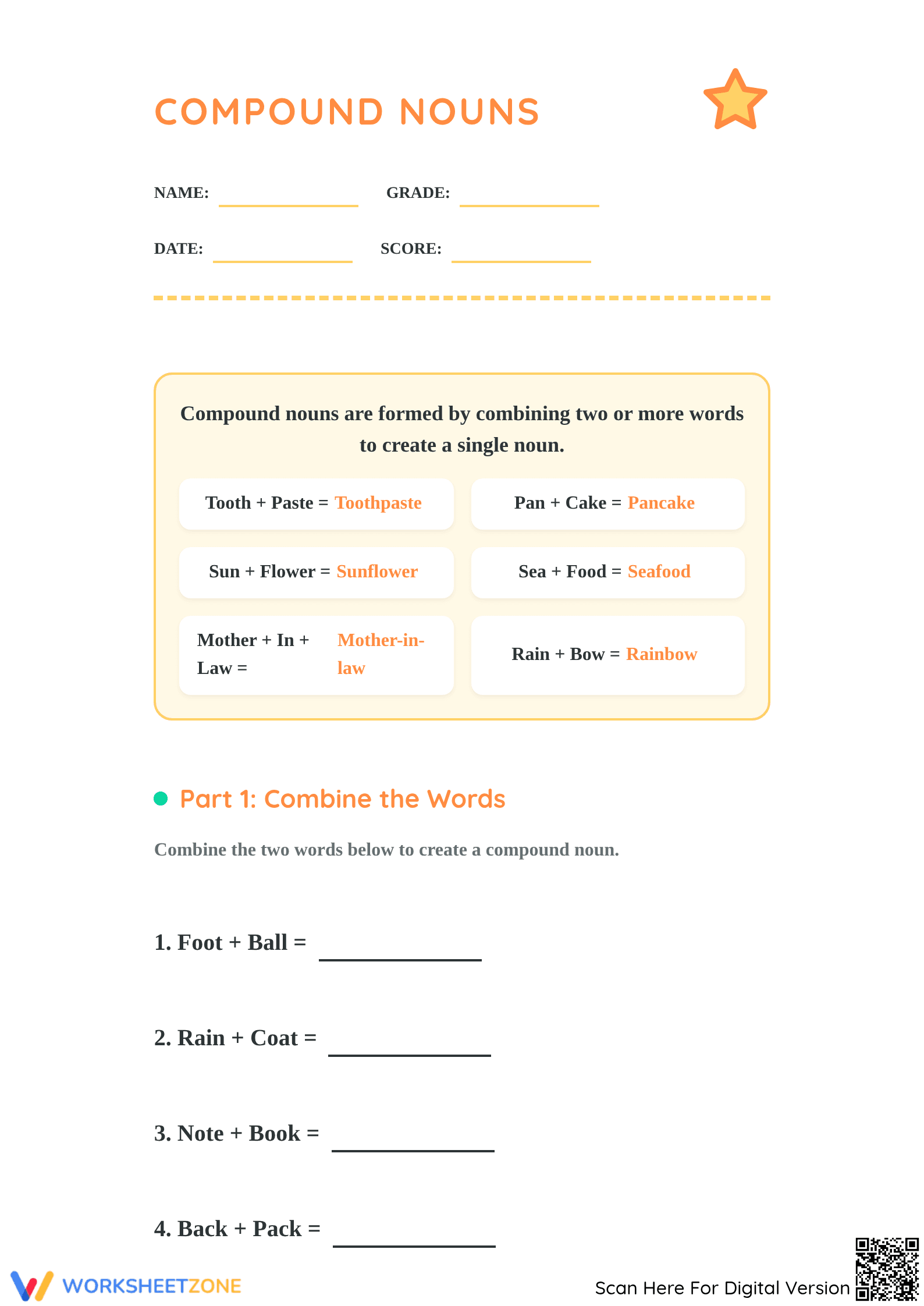
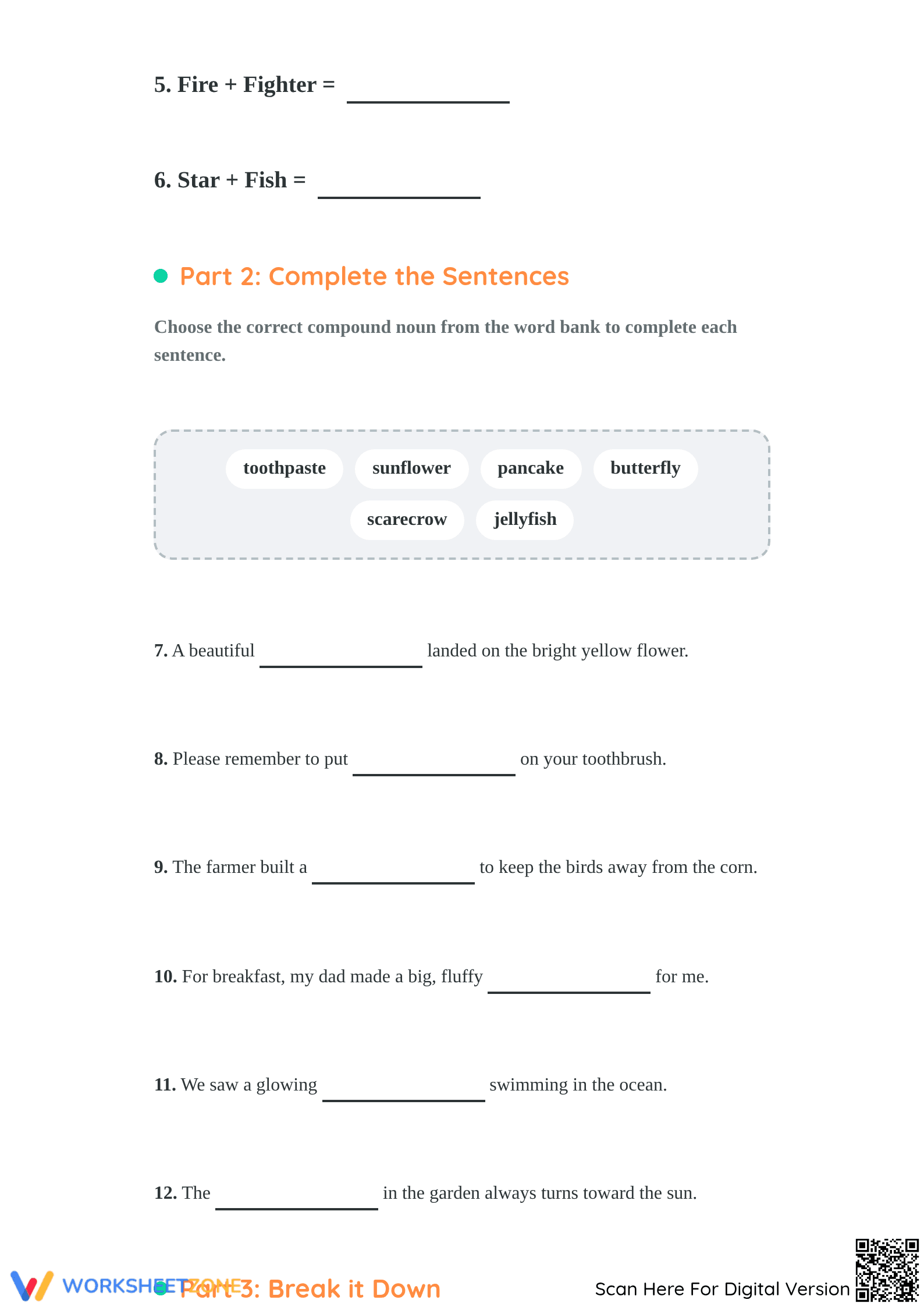
This Grade 2 and 3 compound nouns worksheet provides students with 17 structured problems to master the formation and deconstruction of multi-part words. By engaging with visual examples and sentence-based application, learners develop a concrete understanding of how individual word meanings contribute to new, complex nouns.
At a Glance
- Grade: 2-3 · Subject: ELA Grammar
- Standard:
L.2.4.D— Use individual word meanings to predict the meaning of compound words- Skill Focus: Compound Noun Formation
- Format: 3 pages · 17 problems · Answer key included · PDF
- Best For: Independent practice and grammar centers
- Time: 20–30 minutes
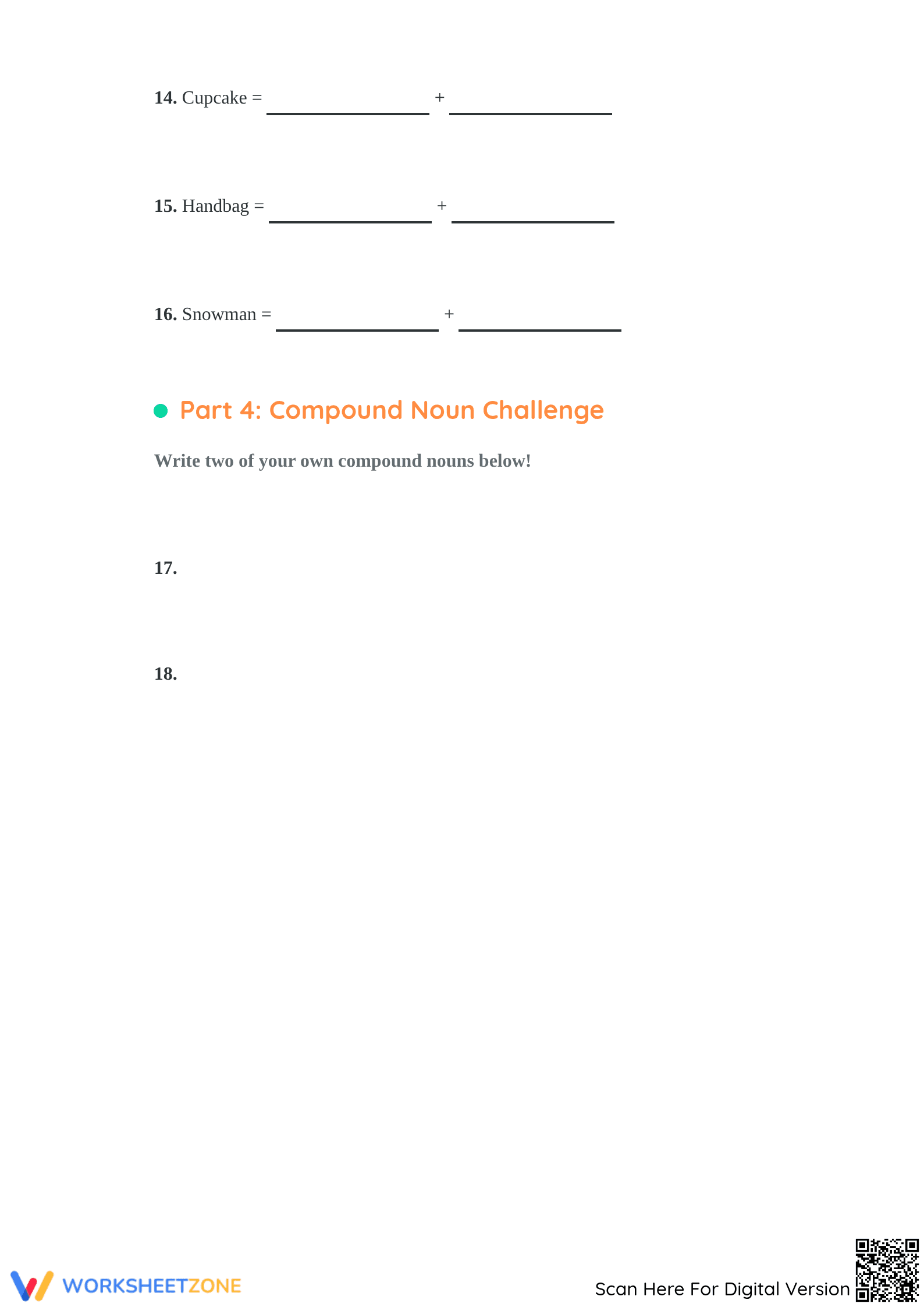
This 3-page PDF includes a clear instructional header defining compound nouns with visual equations. The packet features four sections: word combination, a sentence-completion word bank, deconstruction exercises, and a creative challenge. A full answer key is provided for rapid grading.
Skill Progression
- Guided Practice: Students begin by combining 6 pairs of provided words into new nouns using a visual addition format.
- Supported Practice: Learners use a 6-word bank to complete contextual sentences, reinforcing meaning through usage.
- Independent Practice: Students deconstruct existing compound nouns and synthesize 2 original examples in the final challenge.
This gradual-release model ensures students build confidence before working without scaffolds.
Standards Alignment
The primary focus is `CCSS.ELA-LITERACY.L.2.4.D`, which requires students to use knowledge of the meaning of individual words to predict the meaning of compound words. It also supports `CCSS.ELA-LITERACY.L.3.4`, focusing on general vocabulary acquisition and use. Both standard codes can be copied directly into lesson plans, IEP goals, or district curriculum mapping tools.
How to Use It
Use this during the "You Do" phase of a lesson. It serves as an excellent formative assessment tool; observe Part 3 to see if students can identify root words within words like "Cupcake." Completion typically takes 20 to 30 minutes.
Who It's For
This is designed for second and third-grade students or English Language Learners (ELL) requiring explicit vocabulary instruction. It pairs naturally with a compound noun anchor chart or a matching game involving physical word cards to reinforce the concept.
According to Fisher & Frey (2014), the use of word-part analysis is a critical component of morphological awareness that significantly impacts reading comprehension. This worksheet targets CCSS.ELA-LITERACY.L.2.4.D by requiring students to synthesize and analyze compound nouns, a foundational skill in early literacy development. Research from the NAEP suggests that students who can successfully manipulate word structures demonstrate higher levels of vocabulary flexibility in later grades. By providing 17 specific opportunities for practice across three pages, this resource ensures that the cognitive load is managed through clear formatting and predictable task structures. The inclusion of a "Break it Down" section specifically addresses the analytical requirements of the standard, moving beyond simple memorization toward structural understanding. This evidence-based approach to grammar instruction supports long-term retention of linguistic patterns.


