


























Views
Downloads

Printable Proverbs Worksheet | Grade 4 ELA Guide
Paste this activity's link or code into your existing LMS (Google Classroom, Canvas, Teams, Schoology, Moodle, etc.).
Students can open and work on the activity right away, with no student login required.
You'll still be able to track student progress and results from your teacher account.
Students develop a deeper understanding of cultural wisdom and figurative language with this comprehensive proverb worksheet. By completing common sayings and applying them through creative writing, fourth graders master the nuances of adages. This resource ensures students can explain the general truths found in everyday English expressions while building essential literacy skills.
At a Glance
- Grade: 4 · Subject: ELA
- Standard:
CCSS.ELA-LITERACY.L.4.5.B— Recognize and explain the meaning of common idioms, adages, and proverbs- Skill Focus: Proverbs and Figurative Language
- Format: 3 pages · 9 tasks · Answer key included · PDF
- Best For: Literacy centers and independent vocabulary practice
- Time: 20–30 minutes
What's Inside
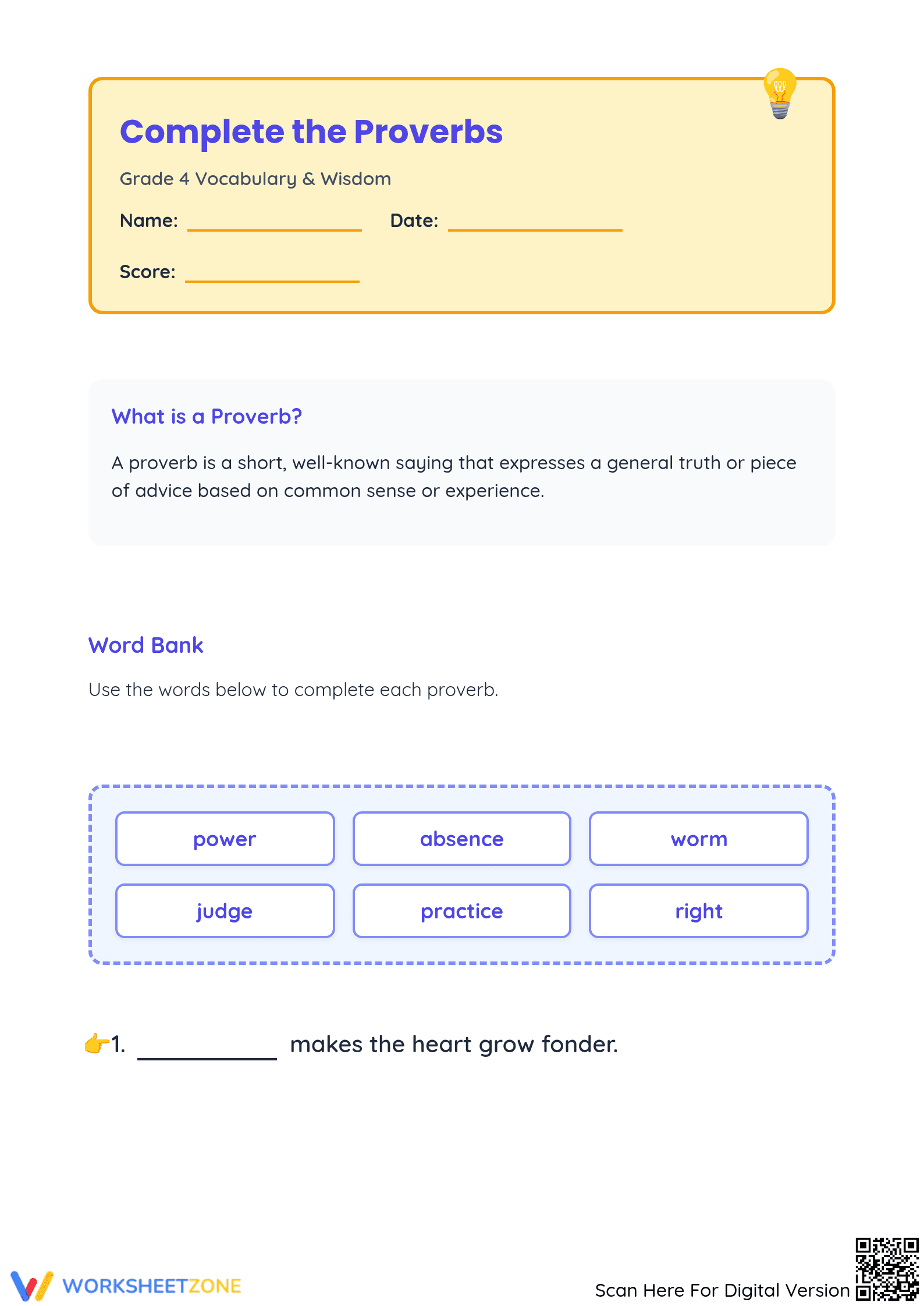
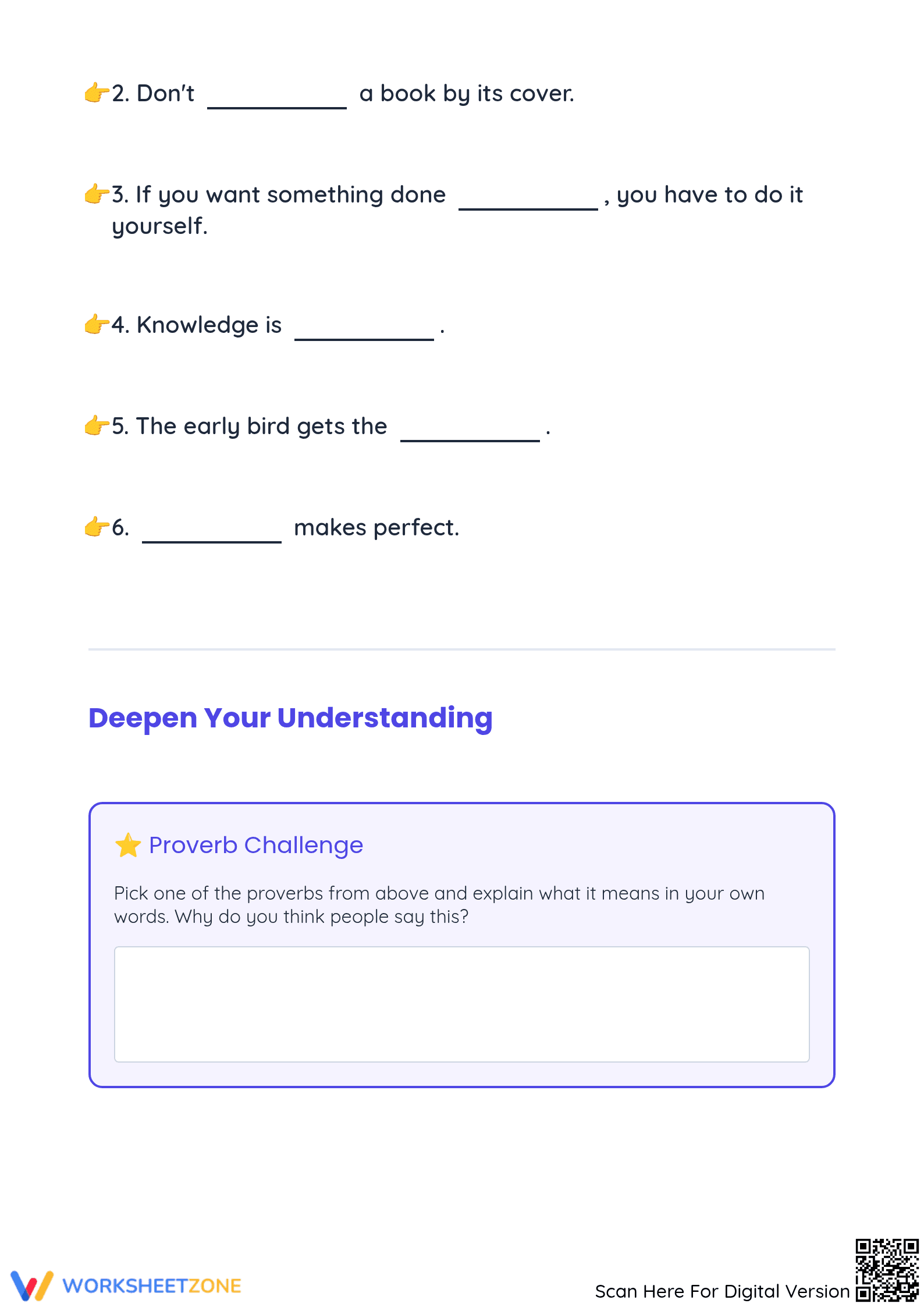
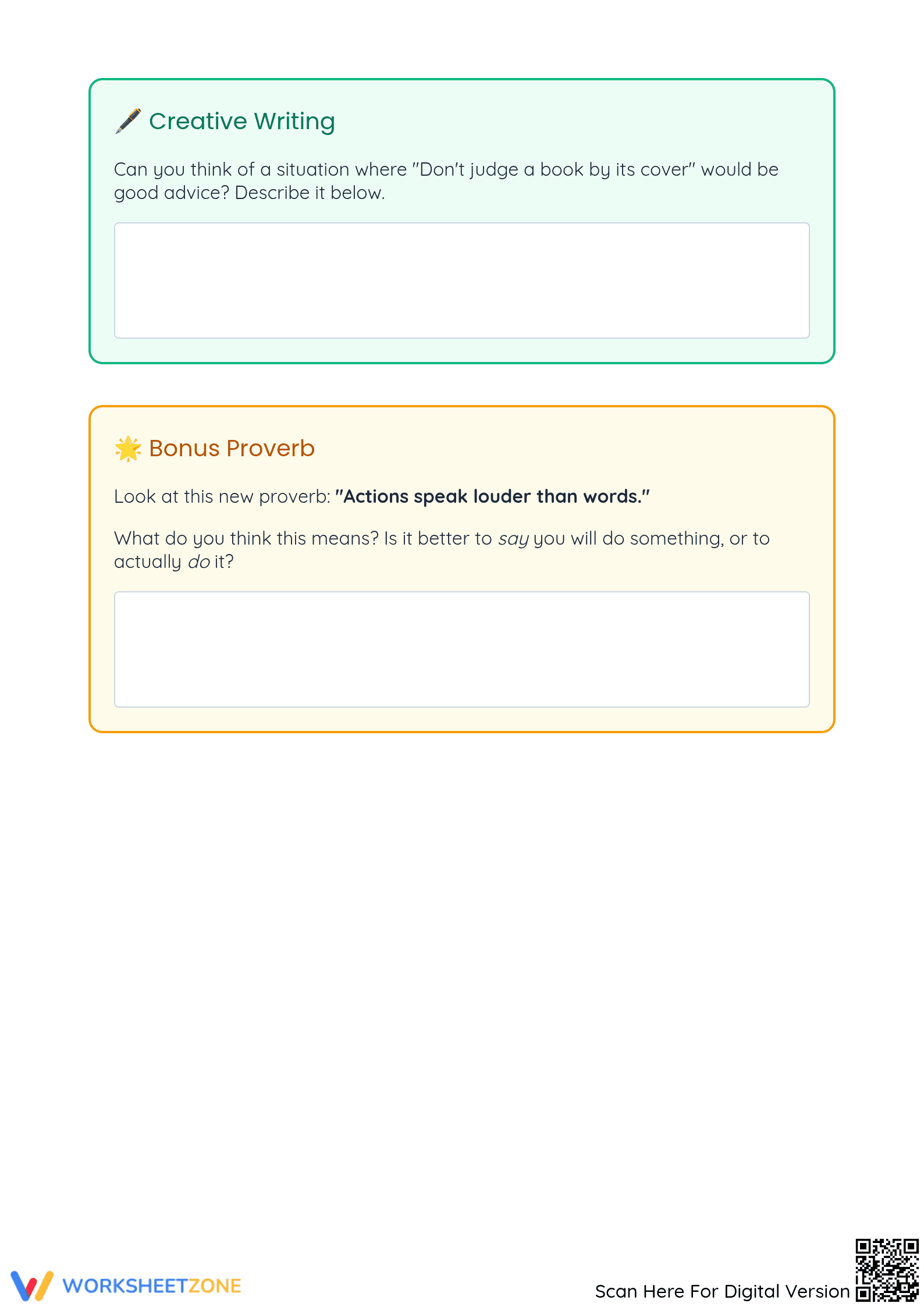
This 3-page resource features a structured layout designed for clarity. It begins with a clear definition of proverbs and a word bank containing six key terms. Students complete six high-frequency proverbs before moving into deeper analysis. The second and third pages include a "Proverb Challenge" for explaining meanings, a "Creative Writing" prompt for real-world application, and a "Bonus Proverb" for extended critical thinking.
Zero-Prep Workflow
Implementing this resource requires minimal effort from the teacher. First, print the three-page PDF for your class, which takes less than 30 seconds. Next, distribute the packets to students for independent or partner work; the self-explanatory instructions mean no direct setup is required. Finally, use the included answer key to review responses in under two minutes, making this an ideal sub plan or warm-up.
Standards Alignment
This worksheet is specifically designed to meet `CCSS.ELA-LITERACY.L.4.5.B`, which requires students to recognize and explain the meaning of common idioms, adages, and proverbs. By moving from simple completion to explanatory writing, students demonstrate mastery of figurative language. Both standard codes can be copied directly into lesson plans, IEP goals, or district curriculum mapping tools.
How to Use It
Use this worksheet during a vocabulary unit as a formative assessment after introducing figurative language. Teachers can observe students during the "Creative Writing" section to identify those who struggle to connect abstract adages to concrete situations. It also functions perfectly as a quiet morning work activity or a comprehensive homework assignment that encourages family discussion about common sayings.
Who It's For
This resource is tailored for Grade 4 students but serves as excellent enrichment for third graders or review for fifth graders. It is particularly beneficial for English Language Learners who need direct exposure to the cultural context of English proverbs. Pair this with a collection of short fables or an anchor chart on figurative language for a complete instructional cycle.
Understanding proverbs is a critical component of language development, as these frozen expressions convey complex cultural values and abstract logic. Research by Fisher & Frey (2014) emphasizes the importance of explicit instruction in figurative language to improve overall reading comprehension and expressive writing. This worksheet aligns with those findings by providing a scaffolded approach that moves students from lexical identification (using the word bank) to semantic analysis (explaining meanings in their own words). By targeting `CCSS.ELA-LITERACY.L.4.5.B`, the activities ensure that fourth graders move beyond literal interpretations of text, a key milestone in late elementary literacy. The inclusion of 9 varied tasks ensures high student engagement while providing teachers with multiple data points for evaluating student progress. Educators can confidently integrate this printable PDF into their curriculum, knowing it supports the systematic development of vocabulary and wisdom as outlined in modern ELA frameworks.


