




























Views
Downloads

Complete Process Explanation Worksheet | Grade 8 ELA

Paste this activity's link or code into your existing LMS (Google Classroom, Canvas, Teams, Schoology, Moodle, etc.).
Students can open and work on the activity right away, with no student login required.
You'll still be able to track student progress and results from your teacher account.
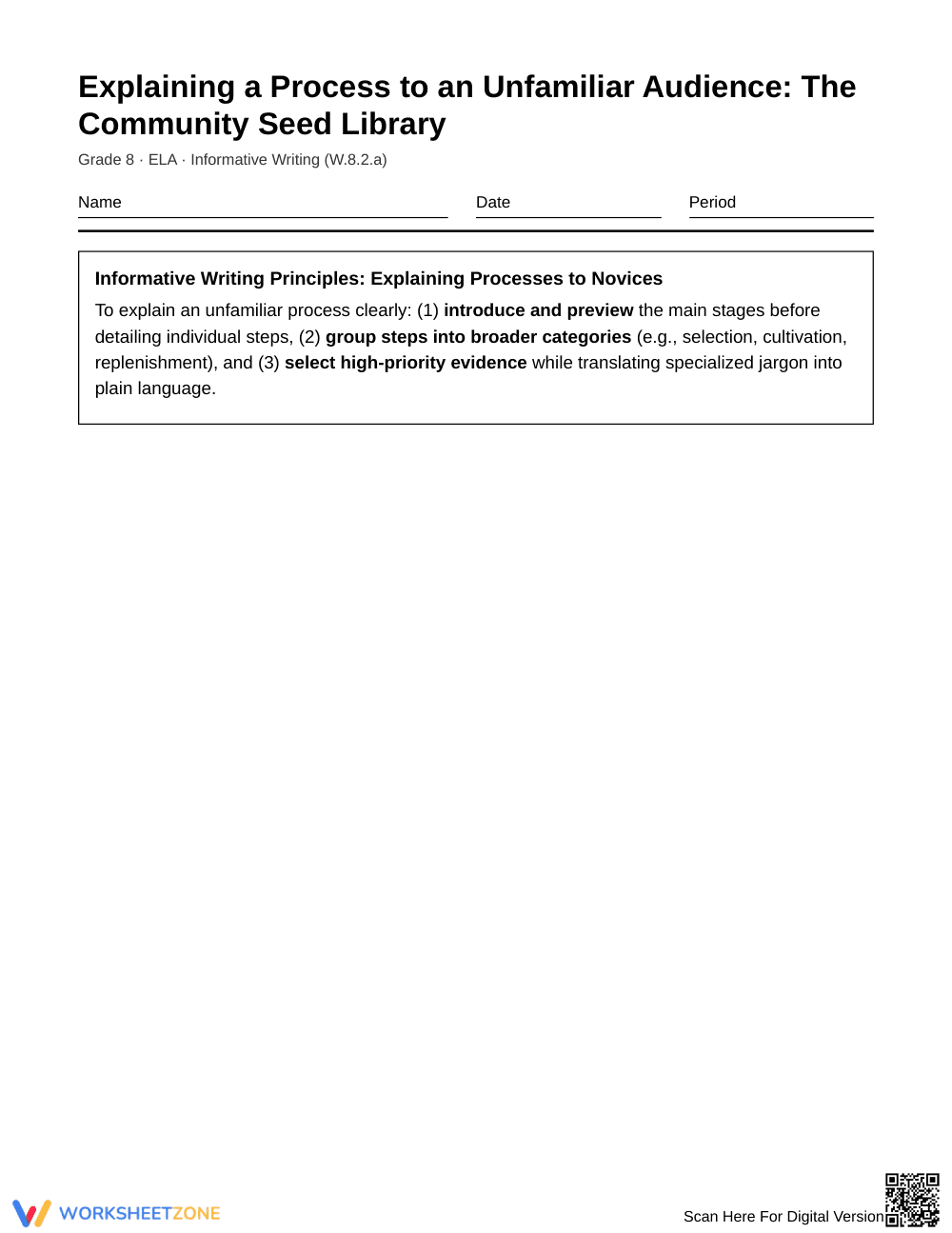
This informative writing worksheet prepares eighth-grade students to explain complex procedures to novice readers with precision and audience awareness. By analyzing realistic community seed library records, learners evaluate evidence, structure procedural phases, and draft explanatory text. Students master how to introduce concepts clearly and organize information logically without confusing their readers.
At a Glance
- Grade: 8 · Subject: ELA
- Standard:
W.8.2.a— Introduce a topic clearly, preview what follows, and organize ideas into categories- Skill Focus: Explaining a Process to an Unfamiliar Audience
- Format: 5 pages · 8 problems · Answer key included · PDF
- Best For: Informative writing instruction and process analysis
- Time: 45–60 minutes
What's Inside
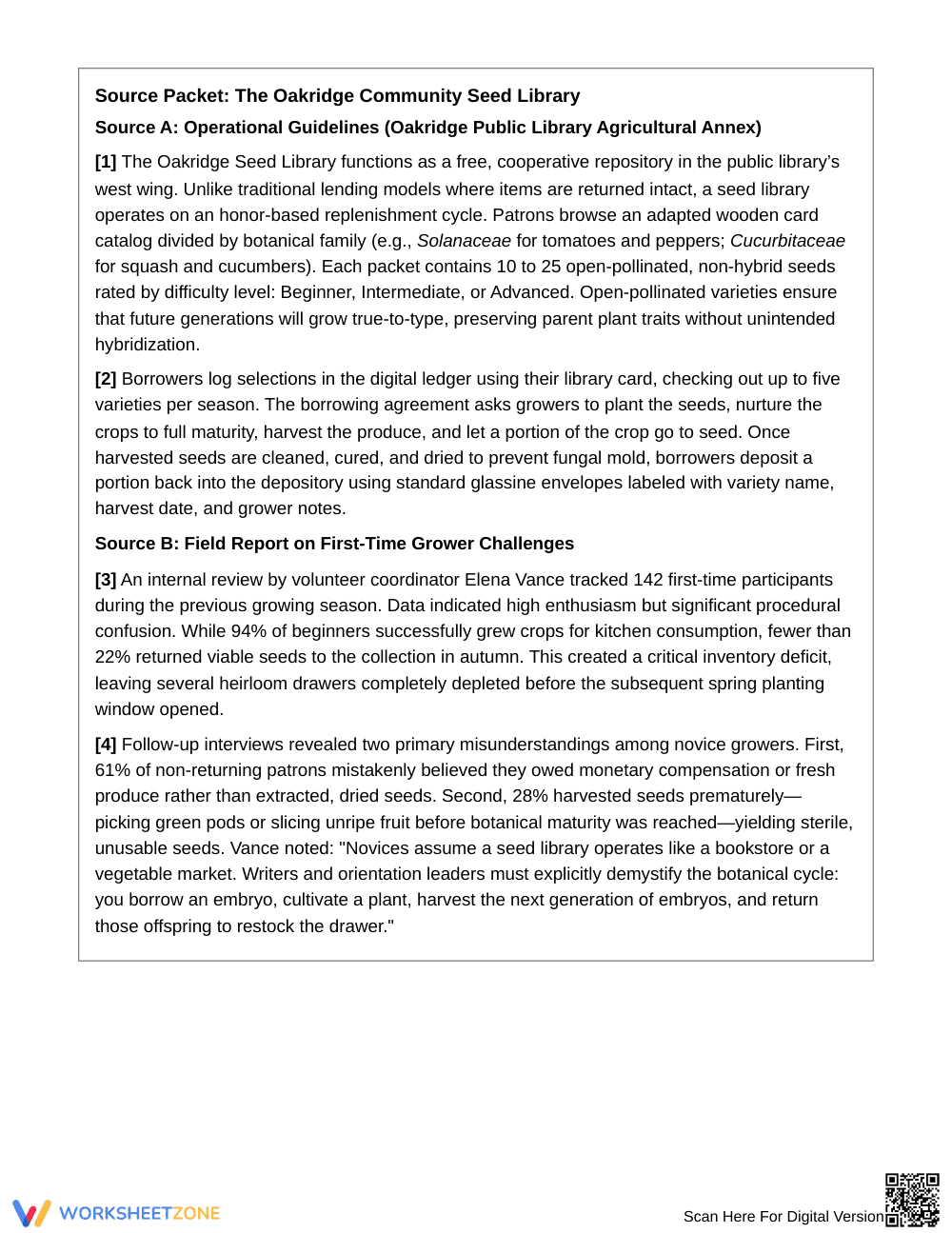
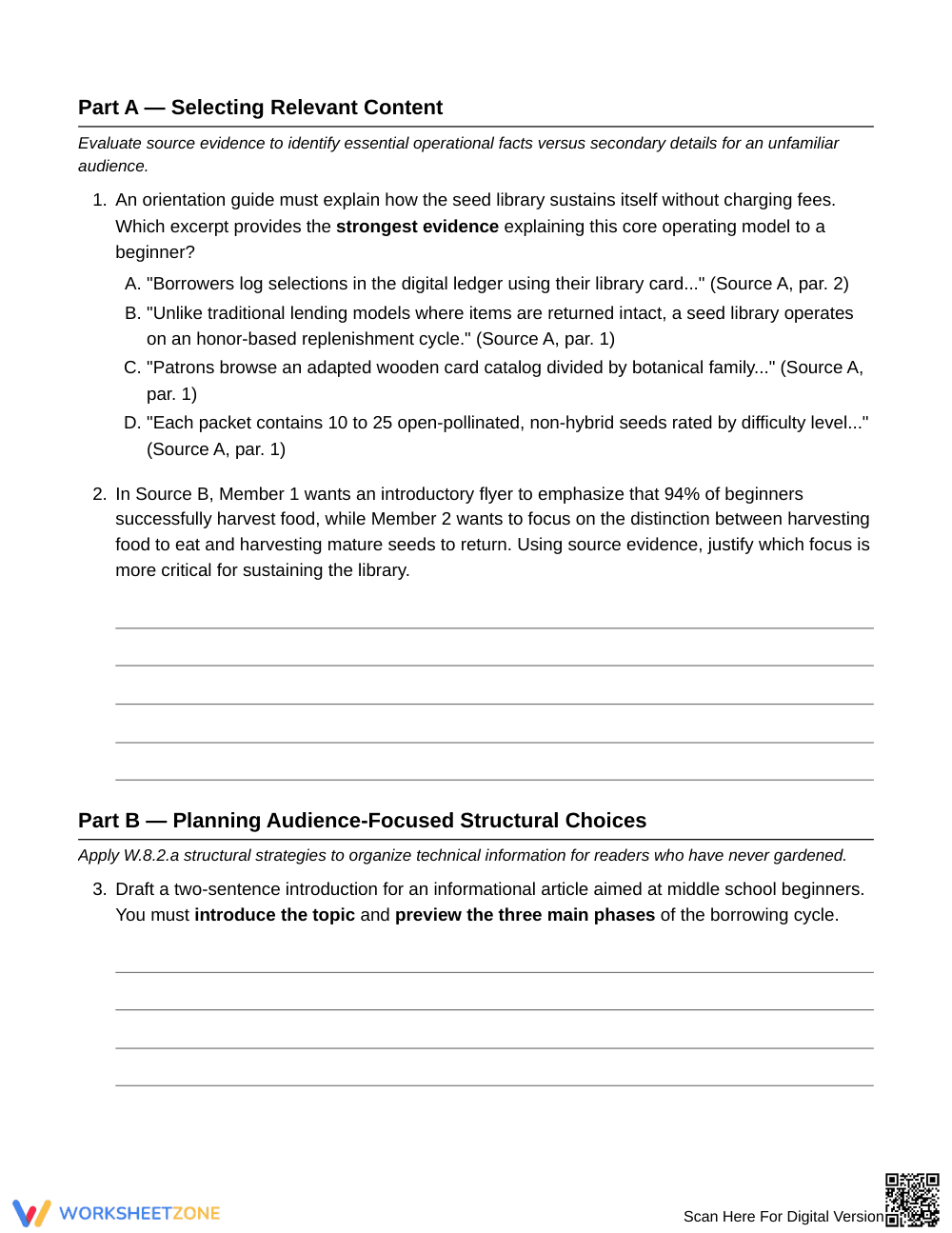
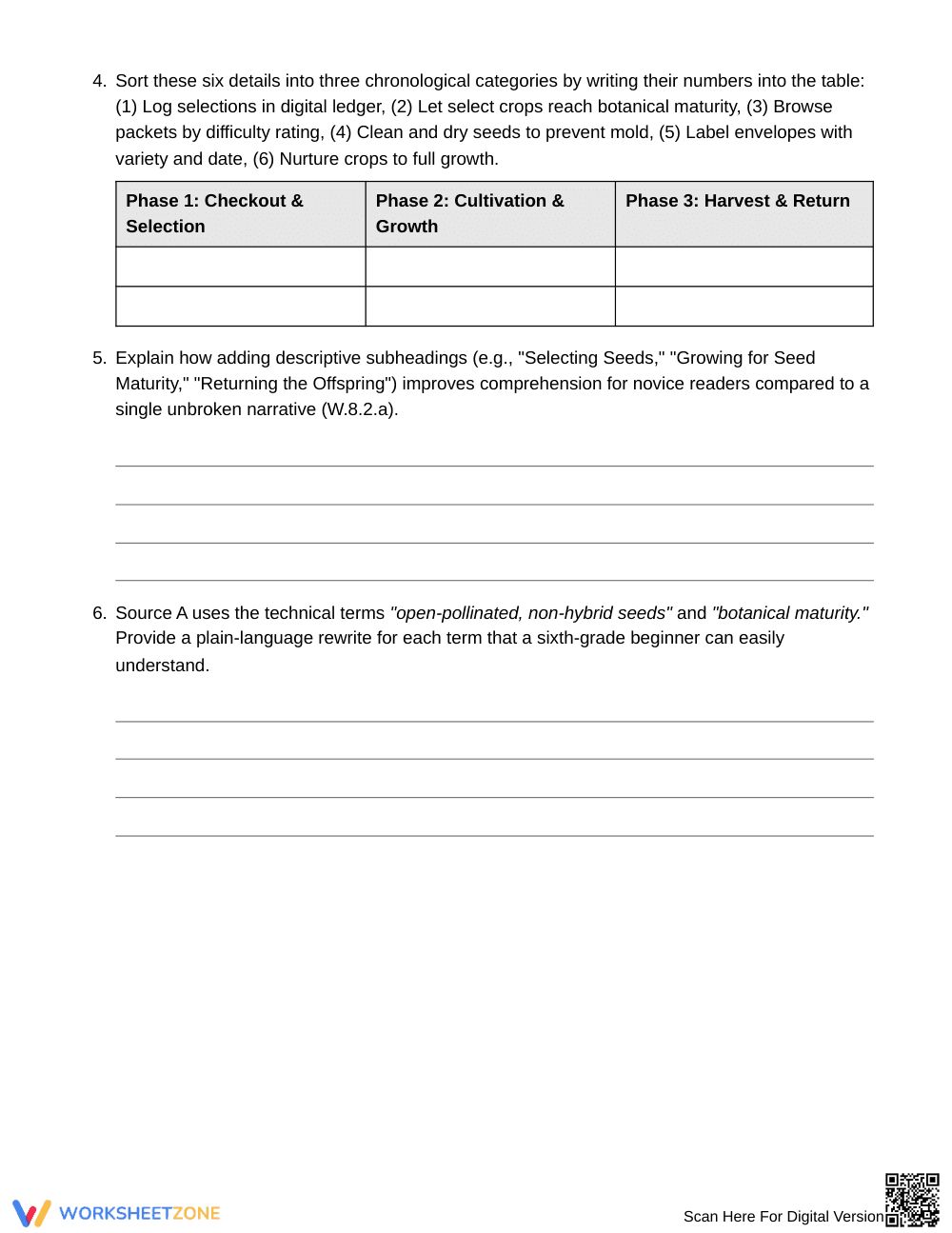
Across 5 student-facing pages, this resource presents an informational source packet with operational guidelines and a volunteer field report, followed by 8 targeted tasks. It features evidence-selection questions, a chronological categorization chart, jargon-translation exercises, an extended writing prompt, and draft revision. A thorough 3-page answer key provides complete model responses and evaluation criteria.
Skill Progression
- Guided practice (Tasks 1–2): Students analyze authentic informational texts to identify essential operational evidence and evaluate competing audience needs with direct source support.
- Supported practice (Tasks 3–6): Learners construct introductory preview sentences, organize six procedural steps into chronological phases, justify structural headings, and translate technical botanical jargon into accessible language.
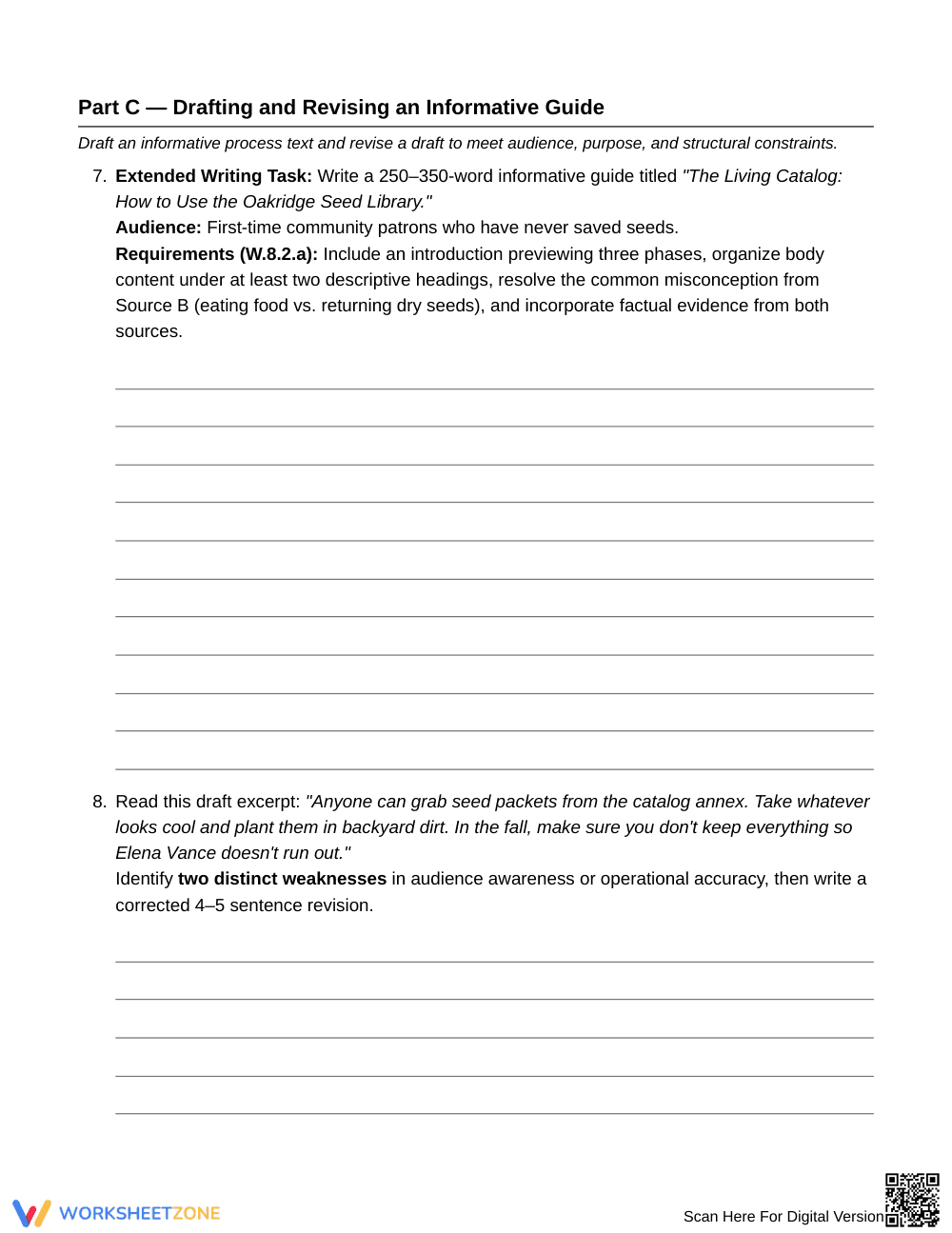
- Independent practice (Tasks 7–8): Students draft a complete 250- to 350-word procedural guide and revise a flawed sample for audience tone and operational accuracy.
This sequence mirrors the gradual release of responsibility model, moving students systematically from analytical evaluation to independent text generation.
Standards Alignment
This worksheet aligns directly to `W.8.2.a`: introduce a topic clearly, previewing what is to follow, and organize ideas, concepts, and information into broader categories. Additionally, it reinforces `RI.8.1` by requiring students to cite strong textual evidence to justify structural choices. Both standard codes can be copied directly into lesson plans, IEP goals, or district curriculum mapping tools.
How to Use It
Deploy this packet during the guided application phase of an informative writing unit or as a structured mid-unit assessment. As a formative assessment tip, check Task 4 to verify whether students correctly group operational steps before they begin drafting in Task 7. The entire resource takes approximately 45 to 60 minutes for students to complete thoroughly.
Who It's For
This resource serves general education eighth-grade English classes, writing intervention groups, and advanced seventh-grade writers needing expository enrichment. Provide sentence frames for developing writers or pair this activity with an anchor chart detailing transitional phrases and organizational structures for procedural texts.
According to research on adolescent literacy by Fisher & Frey (2014), explicit instruction in organizational framing enables middle school writers to communicate complex technical content successfully to unfamiliar readers. Standard `W.8.2.a` demands that Grade 8 students introduce a topic clearly, preview what is to follow, and organize ideas into broader categories. Novice writers frequently assume readers possess specialized background knowledge, leading to procedural omissions, unclear sequencing, and jargon-heavy phrasing. This worksheet targets that instructional barrier directly by guiding students through source evaluation, chronological grouping, and audience-tailored drafting. By teaching adolescents to anticipate reader confusion and structure procedural steps logically, the resource bridges the gap between basic informational summary and authentic expository communication. Students gain deliberate practice in translating technical vocabulary into accessible language, reinforcing crucial informational writing competencies that support lifelong academic literacy.


